
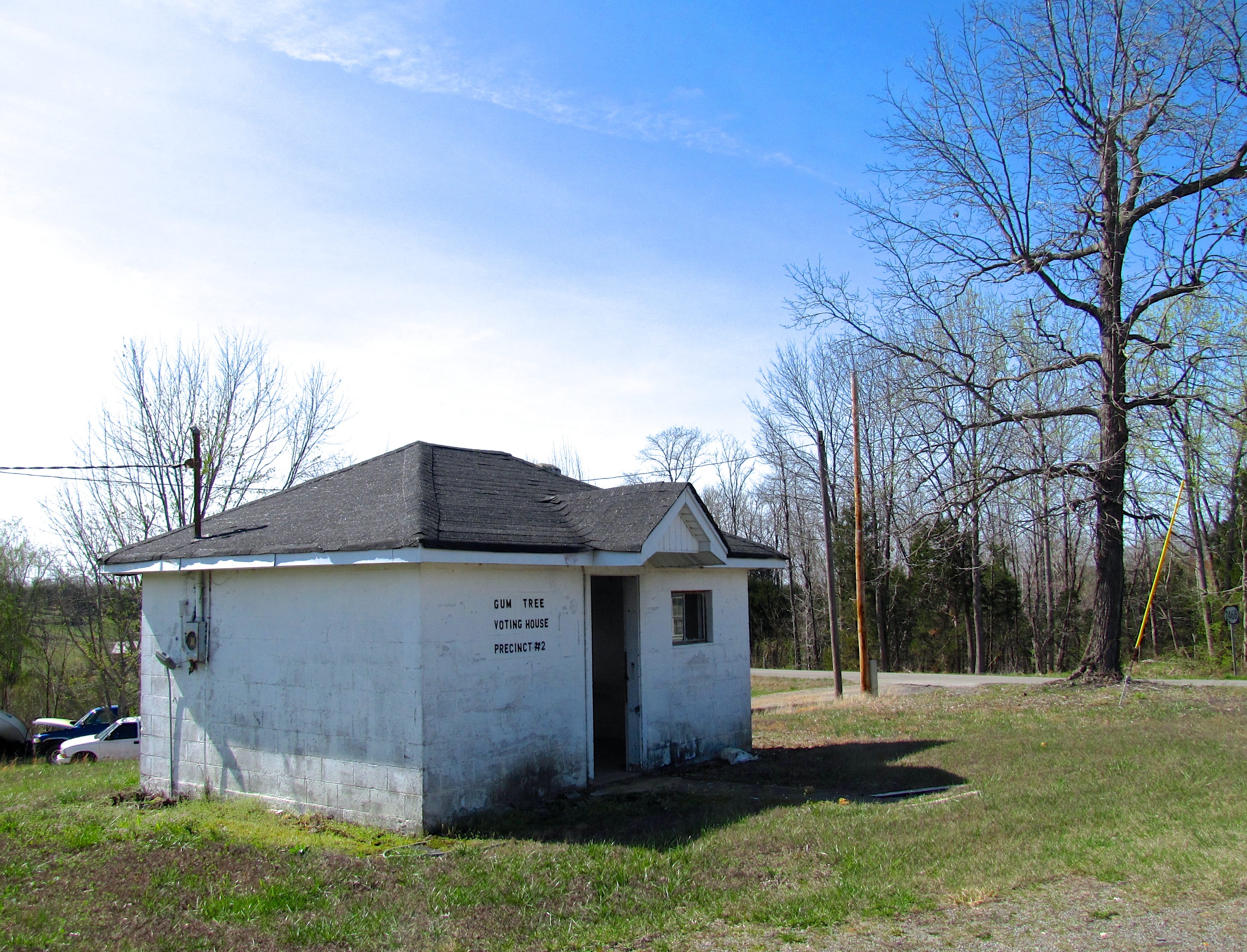
Two months ago, I reported that the federal government planned to withhold about $872,550 of Kentucky’s homeland-security funding unless the state changed how it conducts elections.
That funding was part of a federal program meant to help states and local governments prevent terrorism and other serious threats. But the Departments of Homeland Security and of Federal Emergency Management attached another condition: states could lose access to 20 percent of the funding unless they changed parts of their election administration. Kentucky challenged the requirement, as did several others.
Then, on September 28, a federal judge ruled in a separate lawsuit that FEMA did not have the legal authority to impose the election-process changes as a condition for the counterterrorism grants.
The ruling gives us a clear example of something worth recognizing when we read the news.
Government does not always have to say, Do this because we ordered you to.
Sometimes the message is:
You can say no. But it will cost you.
That is the Pattern of Power I call The Use of Fear to Create Compliance.
What FEMA tried to do
The Homeland Security Grant Program provides more than $1 billion to states, cities, and other local governments to fund activities related to preventing terrorism and other crimes.
For 2026, FEMA grants included conditions requiring grantees to take a series of actions to shift from electronic voting systems to hand-marked paper ballots. A grant recipient would also be required to conduct manual audits of at least 5 percent of ballots and reconcile voter names with ballots. The grant recipients would also be required to use a federal database to verify the citizenship of registered voters and election workers.
Various municipalities in Ohio, Tennessee and Texas filed a lawsuit to enjoin FEMA from implementing the conditions. Other similar conditions contained in different grants issued by FEMA are the subject of a separate lawsuit filed by various other states, including Kentucky.
U.S. District Judge Amir Ali agreed.
“Congress did not authorize the grant program to be used for the sort of election administration reforms FEMA demands here,” he wrote. He said the required changes, whether good or bad as policy, were not being imposed to prepare for or respond to terrorism.
So the September ruling does not by itself resolve Kentucky’s lawsuit.
But it helps expose the structure of the dispute.
The important part is the leverage
Federal money always comes with conditions.
For example, if the feds give cybersecurity money to the states, then the feds can and probably will require that those funds be used for that purpose. The conditions may ensure that funds are accounted for, set performance standards, and/or create barriers to restrict the funds to the designated use.
The Pattern is most obvious when the feds use a single source of funds to implement one of their own policies.
In this case, the effect was clear.
Other entities, states and local governments, for example, could choose not to comply with the feds' conditions.
In this case, the feds said, "You want to play politics? Then, you lose 20% of your money."
Fear, in this Pattern, does not have to mean that people are frightened in the ordinary sense of the word. Entities subject to the conditions must evaluate the cost of defiance. It is a calculus of consequences. Consequences may include loss of funds, contracts, or access. It may also mean an investigation or other unfavorable actions by the condition’s authority. "Fear" in the Pattern means the states calculated how much money they would lose if they defied conditions.
Kentucky gives us a concrete example
The State Homeland Security Program gives Kentucky $4,362,750 for FY 2026.
20% of the state’s funds equals $872,550.
In my last update, I described how funds can be utilized for emergency communications, cybersecurity, law enforcement, schools, equipment, training, and protection against terrorist attacks and catastrophic events.
The Office of Homeland Security permits the use of program funds and accepts applications from cities, counties, school districts, and other public entities. As the state reports, the program helps protect schools, first responders, law enforcement, and the community.
Now consider who ultimately bears the consequences of the federal government’s actions. Local governments, school districts, and other first responders do.
A fire or rescue department that needs special communications equipment to respond to an emergency does not control Kentucky’s voter rolls.
A school district applying for security improvements does not decide how Kentucky conducts post-election audits.
A county emergency-management office cannot decide which federal database the State Board of Elections uses to check citizenship.
Often these local projects compete for the same limited funding.
That is what makes funding leverage powerful. The people who feel its effects do not necessarily control the policy decision being demanded.
The administration says this is about election security
That argument should be evaluated separately.
The administration contends the conditions help defend election processes from foreign electoral interference and cyber risks. Some of the policies it favors, including paper records and post-election audits, also enjoy bipartisan and expert endorsement.
Thus, the essential dispute is not whether paper ballots or audits are meritorious in election processes.
The dispute is who makes that assessment.
Judge Ali’s opinion focused on that assessment.
Congress decides how it appropriates federal money. The Constitution and related laws authorize Congress to regulate the election processes. Each state is also authorized to delineate the election frameworks within the limits established by the Constitution and related laws. The court stated that FEMA could not take money Congress authorized for counterterrorism preparedness and use it to require election-administration changes Congress had not attached to that program.
That is a structural question about power, not a referendum on every election policy contained in the grant requirements.
Why this matters beyond this grant
This is where the example proves useful.
When looking at the situation, the story is about Trump, FEMA, election security, and a federal judge.
But when assessing the use of power and politics, this example takes on a larger meaning.
One institution controls what another institution needs.
The first institution sets conditions.
The conditions relate to something else the controlling institution wants to achieve.
Failing to meet the condition carries an enormous cost.
In such a situation, the receiving institution must decide whether it is in its interest to lose the resource to avoid complying with the condition.
This happens at all levels of society.
It happens at the federal and state levels.
It happens between government and private companies.
It happens between government and universities.
It happens between the government and the media.
The question that needs to be asked in each of these situations is:
Is the government using its power to achieve one goal and requiring compliance for something entirely different?
This is not the same as every funding condition
This pattern is common in the U.S. and, while it can erode the public’s confidence in government, it does not, on its own, pose a systemic threat.
The government's grant-making process necessarily includes conditions that, in a coercive context, require further review.
It would be prudent to assess the relationship between the condition and the granted funding.
Does the condition help further the purpose outlined by Congress?
Or is the condition being used to compel support for a different policy?
Is the condition merited?
Would losing funding be the only consequence?
Is the condition within the government's legal authority?
Is the condition so onerous that the recipient, in good faith, could forgo the funding?
This Pattern reflects those considerations.
What to look for next time
When you see an announcement about a government agency’s threat to impose consequences of cutting funding, removing access, or revoking approval, don't limit your concern to the policy issue.
Analyze the legal and policy structure at play.
What can the government control?
What is the government seeking to compel others to do?
Are the two things directly related?
What happens if the person or institution refuses to do what the government is seeking?
Who is ultimately bearing the cost of that refusal?
Could the same end be achieved through normal, public legislative or legal process?
And perhaps most importantly:
Is it the case that, while the government is permitting a person to say no, it is increasing the cost of saying no?
FEMA has now been found by a federal judge to have crossed a legal boundary to impose an impermissible cost on a grantee of a counterterrorism grant by conditioning such grant on the grantee having something to do with elections.
The legal analysis of this case is not important to this discourse.
The important point is that government power and authority do not always take the form of a command.
Often, it takes the form of a decree about the cost of resisting the government.
That is why we need to learn to recognize the difference.
Sources
Associated Press, “Trump can’t force election changes by blocking counterterrorism funds to states, judge says,” Sept. 28, 2026. Read the AP report
Reuters, “Judge blocks Trump from tying anti-terrorism grants to election changes,” Sept. 28, 2026. Read the Reuters report
Brennan Center for Justice, Nashville v. DHS, including the Sept. 28 memorandum opinion. View the case documents
Rhode Island Attorney General, Emergency Services Conditional Funding, documenting the separate multistate challenge joined by Kentucky. View the case page
Kentucky Office of Homeland Security, Homeland Security Grants. View Kentucky grant information
Dispatches from Kentucky, “Why Federal Election Rules Could Hold Back $872,550 in Kentucky Homeland-Security Funding,” July 24, 2026. Read the earlier Dispatch