
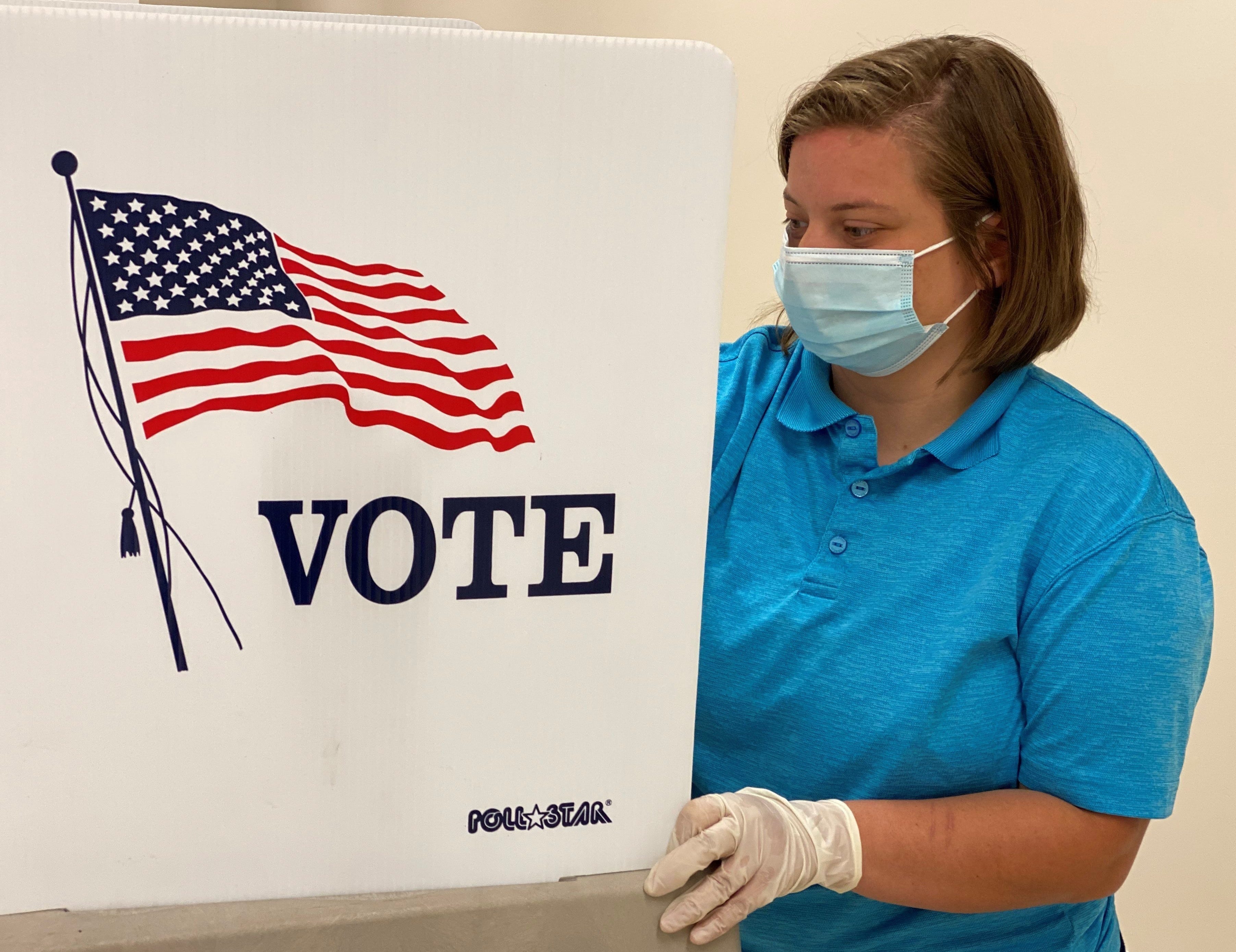
Kentucky’s fiscal year 2026 State Homeland Security Program allocation is $4,362,750. Under a revised federal grant notice, the Department of Homeland Security will withhold 20 percent of Kentucky’s total Homeland Security Grant Program award until federal officials verify compliance with five election-administration requirements.
Twenty percent of Kentucky’s listed State Homeland Security Program allocation equals $872,550. The money would ordinarily support state and local preparedness projects involving emergency communications, cybersecurity, law enforcement, public schools, equipment, training, and protection against terrorist attacks and catastrophic events.
On July 23, Governor Andy Beshear’s office joined a coalition of 24 attorneys general and two governors in suing DHS and the Federal Emergency Management Agency. The complaint asks a federal court in Rhode Island to block the election conditions, immigration-related conditions, and new provisions allowing FEMA to terminate grants based on changing agency priorities or a determination that an award no longer advances the national interest.
The lawsuit does not pause the requirements by itself. Kentucky and its local governments must continue planning under the federal notice unless the court enters an injunction, FEMA changes the conditions, or Kentucky declines the award.
DHS Attached Election Rules to a Preparedness Grant
FEMA posted the fiscal year 2026 Homeland Security Grant Program notice on June 24 and revised it on July 9. DHS publicly announced the election requirements on July 10.
The grant notice establishes three separate financial requirements.
First, Kentucky must devote at least 3 percent of applicable State Homeland Security Program funding to election security. Based on the allocation listed in the lawsuit, that equals approximately $130,883.
Second, at least 10 percent must support what DHS calls “Supporting Border Crisis Response and Enforcement.” For Kentucky’s listed state allocation, that equals $436,275.
Third, FEMA will withhold 20 percent of the total Homeland Security Grant Program award until DHS confirms compliance with five election requirements. Meeting the 3 percent election-security spending minimum does not release the separate 20 percent holdback.
The conditions require states to:
Submit a plan to replace voting equipment that counts a voter’s selections from a barcode or QR code with equipment that accepts hand-marked paper ballots.
Conduct a manual audit of at least 5 percent of ballots after each federal election.
Reconcile the number of voters recorded as participating with the number of ballots cast under a method established by DHS.
Use the federal SAVE database to check the citizenship status of everyone in the statewide voter-registration database within 120 days of accepting the grant.
Verify the citizenship of people working at polling places or operating election equipment, including temporary workers and vendor personnel.
FEMA anticipates making awards by September 30. The 120-day period for voter-roll checks begins when a state accepts its award, rather than when the grant notice was published.
President Donald Trump had already directed DHS to use Homeland Security Grant Program funding to advance his administration’s election policies. Executive Order 14248, signed March 25, 2025, called for paper-based voting records, federal citizenship verification, election-data sharing, and stronger federal influence over election-related grants.
A federal judge blocked several provisions of that executive order on June 24, 2026. The new FEMA notice uses the Homeland Security Grant Program as a separate administrative route, creating a new dispute over whether DHS may attach these requirements to money Congress appropriated for homeland-security preparedness.
Cities, Counties, and Schools Apply Through Frankfort
The Kentucky Office of Homeland Security, led by Executive Director Amy Hess, administers the federal grant in Kentucky. Its Grants and Finance team distributes federal DHS funding and monitors whether recipients comply with federal and state requirements.
Kentucky is currently collecting local applications for both fiscal year 2025 and fiscal year 2026. The state combined the two cycles because of unresolved funding holds affecting the 2025 program.
Applications are due to the Kentucky Office of Homeland Security by 11:59 p.m. on July 31. The state will review the proposals and decide which grant year best fits each project’s schedule, budget, and priority classification.
Eligible applicants include:
City and county governments
Area development districts
Local taxing districts
Public school districts
Each application requires an authorizing official, such as a mayor, county judge-executive, commissioner, or school superintendent. Applicants must also submit a city, county, or district resolution, proof of federal registration, and at least one vendor quote.
Kentucky requires each applicant to choose one priority. The choices include election security, cybersecurity, emergency communications, protection of public locations, and border response and enforcement.
Under the immigration category, Kentucky lists projects involving 287(g) training, ICE information-sharing platforms, screening and detection technology, dedicated communications with ICE field offices, and joint training exercises between ICE and local law enforcement.
The grant does not require every sheriff or county to sign a 287(g) agreement, but it creates federal money for projects that expand local cooperation with ICE.
Kentucky’s election-security category lists physical protection for election sites, cybersecurity work, poll-worker training, chain-of-custody procedures, data encryption, multifactor authentication, and other projects aligned with federal directives. Local election projects may therefore satisfy legitimate security needs while also helping Kentucky meet federal spending conditions.
These are reimbursement grants. A city, county, school district, or taxing district may have to purchase equipment, execute a contract, or incur other eligible costs before receiving payment. A delay in federal drawdown authority can affect local cash flow and project timing even when the underlying project has already been approved.
Kentucky Says FEMA Exceeded Its Authority
The July 23 complaint names FEMA, DHS, DHS Secretary Markwayne Mullin, and Robert J. Fenton, the senior official performing the duties of FEMA administrator.
Kentucky participates through the Office of the Governor rather than Attorney General Russell Coleman’s office. The complaint lists attorneys from Governor Beshear’s Office of General Counsel as Kentucky’s counsel.
The states argue that Congress authorized the Homeland Security Grant Program to help state and local governments prepare for terrorism and other serious threats. They contend that Congress did not authorize FEMA or DHS to rewrite state election rules, require state participation in civil immigration enforcement, or terminate awards according to undefined future priorities.
Those claims have not yet been decided in this case. The complaint represents the states’ legal position, and DHS will have an opportunity to defend the requirements.
The states are asking the court for declaratory and injunctive relief. An injunction could prevent FEMA from enforcing some or all of the challenged terms while the litigation continues.
The timing is significant. FEMA listed July 24 as the federal application deadline, Kentucky’s local application period closes July 31, and federal awards are expected by September 30. State and local governments are making grant decisions before the court has ruled on the new lawsuit.
DOJ Also Tried to Obtain Kentucky’s Full Voter File
The grant dispute developed alongside a separate federal effort to obtain Kentucky’s voter-registration database.
On February 26, the Justice Department sued Secretary of State Michael Adams and members of the Kentucky State Board of Elections. DOJ sought Kentucky’s complete computerized voter file, including each registered voter’s full name, date of birth, residential address, driver’s-license number, the last four digits of a Social Security number, or another federal voter identifier.
Kentucky election officials had refused the request after asking how DOJ would protect the information under federal privacy laws. The State Board also declined to sign a proposed information-sharing agreement provided by DOJ.
On July 23, the U.S. District Court for the Eastern District of Kentucky dismissed the lawsuit with prejudice and denied DOJ’s request for an order compelling disclosure.
The court followed a recent Sixth Circuit ruling that the section of the Civil Rights Act cited by DOJ does not cover a statewide voter file created and maintained by state election officials. The court also found that DOJ’s letters did not satisfy the statute’s requirement to state both the legal basis and the purpose of the demand.
The dismissal currently prevents DOJ from compelling the database through that case. DOJ may appeal, and the federal government is seeking further review of the Sixth Circuit precedent that controlled the Kentucky ruling.
The grant case and the voter-data case are legally separate. Taken together, they give the federal executive branch two routes for influencing state election administration: controlling access to federal money and seeking direct access to state voter records.
Kentucky has already enacted its own citizenship-check law
Kentucky lawmakers created a state process for comparing the voter roll with federal citizenship records during the 2026 legislative session. The new law, KRS 116.116, takes effect January 1, 2028.
The statute authorizes the Kentucky State Board of Elections to sign a written agreement with a federal agency. It limits the information Kentucky may provide to a voter’s name, date of birth, and last four Social Security digits when available.
The state law prohibits the transfer of residential addresses, mailing addresses, driver’s-license numbers, voting history, and political-party affiliation through that agreement. It also establishes notices and procedures for people identified as possible noncitizens to prove their citizenship through a county clerk.
The federal grant timeline would require Kentucky to act much sooner. A grant accepted in fall 2026 could require statewide citizenship checks in early 2027, roughly a year before KRS 116.116 becomes effective.
The federal SAVE program is administered by U.S. Citizenship and Immigration Services within DHS. SAVE searches information held by the Social Security Administration, the State Department, DHS, and related federal databases.
USCIS describes the response as a point-in-time verification based on information available in those records. USCIS also directs participating agencies to give anyone who is not verified as a citizen an opportunity to provide evidence or correct federal records.
A SAVE response is a database result, not a final legal judgment that a registered voter is ineligible.
Kentucky has not publicly released a current SAVE agreement for bulk voter verification, a plan for handling inconclusive responses under the grant deadline, or an analysis comparing the federal requirement with KRS 116.116.
County Clerks, Fiscal Courts, and Local Applicants Carry the Burden
County clerks would perform much of the work
The Kentucky State Board of Elections maintains the statewide voter-registration database, but county clerks maintain local voter records and conduct elections in Kentucky’s 120 counties.
A statewide SAVE review could produce records requiring notices, document checks, corrections, hearings, or other follow-up. County clerks would likely become the first local office contacted by voters whose records were not immediately confirmed.
Kentucky uses more than 15,000 precinct election officers during statewide elections. The federal condition covering poll workers, temporary election staff, and voting-equipment personnel could create a large new verification task before the November 2026 election or later federal elections, depending on when DHS requires compliance.
Fiscal courts may face costs
County fiscal courts provide local election funding. They may have to pay for staff time, voter notices, secure document handling, training, legal review, audit work, or voting-equipment changes that federal funding does not fully cover.
The equipment requirement currently calls for a transition plan, rather than immediate statewide replacement. Kentucky still needs a county-by-county review to determine which certified machines fall within the federal barcode and QR-code restrictions and what replacement would cost.
Local preparedness projects could be delayed
Kentucky’s local governments could lose access to preparedness funding because of state election decisions they do not control.
A school district seeking security improvements, a fire department seeking communications equipment, or a county emergency-management office seeking cybersecurity support cannot decide how the State Board of Elections handles voter-roll verification. Those applicants could still experience delayed reimbursements if FEMA holds part of Kentucky’s award.
Immigration enforcement receives a financial incentive
The 10 percent border-response and enforcement requirement directs part of Kentucky’s homeland-security allocation toward immigration-related activity.
Local sheriffs, police departments, detention facilities, and county governments may seek funds for ICE communications, officer training, information sharing, screening equipment, or exercises. County judge-executives and fiscal courts may have to approve resolutions, purchases, contracts, or local operating costs connected with those projects.
The public will not know which Kentucky counties sought this money until the Kentucky Office of Homeland Security releases the applications or awards.
Registered voters face data and due-process questions
Kentucky voters have a direct interest in which information the State Board sends to DHS, how SAVE results are interpreted, how people are notified, and what evidence they must provide to correct a record.
Naturalized citizens may face particular risks when federal databases contain outdated, incomplete, or inconsistent information. USCIS guidance recognizes that an initial result may require additional verification and record correction.
The July 23 court ruling protected Kentucky’s unredacted voter file from the specific DOJ demand. It did not decide what data Kentucky may voluntarily provide under a SAVE agreement or what information the federal grant conditions may require.
What to watch and what you can do
Track the Rhode Island lawsuit
Watch for a motion for a preliminary injunction and any order entered before FEMA awards the grants. The case is Illinois et al. v. Federal Emergency Management Agency et al., filed July 23, 2026, in the U.S. District Court for the District of Rhode Island.
An injunction order should explain which requirements are blocked, which remain enforceable, and whether the decision applies to Kentucky.
Request Kentucky’s grant records
After the July 31 local deadline, ask the Kentucky Office of Homeland Security for:
Kentucky’s federal fiscal year 2026 HSGP application
All certifications and assurances submitted to FEMA
Correspondence with DHS, FEMA, ICE, USCIS, and the State Board of Elections
The list of local applicants, project descriptions, requested amounts, and selected priorities
Scoring sheets and award recommendations
Proposed ICE, 287(g), voter-security, cybersecurity, and communications projects
Vendor quotes and authorizing resolutions
Any estimate of money delayed by the federal holdback
These records will show how Kentucky translated federal priorities into local spending choices.
Watch State Board of Elections meetings
The Kentucky State Board of Elections normally meets on the third Tuesday of each month at 10 a.m. and streams meetings online. Ask whether the board has received a FEMA compliance request, drafted a SAVE agreement, or completed an equipment and audit review.
Specific accountability questions include:
Has Kentucky submitted or transferred any voter data to SAVE?
Which data fields would be transmitted?
What happens when SAVE does not verify someone immediately?
Will voters receive notice and an opportunity to correct federal records?
Which counties use equipment affected by the barcode or QR-code condition?
How much would replacement or modification cost?
Does Kentucky’s current post-election audit meet the federal 5 percent requirement?
Who will verify more than 15,000 election officers and vendor employees?
Ask local governments what they applied for
Contact the county judge-executive, mayor, school superintendent, or fiscal court clerk and request the local application and authorizing resolution.
Ask which priority the applicant selected, what equipment or services it requested, which vendor supplied the quote, and whether the project creates future local costs after the federal grant expires.
Track any DOJ appeal
The July 23 dismissal protects Kentucky voter data under the current district-court order. Watch for a notice of appeal, further Sixth Circuit proceedings, or a revised federal demand citing a different legal authority.
Check your voter registration through the official state portal
Kentuckians can confirm their registration through the State Board of Elections website before the October 5 registration deadline for the November 3 general election. A federal grant dispute does not change the current registration deadline or eliminate existing state and federal voter protections.
Further reading and primary sources
FEMA fiscal year 2026 Homeland Security Grant Program notice
https://www.fema.gov/sites/default/files/documents/fema_gpd_hsgp-nofo-fy2026_0.pdf
DHS announcement of the election-security grant conditions
https://www.dhs.gov/news/2026/07/10/dhs-requires-states-adopt-common-sense-election-security-measures-receiving-federal
Kentucky Office of Homeland Security grant page
https://homelandsecurity.ky.gov/Pages/Grants.aspx
Kentucky 2025 and 2026 SHSGP application guidance
https://homelandsecurity.ky.gov/Grants/FY%2025_26%20SHSP%20Application%20GuidanceFnl.pdf
Multistate complaint against FEMA and DHS
https://riag.ri.gov/media/8971/download
Rhode Island Attorney General case page
https://riag.ri.gov/federal-action-response/our-cases/emergency-services-conditional-funding
Executive Order 14248, Preserving and Protecting the Integrity of American Elections
https://www.whitehouse.gov/presidential-actions/2025/03/preserving-and-protecting-the-integrity-of-american-elections/
Federal court order concerning Executive Order 14248
https://www.mass.gov/doc/elections-eo-summary-judgement/download
DOJ complaint seeking Kentucky’s voter-registration database
https://www.justice.gov/crt/media/1429061/dl
July 23 order dismissing the DOJ voter-data lawsuit
https://www.aclu-ky.org/app/uploads/2026/03/066-KY-MTD-Order.pdf
Kentucky Revised Statute 116.116
https://apps.legislature.ky.gov/law/statutes/statute.aspx?id=58335
USCIS SAVE voter-registration guidance
https://www.uscis.gov/save/current-user-agencies/guidance/voter-registration-and-voter-list-maintenance-fact-sheet
Kentucky State Board of Elections
https://elect.ky.gov/About-Us/Pages/State-Board-of-Elections.aspx