
The song has been following me this week. Not the versions arranged for concerts or political rallies, but the rough, insistent question at its center. Which side are you on? It drifts through my thoughts like something trying to tap me on the shoulder, refusing to let the moment pass without naming it.
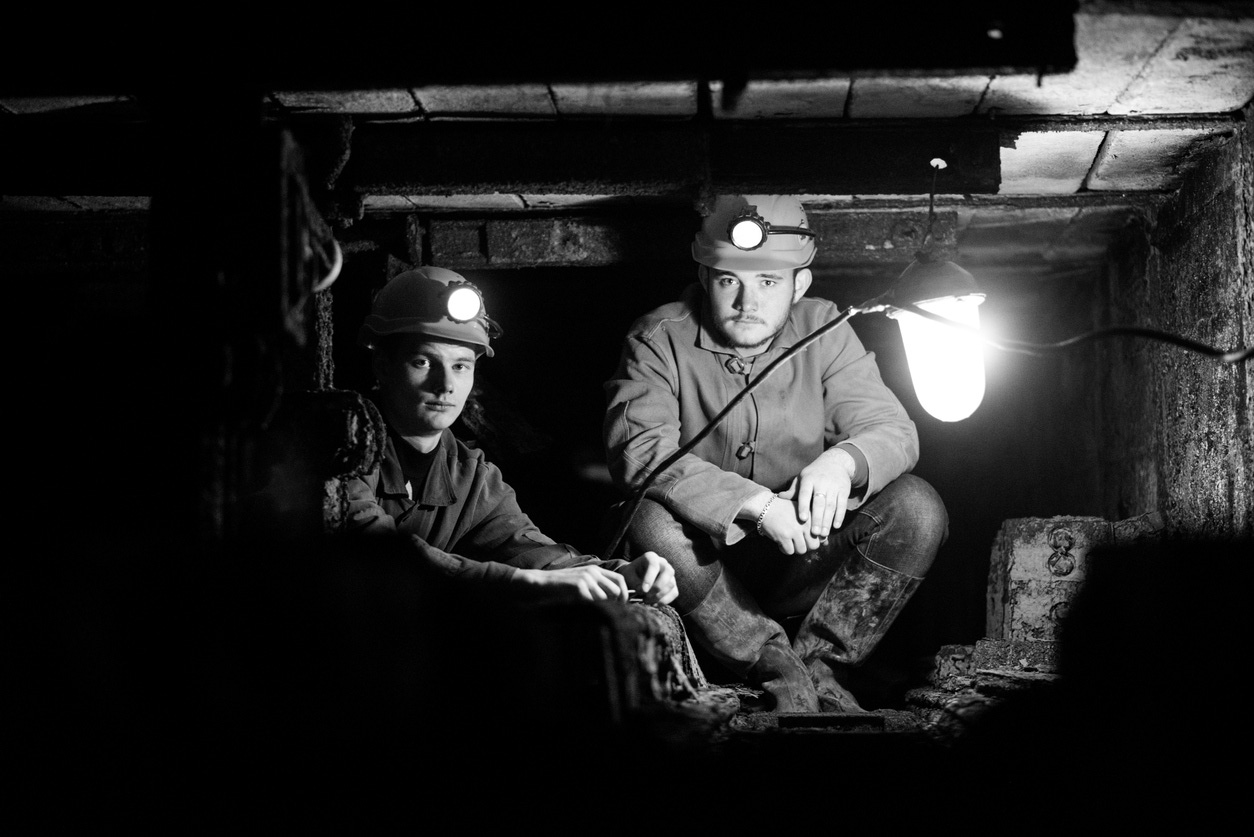
The question was born in Harlan County during a season when power tried to crush working families. It came from a Kentucky woman who understood that neutrality is something the powerful ask from the people they hope will stay quiet. Her name was Florence Reece.
And her story carries a weight that feels familiar again.
The Night the Deputies Came
Reece wrote her song in 1931 after deputies loyal to Sheriff J. H. Blair tore through her home searching for her husband, a union organizer. Blair was the company’s sheriff, not the people’s. His deputies enforced coal-operator control with threats, raids, and rifles. They punched holes in the Reece family’s walls, tore through their furniture, terrified her children, and walked out the door without consequence.
Florence Reece sat at her kitchen table after the chaos quieted, tore a sheet off the family calendar, and started to write.
They say in Harlan County
There are no neutrals there.
You’ll either be a union man
Or a thug for J. H. Blair.
If you’ve never heard Florence Reece sing it herself, it’s worth taking a moment. Her voice carries the truth of the moment she lived through far better than any description can. Double click on the video below.
She didn’t write the song to start a movement. She wrote it because the moment demanded clarity. She had lived under the weight of power before—as a coal miner’s daughter during her father’s strike, and now as a miner’s wife watching a new generation of workers fight the same system. The question she wrote down was not a metaphor. It was the truth of her life.
And the truth of Kentucky’s history.
The Kentucky Thread
We talk about Kentucky as if resistance is something imported from somewhere else, but time and again, ordinary Kentuckians have stood up to injustice when it mattered. Miners in the mountains. Teachers in Frankfort. Civil rights leaders in Louisville. Families fighting for clean water in Martin and Pike counties. Parents defending their children in districts across the state. Workers organizing for safety in warehouses and factories.
These were not abstract causes. They were choices. And each choice asked the same thing Florence asked: Which side are you on?
That is the part of our history that gets buried when people tell the story of Kentucky as a place that “stays out of things.” Our communities have never stayed out of things when the pressure closes in. The record shows the opposite.
And the pressure is closing in again.
The Present Tense of the Question
What gives Florence Reece’s question its force today is not nostalgia. It is recognition. Kentucky is living through a moment when the same old dynamics—power concentrated in a few hands, fear used as a tool of control, communities pressured into silence—are reshaping daily life. But instead of company towns and coal sheriffs, the pressure now arrives through laws, school policies, surveillance, intimidation, and coordinated campaigns to control what people know, say, and believe.
Here are the realities Kentuckians are facing right now:
The push to censor classrooms
Teachers face pressure for teaching accurate history or acknowledging LGBTQ+ students. Entire topics are being restricted not because they harm children, but because they challenge political agendas. Educators have told me they now keep two versions of lesson plans: the one they want to teach and the one they may need to defend.
LifeWise and the fight over public schools
Outside religious programs are entering districts with the intent to shape children’s beliefs under the banner of “parental choice.” Families who opt out fear that their kids will be isolated or targeted. Teachers worry about lost instructional time and the erosion of the mission of public schools. The question is not whether a single program is harmless, but whether Kentucky is willing to let outside groups reshape public education without community consent.
ICE partnerships and local fear
Across Kentucky, proposals are emerging that would require local police to partner with ICE—turning routine encounters into immigration enforcement. Immigrant families already live with fear. Children already go to school wondering if a parent will be home when they return. When lawmakers push for laws that turn neighbors into suspects, the question isn’t abstract. It’s immediate.
The surveillance of students
Districts are adopting monitoring systems that track students’ online activity, messages, searches, and reading. These systems claim to protect children, but they often flag LGBTQ+ content, mental health queries, or anything that looks like dissent. When a child’s private thoughts become data points for scrutiny, silence becomes survival.
Attacks on trans kids
Trans students face public targeting, restrictions on healthcare, and classroom limitations designed to strip them of dignity. These are children trying to learn, play music, join teams, and grow up in peace. The pressure placed on them—by adults who have never met them—is immense. Their safety rests on whether their communities see them.
Privatization disguised as “choice”
Vouchers, ESAs, and charter expansions are promoted as freedom, but the effect is predictable: public dollars leave public schools. Rural districts—already stretched thin—feel the brunt. These policies are not neutral. They force a choice: invest in the shared system that serves every child, or funnel resources to schools that can choose whom to serve.
Local political intimidation
School board members are threatened. Librarians are harassed. Ordinary volunteers are targeted for speaking up. Kentucky towns that once prided themselves on neighborliness now witness campaigns of pressure that hinge on fear and outrage rather than problem-solving.
Church–state entanglements
Some churches are leveraging political networks, funding, and national groups to pressure school boards, libraries, and county governments. The goal is not spiritual care. It is political control. When faith becomes a tool of intimidation, communities face a choice: protect the constitutional line or let it erode.
These are not distant issues. They’re happening in Oldham County, Bullitt County, Shelby County, Pike County, Madison County, Jefferson County, and every corner of the state.
And each one presents the same crossroads Florence Reece faced in her own way.
Not with gun thugs pounding on doors, but with policies designed to silence, shame, divide, or intimidate.
Not with company stores, but with systems that leave families financially trapped.
Not with a sheriff enforcing corporate power, but with officials using public authority to enforce ideological agendas.
The form has changed. The pressure has not.
Why Florence Reece Speaks to Now
What makes the song so persistent this week is not the history itself, but what it asks of the present: clarity.
Reece didn’t ask for heroism. She asked for honesty. She knew the miners fighting for fair wages had everything to lose. She knew the families intimidated by Blair’s deputies wanted peace. But she also knew that neutrality was being used as a weapon. The coal companies wanted their victims to believe that staying silent was the safest path.
That is what makes her question so dangerous to those in power. It forces a reckoning.
Which side are you on?
Are you on the side that wants public schools to remain places where every child belongs?
Or the side that treats children as ideological battlegrounds?Are you on the side that wants immigrant families to feel safe calling police when they need help?
Or the side that turns every traffic stop into a threat?Are you on the side that believes teachers deserve trust and autonomy?
Or the side that polices their words and punishes their honesty?Are you on the side that protects trans kids?
Or the side that chooses cruelty toward the most vulnerable?Are you on the side that believes democracy requires debate, accountability, and transparency?
Or the side that pressures officials into silence and hides decisions from the public?
These questions aren’t abstract. People feel their impact every day.
The Cost of Silence
One of the most telling things about Florence Reece’s moment is that the coal companies didn’t need every miner to be loyal. They didn’t need every family to support the company. They just needed enough silence to keep the system running.
Authoritarianism works the same way. It thrives on quiet neighborhoods, discouraged teachers, fearful parents, exhausted workers, and communities convinced that the safest thing to do is nothing.
Florence understood that silence is a choice. She had lived under its cost. And she knew that refusing to choose—at least in a crisis—is choosing the side that already holds power.
That clarity is what the present moment requires.
The Old Courage We Still Carry
Kentucky does not lack courage. We never have. The courage that lived in Florence Reece still lives here. It shows up in ordinary places:
A teacher who explains the truth because students deserve it.
A parent who goes to a school board meeting even when their voice shakes.
A neighbor who defends a child being targeted, even when the community is tense.
A librarian who keeps books on the shelves because kids need them.
A volunteer who speaks out when local officials sidestep the public.
A teenager who refuses to hide who they are.
A worker who stands up for safety on the job.
A pastor who says faith is not a weapon.
These are the same choices Kentucky families made in earlier generations. Different stakes. Different systems. But the same clarity.
The Song for This Moment
Florence Reece wrote a question that echoes into every era when power tries to close in. It is not a question about party or politics. It is a question about conscience. It is a question about who we see, who we protect, and what we tolerate.
The song has been haunting me because it refuses to let us pretend we are not living through a choice. Kentucky is in another moment when silence is being sold as safety and neutrality is being marketed as wisdom. But what we face—book bans, classroom censorship, fear-based policing, school privatization, political intimidation—demands more honesty than that.
We can disagree about policy. We can argue about strategy. But when the dignity, safety, and humanity of whole groups of people are being targeted, the question is not complicated.
Which side are you on?
Florence Reece asked it with deputies’ bootprints still drying on her floor. She asked it because she understood that courage begins long before the moment of action. It begins with clarity.
And that clarity asks something of us again today.
Which side are you on?