
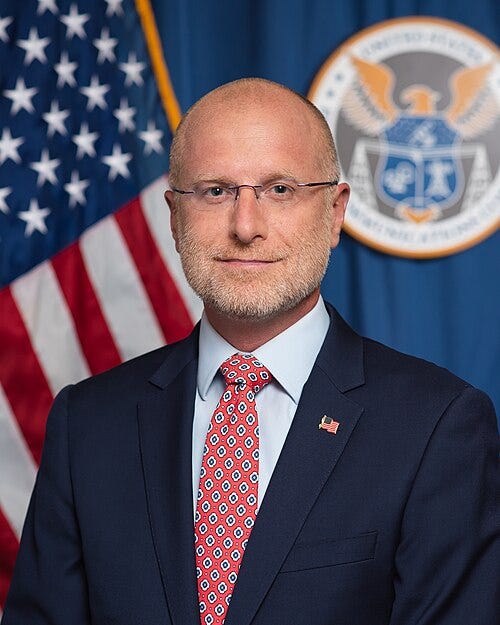
FCC Chairman Brendan Carr said on Wednesday, October 21, that broadcasters could run afoul of federal laws by airing so-called “fake” or “suppression” polls.
Carr claims these polls are designed to suppress voting by influencing whether a viewer decides to turn out.
He reminded broadcasters that their FCC licenses prohibit distorting the news or broadcasting hoaxes.
Again, Carr didn’t name any polls that break the law.
That matters because the FCC is not like other government agencies that bemoan negative media coverage.
The FCC regulates media and broadcasting. The power Carr is alluding to is not the power to publish a critical report, but the power to determine whether a broadcasting entity continues to operate.
There really was a fake polling scandal
Carr’s warning appeared right after public disclosure of election polling problems.
One of the biggest problems was Wedgewood’s admission that nearly all the polls it published during the elections were fake. Some of the fake poll results appeared in well-known polling-aggregate services, including one published by the NYT.
According to Wedgewood, the fake surveys were part of an experiment to show how polling firms and news outlets that cover polls verify and check research.
It showed major problems with the verification process. Often, news outlets publish and cover surveys done by a polling firm.
However, the news outlets don’t really verify the polls. News outlets have a responsibility to investigate polling that raises concerns.
This is especially important when the public will use the polling results to make informed decisions in elections.
Falsified polling does not mean the government can control or regulate how the press publishes election surveys.
Reporting a poll that later proves inaccurate is not the same as deliberately publishing false information.
What the FCC rules actually say
The FCC prohibits intentional falsification of news on broadcast.
However, it can enforce its news-distortion policy only if it has clear evidence that the broadcaster’s management intended to deceive. News reports can be inaccurate for various reasons.
These include inadequate research and reports being contradicted by subsequent events.
The FCC has been reluctant to investigate intentional news distortion by a broadcaster based on a complaint from an individual or group.
The broadcast-hoax rule states that intentionally reporting known false information about crime or other events that the broadcaster reports will harm the public is actionable by the FCC. In determining whether a broadcast report creates a risk of public harm, the rule mentions several potential public safety issues, including public disorder and emotional distress.
Reporting election polls is not actionable under this rule.
The government does not have the right to determine what news stories should be reported. It is unclear whether Brendan Carr distinguished between a broadcaster reporting news and fabricating it.
Carr did not think it was an issue for a broadcaster to explain and give context to polling data.
Context is important, and reports should be clear, thorough, and comprehensible.
It remains to be seen what effect the chairman’s expressions of preference will have.
One commissioner has challenged the warning
FCC Commissioner Anna Gomez released a statement on Wednesday.
Gomez believes pollsters should be held accountable for lying to the public. However, she doesn't believe broadcasters should be held accountable for reporting those results.
According to Gomez, the FCC's rules on distortion and hoaxes in news reporting don’t apply here.
Her concerns carry weight because a commissioner at the FCC expressed them.
However, Gomez’s statement has limits.
Other commissioners are not bound by her concerns, and her statement does not alter or revoke Carr's warning.
As of October 22, Carr's warning has not led the FCC to formally charge any broadcaster for reporting polling results. Additionally, the FCC has not amended its rules to make reporting polling results a violation.
On Wednesday, broadcasters reported polling results without altering their election coverage.
Because Carr has indicated he plans to enforce the rules this way, broadcasters should take his warning seriously.
This year, Carr reviewed and examined eight of Disney/ABC's television broadcasting licenses.
Disney/ABC has filed a lawsuit against the FCC, arguing that the reviews violate its First Amendment rights. The review and Warner's consideration demonstrate the FCC is willing to revoke broadcasting licenses to impose its will on broadcasters.
Kentucky has a role in overseeing the FCC
While this is a nationwide issue, Kentucky is connected to the oversight process.
Brett Guthrie is a Republican Representative from Kentucky and the Chair of the House Energy and Commerce Committee.
Guthrie’s committee has jurisdiction over the FCC.
In January, his committee held a hearing to examine Carr and the other FCC Commissioners. Guthrie’s committee can review whether the FCC is properly applying its rules to protect First Amendment rights.
It’s unclear whether Guthrie has taken any steps to seek more information. His committee can examine these issues, but that doesn’t mean he will.
As of October 22, Guthrie’s committee has not announced plans to review Wednesday’s statement from Carr.
Kentucky citizens have the right to hold Guthrie’s committee accountable and seek answers about Carr’s statement.
Guthrie should ensure his committee asks Carr to define what actions would violate the FCC rules and regulations.
The committee’s number is (202) 225-3641.
Most people seem to agree the FCC can take no action on intentional fabrication of the news. However, it is unclear whether Carr is also referring to routine reporting on controversial polls.
The two situations clearly differ.
As of October 22, the FCC has issued no formal guidance explaining how Carr’s warning would apply to broadcasters reporting election polls in good faith. Commissioner Anna Gomez has publicly challenged his interpretation, but Carr has not withdrawn his warning.
For now, no enforcement action resulting from Wednesday’s warning has been publicly identified. The FCC’s longstanding policies limit its authority to interfere with journalists’ editorial decisions, and the First Amendment provides additional protections.
The question is whether Carr will attempt to use the agency’s enforcement or licensing powers against a broadcaster over its election reporting. If he does, the broadcaster could challenge the action in court.
Until then, the warning remains, along with the possibility that some broadcasters will change their reporting to avoid attracting the chairman’s attention.