
How Authoritarianism Works Now, Part 3
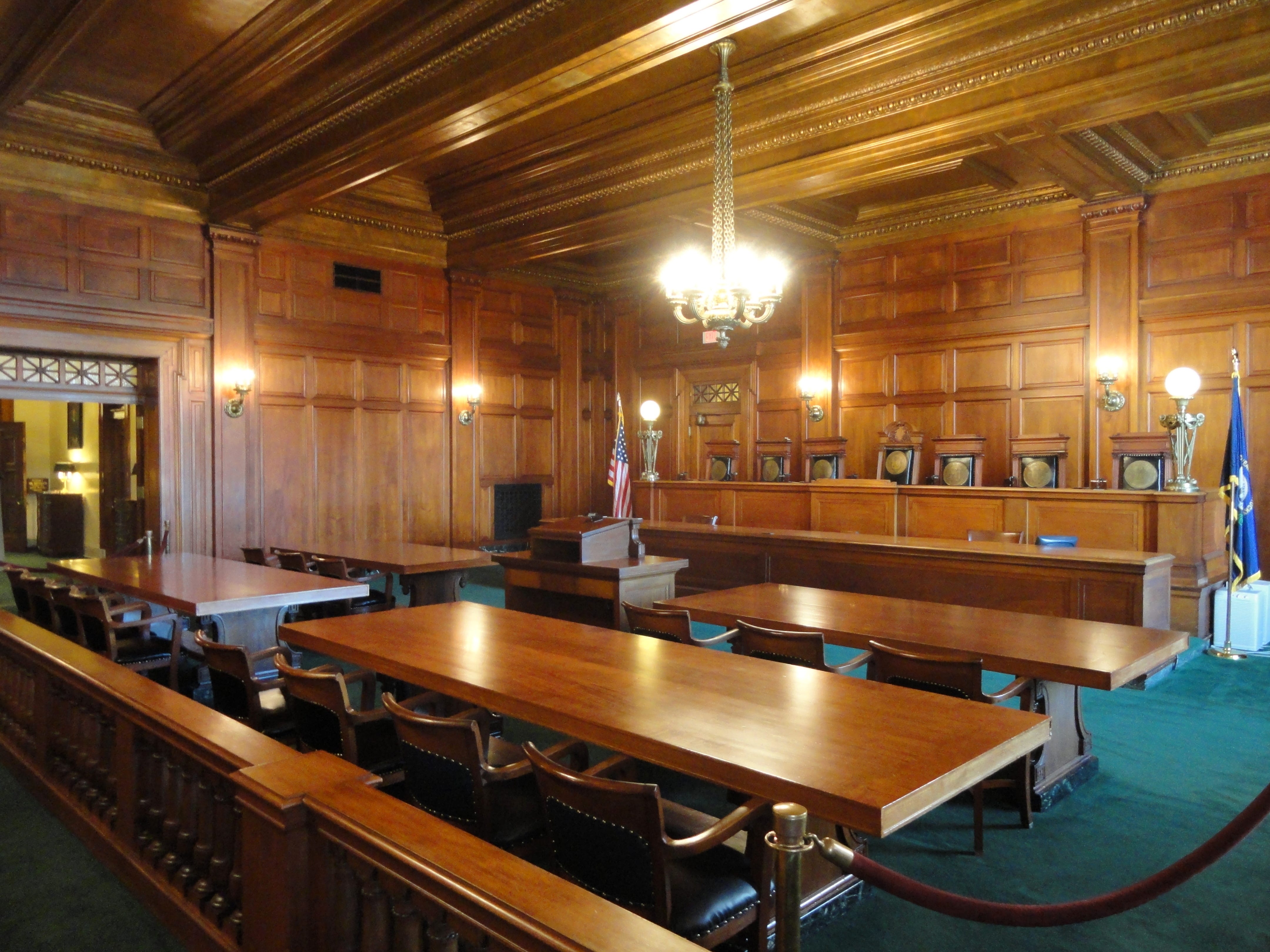
In 2025, the Kentucky General Assembly amended the Open Records Act to govern law-enforcement investigative records.
House Bill 520 amended KRS 61.878. The bill says law-enforcement records may be withheld when disclosure could pose an articulable risk of harm to an agency or investigation by revealing the identity of informants or witnesses not otherwise known.
That sentence sounds like ordinary legal language. It names a statute, an exemption, a risk standard, and a public-safety concern. It also gives Kentucky residents a clear starting point for understanding legalism without the rule of law.
The democratic issue is not whether every investigative record should be public at once. Some records need protection while a real investigation is active. The issue is what happens when the law gives a public agency more discretion over what the public may inspect regarding that agency’s own conduct.
That is the core of weaponized law.
Law is supposed to do more than give public offices authority. It is also supposed to limit that authority. A lawful process should require reasons, protect rights, allow challenge, and leave records that residents can inspect.
Legalism without the rule of law weakens that second function. The public may see a bill number, a court ruling, a subpoena, an attorney general letter, a contract, or an agency rule. Those documents may come from real offices using real authority. The harder question is whether the legal tool still works as a restraint on public authority.
That is the test for weaponized law.
When a public office uses a legal tool, ask what changes for the person or institution on the receiving end. Who has to hire a lawyer, stop speaking, wait for permission, produce records, prove eligibility, delay action, or appeal a denial? Who gains discretion? Who loses it? Who benefits while the review takes months or years?
Those questions help separate law from legal weaponry.
Law restrains public authority. Weaponized law shifts the costs, risks, delays, and discretion onto the people expected to obey it.
That test guides this part of the series. The sections below examine seven patterns: punish opponents, protect allies, chill behavior, control public institutions, displace rights, centralize authority, and blur responsibility.
The Kentucky examples in view
Kentucky and federal officials have used several legal tools in recent years that show how legal form can shift public authority.
The Kentucky General Assembly passed House Bill 520 in 2025. The law changed the Open Records Act exemption for law-enforcement investigative records and gave agencies broader authority to withhold certain records from public inspection.
Attorney General Russell Coleman issued an advisory on Aug. 13, 2024, warning Kentucky public school districts that public resources may not be used to advocate for or against ballot questions, including Amendment 2. Kentucky Lantern later reported that Coleman’s office sent a cease-and-desist notice to Augusta Independent Schools after the district posted opposition to Amendment 2.
The General Assembly passed House Bill 6 in 2025. The law limited how executive branch agencies may file or amend administrative regulations. Gov. Andy Beshear sued to block it, arguing that the General Assembly interfered with executive branch duties.
The Kentucky Supreme Court ruled in 2023 that abortion providers lacked third-party standing to challenge Kentucky abortion bans on behalf of their patients. The court allowed some provider claims to continue, but the standing ruling limited who could bring certain constitutional claims.
The General Assembly passed House Bill 10 in 2026. The law changed executive branch operations, including provisions involving settlements, noncompetitive contracts, transition records, and cabinet appointments. Beshear sued in the Franklin Circuit Court to block it.
The General Assembly also passed House Bill 58 in 2026, creating statewide rules for automated license plate readers. The law responded to the expanding use of camera networks by local police departments and private vendors such as Flock Safety.
At the federal level, U.S. Rep. James Comer of Kentucky has used House Oversight Committee subpoena authority in investigations involving the Sixteen Thirty Fund and ActBlue. Those examples show how legal demands can burden political organizations before any final finding of wrongdoing.
These actions are not identical. A police-records statute, an attorney general warning, an agency regulation law, a court standing rule, an executive branch law, a surveillance statute, and a congressional subpoena raise different legal questions. Their shared civic value is that each reveals a way in which law can shift the burden, discretion, cost, delay, or visibility.
How weaponized law works
Weaponized law does not require every statute, subpoena, investigation, or court ruling to be abusive. A democracy needs criminal law, civil law, agency rules, open records exemptions, investigations, court procedures, contracts, and enforcement authority.
The problem begins when legal tools stop functioning mainly as limits on public authority.
A subpoena can seek evidence for a legitimate legislative purpose. It can also drain a disfavored political organization of time, money, and reputation. An open records exemption can protect a witness. It can also make it harder for police to conduct inspections. A legal advisory can clarify election law. It can also make a school district stop communicating before a judge decides whether the communication was unlawful.
The same pattern appears when a regulatory law blocks an agency from carrying out its duties, when a standing rule keeps affected people from using constitutional claims in time, when an emergency law shifts authority before courts can review it, or when a data-sharing arrangement makes responsibility too diffuse for residents to trace.
A subpoena is legitimate when it seeks facts for public oversight. It becomes dangerous when the investigation itself imposes the penalty. An open-records exemption is legitimate when it protects a witness or an active case. It becomes dangerous when it gives a police agency more room to hide its own conduct.
Punish opponents
Law can punish before anyone proves wrongdoing.
Investigations, lawsuits, subpoenas, prosecutions, audits, ethics complaints, and disciplinary actions can all impose costs upfront. The target may need a lawyer, staff time, document review, public statements, reputation repair, and money. Those burdens can change behavior before a court, committee, agency, or board reaches a final decision.
Here’s a direct Kentucky connection: Comer is a Kentucky congressman using federal committee authority to subpoena political organizations and individuals. On May 14, 2026, the House Oversight Committee announced that Comer had subpoenaed the Sixteen Thirty Fund for documents related to the Chorus influencer program. The committee framed the inquiry around campaign-finance disclosure, media ethics, the Federal Election Commission, and the Department of Justice.
House committees have legitimate oversight authority. Congress can investigate campaign-finance loopholes, misuse of public authority, fraud, corruption, and failures by federal agencies. A subpoena can serve the public when it has a clear legislative purpose and is applied even-handedly.
The warning sign appears when investigative authority falls heavily on disfavored political actors while comparable allies receive lighter scrutiny. In that setting, the subpoena is part of the punishment, forcing the target to spend money, produce records, operate under suspicion, and wait for the committee to decide on the next step.
The same concern applies to the House investigations involving ActBlue. House Administration reported in September 2025 that Comer, House Administration Chair Bryan Steil, and Judiciary Chair Jim Jordan issued subpoenas to one current and two former ActBlue employees to appear for depositions. Politico reported that ActBlue criticized the probe as politically motivated, while Republican committee chairs described the investigation as necessary to examine donor fraud and campaign-finance issues.
The point is not to decide every subpoena fight. The point is to see what the subpoena does before anyone reaches a final finding.
The rule of law investigates wrongdoing under fair standards. Weaponized law makes the investigation itself a penalty.
Accountability questions for this pattern are direct: Who is being subpoenaed? What documents are demanded? What legislative purpose is stated? Are comparable organizations treated the same way? Who pays the legal costs before any finding is made?
Protect allies
Weaponized law can also shield favored actors from inspection.
Protection can come through immunity, secrecy, delayed accountability, narrowed oversight, selective non-enforcement, or legal defenses written for agencies, contractors, officials, or aligned actors. The public sees less, waits longer, or faces a harder path to review.
HB 520 is a Kentucky example. The bill amended the Open Records Act by changing how law-enforcement agencies may withhold investigative records. The official bill record states that the exemption applies when disclosure could pose an articulable risk of harm by revealing the identities of informants or witnesses not otherwise known.
The Kentucky Supreme Court had ruled in 2024 in Shively Police Department v. Courier Journal that the Shively Police Department failed to provide a concrete risk of harm when it withheld records related to a fatal police chase. The court said a pending criminal case alone was not enough to justify withholding records under the law-enforcement exemption.
HB 520 followed that ruling. Louisville Public Media reported that open-government advocates warned the bill would give police agencies more power to conceal records. The concern focused on the shift from a stronger harm showing to broader language about the risks of disclosure.
Police agencies do need some ability to protect witnesses, informants, victims, suspects, and evidence. Immediate release of every investigative file could harm real investigations and real people.
The civic concern is who controls the explanation. A police agency holds the records, knows the facts, and writes the first denial. A resident, journalist, attorney, family member, or watchdog then has to appeal, sue, wait, or give up.
That is how law can protect a public actor. It does not erase the Open Records Act. It makes the route to inspection more difficult when residents ask the agency whose conduct may be at issue for records.
Kentuckians can ask which agency denied the records, what specific harm the agency identified, whether the agency connected that harm to the requested record, whether the investigation remains active, and when the records will be released.
Chill behavior
Law can silence without a court order.
A warning letter, a vague statute, a severe penalty, a public threat, or unclear guidance can make people stop speaking, teaching, reporting, organizing, or objecting. The target may have a legal right to challenge the warning. The risk of challenge may be enough to stop the speech.
Coleman’s Amendment 2 advisory shows this pattern in Kentucky.
On Aug. 13, 2024, Coleman warned public school districts that public resources may not be used to advocate for or against proposed constitutional amendments. The advisory cited Kentucky laws barring the use of public funds to advocate for or against ballot questions. It also said public school districts could provide factual information, but could not campaign.
That legal issue is legitimate. Public funds should not become campaign money. Kentucky voters deserve a clear line between public explanation and public-funded electioneering.
The chill comes from enforcement risk. Kentucky Lantern reported that Coleman’s office sent a cease-and-desist notice to Augusta Independent Schools after the district posted opposition to Amendment 2. A small public school district that has received a legal warning from the Kentucky Attorney General must decide whether it can afford to fight.
The warning may cause a district to delete a post, stop explaining fiscal effects, or avoid public communication even if some factual communication would be lawful. That is how legal threats work before a judge reviews a particular statement.
You can ask what communication was removed, who ordered the change, what statute was cited, whether the district received written legal advice, and whether factual public information was withheld because staff feared enforcement.
A legal warning can silence by making the cost of speaking feel too high.
Control public institutions
Law can control public institutions by changing the conditions under which they operate.
Funding conditions, compliance rules, licensing authority, curriculum rules, contract terms, administrative mandates, and board powers can all decide what a public office can safely do. The public office may retain its name and staff while legal conditions narrow its scope of judgment.
HB 6 shows how a law about administrative regulations can limit the agencies responsible for carrying out state programs.
The General Assembly passed HB 6 in 2025. The official bill record says the law relates to administrative regulations, limits administrative bodies’ authority to promulgate regulations, and took effect March 31, 2025, because of an emergency clause.
Administrative regulations are how Kentucky agencies carry out many statutes. Agencies use regulations for licensing, inspections, public benefits, environmental standards, consumer protections, professional rules, health programs, and program administration. A statute often needs a regulation before residents, businesses, or public employees know how it will operate.
Beshear sued to block HB 6. KET reported that the governor argued the law would prevent executive branch agencies from filing or amending administrative regulations and interfere with the implementation of other laws. Kentucky Lantern reported that the lawsuit challenged a law pushed by conservative Americans for Prosperity.
The General Assembly can set limits on agencies. Agency rulemaking should be subject to legal checks, public comment, legislative review, and judicial review. Regulations can burden people and businesses when they are vague, excessive, or unauthorized.
The warning sign appears when legal procedure prevents an agency from carrying out duties already assigned by law. Residents may experience this as a delayed licensing rule, stalled benefit guidance, unclear public health standards, or a public program waiting for permission to operate.
The power question is specific. Which agency needs to act? Which regulation is delayed or blocked? Which statute is the agency trying to implement? Who has approval authority? Who benefits if the agency cannot move?
Displace rights
Law can leave a right on paper while making the route to use it too narrow, slow, expensive, or risky.
Procedural barriers can do this work. Standing rules, eligibility limits, documentation burdens, delayed appeals, short deadlines, complicated forms, and narrow remedies can decide whether a person can use a right in time.
Kentucky’s abortion litigation after Dobbs gives a stark example.
In 2023, the Kentucky Supreme Court ruled in Cameron v. EMW Women’s Surgical Center that abortion providers lacked third-party standing to challenge Kentucky abortion bans on behalf of their patients. The court allowed some provider claims to continue on their own behalf, but the standing ruling blocked providers from asserting patients’ constitutional rights in that case.
Standing rules matter. Courts should not decide abstract disputes, and parties generally need a legal stake before they can sue. Those rules protect courts from becoming general political forums.
The displacement problem appears when the person allowed to sue is the person least able to carry the burden. A pregnant Kentuckian seeking time-sensitive medical care may lack the privacy, money, health, safety, or time needed to bring a constitutional lawsuit while the pregnancy continues. By the time a court reaches the claim, the medical situation may already have changed.
A right has less force when the person who needs it cannot get into court in time.
The claim may exist. The procedure for bringing it may render timely relief unrealistic for the affected person.
This pattern reaches beyond abortion. Any legal right can be weakened if the path to exercising it requires too much money, time, documentation, or personal exposure.
You can ask who has standing, who can appeal, which deadline applies, which records are required, how long the review takes, and whether the remedy can be implemented before the harm occurs.
Centralize authority
Law can centralize authority by shifting decisions away from local voters, public agencies, affected residents, or a single branch of government and placing them in fewer hands.
Preemption, emergency authority, executive discretion, approval requirements, appointment power, and removal of local control can all centralize decision-making. Statewide standards can be legitimate when they protect rights, prevent local abuse, or create consistent rules.
Centralization becomes dangerous when the legal change removes meaningful discretion from the people or offices closest to the decision and gives more authority to a smaller set of actors.
HB 10 shows how a law about executive branch operations can shift authority among the governor, attorney general, state treasurer, and Senate.
The General Assembly passed HB 10 during the 2026 Regular Session. The official bill record describes it as an act relating to executive branch operations and declaring an emergency. The law became Acts Chapter 178 after Beshear’s veto was overridden.
Beshear sued in the Franklin Circuit Court. Kentucky Lantern reported that the lawsuit names Coleman, State Treasurer Mark Metcalf, and the Senate clerk. The law includes provisions for the review of certain settlements before a gubernatorial inauguration, the certification of certain noncompetitive contracts, the preservation of transition records, and the cabinet appointment process.
The General Assembly can create checks on executive action. Kentucky governors should answer to constitutional limits, public records laws, budget controls, and judicial review. Settlements, contracts, appointments, and transitions all require guardrails.
The civic issue is who gains approval authority and when. If legal power over executive branch operations shifts to the attorney general, state treasurer, Senate, or new approval steps, the governor’s office and state agencies may have to pause or seek permission before acting.
That shift affects more than one governor. It can shape future transitions, state contracts, litigation settlements, cabinet operations, and agency decisions.
You can ask which office held the decision before HB 10, which office now has review or approval authority, whether the change applies across administrations, what action must pause, and how long review can take.
Centralized legal control can be described as oversight. The civic test is whether it creates fair restraint or transfers governing authority to fewer actors.
Blur responsibility
Law can make responsibility hard to trace.
Blurring happens through contractors, intergovernmental agreements, private enforcement, data-sharing arrangements, overlapping jurisdictions, and decisions divided among multiple offices. Each participant may point to another actor. The public must untangle contracts, statutes, vendor terms, policies, databases, and agency rules before anyone answers.
Automated license plate readers show how responsibility can become harder to trace when local police departments, private vendors, state law, and shared databases all play a role.
Lexington Police says its license plate readers are provided by Flock Safety and that the Lexington-Fayette Urban County Government currently has 125 readers throughout Fayette County. Louisville Public Media reported that Louisville Metro Police had nearly 190 cameras posted around the city, with about 100 more awaiting installation.
The cameras photograph passing vehicles, analyze the images, and store the information in databases used by law enforcement. Police departments describe the tool as useful for finding stolen vehicles, solving crimes, and locating missing or endangered people.
House Bill 58 responded to this expanding use. The official bill record addresses the use, retention, and disclosure of automated license plate reader data, toll collection, commercial vehicles, and restrictions. Louisville Public Media reported that the bill would limit data retention and restrict sharing, while allowing access by law enforcement and the National Insurance Crime Bureau under specified circumstances.
The accountability question is complicated because several actors are involved. A city or police department deploys the cameras. Flock Safety provides the equipment and database. Other law enforcement agencies may gain access through sharing. State law sets some rules. Private or quasi-private partners may be named in data provisions. Drivers may never know their plates were scanned or searched.
This does not make every license plate reader use abusive. Public safety investigations can require tools to identify vehicles connected to serious crimes.
The warning sign appears when responsibility becomes too scattered for residents to inspect. Drivers should be able to find out who owns the data, who can search it, who approved a search, how long information is kept, which outside agencies can access it, and what remedy exists if data is misused.
The rule of law requires a traceable decision-maker.
Blurred legal responsibility allows public authority to operate without a clear channel for the public to direct questions, objections, or appeals.
Why this matters in Kentucky
Kentucky residents encounter weaponized law through specific offices and documents, not abstractions.
A family seeking records after a police incident may receive an open records denial from a police department or sheriff’s office. A school district may pull down a public post after a warning from the Kentucky Attorney General. A state agency may pause work on regulations because HB 6 restricts how rules can be filed or amended.
A pregnant Kentuckian may face a standing rule that determines whether a constitutional claim can be heard in time. A governor, cabinet secretary, attorney general, treasurer, or Senate clerk may become part of a separation-of-powers lawsuit over HB 10. A driver in Lexington or Louisville may have vehicle location data captured by a local police camera operated by a private vendor.
Those examples affect different people. Residents seeking police records, public school districts, agency staff, regulated businesses, pregnant Kentuckians, executive branch employees, drivers, journalists, attorneys, and local watchdogs all encounter the law in their daily lives.
The practical effect is burden shifting. The public office using the legal tool often has counsel, time, authority, and access to records. The person or local office on the receiving end may have to hire counsel, stop speaking, wait for review, gather documents, file an appeal, or accept a decision without ever seeing the full record.
That is why legalism without the rule of law is difficult for the public to catch. The document looks official. The cost appears somewhere else.
What you can ask, watch, and do
Read the legal document itself. Find the bill, advisory, subpoena, denial letter, lawsuit, court ruling, contract, data-sharing policy, or emergency clause.
Compare the stated purpose with the practical burden. Identify who must hire counsel, stop speaking, delay action, produce documents, request approval, prove eligibility, or file an appeal.
Request records. Ask for open records denial letters, legal memos, agency guidance, committee substitutes, fiscal notes, contract terms, audit logs, complaint files, and vendor agreements.
Track timing. Note when the legal tool took effect, when the affected person or office could challenge it, when a court could review it, and what happened while everyone waited.
Ask who benefits from the delay. A legal procedure may look neutral while one side gains time, secrecy, leverage, or compliance.
Follow court dockets, not only press releases. Complaints, motions, injunction requests, responses, and orders often show the burden shift more clearly than public statements.
Ask public offices direct questions. Which office made the decision? Which law did it cite? Who can appeal? What records support the decision? Who has discretion? Who reviews misuse? When will the public receive a final answer?
Document changes. If a post disappears, records are denied, an agency pauses work, a policy changes, a program closes, or surveillance expands, ask which legal tool caused the change.
Democracy needs law. You do not have to distrust every statute, court case, subpoena, investigation, or open records exemption to recognize when legal tools begin serving punishment, protection, chilling, control, displacement, centralization, or evasion.
Further reading and sources
Kentucky General Assembly, 2025 Regular Session, House Bill 520
https://apps.legislature.ky.gov/record/25rs/hb520.html
Kentucky Supreme Court / Justia, Shively Police Department v. Courier Journal, Inc.
https://law.justia.com/cases/kentucky/supreme-court/2024/2023-sc-0033-dg.html
Louisville Public Media, “Last-minute change to KY police records bill could give agencies more power to conceal records”
https://www.lpm.org/news/2025-03-14/last-minute-change-to-ky-police-records-bill-could-give-agencies-more-power-to-conceal-records
Kentucky Lantern, “Legislation would make it easier for police to withhold records, say open government advocates”
https://kentuckylantern.com/2025/03/13/legislation-would-make-it-easier-for-police-to-withhold-records-say-open-government-advocates/
Attorney General Russell Coleman, “Public Resources May Not Be Used to Advocate For or Against Amendment 2”
https://www.kentucky.gov/Pages/Activity-stream.aspx?n=AttorneyGeneral&prId=1620
Attorney General Russell Coleman, Amendment 2 Advisory PDF
https://www.ag.ky.gov/Press%20Release%20Attachments/08.13.2024%20Amend%202%20Advisory.pdf
Kentucky Lantern, “Another Kentucky school district warned by attorney general not to campaign against Amendment 2”
https://kentuckylantern.com/2024/10/02/another-kentucky-school-district-warned-by-attorney-general-not-to-campaign-against-amendment-2/
Kentucky General Assembly, 2025 Regular Session, House Bill 6
https://apps.legislature.ky.gov/record/25rs/hb6.html
KET / PBS, “Beshear Sues to Stop Implementation of New Law”
https://www.pbs.org/video/beshear-sues-to-stop-implementation-of-new-law-34q3ez/
Kentucky Lantern, “Beshear sues to block new state law pushed by conservative Americans for Prosperity”
https://kentuckylantern.com/2025/04/02/beshear-sues-to-block-new-state-law-pushed-by-conservative-americans-for-prosperity/
Kentucky Supreme Court / Justia, Cameron v. EMW Women’s Surgical Center
https://law.justia.com/cases/kentucky/supreme-court/2023/2022-sc-0326-i.html
Kentucky Supreme Court, February 2023 case summaries
https://apps.kycourts.net/supreme/casesummaries/February2023.pdf
Kentucky Lantern, “‘Between rock, hard place:’ Will anyone ever have standing to challenge Kentucky’s abortion ban?”
https://kentuckylantern.com/2024/07/29/between-rock-hard-place-will-anyone-ever-have-standing-to-challenge-kentuckys-abortion-ban/
Kentucky General Assembly, 2026 Regular Session, House Bill 10
https://apps.legislature.ky.gov/record/26rs/hb10.html
Kentucky Lantern, “With new lawsuit, Beshear tries to stop KY lawmakers’ latest moves on executive power”
https://kentuckylantern.com/2026/06/01/with-new-lawsuit-beshear-tries-to-stop-ky-lawmakers-latest-moves-on-executive-power/
Lexington Herald-Leader, “Kentucky Gov. Andy Beshear files lawsuit over executive power bill”
https://www.kentucky.com/news/politics-government/article315968639.html
Kentucky General Assembly, 2026 Regular Session, House Bill 58
https://apps.legislature.ky.gov/record/26rs/hb58.html
Louisville Public Media, “Kentucky GOP bill would limit license plate reader data sharing, storage”
https://www.lpm.org/news/2026-02-11/kentucky-gop-bill-would-limit-license-plate-reader-data-sharing-storage
Lexington Police Department, “License plate readers”
https://www.lexingtonky.gov/government/departments-programs/public-safety/police/license-plate-readers
Louisville Public Media, “Nearly 200 license plate readers keep watch on Louisville drivers; LMPD won’t say where they are”
https://www.lpm.org/investigate/2025-12-17/nearly-200-license-plate-readers-keep-watch-on-louisville-drivers-lmpd-wont-say-where-they-are
U.S. House Committee on Oversight and Government Reform, “Comer Subpoenas Sixteen Thirty Fund Documents Related to Dark Money Operation”
https://oversight.house.gov/release/comer-subpoenas-sixteen-thirty-fund-documents-related-to-dark-money-operation/
U.S. House Committee on Administration, “Chairmen Steil, Jordan, and Comer Subpoena Three Additional Individuals in ActBlue Investigation”
https://cha.house.gov/2025/9/chairmen-steil-jordan-and-comer-subpoena-three-additional-individuals-in-actblue-investigation
Politico, “House GOP issues new subpoenas, ramping up ActBlue investigation”
https://www.politico.com/news/2025/06/25/actblue-subpoena-house-gop-investigation-00424703