
In the days after a U.S. Immigration and Customs Enforcement agent fatally shot 37-year-old Renee Nicole Good in Minneapolis on January 7, 2026, public dissent spilled out far beyond the Twin Cities. That dissent reached Kentucky with notable force. What began as a protest in downtown Frankfort soon echoed in Lexington, Louisville, and western Kentucky, demonstrating that the civic response here is neither isolated nor symbolic—it is actively expanding.
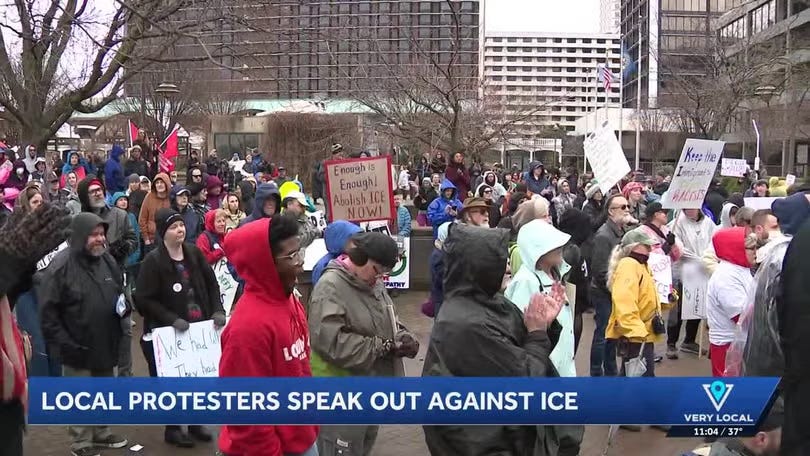
In Frankfort, a crowd of roughly 160 people gathered in the shadow of the state capitol to voice deep concern over ICE enforcement practices and call for accountability and reform. Within days, that energy took multiple forms across the state. In Lexington, hundreds of protesters convened outside the Fayette County Circuit Court, holding signs and demanding answers and accountability tied directly to Good’s killing. In Louisville, demonstrators gathered at the Belvedere for a localized iteration of the “ICE Out for Good” movement, explicitly linking their protest to the national narrative of federal enforcement overreach and its human toll. Western Kentucky saw demonstrators in Bowling Green also rally against the same incident.
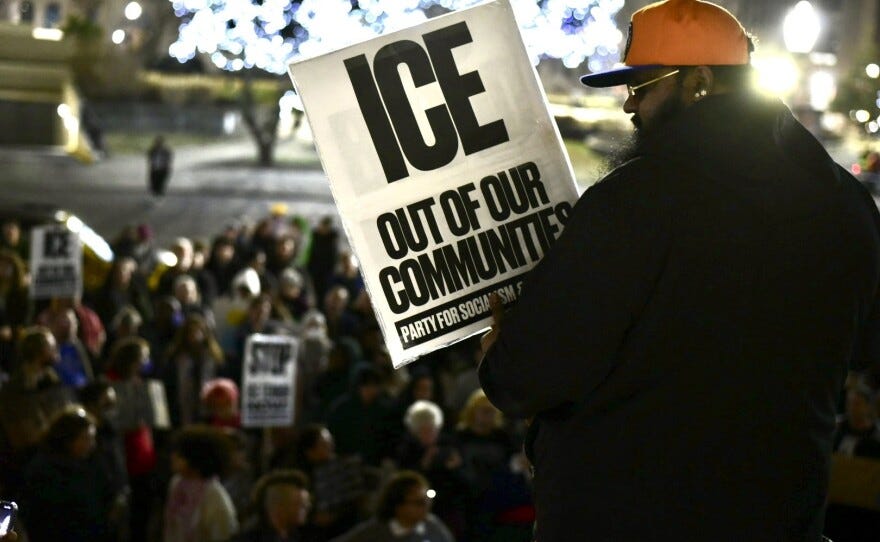
This multi-city mobilization in Kentucky matters because it signals real-time civic engagement around national enforcement controversies and reflects how intensely federal actions can animate local populations. Organizers with national groups such as Indivisible report that in under 48 hours, nearly 1,200 marches and vigils were organized across all 50 states and Washington, D.C. in response to Good’s death. Their message was unambiguous: “There are more of us than there are of them, and We the People won’t stop demanding accountability for ICE’s horrific killing of Renee.” While broader turnout figures across Kentucky remain in flux, the diversity of sites and the speed of organization underscore a discernible escalation in grassroots civic activity here.
Why This Matters for Kentucky
Kentucky’s protest activity tied to this federal incident highlights several interconnected dynamics with civic, political, and social implications:
Local Civic Activation Around Federal Policy
When national enforcement controversies provoke organized response across multiple cities in Kentucky, it signals that federal policy is not abstract for residents here. People are mobilizing with clear purpose, shared narratives, and coordinated timing, even in places without direct immigration enforcement actions. This contributes to shaping local media narratives, influencing what issues citizens discuss with their elected officials, and recalibrating what policy concerns are viewed as pressing in our communities.
Visibility and Community Risk Environment
Large public demonstrations raise visibility around immigrant rights and enforcement concerns. That visibility can embolden advocates, strengthen networks, and facilitate cross-community alliances. But it also invites attention from political opponents and can heighten tensions in spaces where immigrant families already navigate uncertainty and fear.
Pressure on Elected Officials and Norms of Cooperation
State and federal representatives pay attention when protests occur across multiple urban centers within a state. Even when underlying enforcement authority stems from the federal level, widespread civic pressure can influence how Kentucky’s congressional delegation approaches oversight, accountability measures, or public safety dialogue. It can also shape how local jurisdictions communicate their relationship (formal or informal) with federal enforcement entities.
Narrative Influence in a Polarized Era
The coordinated wave of “ICE Out for Good” protests nationwide—including Kentucky’s multi-city response—fits within a broader pattern of public conflict around federal immigration enforcement that can erode trust and intensify grievance-based politics. The visceral imagery from Minneapolis, combined with rapid organization, underscores how enforcement controversies can become focal points for broader debates about rights, accountability, and use of force.
Looking Ahead
Kentucky’s civic response to this national enforcement controversy is evolving. What began as gatherings in Frankfort has become a statewide civic expression in Lexington, Louisville, Bowling Green, and potentially other communities. That spread matters because it reflects a growing willingness among Kentuckians to engage publicly on national policy issues, even when those issues originate outside our borders.

As organizers continue to hold demonstrations and local advocates press for accountability, the implications will extend into political discourse, media framing, and community relationships. Immigrant communities and allied groups will continue to navigate the duality of increased visibility and potential backlash. Elected officials—both state and federal—will watch these mobilizations for signals of constituent priorities and political risk.
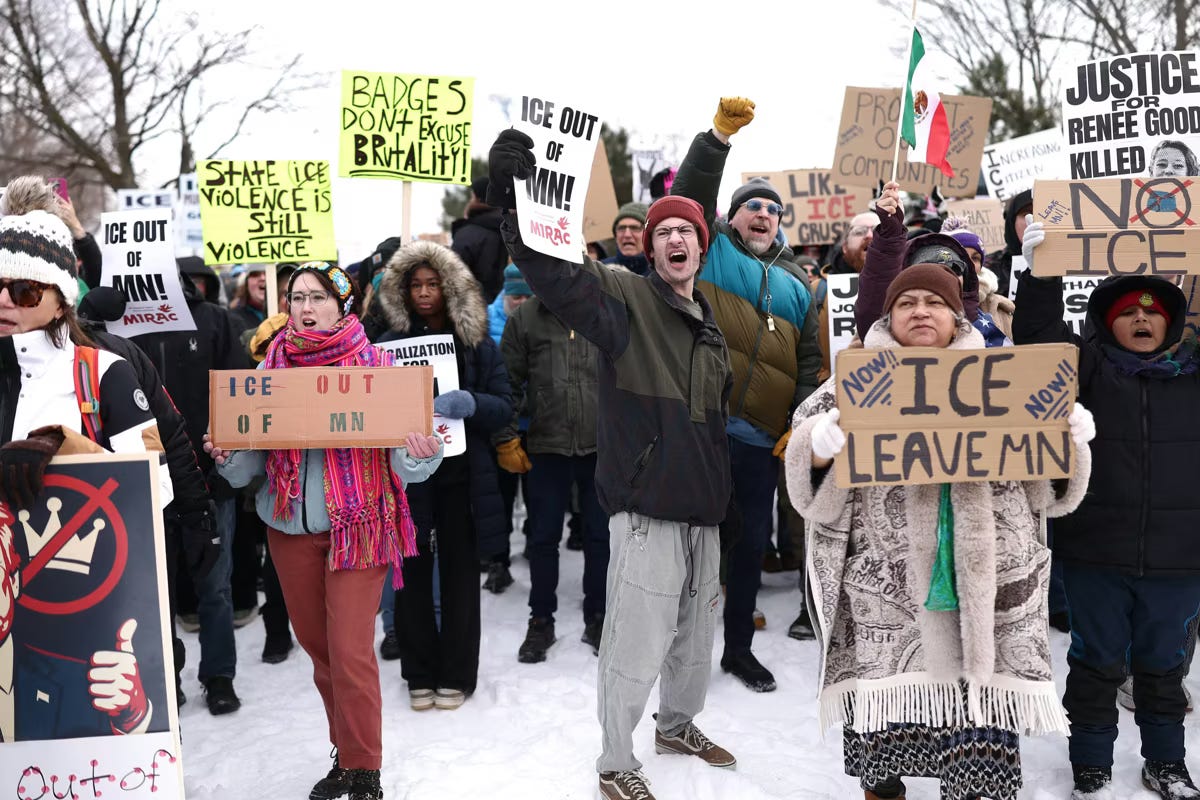
In 2026, protests in Kentucky are not just reactions to distant federal decisions. They are real-time civic indicators of how our communities interpret national power, accountability, and justice. The expanding footprint of anti-ICE protests here is a signal that civic engagement around federal enforcement practices has moved from abstract policy debate into active community mobilization.
We had a great turnout in Pewee Valley! Was inspiring to have several people join us as they noticed the protest while driving home! Keep up
The momentum, Kentucky.
Well said, Kelly!!! You are a terrific thinker, writer. Keep it up.