
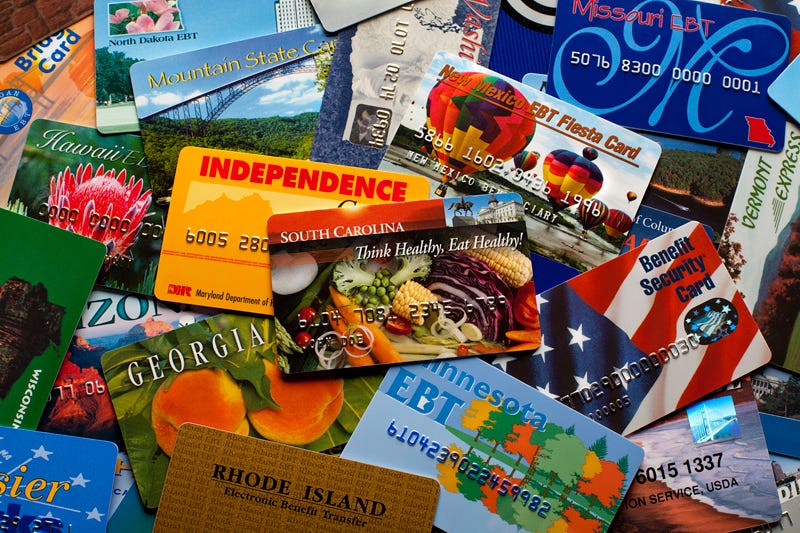
On May 15, the U.S. Department of Agriculture directed Kentucky to provide five years of detailed SNAP records within 21 days. The attached instructions cover “all household members that are listed in the SNAP case,” including people who may not receive food assistance themselves. USDA requested names, aliases, Social Security numbers, family relationships, citizenship or immigration status, addresses, income, assets, and EBT card numbers for records dating to January 1, 2020.
Kentucky did not produce the file. The Justice Department sued the Kentucky Cabinet for Health and Family Services and Secretary Steven Stack on June 26, asking a federal judge to compel production. The governor’s office joined other states resisting the demand in California, while Attorney General Russell Coleman later sought permission to support the federal government’s opposition to pausing the separate Kentucky case.
The underlying dispute is whether USDA can require Kentucky to transfer the records before the state and federal agency agree on the protocol governing their transfer, storage and use. Federal law gives USDA broad authority to inspect SNAP records, but places a condition on that access. U.S. District Judge Claria Horn Boom must first decide whether the Kentucky enforcement case proceeds or waits for the California litigation.
The request reaches beyond SNAP recipients
USDA describes the request as an audit of Kentucky’s entire SNAP caseload, rather than the sample of cases the state already submits for routine federal quality-control reviews. The department says the data will help identify duplicate enrollment, ineligible recipients, deceased people, false identities and other errors or possible fraud.
The federal investment gives USDA substantial leverage. Its May letter says the federal government provided Kentucky almost $691 million for SNAP benefits during the previous fiscal year and reimbursed nearly $68 million in state administrative expenses. USDA pays the full cost of SNAP benefits and half of Kentucky’s administrative expenses.
The requested file reaches further than the phrase “recipient data” suggests.
It includes active recipients, people who are sanctioned, disqualified or excluded from benefits, authorized representatives and absent parents living in another household. USDA also asks Kentucky to identify which person receives each source of income and which household member owns a bank account or other asset.
If Kentucky complies, a parent’s application for food assistance could place information about several connected people into the same federal database. Those records could include a child’s Social Security number, a relative’s immigration status, an absent parent’s identity and the household’s contact and financial information.
No public record reviewed for this article shows that Kentucky has transferred the requested file. There is also no documented Kentucky case in which someone has lost benefits because of a match produced by the national database.
USDA says protocol agreement need not come first
Congress gave USDA the right to inspect and audit state SNAP records. The governing statute says those records must be made available “subject to data and security protocols agreed to by the State agency and Secretary.”
USDA’s May letter states that the law does not require the parties to enter such an agreement before Kentucky transfers the data. The department says the agreement would govern transfer and storage once the states accept it. Kentucky and the other states dispute that reading.
USDA attached a proposed protocol containing substantial protections. The data would be stored in a FedRAMP High environment, encrypted during transfer and storage, and ordinarily accessible only to designated USDA employees. The protocol generally limits retention to three years, requires notice of a qualifying security incident within 12 hours, and says federal law does not authorize USDA to provide the data to the Department of Homeland Security for civil immigration enforcement.
The protocol also contains exceptions. USDA may analyze immigration-status discrepancies for SNAP eligibility purposes. Its inspector general would retain separate access, and USDA could refer a lead to another law-enforcement agency after identifying a criminal connection to SNAP. Records tied to an audit, investigation, or possible litigation could be kept beyond three years.
Kentucky would receive records flagged by USDA and would have 30 days to submit corrective information before the department publicly reported presumptive findings. The protocol does not provide comparable detail about when an affected Kentucky household would receive notice, how someone could inspect the information that produced a flag or how an error could be corrected before it influenced a state eligibility review.
The protocol also says it creates no new rights or liabilities. The documents do not resolve what remedy Kentucky or an affected household would have if USDA departed from the promised restrictions.
A federal judge in California previously blocked earlier versions of USDA’s demand. At the preliminary stage, the judge found that agreed protocols were a condition of access, while also recognizing that states could not unreasonably reject appropriate safeguards. USDA’s revised May request has not received a final ruling on its legality.
Kentucky is arguing in two directions
Kentucky joined the California lawsuit through the Office of the Governor. In a 1-21.pdf, the states said USDA was repeating a demand that courts had already enjoined, imposing an unreasonable 21-day deadline on some state data systems and leaving their earlier legal and security concerns unresolved.
The states proposed continuing protocol discussions while the California court considered the legal merits. CHFS later asked the Eastern District of Kentucky to stay the enforcement case filed against it.
Coleman took the other side of that procedural fight. On July 29, he asked to file an amicus brief supporting the Justice Department’s opposition to the stay.
His public announcement described the filing as joining the Trump administration in an effort to uncover fraud. The proposed brief makes a narrower legal request. It argues that federal law contemplates enforcement in the district where the state SNAP agency is located and asks the Kentucky judge to hear the case rather than defer to the California litigation.
Coleman’s filing does not authorize USDA to take the records. It does not establish that the revised protocol complies with federal law or prove that CHFS has concealed fraud. It could help keep a second federal case moving toward a separate ruling while the governor’s office continues the multistate challenge.
Judge Boom has paused consideration of USDA’s preliminary-injunction request while she decides whether to stay the Kentucky case. If she denies CHFS’s request, the federal government can resume asking her to compel production. If she grants it, the Kentucky enforcement action would pause while the California litigation proceeds. A PACER docket report generated early August 3 showed the stay motion and Coleman’s request still pending.
USDA has a duty to audit a program financed largely with federal money and to investigate credible errors or fraud. Kentucky must protect information collected from families seeking food assistance and verify an automated discrepancy before it affects a person’s benefits or exposes someone to an investigation.
Federal financing gives USDA extensive authority, but Congress attached conditions to access.
Those conditions govern when records may be obtained, how they may be used and whether the safeguards can be enforced. The pending cases will determine whether agreement on those protections comes before Kentucky transfers the file or after USDA has taken custody of it.
Kentucky readers can request the missing operational records from the CHFS Open Records Center. A focused request should ask whether CHFS has begun creating the data extract, which state systems or contractors would produce it, what the work would cost and what procedure would allow a household to correct a federal flag before it affects an eligibility decision. The records are most useful before the court orders production or the parties negotiate a transfer schedule.
Readers can also ask the Kentucky General Assembly’s Interim Joint Committee on Health Services to hold a public hearing before any transfer. CHFS, the governor’s office and the attorney general could then answer from the same documentary record: whether an extract exists, which protections Kentucky considers essential and what review a family would receive after a federal match. Those answers should become public before Kentucky sends the file.