
Kentucky will not vote on this fund in Frankfort.
No county fiscal court will approve it. No school board will debate it. No state agency will write the rules for it. Most Kentuckians will never see a line item for it in a budget document.
But the money is still public money. The power is still federal power. And Kentucky’s members of Congress still have a responsibility to answer for what happens when the president’s Justice Department helps create a nearly $1.8 billion fund to compensate people who claim they were harmed by political “weaponization” or “lawfare.”
On May 18, the Department of Justice announced that the settlement of President Donald J. Trump v. Internal Revenue Service created what it calls the Anti-Weaponization Fund. DOJ says the fund will provide a process to hear and redress claims from people who say they suffered from weaponization and lawfare. The same announcement says Trump, Donald Trump Jr., Eric Trump, and the Trump Organization will receive a formal apology, but no monetary payment or damages. In exchange, they agreed to drop their IRS lawsuit with prejudice and withdraw two administrative claims tied to the Mar-a-Lago search and the Russia investigation.
This is not a story where Trump personally receives a $1.776 billion check.
The concern is different and, in some ways, more important. A lawsuit brought by a sitting president against his own government has ended with the creation of a taxpayer-funded compensation system inside that same government.
The people who may benefit from it have not all been named. The standards for evaluating claims are not yet clear to the public. The oversight structure appears limited. And the money is supposed to come from a federal mechanism most citizens have never heard of: the Judgment Fund.
For Kentucky, the question is straightforward: when federal taxpayer money is used this way, who gets to ask whether the process is lawful, fair, public, and protected from political favoritism?
The answer starts with Congress.
The Tax Leak Was Real. The Remedy Is the Problem.
The underlying leak of Trump’s tax information was real. A former IRS contractor, Charles Littlejohn, pleaded guilty and was sentenced to five years in prison for leaking tax information tied to Trump and others. Reuters reports that Trump’s lawsuit against the IRS sought $10 billion and argued that the agency should have done more to prevent the leak.
That part should not be waved away. Federal tax records are supposed to be confidential. Government workers and contractors should not leak private taxpayer information for political or journalistic purposes. When they do, the public has an interest in accountability.
But that is not where the story ends.
The question now is whether the remedy fits the harm, and whether this settlement has become something larger than compensation for a privacy breach. The DOJ announcement says the Trump plaintiffs receive no money. Instead, the settlement creates a fund for other people who claim they were harmed by government “weaponization” or “lawfare.”
That moves the issue away from one tax leak and into a much broader question of public money, political grievance, and executive discretion.
A Political Grievance Becomes a Government Claims System
Reuters reports that the fund totals $1.776 billion, a number DOJ says symbolizes 1776. The fund is meant to compensate people who claim they were targeted for improper political, personal, or ideological reasons. Reuters also reports that Acting Attorney General Todd Blanche will appoint four of the five commission members who decide claims. AP reported that a five-member commission appointed by Blanche will oversee the fund.
That structure deserves scrutiny.
A normal settlement resolves a dispute between parties. A normal court-supervised process has public filings, judicial oversight, defined claims, and clearer procedures. This arrangement appears to serve a broader purpose. It creates a pool of federal money for future claimants whose claims may be political, ideological, or personal in nature.
AP reported that the fund would allow people who say they were targeted for political prosecution, including by the Biden Justice Department, to apply for payouts.
That creates the central problem. The fund is not just compensating a known plaintiff for a known injury. It is creating a process that could reward a category of people defined by a political narrative already used heavily by Trump and his allies.
The words matter. “Weaponization” and “lawfare” are not neutral legal categories with settled meanings. They are also campaign, media, and movement words. When those words become the basis for public compensation, the government is no longer just resolving legal claims. It is placing official weight behind a political story.
The Judgment Fund Was Built for Legal Obligations, Not Political Reward
The administration points to the Judgment Fund as the source of payment.
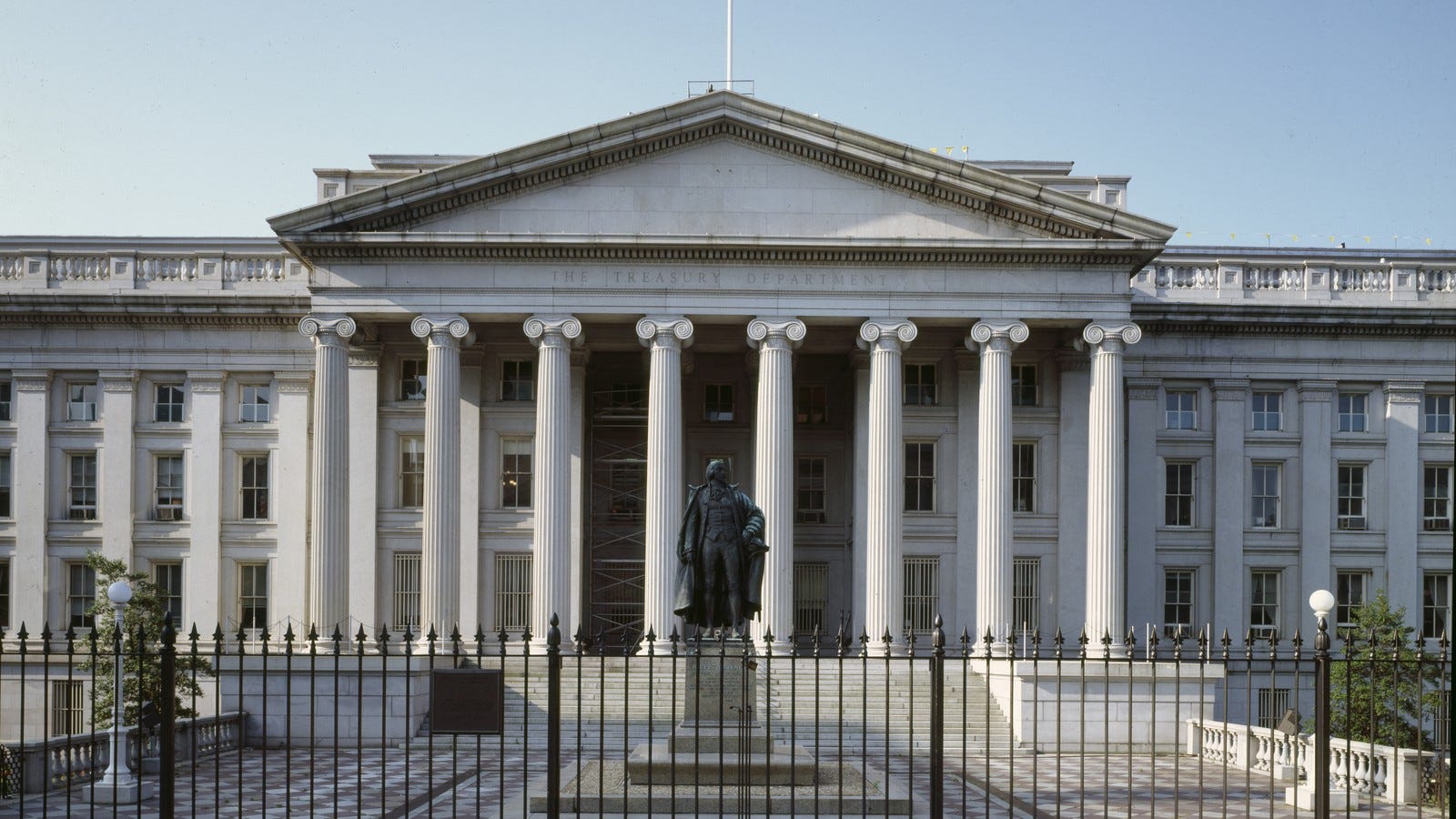
The Treasury Department describes the Judgment Fund as the federal mechanism that pays court judgments and compromise settlements of lawsuits against the government. Agencies may ask Treasury’s Bureau of the Fiscal Service to pay from the fund for most court judgments and Justice Department settlements of actual or imminent litigation, but Treasury also states that an agency may only ask for payment if funds are not legally available from the agency’s own appropriations.
The legal authority sits in 31 U.S.C. § 1304. That statute appropriates necessary amounts to pay final judgments, awards, compromise settlements, and related costs when payment is not otherwise provided for, when Treasury certifies payment, and when the judgment, award, or settlement is payable under specified legal authorities.
In plain language, the issue is simple: Congress created a standing pot of money so the federal government can pay valid legal obligations without passing a separate law for every settlement or judgment. That makes sense for ordinary litigation. It becomes much more troubling if that mechanism is used to create a broad executive-controlled compensation system for politically aligned claimants.
The Attorney General document establishing the fund says that within 60 days, the United States will provide Treasury with the forms and documentation needed to direct $1,776,000,000 to an account for the sole use of the Anti-Weaponization Fund. It also says the fund’s corpus does not represent the value of any claim by the Trump plaintiffs, but is based on the projected valuation of future claimants’ claims.
The money is not based on what Trump, his sons, or his company are being paid. DOJ says they are not being paid. The money is based on projected future claims by other people.
That turns the Judgment Fund from a payment mechanism into something closer to a political compensation infrastructure.
The Public May Not See Who Gets Paid
The administration is presenting the fund as a remedy for government abuse. But the structure raises the very question the fund claims to answer: who guards against abuse when the executive branch defines the injury, controls the process, and directs the money?
Reuters reported that legal experts described the arrangement as highly unusual because funds of this scale are typically created by Congress or supervised by a court. Reuters quoted Rupa Bhattacharyya, a former Justice Department lawyer who oversaw a fund for victims of the September 11 attacks, saying that giving taxpayer money to the executive branch to distribute with little restriction lends itself to abuse and corruption.
That should matter across party lines.
A government that can punish enemies is dangerous. A government that can pay allies through a loosely defined grievance process is dangerous too.
Both collapse the line between public authority and political loyalty.
The fund also appears designed to operate with limited public visibility. The Attorney General document says the money may be used for administrative services, staff, travel, facilities, and other support services needed to carry out the fund’s mission. It also says that once the money is deposited into the designated account, the United States has no liability for protecting or safeguarding those funds, regardless of bank failure, fraudulent transfers, fraud, or misuse.
That language should trigger immediate oversight questions.
Who holds the account? Who audits it? Who reviews denied claims? Who reviews granted claims? Will the public know who gets paid? Will Congress receive full reports? Will Treasury’s public Judgment Fund payment reports show enough detail to allow meaningful review?
These are not partisan questions. They are the questions taxpayers ask whenever public money leaves public control.
The Bigger Test Is Whether Public Money Can Become a Loyalty System
The fund should be understood as part of a broader governing pattern.
First, the administration defines investigations, prosecutions, and accountability efforts as “weaponization.” Then it creates official mechanisms to validate that story. Then, public money, public offices, and public authority are used to reward people who fit inside that narrative.
That is not normal democratic accountability. It is a loyalty system.
There is a real and legitimate public interest in preventing politically motivated prosecution. No administration should use law enforcement to punish opponents. Courts, inspectors general, congressional oversight, whistleblower protections, and civil-rights laws all exist because government power can be abused.
But a president should not be able to convert that concern into an executive-run payout system for allies.
That is especially true when the president himself brought the lawsuit, controls the executive branch being sued, and benefits politically from the story the fund reinforces. Reuters reported that the judge overseeing the case had previously questioned whether the parties were “truly antagonistic to each other,” because Trump controls the agencies he sued.
That gets to the heart of the matter.
A settlement is supposed to resolve a dispute. But when the president sues his own government, and his own Justice Department helps turn that lawsuit into a fund for future claimants aligned with his political narrative, the normal assumptions around adversarial litigation start to break down.
Five Questions You Can Ask Now
You can ask your members of Congress five concrete questions:
Do you support the creation of a $1.776 billion Anti-Weaponization Fund through this settlement?
Do you believe the Judgment Fund can lawfully be used to finance future claims that were not part of the original lawsuit?
Will you support public hearings with DOJ and Treasury officials?
Will you demand public disclosure of who receives payments, how much they receive, and why?
Will you support legislation preventing presidents from using settlements with their own administration to create funds that may benefit political allies?
You can also watch Treasury’s Judgment Fund payment reports, follow statements from government watchdog groups, and ask Kentucky media outlets to press the delegation for clear answers.
The issue is not whether every person who claims government abuse is lying. Some people may have legitimate claims. The issue is whether those claims should be handled through a process designed and controlled inside the president’s own Justice Department after he sued his own government.
That is a test of whether public money remains public, whether legal settlements remain legal settlements, and whether Congress is still willing to guard the line between taxpayer dollars and political reward.
Direct sources
U.S. Department of Justice: “Justice Department Announces Anti-Weaponization Fund”
DOJ announced the fund as part of the settlement in President Donald J. Trump v. Internal Revenue Service. The announcement says Trump, Donald Trump Jr., Eric Trump, and the Trump Organization receive a formal apology but no monetary payment or damages.
https://www.justice.gov/opa/pr/justice-department-announces-anti-weaponization-fund
DOJ document establishing fund mechanics
This document says the United States will provide the Treasury with documentation within 60 days to direct a $1,776,000,000 payment to an account for the sole use of the Anti-Weaponization Fund. It also says the fund amount is based on projected future claims, not the value of the Trump plaintiffs’ claims.
https://www.justice.gov/opa/media/1441086/dl?inline=
Reuters: “Trump drops IRS lawsuit in exchange for DOJ $1.8 billion ‘weaponization’ fund”
Reuters provides the clearest factual spine on the lawsuit, the fund amount, the tax leak, the commission structure, and legal concerns about the arrangement.
https://www.reuters.com/world/trump-dismisses-lawsuit-against-irs-court-filing-shows-2026-05-18/
Associated Press: “Justice Department announces nearly $1.8B fund to compensate Trump allies in a deal to drop IRS suit”
AP provides useful detail on political reaction, possible claimants, watchdog criticism, and congressional concerns.
https://apnews.com/article/trump-lawsuit-irs-leak-3729de38770b558be01712a143437bf8
U.S. Treasury Bureau of the Fiscal Service: Judgment Fund
Treasury explains that the Judgment Fund pays court judgments and compromise settlements of lawsuits against the government.
https://fiscal.treasury.gov/payments-from-government/judgment-fund
31 U.S.C. § 1304: Judgments, awards, and compromise settlements
This is the statutory authority for the Judgment Fund.
https://www.law.cornell.edu/uscode/text/31/1304