
On April 3, 2026, a coalition of 22 states and the District of Columbia filed a lawsuit to block a new executive order issued by Donald Trump that would change how mail-in voting is administered across the country.
The lawsuit, first reported by Reuters, challenges the federal government’s attempt to impose new requirements on voter eligibility lists, ballot delivery, and election record retention.
What Happened
The executive order introduces three core directives affecting election administration:
Creation of a federal list of eligible voters
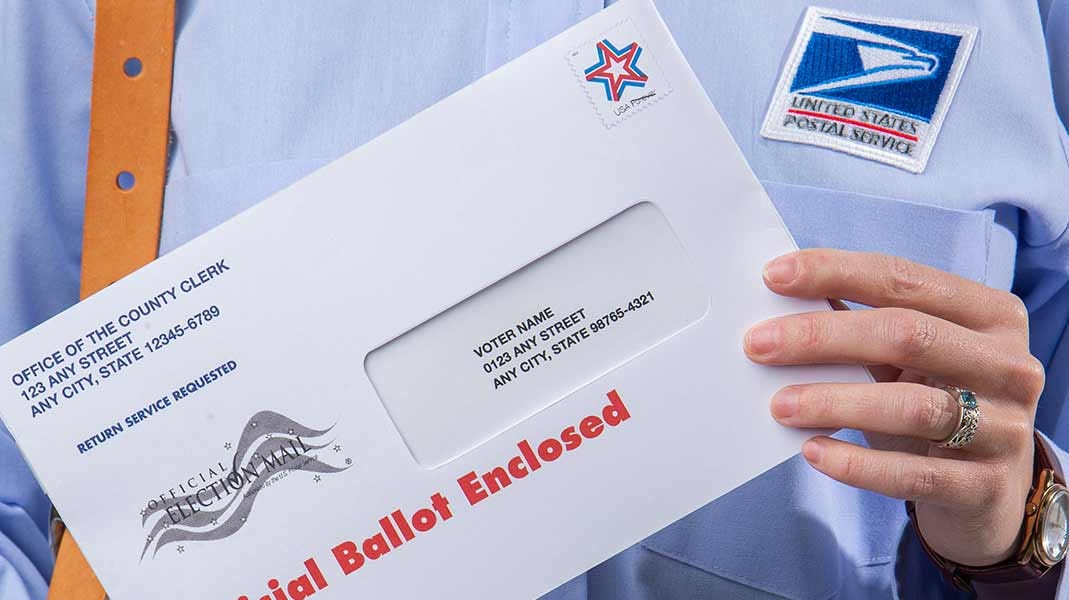
Instruction to the United States Postal Service to deliver mail-in ballots only to voters appearing on state-approved lists
A requirement that states retain election records for five years
The states challenging the order argue that it exceeds federal authority and interferes with how elections are traditionally managed. Election administration in the United States is largely governed by state law, with federal standards layered on top through legislation such as the Help America Vote Act and the Voting Rights Act.
The lawsuit seeks to block implementation before the order can take effect.
How It Works
Each component of the order alters a different part of the election system.
Federal voter list creation
The order directs federal agencies to compile or coordinate a national list of eligible voters. This introduces a centralized layer into a system that is currently decentralized, where states maintain their own voter rolls using state-specific criteria and processes.
Operationally, this could require states to reconcile their voter databases with federal data sources. Discrepancies between state and federal records could trigger challenges, delays, or additional verification steps.
Ballot delivery restrictions through the Postal Service
The directive to the Postal Service would limit delivery of mail ballots to individuals confirmed on state-approved voter lists. In practice, this ties ballot delivery more tightly to list accuracy and timing.
If voter rolls are not fully updated, eligible voters could face delays or missed ballots. Election officials would need to ensure that voter list maintenance is completed earlier and with greater precision.
Five-year record retention requirement
States would be required to keep election-related records for five years. Many states already maintain records, but retention periods and formats vary.
This provision would standardize retention timelines but could increase administrative burden, especially for counties with limited storage capacity or digital infrastructure.
Kentucky Impact
Kentucky’s election system is administered through the Kentucky State Board of Elections and 120 county clerks.
At this stage, the impact on Kentucky is conditional and depends on how courts rule on the lawsuit.
If the order is implemented:
Voter roll management would face new pressure
County clerks would need to ensure that voter registration lists align with any federal data requirements. This could introduce new verification steps or reconciliation processes.Mail ballot handling could become more rigid
Kentucky allows absentee voting under specific conditions. Ballot delivery tied strictly to finalized voter lists could create timing constraints, particularly for voters who register or update information close to election deadlines.Administrative workload would increase
A five-year retention requirement would require consistent record-keeping practices across all counties. Smaller counties may need additional resources or system upgrades.Public trust could be affected
Changes to how voter lists are validated and how ballots are delivered often generate confusion. Even without immediate procedural disruption, uncertainty around the rules can influence voter confidence and participation.
Kentucky is not currently listed among the plaintiff states. That means state officials are more likely to be in a compliance posture if the order survives legal challenge.
Pattern Recognition
This action aligns with a broader set of federal efforts to engage more directly with state-level election infrastructure.
Recent developments include:
Federal attempts to obtain or review state voter-roll data
Increased emphasis on standardizing election procedures across states
Use of executive authority to shape election-related processes without new legislation
Taken together, these steps point toward a shift in how federal authority is being applied to election administration. The system remains state-run, but the federal role is becoming more operational rather than purely regulatory.
The immediate question is whether courts will block or narrow the executive order before implementation.
Key points to watch:
Whether a federal court issues a temporary injunction
Whether additional states join the lawsuit
How state election officials, including those in Kentucky, begin preparing for possible compliance
Whether Congress responds with legislation clarifying federal and state roles in election administration
The outcome will determine whether this order remains a proposal contested in court or becomes an operational requirement shaping how elections are run ahead of the next federal cycle.
Further Reading
Help America Vote Act (HAVA) overview
https://www.eac.gov/about/help-america-vote-act