
Geraldo Lunas Campos died in federal immigration custody at Camp East Montana in El Paso, Texas, on January 3, 2026.
The medical examiner determined the cause of death to be asphyxia and ruled it to be a homicide.
In June of that year, the Government Accountability Office (GAO) reported that the contractor operating the detention facility had not submitted reports, as mandated by the contract, regarding the incident. Evidence associated with the incident was missing or destroyed.
According to the GAO report, as of July 2022, the facility still had inadequate medical, security, and administrative services. At the time of the report, a contractor different from the one that lost or purposefully destroyed evidence operated the detention facility, and the incident under review was the subject of a federal criminal investigation.
Source: Government Accountability Office
A man died in the custody of the United States government. His death was ruled a homicide. Evidence was missing or destroyed.
Who will answer for that?
Who destroyed or lost the evidence? Were crimes committed? Are there consequences for the perpetrators of the cover-up? These are questions that must also be asked and answered.
An election is not a reckoning
On November 3, 2026, Americans voted to put the Democrats in charge of the U.S. House of Representatives and the U.S. Senate.
The political consequences were substantial. Beginning in January 2027, the Republican-controlled Congress of 2017-2026 can no longer shield the administration from congressional oversight.
But elections can’t be substitutes for justice.
Trump won. He is President. For now. His administration remains in power. Actions have consequences, and we will all have to face the decisions we’ve made.
We must address the unlawful and corrupt behavior that has occurred over the last several years. This behavior has occurred at all levels of government and across various branches.
Federal judges have ruled that Trump, his advisors, and employees have violated the law. Ample evidence shows numerous other violations. These violations include obstruction of justice, corruption, fraud, and violations of the Constitution, laws, and treaties. This country’s Constitution, laws, and treaties must be enforced. Injustices, no matter who the perpetrators are, must be remedied.
There must be consequences for violating the rule of law. Just because the American people have grown weary of the corruption and injustice, we cannot allow it to continue. We can’t just vote for the status quo to change.
We can’t just ignore what we don’t want to deal with.
The record is not a matter of partisan opinion
Trump and his appointees violated numerous laws and failed to enforce courts’ orders to stop doing so.
For example, in 2025, the Trump Administration illegally sent Kilmar Abrego Garcia to El Salvador, violating a court order. The Supreme Court later ordered the Administration to correct this.
Reuters reported in February 2026 that 400 federal judges presided over 4,421 cases between October 2025 and February 2026 where they determined that immigrants were unlawfully detained. The report mentioned other cases where the government refused to abide by court orders releasing immigrants.
Some appellate courts have reviewed cases where lower courts ruled that the administration unlawfully detained immigrants. Those cases are ongoing.
Not all disagreements on immigration policy will necessarily result in a court order.
The executive branch has some authority to develop and implement immigration policies. However, the President cannot interpret that authority to mean that he can unlawfully imprison immigrants, override judicial decisions, and disregard the law.
Those same limitations apply to other branches.
In 2025, Trump issued four executive orders to sanction law firms, including Perkins Coie, Jenner & Block, and WilmerHale. Other firms, including Susman Godfrey, represented clients that opposed Trump and his policies. Trump claimed the executive orders targeted law firms for representing his clients and engaging in legal practices he disfavored.
However, judges ruled that the executive orders unconstitutionally restricted the law firms and enjoined the government from enforcing the orders.
The DOJ also initiated and prosecuted criminal cases against Comey and James. It confirmed the government initiated prosecutions without lawful authority.
Important details remain. Who ordered these prosecutions? What evidence did prosecutors rely on? Did lawyers make prosecutorial decisions, or did the president direct them?
The public deserves the opportunity to review the evidence and hear the prosecutors testify.
The reckoning must include January 6
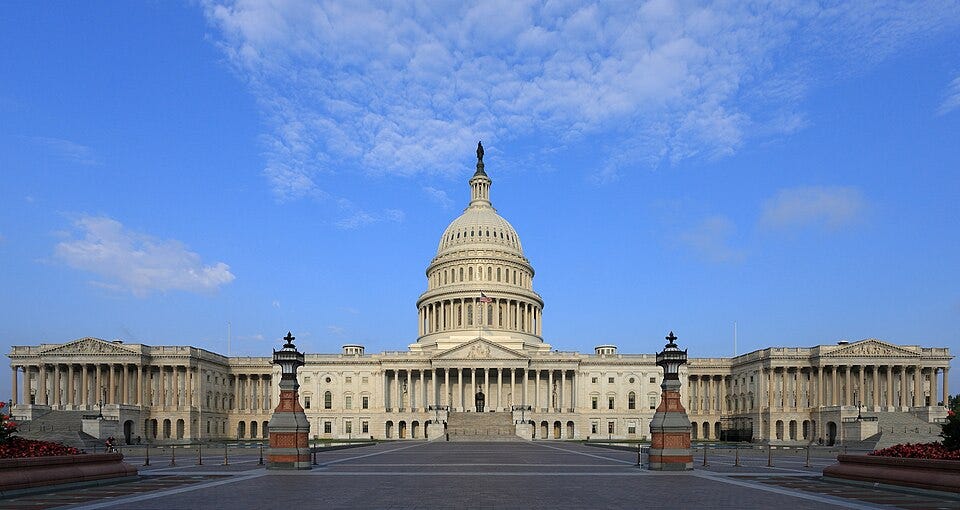
During 2027 the new Congress must address what remains unresolved regarding the election of 2020 and the violent attack on the Capitol.
Prosecutorial decisions by the Justice Department during the Trump administration are subject to intensive review. The final report by Special Counsel Jack Smith concluded the evidence was sufficient for the prosecution of President Trump.
A jury never considered the evidence.
The case ended because the Justice Department decided it would not prosecute a sitting president. The Supreme Court’s 2024 ruling on presidential immunity restricted the prosecution of Trump.
In January 2025, former President Trump was sworn in for a second term. In January 2025, he returned to the White House, issued pardons and commuted the sentences of individuals involved in the attack on the Capitol.
Trump said the pardons promoted healing in the country.
They preserved the assault, the hurt added to law enforcement officials, and the proof accumulated in spellbinding examination and legal prosecution.
The requests for data concerning the people who attempted to interfere in the legitimate move of government power stay unsatisfied. The American public ought to have a complete and official report concerning these subjects.
The U.S. should maintain an objective and thorough inquiry into the disturbing incidents that happened on its soil.
No legitimate body restricted the people of the U.S. from considering and interrogating the individuals concerned.
We have already seen what happens when a nation tries to put an attack on its democratic institutions behind it without resolving the responsibility of those involved.
We should not repeat that mistake.
Follow the money, too
A nation’s inquiry into a autocratic, unlawful breach of its constitution ought not to disregard the monetary interests serving and complementing the subsisting aggressive interests.
In 2026, it was reported that a UAE Official’s family member and some business associates, collectively, purchased an approximate $500 million stake in Trump’s cryptocurrency company, World Liberty Financial, prior to Trump’s second inauguration.
The transaction was probed for impropriety because of Trump’s administration’s green-lighting of the UAE’s requests to export American tech with shortened review periods.
A business transaction alone does not prove bribery, nor does a favorable policy decision establish an unlawful exchange. However, a probe is warranted to disclose whether the foreign leaders involved in the transaction disclosed their conflicts of interest and/or the U.S. President used executive powers to pursue his personal financial interests.
But those denials do not eliminate the public’s right to know who received the money, which officials participated in the relevant decisions, whether conflicts were disclosed, and whether presidential authority was used to advance private financial interests.
The rule ought to be applied to all persons, including government contractors, donors, and officials, who may have personally benefited from political appointments and decisions.
If public office was used for private enrichment, the people responsible must be identified and the applicable laws enforced.
A reckoning that examines abuses of authority but ignores the money surrounding them would leave a significant part of the story untold.
The people who enabled it must also answer
With President Trump, it’s natural to tie the personal to almost any policy issue.
He has charged and directed his administration’s efforts. He bears a personal responsibility for the choices made and the consequences that flow from them.
However, he does not serve as president in a vacuum.
Cabinet secretaries and other political appointees directed the activities of various executive agencies and departments. Members of the Justice Department, as well as other law enforcement personnel, made decisions and took actions to implement the administration’s policies. Thousands of private contractors, at public expense, helped operate immigration detention facilities. Many in the administration took actions that the vast majority of Americans despised and condemned.
The administration’s actions and policies call for accountability for its decisions and choices, as well as for the justification of actions taken to cover up its wrongdoing.
Numerous members of the executive branch acted to carry out the administration’s policies. Some actively refused to do so. Others may have acted in accordance with the law and the directives of the executive branch; however, those actions may have harmed thousands of Americans.
Responsibility and accountability for these unlawful acts must extend to all levels of the executive branch that carried out unlawful orders and harmed the American people.
This is not a call for revenge
Some will call reckonings political vengeance.
This warrants a response.
Revenge focuses on the individual and discovers means for retaliation.
Under the rule of law, the focus should be on potential evidence and the laws broken.
The evidence must speak to the requirements of the law and the standards of proof. Each person is innocent until proven guilty. This is especially important when the individuals in question are Cabinet Secretaries, Presidential Advisors, and other politically connected individuals.
Without exception, the process must speak for the accused. Without exception, the process must respond for the injured. This is particularly true when the injured are many, and the injuring are powerful.
The next Congress has a choice
When the new Congress meets in January 2027, it will have the opportunity, but not the luxury, to address only legislative issues.
It will also have to confront numerous cases of misconduct by government officials, including covered-up misconduct.
Members can initiate investigations concerning the conditions of immigration detention and the circumstances surrounding the deaths of immigrants in federal custody.
They can compel the production of internal records concerning potentially exculpatory evidence.
They can study the government’s willful disobedience of federal court orders and the Justice Department’s decisions not to pursue cases involving crimes against women and children. They can inspect potential conflicts of interest involving the president and his family.
Members of Congress can sift through the facts to identify decisions that adversely impacted people and create an enduring record of those decisions.
Members can never accuse or punish authorities for crimes, which is the role of the judicial and prosecutorial arms of the government, respectively.
However, when Congress acts as a fact-finding authority, it can inform, educate, and sensitize the court to matters that compel it to adjudicate certain cases.
These agencies retain a responsibility to utilize their powers to investigate and report.
The public deserves a thorough review of the evidence, as well as answers to incisive questions. Evidence should dictate the use of the subpoena, and, in the case of obstructing officials, its issuance should be followed by a determination of the official’s reasons for obstructing. The public’s right to know should take precedence over the official’s right to obstruct.
The public should have access to evidence pertaining to potential criminal acts, and if such acts are determined to have occurred, the public should have the opportunity to be a party to the legal process that addresses them.
A speech, a television program, or a report disappearing into a congressional file does not provide the American people with a reckoning.
The American people deserve a thorough, comprehensive accounting of the evidence.
The people deserve better than repeated promises to address abuse.
We cannot move on from what we refuse to confront
Following a crisis, many appeal for diplomacy, the airing of grievances, and the search for points of agreement.
While engaging with one another is better than avoiding each other, we must recognize that actions have consequences. It is unfair to expect citizens to forgive their attackers and move on when their attackers have yet to be held accountable.
The families of those who died while in the custody of government agencies have a right to an explanation and investigation into the death of their loved one.
The same is true for citizens who have been illegally detained or imprisoned.
The members of the public have the right to expect accountability for the abuse of governmental power.
Offending government employees must not be allowed to evade legal accountability.
This includes situations where a government employee abuses their power to further their personal and/or financial interests.
Government employees should not expect a free pass. They must be held to the same standards as the citizens they govern. This was particularly true during the most recent administration. The 2026 elections offer an opportunity to explore the consequences of actions taken during this administration.
Before we determine how to repair America’s democratic system, we must examine the recent events that have irreparably damaged it.
Who perpetrated the crimes? Who are the victims? And what are the legal consequences?
We must acknowledge the truth, no matter how distressing. We must trace the facts where they may lead, including to the doorstep of the powerful. Furthermore, we must investigate without prejudice and prosecute the law to the fullest extent.
If the US government has repeatedly violated the laws of the United States and the Constitution, we have a moral and legal imperative to prosecute these crimes, regardless of the politics or passion surrounding them. We cannot teach our children that crimes will be ignored and that lawless politics will win.
If we have not taught the lesson of reckoning, we are guaranteed that these violations of the law, democracy, and the social contract will be committed again and again.
Sources and Further Reading
Government Accountability Office: Immigration Detention: Waste and Performance Issues at Camp East Montana. Findings concerning detention conditions, required reports, and missing or destroyed evidence.
Reuters, February 2026: Courts ruled thousands of times that ICE held people unlawfully. Investigation of judicial findings and government compliance.
U.S. Supreme Court, April 10, 2025: Noem v. Abrego Garcia. The Court’s order concerning Abrego Garcia’s unlawful removal.
U.S. District Court, June 27, 2025: Susman Godfrey LLP v. Executive Office of the President. Judicial opinion finding the executive order unconstitutional.
PBS NewsHour, November 24, 2025: Dismissal of the Comey and James prosecutions. Reporting on the prosecutor’s unlawful appointment.
U.S. Department of Justice, January 2025: Special Counsel Jack Smith’s Final Report, Volume One. Findings concerning efforts to interfere with the lawful transfer of power.
The White House, January 20, 2025: January 6 pardons and commutations proclamation. Primary record of presidential clemency.
The Wall Street Journal, January 31, 2026: Reporting on the $500 million World Liberty Financial investment. Investigation of financial connections and potential conflicts of interest.
Associated Press, November 5, 2026: Calling control of Congress in the 2026 midterms. Verified election results.