
I am approaching this differently than I usually do in Dispatches from Kentucky. There are no local headlines here, no school board votes, no immediate calls to action. This piece is meant to slow the frame down. Before talking about what recovery looks like in our own communities, it helps to understand how long recovery takes, even when authoritarian power appears to have ended.
The series begins with Italy after Mussolini, not because history repeats itself neatly, but because it offers clarity where contemporary debate often obscures it. Italy’s experience forces us to confront a difficult truth: authoritarian regimes can collapse quickly, while the damage they leave behind unfolds slowly, unevenly, and across generations.
In the second essay, that historical framework will be applied to the United States after Donald Trump, with particular attention to cultural normalization, institutional pre-compliance, and the false expectation that elections alone restore democratic health. The third essay will turn inward, addressing time, age, and purpose, and asking what meaningful contribution looks like when the work of recovery extends beyond our own lifetimes.
This first part does not argue for analogy or prediction. It establishes ground. Before asking what comes next for us, it is worth being honest about how fascism ends.
The seduction of the ending
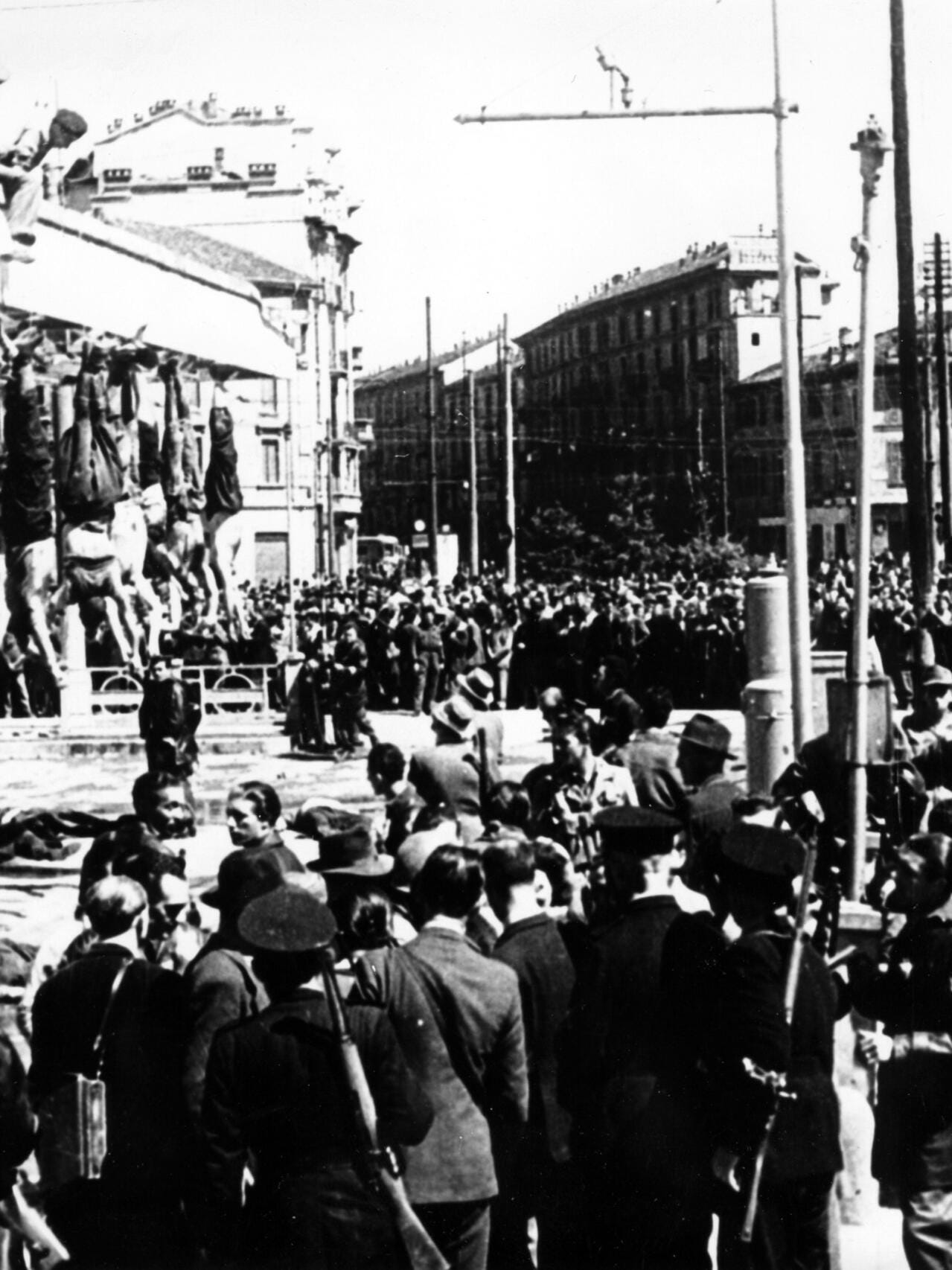
The end of fascism is often remembered as a single, decisive image. A dictator dragged into a public square. A body hung upside down. Crowds jeering. The war is over. The danger finished.
It is an image that carries a powerful promise: that authoritarianism announces its own defeat, that history provides a clear moment of closure, and that once the leader falls, the story is effectively done.
That instinct is understandable. After years of fear, coercion, and exhaustion, people want an ending they can recognize. They want to believe that fascism ends the way it is remembered, abruptly and unmistakably, leaving behind a shared understanding that the threat has passed.
But history rarely works that way.
When Benito Mussolini fell in 1945, Italy did not step cleanly into a democratic future. The regime collapsed, but the habits it had cultivated did not. Fascism did not disappear with its leader. It remained embedded in institutions, in language, and in the quiet calculations people had learned to make to live under it.
What ended quickly was the spectacle. What did not end was the damage.
This is the distinction that matters, and the one we often avoid. Political endings can be dramatic. Cultural endings are slow, uneven, and often invisible while they are happening. The fall of a regime is a moment in history. The work of undoing what it shaped unfolds over generations.
This essay begins with Italy not because the past offers comfort, but because it removes illusion. Before we can understand what recovery demands of us now, we must be honest about how fascism ends
.
Mussolini’s regime: how fascism embeds itself
To understand why fascism lingered in Italy long after Mussolini’s fall, it is necessary to look past the spectacle of his end and examine how his rule functioned while it was in place.
Mussolini did not seize power overnight. His rise was gradual, legalistic, and opportunistic. Mussolini was appointed prime minister legally in 1922 after the March on Rome, a political crisis that pressured King Victor Emmanuel III to hand him power rather than risk civil unrest. He exploited post–World War I instability, economic anxiety, and political fragmentation, presenting himself as a restorer of order rather than a destroyer of democracy. By the time the dictatorship was fully consolidated, many of the institutions that might have stopped him had already been weakened from within or rendered passive through accommodation.
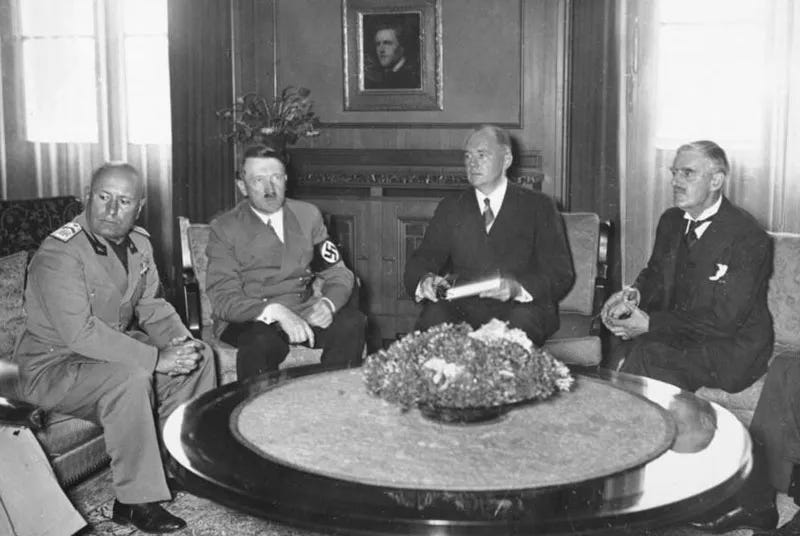
Once in power, Mussolini’s regime did not govern solely through terror. It was governed through erosion. Rather than abolishing Italy’s democratic institutions outright, Mussolini hollowed them out, preserving their outward form while stripping them of independence and authority. Courts and universities continued to exist, but in 1931 judges and university professors were required to swear loyalty to the fascist regime, ensuring that institutional survival depended on political obedience. Bureaucracy continued to function, but loyalty increasingly mattered more than competence. By the late 1920s, the Fascist Party had formally merged with the state, meaning advancement in public administration increasingly required party membership rather than professional qualification. Elections and media did not disappear all at once; they were emptied of substance and reshaped to reinforce the regime’s authority.
Just as consequential was the cultural shift that accompanied this institutional decay. Fascism rewarded compliance, not conviction. It taught citizens how to keep their heads down, how to avoid notice, how to adapt language and behavior to survive. Over time, open resistance came to feel reckless, even irresponsible, while quiet accommodation came to seem prudent.
This produced a deeper, more corrosive effect: moral fatigue. Years of pressure, propaganda, and compromised choices dulled the sharp edges of dissent. People learned to live with contradictions, to accept what they could not change, to reserve judgment in public and sometimes even in private. The cost of constant resistance felt too high. The reward for conformity felt just high enough.
By the time Mussolini’s regime collapsed, Italy was not simply emerging from authoritarian rule. It emerged from an extended period in which fascism had trained an entire society how to endure it. People had learned how to survive under authoritarianism. They had not learned how to dismantle it.
That distinction helps explain why the fall of the regime did not mark the end of its influence. The damage fascism does is not limited to the structures it controls. It reshapes the habits, expectations, and moral reflexes of the people living within it. Those effects do not disappear when the leader does. By the time the regime collapsed, Italy’s institutions still stood, but many no longer functioned as independent checks on power.
This is the terrain Italy faced in 1945, and it is why the story of fascism’s end cannot be told as a single moment of collapse. It must be described as a longer process, one that begins with how power was exercised and lingers in how people were taught to live under it.
1945: what ended and what did not
The collapse of Mussolini’s regime came quickly once it came at all. Mussolini’s regime collapsed in April 1945 within weeks of Allied advances in northern Italy, ending more than two decades of dictatorship almost overnight. Mussolini was captured while attempting to flee, executed by partisans, and publicly displayed. The war in Italy soon ended. The spectacle of fascism’s defeat was unmistakable.
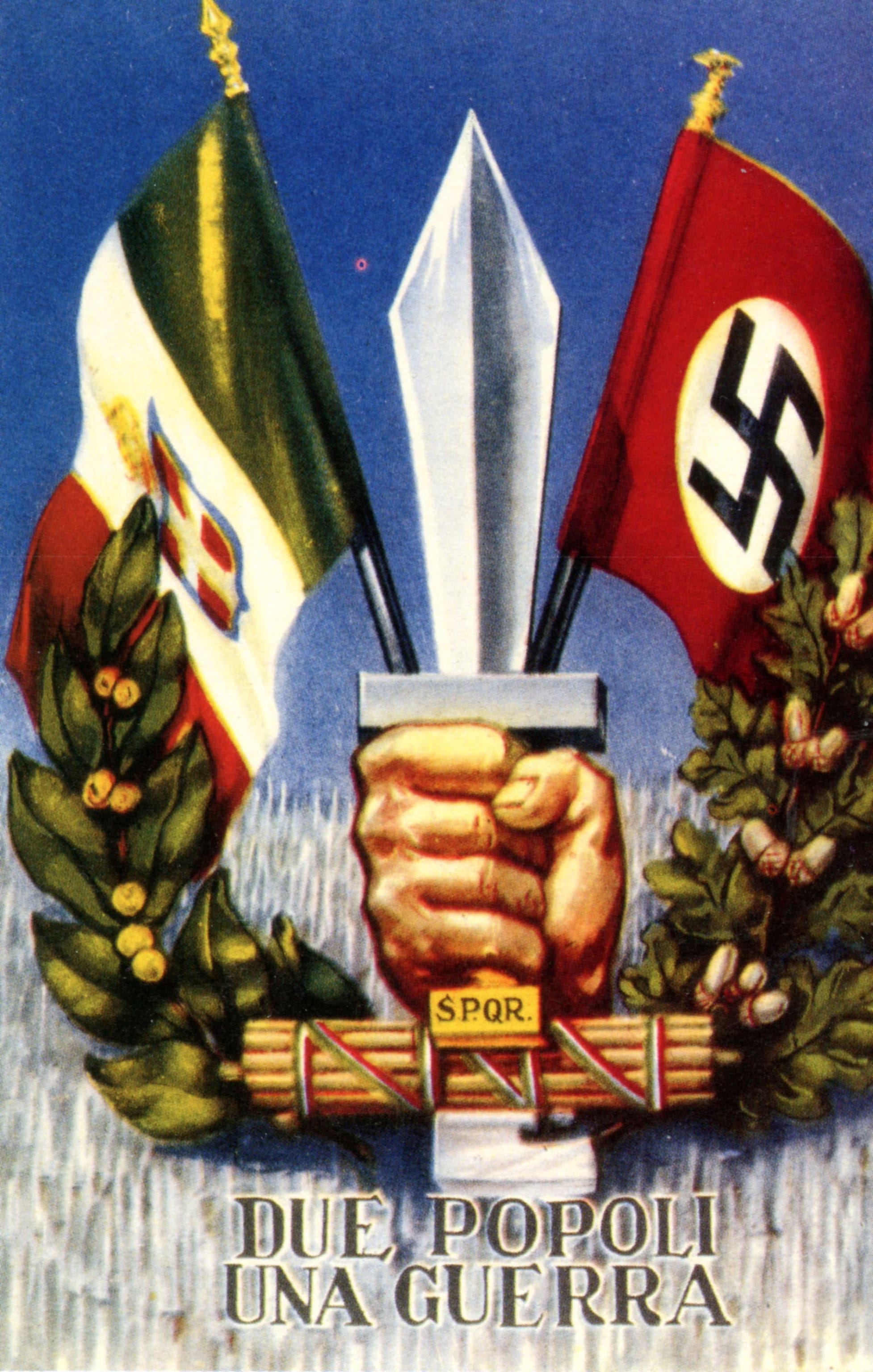
What followed in the immediate aftermath felt, to many, like a rupture. The leader was gone. The uniforms disappeared from the streets. Fascist symbols were swiftly removed from public life, with party insignia, portraits, and salutes disappearing from streets and government buildings in the immediate postwar period. The visible architecture of the regime collapsed almost overnight. For a population exhausted by war and deprivation, this disappearance carried enormous psychological weight. It looked like liberation. It looked like an ending.
In a narrow sense, it was.
The fascist state no longer governed. Mussolini no longer ruled. The formal structures that had enforced authoritarian control were dismantled or discredited. Italy began the process of political reconstruction with remarkable speed, drafting a new constitution and reestablishing democratic institutions within a few short years.
But what vanished quickly were the most obvious elements of fascism, not its deeper imprint.
Authoritarian habits did not dissolve with the regime. Years of centralized power had reshaped how people related to authority, to institutions, and to one another. Deference had been learned. Silence had been practiced. Risk avoidance had become rational. Even in the absence of overt repression, these behaviors persisted, not as ideology, but as instinct.
Informal networks also endured. The end of the regime did not mean the end of relationships built within it. Former officials, party members, collaborators, and beneficiaries did not evaporate. Many repositioned themselves quietly, retaining influence through personal ties, local power structures, and professional continuity. Accountability was uneven, and in many cases absent. The machinery of everyday life required people to work with those who had served the old order, whether they trusted them or not.
Perhaps most destabilizing was the emergence of nostalgia and denial. For some, fascism had become easier to remember than to confront. The years of dictatorship were selectively reframed as a time of order, national pride, or stability, with violence and repression minimized or rationalized. Others preferred silence altogether, treating the past as something better left undisturbed. The desire to move on, understandable as it was, often came at the cost of honest reckoning.
These forces combined to create a strange and fragile transition. Italy was no longer fascist, but it was not yet fully disentangled from fascism either. Democratic institutions were being rebuilt atop a society still carrying the habits and compromises of authoritarian rule. The visible danger had passed, but the quieter residues remained.
This gap between what ended and what endured is the heart of the problem. Fascism does not rely solely on leaders and symbols. It reshapes behavior, rewards accommodation, and embeds itself in social and political relationships. When it falls, those changes do not automatically reverse. They linger, often unnoticed, shaping the post-authoritarian landscape long after the spectacle of collapse has faded.
1945 marked the end of a regime. It did not mark the end of fascism’s influence. That work would unfold slowly, unevenly, and incompletely over the decades that followed.
The long reconstruction
Italy’s formal reconstruction began almost immediately after the war. Within three years of Mussolini’s fall, the country adopted a new constitution that rejected authoritarianism outright and embedded democratic safeguards at its core. The document emphasized civil liberties, separation of powers, and protections against the concentration of executive authority. On paper, it represented a decisive break from the fascist past.

The speed of this constitutional process was striking. After decades of dictatorship and years of war, Italy moved quickly to reestablish democratic legitimacy. Elections were held. Institutions were reconstituted. A legal framework for democracy was put in place with urgency and seriousness. Compared to the violence and collapse that preceded it, the transition appeared orderly and forward-looking.
Yet the constitutional project carried an inherent tension. The architecture of democracy was rebuilt far faster than the culture required to sustain it.
One reason was the way the recent past was remembered. The Italian resistance played a vital role in opposing fascism and aiding liberation, but its story quickly took on a mythic quality. In the postwar years, the Italian resistance was elevated as a unifying national story, often standing in for a broader reckoning with how widely fascism had been accommodated in everyday life. This selective memory allowed many Italians to see themselves as victims or quiet opponents of the regime, rather than as participants in a system that had depended on mass compliance.
Mythology served a purpose. It offered moral clarity in the aftermath of moral collapse. It provided heroes in a moment when the nation needed them. But it also narrowed the space for honest accounting. By elevating resistance as the defining experience, it pushed aside harder questions about collaboration, silence, and benefit. The story of fascism became something that had been imposed, rather than something that had been lived with and, in many cases, adapted to.
Justice followed a similar pattern. Some fascist leaders were prosecuted or purged, but accountability was inconsistent and often limited. In 1946, Italy enacted a broad amnesty that reduced sentences for many former fascists, prioritizing political stability and administrative continuity over comprehensive accountability. Practical concerns shaped decisions. The state needed experienced administrators. Communities needed to function. As a result, many who had served the regime reintegrated into public life with little scrutiny, while victims of repression received uneven recognition.
Reconciliation, when it occurred, was often informal rather than deliberate. There was no singular national process to confront the moral damage of fascism in full. Instead, the country moved forward through a combination of legal reform, economic rebuilding, and collective silence. This approach reduced immediate conflict, but it left tensions unresolved beneath the surface.
What emerged was a democracy with strong formal protections and fragile underlying trust. Laws changed more quickly than expectations. Institutions were rebuilt before confidence in those institutions could fully take root. The result was a kind of democratic scaffolding: a sturdy external framework erected to support a society still recovering from years of distortion and fear.
Scaffolding is necessary. It allows construction to proceed when the structure itself is not yet stable. But it is not the finished building. Without time, reinforcement, and shared commitment, it remains provisional. Italy’s postwar democracy depended on this scaffolding for decades, functioning while carrying the weight of unresolved history.
This imbalance helps explain why the legacy of fascism continued to surface long after its formal defeat. Democratic systems were in place, but democratic trust was still under construction. The work of repair extended far beyond constitutions and elections, into memory, accountability, and the slow rebuilding of civic confidence.
Fascism after fascism
The persistence of fascism in Italy did not take the form many expected. It did not return as a centralized dictatorship or announce itself with the symbols of the past. Instead, it survived through adaptation. In 1946, former fascists helped establish the Italian Social Movement, a party that rejected dictatorship rhetorically while retaining nationalist and authoritarian themes. Political movements emerged that distanced themselves rhetorically from Mussolini while preserving elements of fascist ideology under new names and softer language. Former supporters reorganized, reframed their commitments, and reentered public life without fully confronting what those commitments had been.
This was not a failure of law. Fascist parties were formally banned, and explicit allegiance to the old regime was widely discredited. What endured were ideas, habits, and networks that could be expressed without invoking fascism directly. Nationalism could be recast as cultural pride. Authoritarian instincts could be framed as a desire for order. Exclusion could be justified as common sense. The absence of overt fascist symbols made these continuities easier to overlook and easier to tolerate.
Over time, this persistence was reinforced by a different force: exhaustion. As years passed, the urgency of reckoning faded. A new generation, focused on economic recovery and political stability, inherited a democracy that functioned well enough on the surface. The language of closure became more common. Italians were encouraged to look forward rather than backward, to treat fascism as a settled chapter rather than a living influence.
“We have moved on” became a form of reassurance. It signaled progress, maturity, and normalcy. It also served as a convenient way to avoid reopening difficult questions. The phrase implied that the work was finished, that vigilance was no longer required, and that revisiting the past risked unnecessary division. In practice, it often meant that unresolved issues remained unresolved by design.
This normalization of closure had consequences. Without sustained public engagement with the legacy of fascism, its quieter expressions faced less resistance. Post-fascist ideas could circulate without being named as such. Authoritarian rhetoric could reenter mainstream discourse framed as pragmatism or realism. The absence of dramatic warning signs made the danger seem abstract, even when its effects were tangible.
Decades later, these dynamics still matter. Italy’s experience demonstrates that the passage of time does not automatically dissolve authoritarian influence. In some ways, time makes it more elusive. As memories fade and narratives simplify, the conditions that allowed fascism to take root can reemerge in altered form. What once required force can later rely on familiarity. What was once contested can become background noise.
Fascism after fascism is rarely a revival of the past. It is a continuation of unfinished business. It draws strength from selective memory, incomplete justice, and the belief that history’s hardest lessons have already been learned. Italy’s postwar experience shows how easily a society can mistake endurance for resolution, and how dangerous that mistake can be. Long after the war, post-fascist parties continued to win seats in parliament, underscoring how authoritarian ideas can persist within democratic systems once they have been culturally normalized.
This is why the story does not end with reconstruction. The true measure of recovery lies not in how quickly democracy is restored, but in how consistently it is defended long after the urgency has faded.
What ends, and what lingers
Italy’s experience makes one fact unavoidable: fascism ends politically before it ends culturally.
The removal of a leader, the collapse of a regime, and the restoration of democratic institutions can happen within a relatively short span of time. Those changes are visible, documentable, and often celebrated. They offer a sense of resolution that is emotionally compelling and politically useful. But they do not, on their own, undo the deeper work authoritarianism has done.
Culture moves more slowly than law. Habits outlast decrees. Moral reflexes shaped under pressure do not disappear when pressure is lifted. The behaviors fascism encourages—deference, silence, accommodation, selective memory—persist precisely because they were adaptive. They helped people survive. They are not easily unlearned.
Italy rebuilt its democratic framework in the years following 1945, but the cultural work of disentanglement stretched across generations. The residue of authoritarianism did not remain because democracy failed, but because recovery demanded more than institutional repair. It required sustained attention to memory, accountability, and trust—work that rarely unfolds on a clear timetable.
This is the lesson that tends to be lost when fascism is treated as a finished chapter rather than a continuing influence. The danger is not only the return of overt dictatorship. It is the quiet endurance of the assumptions that made it possible in the first place. When those assumptions are left unexamined, they remain available for reuse.
If fascism ends politically before it ends culturally, then the moment of collapse is not the conclusion of the story. It is the beginning of a longer, more ambiguous phase—one in which vigilance replaces urgency, and repair replaces resistance as the dominant task.
That realization forces a harder question. If history tells us that authoritarian damage outlasts the regime itself, what does that mean for societies living in the aftermath? And more pointedly, what does it require of those who believe they have already reached the end?
Italy offers the framework. The present demands that we apply it. This matters because many societies reach the moment after collapse and assume the most difficult work is behind them. History suggests the opposite.
________________________________________________________________
Italy’s story does not offer comfort. It offers calibration.
It reminds us that the fall of a leader is not the end of an era, that democratic reconstruction can move faster than democratic trust, and that authoritarian influence often survives in the ordinary habits of a society that believes it has already moved on. These are not failures unique to Italy. They are patterns that appear wherever authoritarian power has been normalized and then abruptly removed.
The question, then, is not whether Italy’s experience matters. It is whether we are willing to recognize similar dynamics closer to home.
In the next essay, this framework shifts to the United States after Donald Trump. Not to argue that history is repeating itself, but to examine how cultural damage persists even when formal power changes hands, and why expectations of rapid recovery misunderstand the nature of the problem.
If fascism ends politically before it ends culturally, then the most important work often begins after the moment we are told the danger has passed.