
This was not a chaotic week.
There were no emergency declarations, no tanks in the streets, no single headline that screamed constitutional crisis. If you were skimming news between holiday errands, it might have looked like background noise.
Taken together, the past week tells a clear story. Power is not being asserted through spectacle. It is being exercised through institutions. Quietly. Incrementally. And in ways Kentucky is especially vulnerable to.
A Week Defined by Institutional Pressure
Several national developments this week weren’t dramatic in isolation, but together they reveal a governing pattern: weaken the independence of civic institutions and reward loyalty over expertise.
For example, ongoing pressure within the Department of Justice has broadened this month to include personnel actions targeting prosecutors and investigators who handled January 6 cases, even in the absence of new evidence of wrongdoing. Former officials say the move reflects political influence over what should be neutral law enforcement functions. This dynamic was reported on December 17 in The Guardian and Reuters (“They prosecuted the Capitol rioters. Now the rioters and the DOJ are after them.”). Reuters
At the same time, a federal appeals court upheld broad executive authority over National Guard deployment in Washington, D.C., limiting the ability of local officials to challenge the action. While the ruling itself doesn’t change Kentucky policy, it underscores a broader trend: expanding executive latitude at the expense of local or procedural checks. WHAS11
These are structural signals — not headlines designed to go viral — but they demonstrate how institutional norms are being reshaped at a national level.
Why Kentucky Is Especially Exposed
Kentucky sits downstream from these pressures in three distinct ways:
Public Education and Libraries Are Already Battlegrounds
A striking example of this dynamic closer to home is Kentucky’s ongoing library and educational materials controversies.
Over the past year, challenges to library content in the state have soared. Incidents in Kentucky involving challenges to public library books — often tied to LGBTQ+ themes — rose substantially in 2024, with reported challenges increasing by more than a thousand percent compared to the prior year. Kentucky
That wave of conflicts has not been abstract. School districts in Kentucky have enacted or interpreted state laws in ways that resulted in hundreds of books being removed from shelves. In Boyle County, public schools removed more than 100 books from school libraries in 2023 in the name of compliance with restrictions in Senate Bill 150, which prohibits certain instruction on gender and sexual orientation and has been interpreted by some officials as applying to library collections. Louisville Public Media
Those actions came amid broader statewide debates over Kentucky educational policy — including a 2023 Senate passage of a measure making it easier for parents to challenge instructional materials. Critics, including the ACLU of Kentucky and Democratic lawmakers, warned such measures could lead to censorship and limit access to diverse ideas. AP News
These are not isolated episodes. They are structural pressures on institutions of learning and information — the very places where ideas should be freely exchanged.
Weak Accountability in State Politics
Kentucky’s political structure — characterized by uncompetitive legislative maps and strong one-party rule — leaves fewer institutional guardrails when these pressures mount. Competitive elections and cross-institutional checks often force compromise or slow momentum on controversial changes. When these fail, institutions reduce their own risk exposure by preemptive compliance or retreat.
This was reflected earlier in the week even in national commentary from Kentucky’s own Senator Rand Paul, who criticized aggressive partisan redistricting strategies as potentially fueling political tensions. While the context was national, a sitting Kentucky U.S. Senator speaking to such risks signals the fractures within an already strained democratic landscape. Yahoo
National Narratives Are Already Local
National rhetoric casting educators, librarians, bureaucrats, and civil servants as enemies rather than professionals aligns with narratives already active in Kentucky public discourse. That alignment normalizes distrust in civic institutions and conditions the public to accept or even demand their weakening.
A Kentucky Case Study: When Libraries Become the Battleground
This pattern is already visible in Kentucky.
Across Kentucky, library boards and school districts have faced sustained pressure from organized groups seeking to influence what counts as acceptable public information.
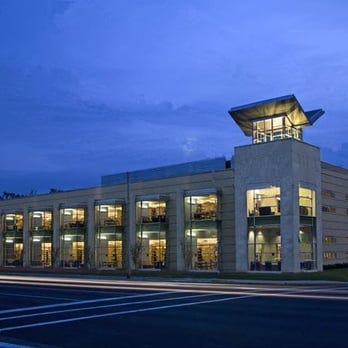
In Daviess County, crowds have repeatedly used public comment periods at library board meetings to demand removal of materials they consider morally objectionable, framing their concerns as a defense of children — but with undertones suggesting neutrality itself is incompatible with their values. Local governance meetings, which once focused on mundane budget or service items, have become venues for moral and ideological debates about what libraries should represent. WKYU FM
Elsewhere, Boyle County Schools pulled over 100 books under the rubric of complying with state restrictions on discussions of gender identity and sexual orientation. Many of the affected titles included works dealing with LGBTQ+ themes, diverse lived experiences, and complex social histories. Louisville Public Media
These episodes are more than culture wars. They are stress tests on the idea of public goods — whether a public library is a resource for all community members or a screened space curated for ideological comfort.
What these cases share is a pattern of pressure on institutions to conform to narrow expectations, reducing their capacity to serve diverse constituencies. That pattern echoes the institutional pressures reported at the national level this week.
What Did Not Happen — And Why It Matters
This week had no single explosive moment. No dramatic executive action. No civil liberties crisis breaking in the headlines.
That absence is precisely the risk.
Democratic erosion — whether through redistricting, executive prerogatives, or library pressures — often unfolds through normalization: shifting expectations for institutions, redefining who counts as a legitimate professional or a threat, and encouraging entities to prioritize self-protection over mission.
Kentucky has already seen this play out in education policy and civic spaces. This week’s national developments did not create the trend — they amplified it.
Work You Can Do
Kentuckians who care about democratic institutions should not wait for a dramatic crisis to respond. The work is here, and it is quiet:
Watch the meeting agendas for school boards, library boards, and university committees.
Attend the meetings.
Ask officers and trustees how they define their mission.
Support public servants and educators when they stand for neutrality and access to information.
Speak up when institutional independence is framed as ideological bias.
And do not let the exercise of power go unnoticed simply because it is not loud.
Democracy in Kentucky will be shaped just as much by these everyday battles over information and trust as by any headline crisis.