
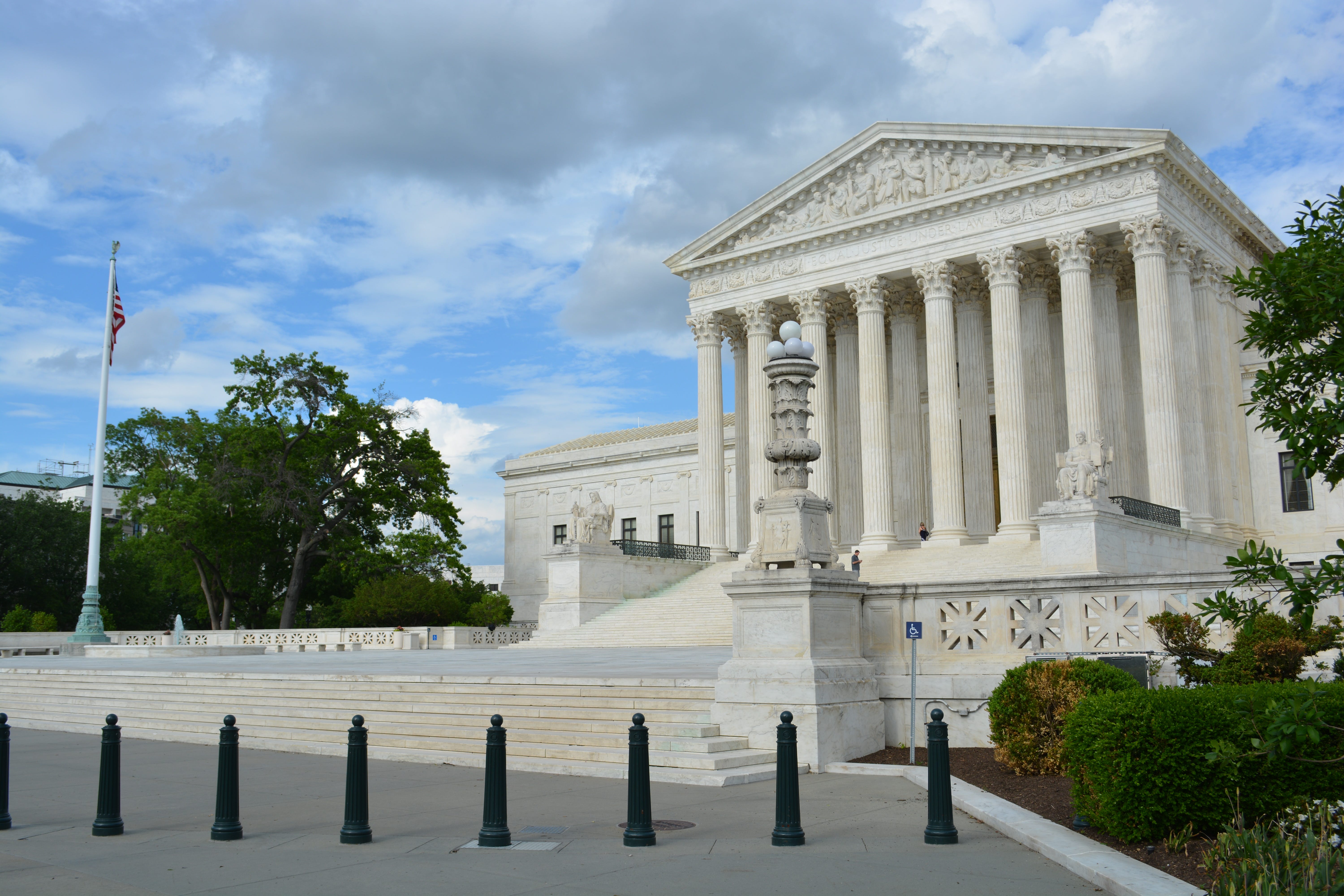
The U.S. Supreme Court agreed on June 15, 2026, to hear a Trump administration appeal involving prolonged immigration detention without bond hearings.
The case began with two lawful permanent residents in New York, Carol Williams Black and Keisy G.M., who were detained by U.S. Immigration and Customs Enforcement while their removal cases were pending. Black was detained for seven months. G.M. was detained for twenty-one months. Neither received a bond hearing at the start of detention or during detention.
The Second U.S. Circuit Court of Appeals ruled that the Constitution’s due process guarantee bars unreasonably prolonged detention under 8 U.S.C. § 1226(c) without a bond hearing. The court also said that when detention has already become unreasonably prolonged, the government must justify continued detention by clear and convincing evidence.
The Supreme Court has now agreed to review that ruling.
The case began in New York, but the ruling could affect Kentucky because ICE detention already operates through county jails here.
When the federal government holds people in local detention facilities, national detention rules become county-level realities.
What happened
On June 15, 2026, the U.S. Supreme Court agreed to hear the federal government’s appeal in a case involving the lengthy detention of certain noncitizens with pending deportation proceedings.
The case concerns 8 U.S.C. § 1226(c), a federal immigration statute that requires detention of certain noncitizens who have been convicted of specified crimes or fall within other listed categories. The statute sharply limits release while removal proceedings are pending.
The two people at the center of the case were lawful permanent residents. Black, a Jamaican citizen, had lived in the United States since 1983. G.M., a Dominican citizen, became a lawful permanent resident in 2011. Both were detained by ICE after criminal convictions while their immigration cases proceeded.
Each filed a habeas corpus petition in federal court. A habeas petition asks a court to review whether the government has legal authority to keep someone detained.
The Second Circuit ruled in 2024 that due process does not allow unreasonably prolonged detention under § 1226(c) without a bond hearing. The court did not create a fixed deadline that applies in every case. It used a case-specific approach and held that both men were entitled to individualized review.
The federal government asked the Supreme Court to review that decision. The case is expected to be argued during the Court’s next term, which begins in October 2026.
No new national rule has been issued yet. The Supreme Court has agreed to decide whether the lower court’s due process rule should stand.
How bond hearings work in immigration detention
Federal immigration law allows the government to detain people while deciding whether they can be removed from the United States.
Under 8 U.S.C. § 1226(a), the Attorney General may detain a noncitizen while removal proceedings are pending, or may release that person on bond or conditional parole. Section 1226(c) is different. It directs the government to take certain people into custody and allows release only in very narrow circumstances.
A bond hearing gives a detained person a chance to ask an immigration judge for release while the immigration case continues.
The judge can consider whether the person is a flight risk, whether the person poses a danger, whether alternatives to detention exist, and whether a bond amount is realistic.
The Second Circuit said the government may detain people under § 1226(c) without an initial bond hearing. But it also said detention can become so long that due process requires an individualized hearing. In Black’s case, the court approved a bond hearing in which the government had to justify continued detention with clear and convincing evidence. The court also directed the immigration judge to consider the ability to pay and alternatives to detention.
The administration’s appeal asks the Supreme Court to narrow or reject that due-process rule. If the administration wins, ICE may have broader authority to keep certain detained immigrants in custody for long periods without the bond-hearing protections the Second Circuit required. If the detainees win, people held under § 1226(c) may have stronger constitutional arguments when detention becomes prolonged.
The Supreme Court has considered immigration detention before. In 2003, the Court upheld mandatory detention under § 1226(c) in Demore v. Kim. In 2018, the Court held in Jennings v. Rodriguez that the statute itself does not require periodic bond hearings. The current case asks a constitutional question left unresolved by those decisions: whether due process requires a bond hearing once detention becomes unreasonably long.
How federal detention becomes a Kentucky jail issue
Kentucky is already part of the federal immigration detention network through county jails.
ICE lists the Oldham County Detention Center as a detention facility. Oldham County has also been connected to ICE through 287(g) agreements, which allow trained local officers to perform certain immigration-enforcement functions under federal supervision.
Local reporting has documented the county-level impact. In April 2025, WDRB reported that the Oldham County Detention Center had changed from a 72-hour ICE hold to full-time ICE detention. Oldham County Judge-Executive David Voegele told WDRB that the county cooperates with federal law, but that Jailer Jeff Tindall made the decision to participate in the 287(g) program.
That detail matters for Kentucky readers because it names the local office with operational authority. In Oldham County, the jailer decided to participate. The fiscal court controls the county budget and provides a public forum where residents can question jail revenue, jail capacity, and the county’s relationship with ICE.
The Kentucky connection is also financial. Local jails can receive daily payments for holding federal detainees. WDRB reported that Oldham County received $73 per day for each federal inmate. Other Kentucky reporting has found that ICE detainees are held in multiple Kentucky county jails and that per diem rates can vary by county.
When detention lasts longer, local jail capacity, staffing, medical care, transportation, legal access, family contact, and county revenue can all be affected. A Supreme Court ruling that makes bond hearings harder to obtain could increase the time some people spend in custody. A ruling that affirms due process limits could create more legal avenues for detained people to seek review.
For Kentucky families, the issue is immediate in a different way. A person held in an ICE bed at a Kentucky jail may be far from their family, lawyer, employer, church, school, or medical care. A bond hearing can determine whether that person waits for the immigration case at home or behind bars.
Who is affected
People detained by ICE are affected first. The case concerns people who may spend months or years in custody while removal proceedings continue.
Families are affected when a parent, spouse, caregiver, worker, or relative is detained far from home. Detention can interrupt wages, housing stability, caregiving, transportation, school routines, and access to legal counsel.
County jail staff are affected when local facilities hold federal detainees. Longer detention can increase demands on corrections officers, medical staff, transportation staff, interpreters, food service, and facility administration.
County taxpayers are affected when federal detention revenue becomes part of a jail’s budget picture. A county may receive per diem payments, but it also carries public responsibility for conditions, staffing, medical care, liability, and public trust.
Legal-aid lawyers and immigration attorneys are affected because prolonged detention cases require habeas filings, preparation for bond hearings, review of court and immigration records, and contact with people who may be moved between facilities.
Kentucky residents are affected when a county jail accepts federal detainees, collects a daily payment, assigns local staff to federal custody work, and brings those choices into the county budget.
Once ICE detention is part of a jail’s operations, fiscal court members can ask what the county is being paid, what the county is spending, and what legal or medical responsibilities come with the arrangement.
What you can watch or do
Start with the Supreme Court docket. The next key documents will be the certiorari petition, the respondents’ briefing, amicus briefs, the argument calendar, the oral argument transcript, and the final decision.
Track Kentucky jail contracts. Ask whether your county jail holds ICE detainees, participates in 287(g), or receives federal payments for detainee housing.
Read fiscal court budgets. Look for jail revenue lines tied to federal inmates, ICE detainees, U.S. Marshals, or intergovernmental detention agreements.
Attend fiscal court meetings when jail budgets, detention contracts, jail staffing, bond debt, medical costs, or public safety spending are on the agenda.
Request public records. Useful documents include ICE contracts, 287(g) memoranda of agreement, per diem rates, monthly invoices, transportation bills, detainee counts, medical care contracts, grievance policies, and communications with ICE.
Ask specific questions. Does the jail hold ICE detainees? How many? Under what agreement? What is the daily rate? Who signed the agreement? Does the fiscal court review the revenue? How much does the county spend to support federal detention work? How does the jail ensure access to attorneys, families, medications, interpretation, and court hearings?
Compare local claims with documents. If a county says it is only cooperating with federal law, ask which agreement requires the specific practice. If a county says detention revenue helps the budget, ask how much revenue came in, how it was spent, and what costs were excluded from the public explanation.
Share local documentation with reporters, advocacy groups, and residents who attend fiscal court meetings.
The Supreme Court will decide the constitutional rule.
You can still examine whether your county jail participates in federal detention and what that participation costs.
Further reading and sources
Primary sources:
8 U.S.C. § 1226, Apprehension and detention of aliens
https://uscode.house.gov/view.xhtml?req=(title:8%20section:1226%20edition:prelim)
Second Circuit decision, Black v. Decker; G.M. v. Decker, May 31, 2024
https://law.justia.com/cases/federal/appellate-courts/ca2/20-3224/20-3224-2024-05-31.html
Second Circuit rehearing order, Black v. Almodovar; G.M. v. Almodovar, Oct. 24, 2025
https://law.justia.com/cases/federal/appellate-courts/ca2/20-3224/20-3224-2025-10-24.html
ICE 287(g) program page
https://www.ice.gov/identify-and-arrest/287g
ICE Oldham County Detention Center facility page
https://www.ice.gov/detain/detention-facilities/oldham-county-detention-center
Reporting and Kentucky context:
Reuters, Supreme Court to hear Trump appeal involving lengthy detention of certain immigrants, June 15, 2026
https://www.reuters.com/world/supreme-court-hear-trump-appeal-involving-lengthy-detention-certain-immigrants-2026-06-15/
WDRB, Oldham County residents question jail’s new policy to indefinitely hold illegal immigrants, April 15, 2025
https://www.wdrb.com/news/oldham-county-residents-question-jails-new-policy-to-indefinitely-hold-illegal-immigrants/article_7ff5b586-6714-4327-b34d-248b207b3070.html
Kentucky Lantern, More than 1,000 people being held by ICE in Kentucky jails, analysis finds, March 16, 2026
https://kentuckylantern.com/2026/03/16/more-than-1000-people-being-held-by-ice-in-kentucky-jails-analysis-finds/
KyCIR/LPM, Trump’s deportation machine sends thousands of immigrants to Kentucky jails, May 26, 2026
https://www.lpm.org/investigate/2026-05-26/trumps-deportation-machine-sends-thousands-of-immigrants-to-kentucky-jails