
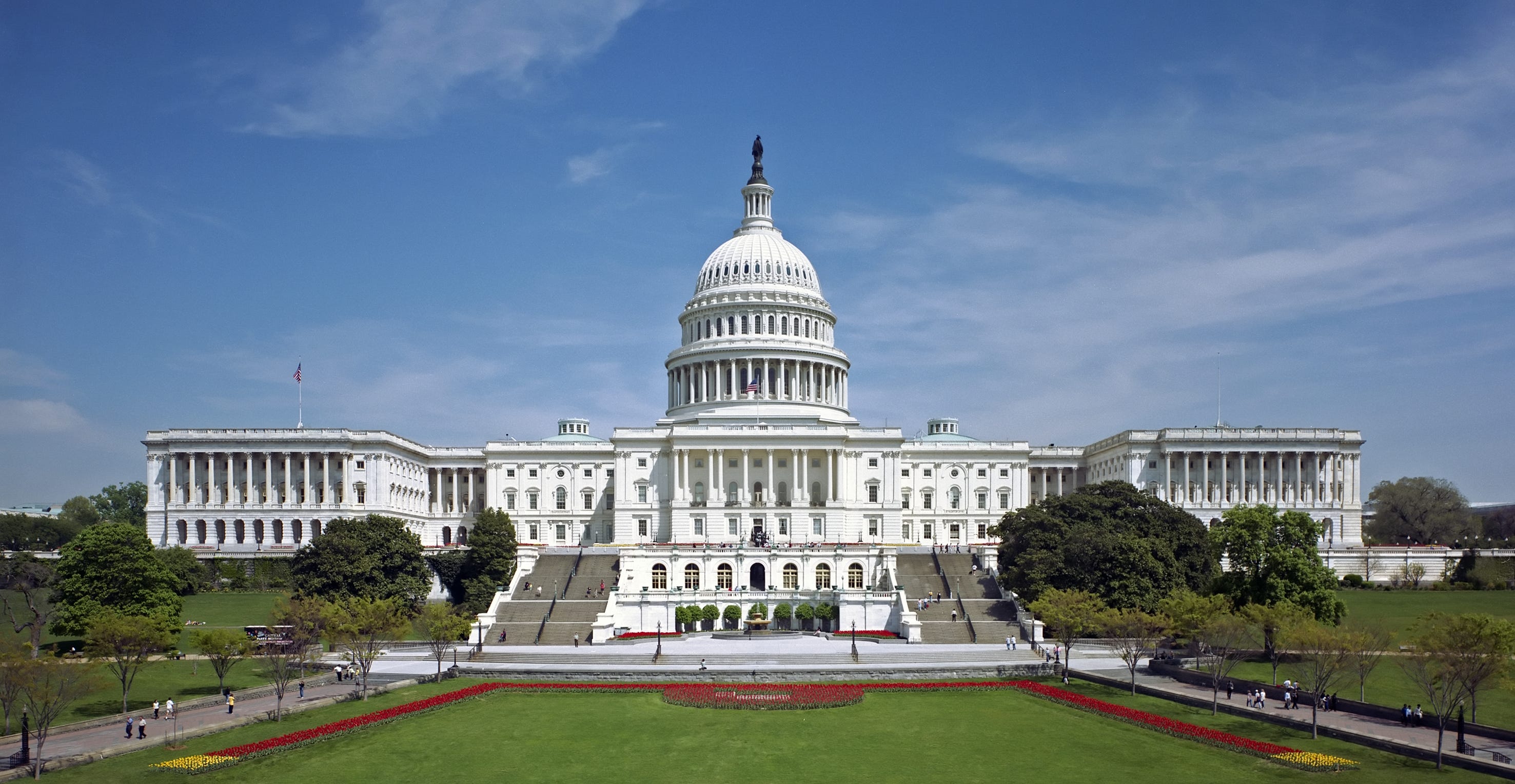
At 4:51 a.m. on June 5, 2026, the U.S. Senate passed S. 2, the FY2026 Budget Reconciliation Bill, as amended, by a 52-47 vote. Republican Senator Lisa Murkowski voted no. Democratic Senator Michael Bennet did not vote. The bill now goes to the U.S. House.
The Senate package would provide roughly $69.5 billion for immigration enforcement, with money directed to U.S. Immigration and Customs Enforcement, U.S. Customs and Border Protection, border security technology, screening, and other Department of Homeland Security needs. The money would be appropriated in fiscal year 2026 and remain available through the end of fiscal year 2029.
For Kentucky, the local connection is already visible in county jails.
Federal data reviewed by KyCIR and Kentucky Public Radio found that ICE held 9,335 people in Kentucky jails between October 2022 and early March 2026, and nearly half of them were brought here from other states. Kentucky is not waiting for a future immigration debate to become involved. Several county jails are already being paid to hold people for ICE.
The vote before dawn
The Senate-passed package is part of the budget reconciliation process. Reconciliation allows certain tax, spending, and debt-limit legislation to pass the Senate with a simple majority instead of the 60 votes usually needed to overcome a filibuster.
That procedural choice is central to the story. Congress is using a budget tool to fund immigration enforcement agencies for multiple years. According to the American Action Forum’s breakdown of the Senate-passed package, the bill includes $38.5 billion for ICE, $22.6 billion for CBP, $3.5 billion for border security, technology, and screening, and $5 billion in additional funding for the Department of Homeland Security.
The funding would cover hiring, pay, training, equipment, transportation, information technology, facility maintenance, fleet maintenance, and coordination with state and local authorities for immigration enforcement activities.
In plain language, this bill funds people, vehicles, beds, equipment, and intergovernmental cooperation.
The Senate also voted on amendments during the overnight session. The Senate Daily Press recorded failed amendments related to the Immigration Detention Ombudsman, body cameras for agents and officers, DACA, voting requirements, and other issues. One amendment concerning the Immigration Detention Ombudsman failed by a party-line vote of 46-53. A later amendment to equip agents and officers with body cameras was also taken up before final passage.
The bill is not law yet. The House still has to act, and the final text should be checked before quoting section language in a permanent reference piece. But the Senate vote is a real development because it sends the House a multi-year enforcement package with large sums already assigned to ICE and CBP.
How ICE funding can become county jail revenue
Federal immigration enforcement does not depend only on federal buildings near the border. ICE uses federal officers, federal contracts, transportation arrangements, county jails, local detention space, and cooperation agreements with local law enforcement.
That is how a Senate vote in Washington can become a jail-budget issue in Kentucky.
ICE can pay county jails to hold immigration detainees. KyCIR reported that the federal government pays a dozen Kentucky jails up to $100 per day to hold someone for ICE, with reimbursement also available for transportation and guarding detainees admitted to hospitals. In Oldham County, records obtained by KyCIR showed the jail invoiced ICE for about $3.7 million since Trump returned to office.
The practical effect is not limited to arrests inside Kentucky. KyCIR found that nearly half of the people ICE held in Kentucky between October 2022 and early March 2026 were brought from 37 other states, including Indiana, Illinois, Wisconsin, Arizona, and New York.
That makes Kentucky a detention destination.
A person arrested at an ICE office or workplace in another state can be transported to a county jail in Leitchfield, La Grange, Burlington, Madisonville, or another Kentucky facility. The local jail receives federal money. The family may have to find a person now held hours away. The attorney may have to file in a different federal court.
Kentucky is already a detention site
Kentucky already has county jails holding people for ICE. The League of Women Voters of Kentucky’s February 2026 report used ICE Detention Management data and jail website reviews to examine Kentucky detention facilities. The report identified discrepancies in how some county jail websites listed ICE detainees and federal detainees.
The League’s report found that the websites of Boone, Daviess, Grayson, Hopkins, and Oldham counties identified many inmates held for immigration reasons. The report also noted that the Campbell, Christian, and Kenton County websites showed far fewer people identified as held for immigration reasons than the ICE-reported average daily population numbers indicated.
That is a Kentucky accountability problem. Families, attorneys, journalists, advocates, and taxpayers need accurate jail information to know who is being held, by whom, under what authority, and at what cost.
The Kentucky Attorney General’s Office has already addressed one open-records dispute involving ICE detainer information at the Oldham County Detention Center. In 26-ORD-138, issued March 31, 2026, the Attorney General found that the Oldham County Detention Center violated the Open Records Act when its initial denial did not explain the basis for withholding records, though the office also found the jail did not violate the law when it withheld records exempted by federal regulation.
That decision shows how federal immigration detention can narrow the ordinary public-records pathway. A county jail may hold people. County money, staff, vehicles, and public facilities may be involved. Yet some detainee information may be shielded by federal regulation once ICE is involved.
When jail beds become revenue
Federal detention money can change how local governments talk about jail space.
KyCIR reported that federal payments can generate millions of dollars for county budgets. Boone County’s jailer told KyCIR that federal inmate fees make up about half of the jail’s roughly $12 million annual budget.
That changes the local conversation. Empty jail beds become revenue potential. Transport vehicles become part of a federal detention operation. Fiscal courts may hear the issue framed as budget management, public safety, or jail efficiency rather than as an immigration detention decision.
Oldham County is one of the clearest examples in Kentucky. KyCIR reported that the Oldham County jail held nearly 1,800 people for ICE between October 2022 and early March 2026. The same investigation reported that Oldham County Jailer Jeff Tindall said at a March 2025 public meeting that he expected to get “a lot busier,” and that the jail received approval to spend nearly a quarter of a million dollars on a van and a bus to transport inmates.
When Congress increases ICE funding, arguments about local jail revenue do not become separate from federal immigration policy.
They become one of the means by which the policy is carried out.
Who is affected
People detained by ICE are affected first. Some are arrested in Kentucky. Others are transported here from other states. KyCIR reported that people held in Kentucky by ICE came from more than 100 countries, and about 70% were Hispanic.
Families are affected when a person is moved to a Kentucky jail far from home. A spouse, parent, child, or attorney may not know where someone has been taken. Even when the location is known, travel costs, work schedules, childcare, and language access can make contact difficult.
Immigration attorneys are affected because detention changes the legal case. KyCIR quoted attorney Gwendolyn Starda, explaining that detention can make it harder for people to gather documents and evidence, and that a lawyer licensed elsewhere may have to seek admission to file in federal court in Kentucky.
Kentucky taxpayers are also affected. Federal per diem payments may bring money into a county jail, but local residents still have an interest in staffing, transportation purchases, medical care, liability exposure, public-records access, and whether county officials are using jail capacity for federal immigration detention.
Jail workers are affected because federal detention can change workload, transport duties, classification decisions, medical coordination, and daily operations. County fiscal courts are affected because jail revenue and jail expenses become part of county budget decisions.
The offices that can answer for this
The next federal decision is in the hands of the U.S. House of Representatives. Kentucky’s House members will decide how they vote if the Senate-passed package or a related final bill comes before them.
The federal agencies that would implement the funding are the Department of Homeland Security, ICE, and CBP. ICE would make operational decisions about detention, transport, staffing, contracts, information technology, and coordination with state and local authorities.
In Kentucky, authority is divided across county offices. A county jailer operates the jail. A fiscal court approves budgets and major county spending. A county judge-executive helps set county priorities and the fiscal court’s agenda. A sheriff, police department, or jail may also become involved, depending on the type of federal agreement.
The Kentucky General Assembly does not control federal immigration enforcement, but state lawmakers can examine county jail reporting, state jail data, public-records access, and whether Kentucky taxpayers can see the full cost and revenue picture. The Kentucky Attorney General’s Office can also become involved when open-records disputes arise.
Local residents have more authority than the national debate suggests.
They can ask county jailers and fiscal courts for contracts, invoices, transportation costs, medical cost reimbursements, public meeting records, vehicle purchases, and jail population data. They can compare what ICE reports with what county jail websites disclose.
Questions for House members, jailers, and fiscal courts
Ask Kentucky’s U.S. House members how they will vote on the Senate-passed immigration enforcement package and whether they support multi-year ICE and CBP funding through 2029.
Ask whether the final bill includes funding for detention oversight, body cameras, ombudsman work, reporting requirements, or public complaint processes. The Senate’s overnight votes show that some oversight-related amendments did not pass.
Ask your county jailer whether the jail currently holds people for ICE, how many people it held for ICE in the last fiscal year, what the per diem rate is, and whether the county receives transportation or hospital-guard reimbursement.
Ask your fiscal court for the county’s ICE contract, ICE invoices, transport vehicle purchases, jail staffing changes, and budget lines connected to federal detainee revenue.
Track county jail websites. Compare the jail’s public inmate list with ICE detention data when available. The League of Women Voters of Kentucky report found that some jail websites did not identify ICE detainees in ways that matched ICE-reported average daily population data.
Attend fiscal court meetings when jail budgets, transport vehicles, federal inmate revenue, jail staffing, or detention contracts are on the agenda. Those are the local decisions where federal enforcement funding becomes a county policy choice.
Read the final House version before treating any section as settled law. The Senate vote is important, but the final enacted language will determine exactly how much money is available, which agencies receive it, and what limits or reporting requirements survive.
Further reading and sources
U.S. Senate Daily Press, Thursday, June 4/Friday, June 5, 2026
https://www.dailypress.senate.gov/thursday-june-4-2026/
American Action Forum, “The Senate’s $70-billion Reconciliation Package: What’s In, What’s Out”
https://www.americanactionforum.org/insight/the-senates-70-billion-reconciliation-package-whats-in-whats-out/
KyCIR/Louisville Public Media, “Trump’s deportation machine sends thousands of immigrants to Kentucky jails”
https://www.lpm.org/investigate/2026-05-26/trumps-deportation-machine-sends-thousands-of-immigrants-to-kentucky-jails
League of Women Voters of Kentucky, “ICE Detention in Kentucky: An Initial Report”
https://static1.squarespace.com/static/5da3dbee03dd2c4493abed8b/t/69b2bad0f245e642505847b6/1773320912349/Immigration%2BInitial%2BReport.LWVKY.Feb122026.pdf
Kentucky Attorney General Open Records Decision 26-ORD-138, In re: Kelly Young/Oldham County Detention Center
https://www.ag.ky.gov/Resources/orom/2026/26-ORD-138.pdf
ICE, 287(g) Program
https://www.ice.gov/identify-and-arrest/287g
ICE, Detention Facilities
https://www.ice.gov/detain/detention-facilities