
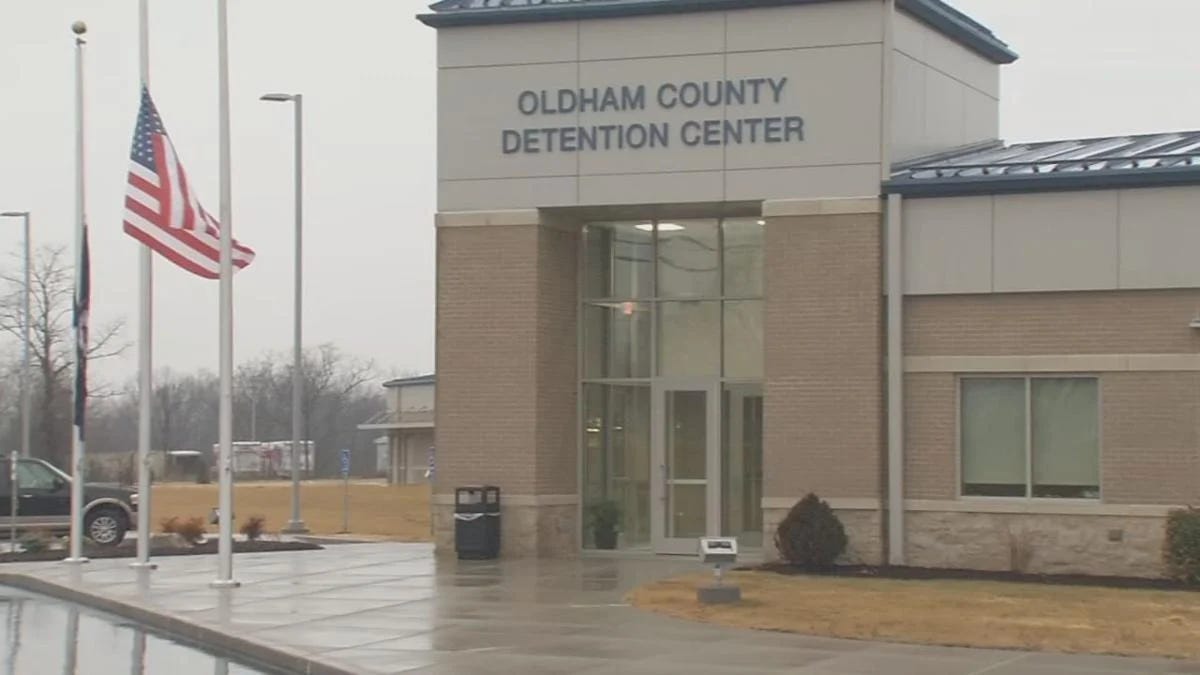
The federal court record keeps circling back to the same place: the Oldham County Detention Center.
From 2025 into spring 2026, OCDC and its jailer, Jeff Tindall, continued to appear in immigration habeas cases in the Western District of Kentucky. Publicly readable orders show grants of relief in some OCDC-linked cases and denials in others. More recent docket entries indicate that the litigation remains active.
That matters because OCDC is not showing up as a single isolated lawsuit or a single unusual detention story. It appears repeatedly in federal habeas litigation, under different captions, before different judges, and in cases that do not all begin the same way. The public record is incomplete, but it still shows a real pattern.
The jail keeps showing up
The newer filings do not all tell a full public story yet. They do show that the OCDC habeas docket is still active.
Public docket trackers list recent OCDC-linked cases, including Duenas-Cobis v. Tindall, Guerrero Gonzalez v. Field Office Director, Epieyu-Nunez v. Tindall, Estrada v. Oldham County Detention Center, and Saldana-Ortiz v. Tindall. In some of those cases, the docket points to Oldham County detainee materials, service on Jeff Tindall, or OCDC named directly in the caption.
The detention center keeps appearing in federal court records, and it is appearing often enough to treat this as an institutional pattern, not a one-off dispute.
The route into detention is not always the same
The public orders that are readable matter because they show that people are not reaching OCDC for detention through a single pipeline.
In Ramirez Batista v. Tindall, Judge Rebecca Grady Jennings granted habeas relief on April 17, 2026. The order says Batista had been in detention since March 4 after local police stopped the vehicle he was driving.
In Ozbay v. Tindall, also decided by Judge Jennings on April 7, 2026, the order describes a different path. Ozbay had been detained since October 20, 2025, while working as an Uber driver during Operation Midway Blitz.
In Herrera-Hernandez v. Tindall, decided the same day, the order says Herrera-Hernandez had been released into the United States on an order of recognizance requiring regular check-ins with immigration officials. The court says he had been detained since March 10, 2026, when he attended one of those required check-ins.
Then there is Anjomshoa v. Oldham County Jail. Judge Claria Horn Boom’s April 16, 2026, order says Anjomshoa had been detained at OCDC while the government tried to carry out a final order of removal. The opinion traces that case through expedited removal, parole, re-detention, a negative credible-fear process, and a final order entered on September 17, 2025, before the court ordered his release.
These are not minor variations on one story. They point to different custody paths ending in the same jail: local police contact, an enforcement operation, a required immigration check-in, and post-final-order detention.
That is useful information even before the full underlying records are in hand.
The record is partial, but it is still useful
A lot remains hard to see from home. Some of the newer cases are easier to track through docket entries than through full, remotely accessible filings. That limits what can be said with confidence about any one detainee’s full procedural history. It does not erase the larger pattern already visible in the public record.
What is visible now is enough to say this plainly: OCDC continues to appear in federal immigration habeas litigation. The filings did not stop in 2025.
The publicly available orders already show that detention at the jail is being pursued through more than one path.
The next records may clarify how intake, classification, transfer timing, and custody authority work inside the jail. But even without that fuller view, the public court record has already established something important. OCDC is not appearing once. It is appearing repeatedly.
Direct sources
Readable public orders
Ramirez Batista v. Tindall
Ozbay v. Tindall
Herrera-Hernandez v. Tindall
Anjomshoa v. Oldham County Jail
Beltran Barrera v. Tindall
Recent public docket entries
Duenas-Cobis v. Tindall
Guerrero Gonzalez v. Field Office Director
Epieyu-Nunez v. Tindall
Estrada v. Oldham County Detention Center
Saldana-Ortiz v. Tindall