
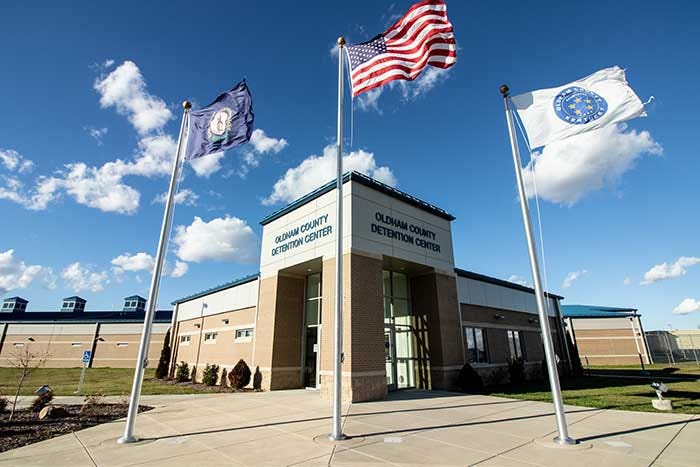
On Tuesday afternoon, March 17,2026 in a routine budget presentation to the Oldham County Fiscal Court, a shift happened. It didn’t come from a protest or outside pressure. It came from the jailer himself.
If you have followed the debate over Oldham County’s agreement with ICE, the central argument has been consistent. The jail needs the revenue. Without it, the numbers do not work. That assumption has shaped the entire conversation.
At this Fiscal Court meeting, that assumption was challenged in plain terms. During the discussion of the 2026–2027 jail budget, Magistrate Kevin Woosley asked a direct question. What happens if the ICE revenue goes away?
The answer mattered because the numbers are significant. Of the jail’s projected $8.7 million in revenue, more than $7.4 million is expected to come from federal sources, including about $3.1 million tied to ICE. This is the financial foundation that has been used to justify the agreement.
The jailer’s response was not what many expected. Jeff Tindall explained that the jail houses inmates from multiple sources. Federal marshals. Other counties. The state. The mix changes over time, but the demand doesn’t disappear.
Then he said something that reframes the entire issue:
“The numbers are always going to be there.”
He went further. If ICE detainees were no longer part of the population, the jail would not sit empty. Other inmates would take those beds. The facility would continue operating.
There was no claim that the jail would shut down nor was there an indication that the system would collapse. No warning of a financial cliff. Instead, the picture that emerged was one of flexibility, a facility that adjusts its population based on available contracts and demand.
That matters because it separates two ideas that have been treated as one: the jail’s ability to operate and the decision to house ICE detainees. They are not the same.
The meeting also made clear how the current model works. The jail is not sustained primarily by local detainees. It relies heavily on outside placements. Federal contracts play a large role in that system, and ICE is one piece of it, but only one.
That means the ICE agreement is not the foundation of the jail. It is a component within a larger structure, and components can be changed.
During the same discussion, Magistrate Chris Haunz and Chief Financial Officer Stan Clark pointed to the financial turnaround since the county built the current facility. Years ago, the jail operated at a loss. Today, it shows a projected surplus. That shift reflects a deliberate move toward a model that brings in revenue through external detainees.
But it also raises a different question.
If the jail is designed to generate revenue by housing people from outside Oldham County, then decisions about who those people are become part of local governance. Not federal policy. Local choice.
That is where the conversation now sits.
For months, the ICE agreement has been framed as something the county must do to keep the jail financially stable. The discussion has focused on legality, contracts, and the broader national immigration system.
What the March 17 meeting introduced is a narrower, more immediate question. If the jail can operate without ICE detainees, what is the basis for continuing the agreement?
That question does not resolve the issue on its own. But it does clarify something that was not clear before. Continuing the ICE agreement is not a condition the county is required to meet to keep the jail operating. It is a decision being made within a system that has other options.
And decisions like that do not sit outside local control.
Further Reading / Source
The jail in OC has consistently had about 100 more people than beds for *months*, at least what folks can see from what the jail itself publicly reports. Is the budget dependent on this overcrowding?