
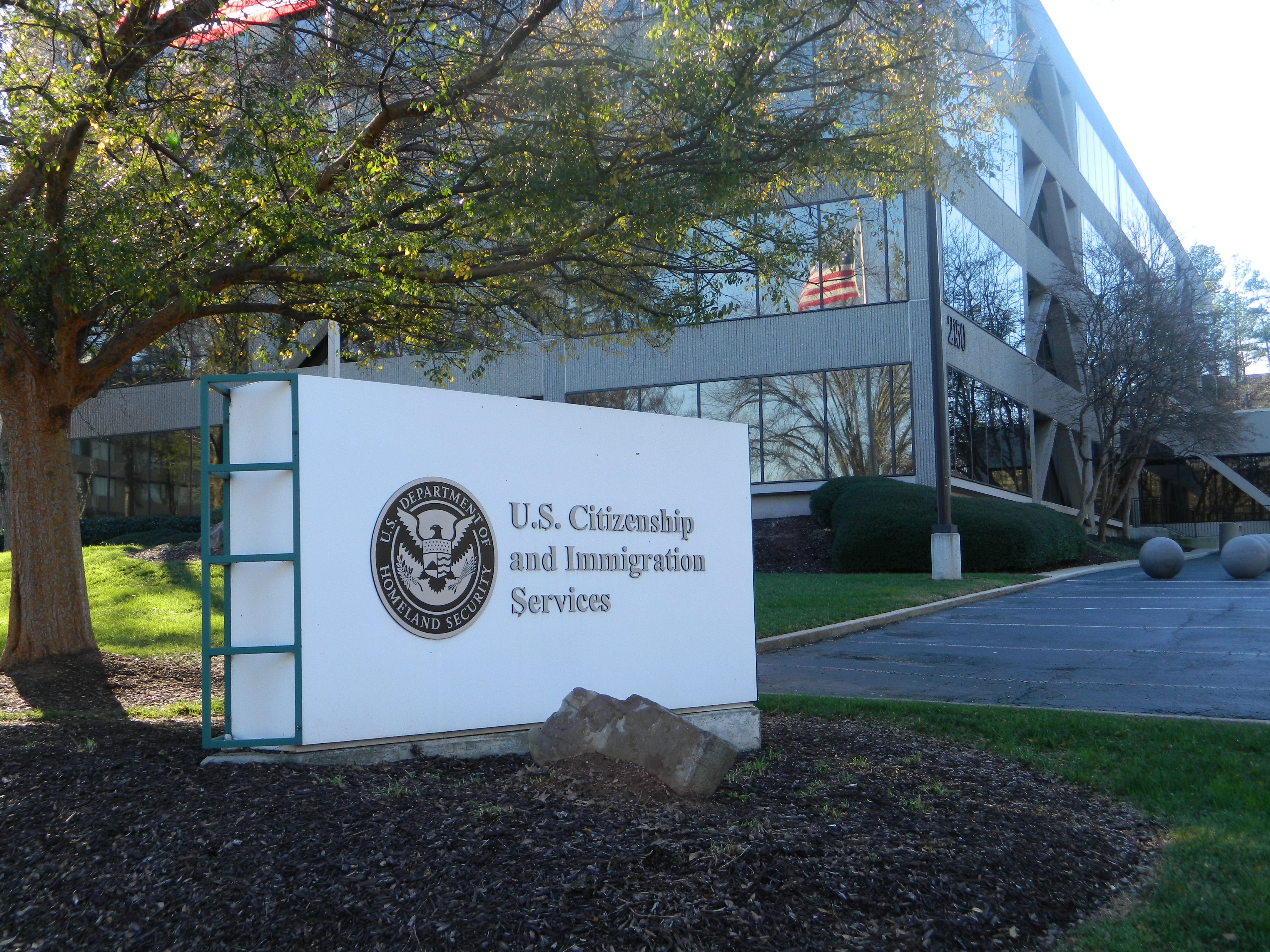
On July 20, the Department of Homeland Security published a 154-page final rule changing how federal officers decide whether some immigrants are likely to become a “public charge.”
The rule, signed by Homeland Security Secretary Markwayne Mullin, takes effect September 18, 2026. It applies to covered applications for admission filed on or after that date and applications to adjust to lawful permanent resident status that are postmarked or submitted electronically on or after September 18.
The rule does not cancel Medicaid, food assistance, housing support, tax credits, or other benefits. It does not direct the Kentucky Cabinet for Health and Family Services to remove anyone from coverage.
It does give U.S. Citizenship and Immigration Services officers wider discretion to consider an applicant’s use of income-based public benefits, along with health, age, income, family circumstances, education, skills, and other evidence. The rule removes several definitions and limits that had governed those decisions since 2022.
Kentucky’s role begins with preventing the federal change from producing inaccurate advice, unnecessary loss of health coverage, or avoidable fear among families who remain legally eligible for assistance.
What happened
Congress has long allowed federal immigration officers to deny admission or permanent residency to certain applicants found likely to become a public charge. The Immigration and Nationality Act requires officers to consider at least five factors: age, health, family status, assets and financial resources, and education and skills.
The Biden administration’s 2022 regulation defined public charge more narrowly. It focused primarily on whether someone was likely to depend on cash assistance for income maintenance or long-term institutional care paid for by the government. The regulation also defined key terms, established an adjudication framework, limited which benefits could be considered, and placed statutory exemptions and waivers in one section of the federal regulations.
The new DHS rule removes federal regulations 8 C.F.R. §§ 212.20 through 212.23. Those sections covered applicability, definitions, the adjudication framework, and exemptions and waivers. DHS is not replacing them with an equally detailed set of regulations.
Under the new approach, an officer may consider an applicant’s application for, approval for, or receipt of any “means-tested public benefit.” DHS defines that broadly as a government-funded benefit whose eligibility depends on whether a person’s income or resources fall below a specified level. Earned benefits such as Social Security retirement, government pensions, unemployment insurance, and veterans’ benefits do not fall within that definition.
DHS says benefit use will remain one part of a forward-looking review. Officers are supposed to consider the nature of the benefit, the amount received, how long the person received it, why it was needed, how recently it was received, and whether the reason for receiving it is likely to continue.
Receiving Medicaid, food assistance, or another income-based benefit will not automatically produce a denial.
DHS says officers must consider all relevant circumstances rather than treating benefit use as conclusive evidence.
The change is still substantial. The federal government has expanded the range of information officers may consider while removing binding definitions that gave applicants and attorneys a clearer picture of how public-charge decisions would be made.
How the new rule works
A public-charge decision generally arises when a covered person seeks admission to the United States or applies to become a lawful permanent resident.
For applications handled by USCIS, the applicant carries the burden of proving admissibility. The revised Form I-485 will require covered applicants to report their application for, approval for, certification for, or receipt of means-tested public benefits after the rule’s effective date. USCIS officers will evaluate that information with the other statutory factors.
The rule applies prospectively in an important respect. Benefits that were excluded under the 2022 regulation will not be reconsidered under the expanded standard when they were received before September 18, 2026. DHS says those earlier benefits will be treated under the rules that applied at the time.
The public-charge provision also does not apply to every immigrant or every immigration application. Congress has exempted several categories, including refugees and asylees adjusting through designated humanitarian pathways, certain trafficking survivors, certain crime victims, and other groups protected by federal law.
DHS removed the consolidated exemption list from the regulation, but it did not repeal those statutory exemptions. The department says USCIS will continue listing them in its Policy Manual and on immigration forms.
Family members’ benefits generally are not treated as benefits received by the applicant. USCIS says it will collect information about the applicant’s own benefit use, not every benefit received by a spouse or child.
There are narrower circumstances in which family benefit information may become relevant. An officer may consider that an applicant’s income is low enough that a legally supported family member qualifies for assistance, or that benefits received by a family member are providing the applicant’s own financial support.
That distinction is especially important for mixed-status households. A U.S.-citizen child’s enrollment in K-CHIP, Medicaid, nutrition assistance, or another program does not automatically become benefit use by an immigrant parent.
Individual families will still need qualified immigration advice. A DCBS eligibility worker, school employee, health-department nurse, or hospital financial counselor can explain benefit rules but usually cannot determine how USCIS will evaluate a particular immigration case.
The rule relies heavily on officer discretion
The final regulation contains less detail than the policy it replaces. DHS says USCIS will provide training, internal reference materials, Policy Manual updates, and other guidance to help officers make consistent decisions.
Those materials matter because the rule permits consideration of any means-tested public benefit and any other factor an officer determines is relevant to the likelihood that an applicant will become a public charge.
DHS declined requests to publish a comprehensive list of covered programs. The department says attorneys and applicants can determine whether a benefit qualifies by asking whether it is government-funded and whether income, resources, or financial need affect eligibility or the benefit amount.
That leaves significant questions for applicants and benefit administrators. Kentucky operates programs with different eligibility formulas, federal funding arrangements, emergency provisions, household rules, and population-specific qualifications.
USCIS officers will have to understand enough about those programs to evaluate an applicant’s circumstances. Applicants will have to decide what to report, gather the required records, and explain why assistance was received.
DHS says officers will receive training and will have resources to research unfamiliar programs. The public has not yet seen the complete training materials, supervisory review procedures, or standards USCIS will use to measure consistency among officers and field offices.
Why this matters in Kentucky
Kentucky’s benefit eligibility laws do not change on September 18. The federal immigration consequences attached to benefit use are changing.
The Kentucky Cabinet for Health and Family Services administers Medicaid and K-CHIP, food assistance, WIC, public-health programs, and other services that may generate questions from immigrant families. The Department for Community Based Services determines Medicaid and food-benefit eligibility. The Department for Medicaid Services oversees Kentucky Medicaid, participating health plans, and provider relationships.
Kentucky already applies different health-coverage rules based on immigration status. The Kentucky Health Benefit Exchange explains, for example, that many lawful permanent resident adults face a five-year Medicaid waiting period, while lawfully present children and pregnant women may qualify without that same waiting period. Refugees, asylees, and other humanitarian immigrants also have specific eligibility rules.
Those eligibility rules are separate from the public-charge determination. A person may be legally eligible for a Kentucky benefit while also needing legal advice about whether accepting it could become relevant in a future immigration application.
Kentucky is also preparing for separate federal Medicaid eligibility changes that begin October 1, 2026. State guidance says some refugees, asylees, parolees, trafficking survivors, and other lawfully present groups will lose Medicaid eligibility under changes enacted in 2025, although emergency Medicaid will remain available for qualifying life-threatening conditions.
The two federal changes should not be confused. One changes who may qualify for Medicaid. The public-charge rule changes what federal immigration officers may consider when reviewing certain immigration applications.
Families encountering both changes within weeks of each other could easily receive incomplete or inaccurate information. A person might assume a Medicaid termination occurred because of the public-charge rule. Another might withdraw an eligible child from coverage because a parent believes the child’s benefit will automatically be held against the family.
CHFS, kynect, managed-care companies, hospitals, local health departments, schools, and legal-service organizations will need clear explanations that separate benefit eligibility from immigration adjudication.
The federal government expects people to leave benefits
DHS’s own economic analysis anticipates a much wider effect than the number of people who may eventually receive public-charge denials.
The department estimates that disenrollment or forgone enrollment could affect approximately 1.27 million people and 35,294 households each year across the programs it examined. DHS estimates that federal and state transfer payments could decline by approximately $13.05 billion annually.
Those figures describe money that would no longer reach households through Medicaid, nutrition programs, housing assistance, tax benefits, and other programs. They do not prove that federal and state governments will realize the same amount in net savings.
Some costs may be transferred elsewhere. A person who declines Medicaid may later seek uncompensated hospital care. A pregnant patient who delays prenatal care may need more intensive treatment. A family that loses food assistance may turn to schools, food banks, churches, or local charities.
Health plans and medical providers may also lose revenue when eligible patients withdraw or fail to renew coverage. Local health departments may face more demand from people who avoid other providers.
DHS acknowledges that people who are not subject to public-charge review may leave benefits because they misunderstand the rule. The department describes such decisions as unreasonable because family members’ benefit use generally will not be attributed to the applicant, but it still includes those likely withdrawals in its economic estimate.
That acknowledgment gives Kentucky agencies a measurable responsibility.
State administrators cannot stop USCIS from applying the rule, but they can reduce preventable disenrollment caused by false information.
Who is most likely to be affected
The direct effect falls on people subject to public-charge review who apply for admission or lawful permanent residency on or after September 18.
Applicants with low incomes, chronic health needs, limited formal education, unstable employment, recent benefit use, or limited financial support may face more extensive documentation and greater uncertainty. Officers must evaluate all circumstances, but those applicants may have more facts viewed as evidence of possible future dependency.
Immigration attorneys and accredited representatives will have to interpret a rule that deliberately leaves significant discretion to federal officers. Their clients may need records from Kentucky Medicaid, DCBS, housing programs, health providers, tax filings, and other agencies.
Mixed-status families face a separate risk of confusion. A parent may be subject to public-charge review while a spouse or child is a U.S. citizen, lawful permanent resident, refugee, or otherwise exempt.
Kentucky schools may hear from parents worried about K-CHIP, school meals, or services for their children. School employees should not offer immigration advice, but they can direct families to accurate state information and qualified legal assistance.
Hospitals, federally qualified health centers, local health departments, and prenatal-care providers may encounter patients who decline coverage or treatment. Managed-care companies may see members request termination or fail to complete renewals.
Refugee and immigrant-serving organizations may receive a surge of questions even though many refugees and asylees remain exempt when they adjust through the humanitarian pathways Congress created.
Kentucky has less than two months to prepare
The rule becomes effective September 18. Kentucky agencies do not need to wait for the first family to lose coverage before issuing instructions.
CHFS can publish a plain-language notice that makes four points clear:
The public-charge rule does not change Kentucky benefit eligibility.
Receiving a benefit does not automatically cause an immigration denial.
Many immigrants and humanitarian categories are exempt.
Individual immigration questions should be referred to qualified attorneys or federally accredited representatives.
That notice should be available in the languages Kentucky already uses for health-coverage applications and immigrant enrollment information. Kentucky’s existing multilingual materials demonstrate that the state has both an identified audience and an established distribution channel.
DCBS should give eligibility workers and call-center employees a standard response. Staff should know which statements are accurate, which questions require legal referral, and how to document reports that families are declining or ending assistance because of public-charge concerns.
The Department for Medicaid Services should ask Kentucky’s managed-care organizations to identify unusual disenrollment patterns and recurring member questions. Hospitals and clinics should be asked to report delayed care or loss of coverage tied to immigration concerns without collecting unnecessary immigration information.
The Department for Public Health should prepare local health departments for questions involving WIC, prenatal services, vaccinations, communicable-disease care, and children’s coverage.
The Kentucky Medicaid Advisory Committee can request a public briefing from CHFS. Committee members can ask whether the cabinet has issued training, established a referral network, prepared multilingual materials, and created a method for measuring preventable loss of coverage.
What you can do
Ask CHFS for its September 18 preparation plan. Contact the Cabinet for Health and Family Services and request any public guidance, employee instructions, multilingual materials, and provider communications related to the new federal rule.
Contact Kentucky legislators who serve on health and family-services committees. Ask whether CHFS has briefed the General Assembly on possible Medicaid, K-CHIP, WIC, public-health, and uncompensated-care effects.
Ask Kentucky’s congressional delegation for federal implementation details. Members can request the final USCIS Policy Manual language, officer-training materials, benefit definitions, quality-control procedures, and Kentucky-specific application data.
Request public records. Kentucky residents and reporters can seek CHFS communications concerning the July 20 rule, staff scripts, legal analyses, correspondence with federal agencies, and plans to monitor disenrollment.
Document what happens. Attorneys, health providers, kynectors, schools, local health departments, and immigrant-serving organizations can record recurring questions, erroneous advice, interrupted coverage, and delayed care. Personal information should be protected, but aggregate evidence can show whether the federal rule is changing behavior in Kentucky.
Share precise information. Do not tell families that all benefit use will cause a green-card denial. Do not promise that a particular program will be ignored. Direct case-specific questions to qualified immigration counsel.
The next federal documents may be as important as the final rule itself. USCIS guidance, revised forms, officer instructions, litigation, and early adjudication data will determine how broadly federal officers use their new discretion.
Kentucky’s immediate decision concerns preparation.
CHFS can provide clear information before September 18, or leave families and frontline workers to interpret a 154-page immigration regulation on their own.
Further reading and sources
Primary federal sources
Department of Homeland Security, “Public Charge Ground of Inadmissibility,” final rule, July 20, 2026
https://www.federalregister.gov/documents/2026/07/20/2026-14539/public-charge-ground-of-inadmissibility
Department of Homeland Security, proposed public-charge rule, November 19, 2025
https://www.federalregister.gov/documents/2025/11/19/2025-20278/public-charge-ground-of-inadmissibility
Department of Homeland Security, 2022 public-charge final rule
https://www.federalregister.gov/documents/2022/09/09/2022-18867/public-charge-ground-of-inadmissibility
Immigration and Nationality Act, 8 U.S.C. § 1182
https://www.govinfo.gov/app/details/USCODE-2020-title8/USCODE-2020-title8-chap12-subchapII-partII-sec1182
White House, Executive Order 14218, “Ending Taxpayer Subsidization of Open Borders”
https://www.whitehouse.gov/presidential-actions/2025/02/ending-taxpayer-subsidization-of-open-borders/
Kentucky sources
Kentucky Health Benefit Exchange, immigrant health-coverage eligibility
https://khbe.ky.gov/About/Pages/Immigrant-Population-Health-Coverage.aspx
Kentucky Health Benefit Exchange, Medicaid and Marketplace changes beginning in 2026 and 2027
https://khbe.ky.gov/Enrollment/Pages/MedicaidChanges.aspx
Kentucky Cabinet for Health and Family Services, Department for Community Based Services
https://www.chfs.ky.gov/agencies/dcbs/Pages/default.aspx
Kentucky Medicaid and K-CHIP information through kynect
https://kynect.ky.gov/benefits/s/medicaid-kchip-program?language=en_US
Kentucky Refugee Ministries, immigration and citizenship legal services
https://kyrm.org/services/immigration-citizenship/