
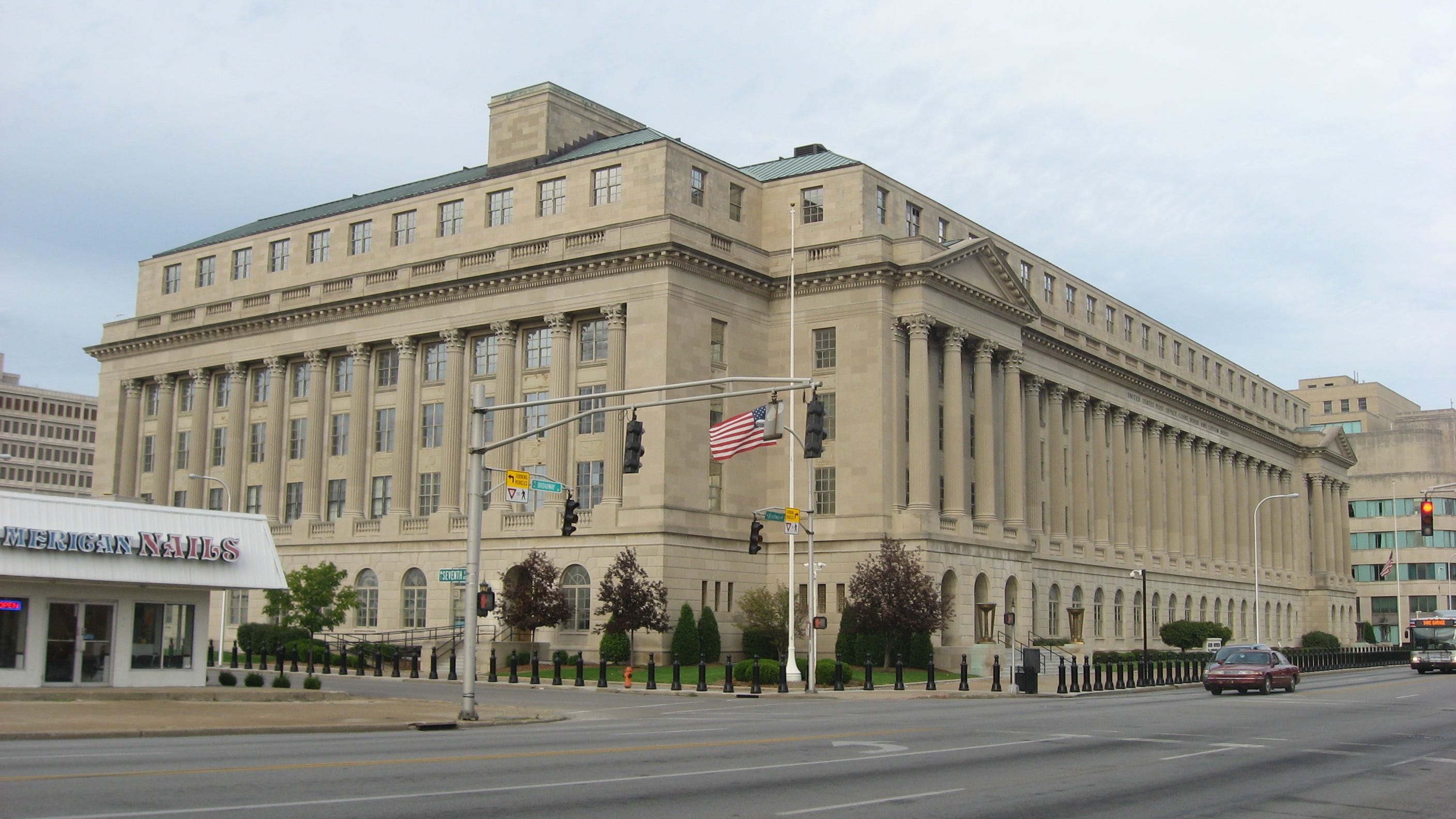
The federal government operates an immigration-court hearing location at 601 West Broadway in Louisville. The office is administered by the Memphis Immigration Court, which controls the Louisville docket and accepts its filings.
A Kentucky asylum applicant who expected an interview with U.S. Citizenship and Immigration Services could now receive court papers instead.
Under a Department of Homeland Security rule that took effect July 28, USCIS may refer selected affirmative asylum applications to immigration court without first interviewing the applicant. The change applies to applications already pending as well as newly filed cases.
The referral does not deny asylum or order someone deported. It places the applicant in removal proceedings, where the Department of Homeland Security becomes the opposing party, and an immigration judge decides whether the person may remain in the country. A Kentucky case could be assigned to the Louisville hearing location, although the government has not disclosed how many Kentucky residents may be affected or whether any have already been referred under the new rule.
The interview can now disappear
Affirmative asylum applications are filed with USCIS by individuals in the United States who are not already in removal proceedings. Before the new rule, the USCIS Asylum Division generally interviewed applicants before granting an application or referring it to immigration court.
The interview was non-adversarial. An asylum officer could ask about the persecution the applicant feared, apparent inconsistencies in the written application, travel history, and any provision of law that might bar asylum. Applicants also had an opportunity to explain why they filed more than one year after arriving in the United States or why their written applications did not fully describe what had happened to them.
Under the new interim final rule, an asylum officer may rely on “the record and other evidence” to refer an application without conducting that interview. The rule identifies several possible grounds: the one-year filing deadline, a statutory bar to asylum, a conclusion that the applicant does not merit asylum as a matter of discretion, or a finding that the claim is not eligible on its merits.
Those categories are not exclusive. USCIS may identify additional referral priorities in subsequent policy guidance, leaving some of the standards governing these decisions outside the regulation itself.
USCIS must still conduct an interview before formally granting or denying an affirmative asylum application. In a no-interview case, the agency does neither. It transfers the application to the Justice Department’s Executive Office for Immigration Review, which operates the immigration courts.
The rule also eliminates a requirement that the referral letter include an assessment of the applicant’s credibility. DHS said the change would reduce the time officers spend preparing referral decisions when credibility was not the reason for sending the case to court.
DHS describes the rule as a response to an affirmative asylum backlog that exceeded 1.4 million pending applications at the end of fiscal year 2025. USCIS Director Joseph Edlow said the asylum system had been exploited for delay and work authorization. The department estimates that approximately 132,000 applicants each year may fall into several categories eligible for referral without an interview, although that estimate does not include all grounds authorized by the rule.
The department acknowledges that some people referred under the new procedure could ultimately qualify for asylum. It predicts those cases will be rare because officers remain free to schedule interviews when they believe one is needed.
That places greater weight on the initial written application.
A person who omitted a detail, misunderstood a question, received poor assistance or struggled to put a traumatic experience into writing may enter immigration court before speaking to the USCIS officer who selected the case for referral.
From a paper review to the Louisville docket
Kentucky no longer has a stand-alone immigration court. The Justice Department closed the Louisville Immigration Court in 2021 and established Louisville as a hearing location under the administrative control of the Memphis Immigration Court. The current Memphis court page directs Louisville docket filings to the federal building at 601 West Broadway.
Removal proceedings begin when DHS serves a Notice to Appear and files it with the immigration court. The notice states the government’s allegations and the legal grounds on which it believes the person may be removed. The hearing location is identified on the notice or a later hearing notice.
An immigration judge then determines whether the person is removable and whether the person qualifies for asylum or another form of protection. The applicant may submit evidence and testify, but the setting has changed. The person must now defend the asylum claim in an adversarial proceeding where a DHS attorney may argue the government’s case.
Applicants may hire an attorney or seek help from an accredited representative, but the federal government does not provide one. Kentucky Refugee Ministries offers asylum and other immigration legal services across the state. Its current services page warns that people outside its existing clientele may face an extended waitlist and that an initial consultation is not guaranteed.
The Memphis court’s administrative-control list also places several Kentucky detention facilities within its regional network, including the detention centers in Oldham, Campbell, Boone, and Kenton counties. The list confirms that Kentucky already has court and detention infrastructure for immigration cases.
A no-interview referral does not automatically lead to arrest or detention. There is no public evidence yet that the new rule has sent anyone to any Kentucky jail. The administrative list identifies a possible route for a detained case, not evidence that an applicant referred under the rule has followed it.
The public comments after implementation
The first decision belongs to USCIS. Its asylum officers determine whether an interview is needed or whether the written record is sufficient to send the applicant to court.
The regulation supplies broad categories but does not disclose the detailed screening instructions, supervisory requirements, or evidentiary thresholds officers will use. USCIS may address some of those questions through internal guidance. Until that guidance becomes public, applicants and their attorneys will not know exactly how the agency distinguishes a case that receives an interview from one referred directly to court.
The Kentucky numbers are also missing.
USCIS has not published the number of pending affirmative asylum applications associated with Kentucky, how many may fall within the new referral categories, or whether any have already been sent toward the Louisville docket without interviews.
Responsibility divides after the USCIS paper review. USCIS decides whether to hear the applicant. The Justice Department operates the court, DHS attorneys represent the government, and Kentucky lawyers and nonprofit legal organizations help applicants respond. ICE could make a separate custody decision, but the rule does not require detention following a referral.
DHS made the rule effective immediately rather than waiting for public comments. The department invoked exceptions to the usual advance notice-and-comment procedure and said the change concerns the agency’s case processing. As a result, people who filed applications while an interview was the general practice are subject to the new rule even if they have already waited years for an appointment.
The public may submit written comments through DHS docket USCIS-2026-0199 until 11:59 p.m. Eastern time on September 28, 2026. DHS says comments will be most useful when they identify a specific portion of the rule, explain a recommended change, and provide supporting information. Emails or letters sent directly to DHS or USCIS officials will not count as formal comments on the rule.
The next records should show whether this procedural change has reached Kentucky: USCIS implementation guidance, referral totals by residence or court destination, and Louisville docket records identifying cases that arrived without a prior interview. Those records will determine whether the rule remains a national warning for Kentucky or has already changed the cases appearing at 601 West Broadway.