
On a recent weekday morning, attorneys for Louisville Metro Government filed a complaint in Jefferson Circuit Court asking a judge to set aside an open-records decision issued by Kentucky Attorney General’s Office. The filing challenges an order that required disclosure of information tied to a public defender’s request for surveillance footage.
The dispute began with a narrow request: a day of video. A public defender sought surveillance footage maintained by the city in connection with a criminal case. Louisville Metro denied the request. The denial moved to the Attorney General for review under Kentucky’s open-records statute, Kentucky Open Records Act, which allows requesters to appeal an agency’s refusal.
The Attorney General issued a decision directing disclosure. Instead of complying, Louisville Metro invoked the statute’s next step. Under KRS 61.880(5)(a), an agency may file an action in circuit court within 30 days to challenge an adverse open-records decision. That is what the city has now done. The complaint asks the court to reverse the Attorney General’s ruling and to uphold the city’s denial.

What began as a request for one day of video has widened into a dispute over what the public can learn about where the city’s surveillance cameras and related tools are located, and whether footage that once existed was erased under the city’s retention practices.
The Open-Records Appeal Under KRS 61.880(5)
Kentucky’s open-records law assigns the Attorney General a specific role. When a public agency denies access to records, the requester may appeal to the Attorney General within 30 days. The Attorney General reviews the denial, examines the records if necessary, and issues a written decision. That decision has the force of law unless a circuit court overturns it.
The Attorney General’s decision in this case found that Louisville Metro had not met its burden to justify withholding the requested materials. Under KRS 61.882(3), the burden of proof rests with the public agency to sustain its action. If the agency cannot demonstrate that a statutory exemption applies, the records must be disclosed.
Louisville Metro’s complaint to Jefferson Circuit Court seeks judicial review of that determination. The filing shifts the dispute from the executive branch to the judiciary. It also pauses the effect of the Attorney General’s order until the court rules.
This step is authorized by statute. It is also consequential. When an agency litigates an open-records ruling, the timeline for disclosure extends. Discovery may occur. Briefing schedules are set. A judge issues an order that can itself be appealed. The path from request to production grows longer.
Kentucky courts have seen similar disputes before. In City of Fort Thomas v. Kentucky Attorney General’s Office, a city sought review of an open-records decision regarding police records. In another case, University of Kentucky litigated an Attorney General ruling concerning public records tied to athletics. In each instance, the agency used the same statutory mechanism Louisville Metro now invokes: circuit court review under KRS 61.880(5).
The current lawsuit places the question squarely before a Jefferson County judge: whether the requested surveillance-related materials fall within a statutory exemption, and whether the Attorney General applied the law correctly.
The Public Defender’s Request for Surveillance Footage
The underlying request came from a public defender seeking video connected to a specific date. Surveillance systems operated or overseen by Louisville Metro include fixed cameras, mobile units, and other recording tools deployed in public spaces.
When the request was denied, the stated grounds included concerns about revealing camera locations and operational details. Kentucky’s open-records law contains exemptions for records that, if disclosed, would pose a risk to public safety or compromise law-enforcement operations. KRS 61.878(1)(m), for example, allows withholding of certain records compiled for law-enforcement purposes if disclosure would harm enforcement efforts.
The Attorney General’s decision examined whether the requested materials fit within those exemptions. According to reporting and the parties’ filings, the dispute expanded beyond the single day of footage to encompass information about where surveillance cameras and related tools are located.
At the same time, Louisville Metro indicated that the requested footage was later erased under retention practices. Many surveillance systems operate on rolling retention schedules. Video may be stored for a fixed period before being overwritten, unless preserved for evidentiary reasons.
The interaction between retention rules and open-records obligations is central to the case. If footage is requested while it exists, agencies must preserve it pending resolution of the request. If it is erased after a denial but before a final decision, courts examine whether the agency complied with its duty to maintain records subject to a live dispute.
The complaint filed in Jefferson Circuit Court asks the judge to determine whether the Attorney General’s order improperly required disclosure of materials tied to surveillance infrastructure and whether the city’s retention practices complied with Kentucky law.
Surveillance Camera Locations and Claimed Exemptions Under KRS 61.878
Louisville Metro’s position relies in part on statutory exemptions in KRS 61.878. The law permits agencies to withhold certain records if disclosure would compromise public safety, reveal security vulnerabilities, or interfere with law-enforcement operations.
The key legal question is how broadly those exemptions apply. Does a request for footage from a specific day require disclosure of camera locations? Are generalized maps or deployment details distinct from the footage itself? Does the exemption cover both the video and the metadata that identifies where cameras are placed?
The Attorney General’s written decision addressed those questions and concluded that Louisville Metro had not demonstrated that the exemptions justified blanket withholding. The city’s complaint contests that interpretation.
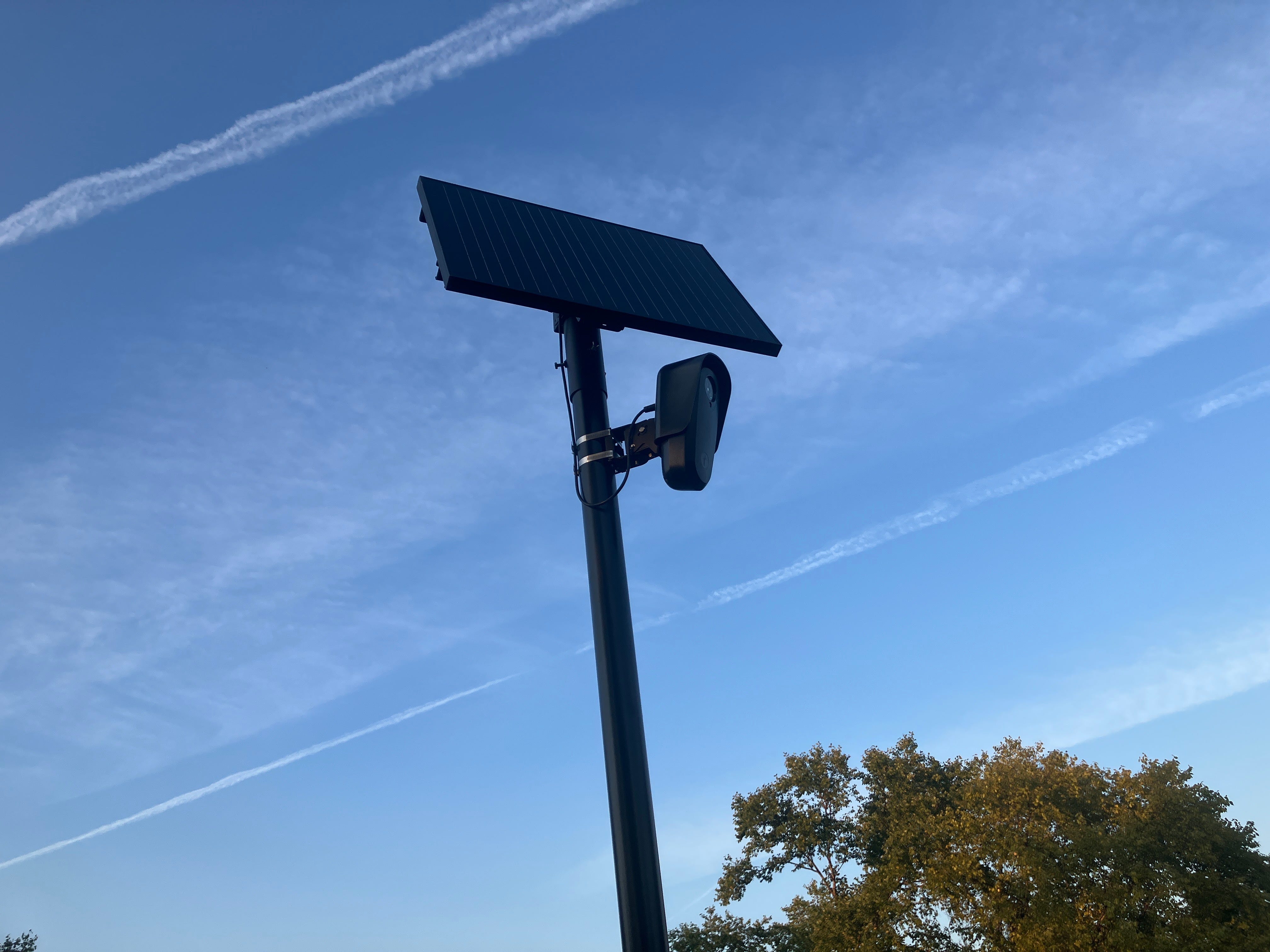
Kentucky courts have addressed similar issues in other contexts. In cases involving jail surveillance footage and police body-camera video, courts have weighed privacy interests, safety concerns, and the presumption of openness embedded in the statute. The standard remains consistent: the agency must prove that an exemption applies.
In this dispute, the city’s lawsuit asks the court to adopt its reading of the exemption for law-enforcement and security records. The public defender, and potentially other intervenors, will argue for the Attorney General’s interpretation.
The outcome will determine whether information about surveillance camera locations is categorically shielded or subject to case-by-case review.
Retention Policies and the Erasure of the Requested Video
A second thread runs through the case: the city’s statement that the requested footage was erased under retention practices.
Retention schedules for video systems are typically set by policy. They may vary by camera type and storage capacity. Some systems retain footage for 7, 14, or 30 days. Others store longer if flagged for investigation.
When an open-records request is filed, agencies have a duty to preserve responsive records while the request is pending. The question for the court will be whether Louisville Metro’s retention practices complied with that duty.
If the footage was erased after the request was submitted and while the dispute was ongoing, the court may examine timelines closely. If it was erased before the Attorney General’s decision, the court may evaluate whether the agency acted in accordance with its policy and statutory obligations.
Kentucky law does not require agencies to create records that no longer exist. It does require them to produce records that are in their possession and to preserve records subject to a pending request.
The complaint does not itself restore the erased footage. It asks the court to resolve whether the Attorney General’s order properly directed disclosure and whether the exemptions apply. The retention issue may surface as part of the factual record the court reviews.
Circuit Court Review and the Standard of Decision
Jefferson Circuit Court will apply a de novo standard of review to the Attorney General’s legal conclusions. That means the judge will interpret the statute independently, rather than deferring to the Attorney General’s reading.
The court may review the records in camera, meaning privately in chambers, to determine whether they qualify for exemption. It may also consider affidavits from city officials describing how disclosure would affect law-enforcement operations.
The procedural steps are set by statute and the Kentucky Rules of Civil Procedure. The city has filed its complaint within the statutory window. The Attorney General will be served and may defend the decision. The requester may seek to intervene to protect access to the records.
Briefing will follow. The court may hold a hearing. An order will issue. That order can be appealed to the Kentucky Court of Appeals.
The process is public. The complaint, docket entries, and court orders will be available through the court record.
A Test of Open-Records Oversight in Kentucky
This case places two Kentucky institutions in direct opposition: Louisville Metro Government and the Kentucky Attorney General’s Office. The Open Records Act assigns the Attorney General the task of enforcing disclosure in the first instance. Circuit courts serve as the check on that enforcement.
Louisville Metro’s decision to litigate extends the dispute beyond the executive review process. Other Kentucky agencies have used the same mechanism in prior disputes over police records, university documents, and internal communications. Each time, the court’s ruling shapes how broadly agencies may invoke exemptions.
The current case centers on surveillance technology operated in a major Kentucky city. The court’s interpretation will influence how future requests for camera footage, deployment maps, and related materials are handled across the Commonwealth.
For defense attorneys, the timing of disclosure can affect case preparation. For journalists and civic groups, access to information about surveillance systems informs public reporting. For city officials, the scope of disclosure determines how much operational detail enters the public record.
The judge’s ruling will clarify how KRS 61.878 applies to modern surveillance infrastructure and how retention policies intersect with open-records obligations.
What Happens Next in Jefferson Circuit Court
In the coming weeks, the court will set a briefing schedule. Louisville Metro will file a memorandum supporting its interpretation of the statute and the claimed exemptions. The Attorney General will respond, defending the original decision. The requester may participate.
The court may request in camera review of the disputed materials. If factual questions arise regarding retention timelines, affidavits or testimony may be submitted.
Once the court issues its order, either side may appeal. Until then, the Attorney General’s directive remains suspended.
The decision point is procedural and specific. A Jefferson Circuit Court judge will determine whether the Attorney General’s open-records ruling stands or is reversed. That order will define the immediate scope of access to the requested surveillance-related materials.
Suggested Actions for Readers
Review the complaint filed in Jefferson Circuit Court once it is available on the public docket.
Read the Attorney General’s open-records decision in full to understand the statutory reasoning.
Examine KRS 61.870–61.884 to see how Kentucky’s open-records law assigns authority and sets deadlines.
Monitor future filings and the court’s briefing schedule.
Contact Louisville Metro Council members to ask about current surveillance retention policies and preservation procedures during open-records disputes.
Further Reading
Open Records Opinions and Primary Documents
Ryan Dischinger v. Louisville Metro Government Open Records Decision (25‑ORD‑400, Dec. 15 2025) — Full PDF of the Kentucky Attorney General’s ruling that Louisville Metro violated the Open Records Act by denying a surveillance footage request.
Kentucky Open Records Act (Ky. Rev. Stat. 61.870–61.884) – Legislative text (official statute) — Executive branch statutory provisions governing public-records access and appeals in Kentucky.
Primary Reporting
“Louisville Metro sues to keep surveillance records secret” (LPM Investigates, Feb. 17 2026) — Reporting on the lawsuit filed in Jefferson Circuit Court challenging the Attorney General’s open-records decision.
“Louisville police can keep license plate cameras locations secret, AG says” (LPM Investigates, Feb. 10 2026) — Related reporting on another open-records dispute involving surveillance camera locations and Attorney General decisions.
Context on Related Litigation
ACLU of Kentucky press release: “ACLU‑KY files suit against Louisville Metro” (Jun. 12 2025) — A recent Jefferson Circuit Court filing challenging Louisville Metro’s withholding of detention center records under the Open Records Act; shows a broader pattern of litigation over access to government records.