
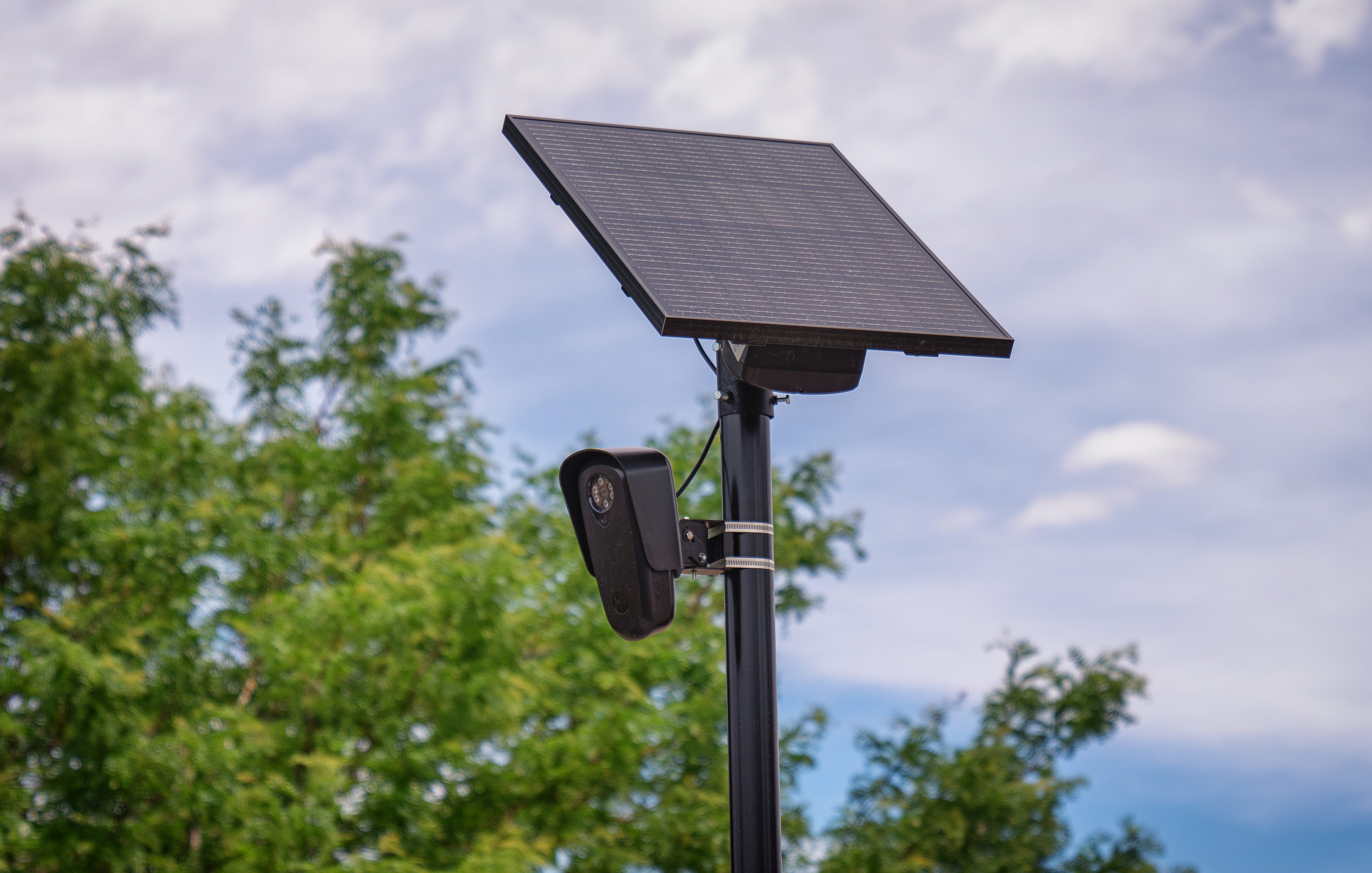
On Saturday, April 18, 2026, someone at the Lexington Police Department recorded the reason for two searches of the city’s Flock license plate reader system: “Other – agency assist (ICE).” Each search covered a seven-day period and reached 2,081 camera networks across the country. The officer’s name and case number were withheld. The entries did not appear in Lexington’s published quarterly audits. They surfaced in network logs released by agencies in Ohio, Georgia, Missouri, New York and Alabama. What looked like two routine database entries revealed something Lexington’s own audits had not shown residents: local police had used a locally controlled surveillance system to assist a federal agency.
Those two searches were not Lexington’s only documented connection to federal investigations. In written answers released August 28, the department identified approximately 84 other searches associated with Homeland Security Investigations (HSI), the investigative arm of U.S. Immigration and Customs Enforcement (ICE). Lexington said it has no HSI task force arrangement and that ICE agents do not have access to its current license plate reader system.
Taken together, the records show local assistance to federal investigations, not direct or unrestricted federal access to Lexington’s account.
For residents, the question is not simply whether federal agents had their own access. It is whether Lexington police can use a locally approved surveillance system on a federal agency’s behalf without clear approval rules or public reporting.
Lexington says the April searches were conducted to assist a federal agency with what the department described as a criminal pickup order. According to the department, the searches concerned people wanted in connection with continuing gang and drug trafficking activity. The department said that activity came to authorities’ attention after a relative was arrested for a local murder. A Lexington police commander said one person connected to the matter is now imprisoned for murder and credited technology with helping locate that person. That is the strongest public safety case for this kind of interagency assistance. But even a justified search in a serious criminal case would not resolve who may request such searches, who approves them, what limits apply, or what the public is entitled to know. The released records do not disclose what the searches returned, what information Lexington transmitted, or what role the searches played in any arrest.
HSI is part of ICE, but it investigates human trafficking, child exploitation, narcotics, financial crimes, and other criminal matters that may have no connection to civil immigration enforcement. Lexington’s approximately 84 searches associated with HSI therefore cannot all be labeled immigration searches without information about their individual purposes. But the connection still deserves scrutiny because the records do not disclose those purposes and the two April entries expressly used the term “ICE.” The records support a narrower conclusion: Lexington documented federal investigative assistance without giving the public enough information to determine its full scope.
Lexington says it operates 125 Flock readers throughout Fayette County. Department employees conducted 14,014 searches in April, 14,970 in May, and 10,135 in June, for a three-month total of 39,119 searches. The second-quarter audit reports that every search listed a reason. Hundreds of employees used the system each month.
What those cameras collect is more revealing than a plate number alone. Kentucky law defines captured data to include photographs of the plate and vehicle; the plate number and the vehicle’s make, model, and color; and GPS coordinates, date, and time. Lexington’s policy describes the same basic record: an image of a vehicle visible from a public place, its plate, GPS coordinates, and the date and time of the read. The system does not, by itself, establish who was driving, but it can record that a vehicle bearing a particular plate was observed at a particular location and time.
The system becomes more powerful when those individual records are combined into searchable networks. Flock says a police department participating in National Lookup can enter a complete plate number and search cameras that other agencies have chosen to make available through the network. Lexington requires users to give a reason for each search, and the searches become part of an audit trail. But Lexington’s April searches still extended across thousands of participating networks. By August 28, Lexington said it had turned off what it called its “Nationwide search feature” in response to community concerns, although the department did not say exactly when it changed the setting.
That gap illustrates why the meaning of “access” matters. Flock says federal agencies are excluded from statewide and nationwide lookup networks, that federal sharing is turned off by default, and that federal organizations are limited to one-to-one sharing arrangements explicitly approved by a local customer. Those restrictions do not address a different route: a Lexington officer with local credentials can conduct a search in response to a federal request. The records do not establish whether ICE had a Lexington login, but they show that Lexington personnel used local access to assist a federal agency.
Lexington introduced Flock readers in 2022 with a public explanation focused on reducing crime, recovering stolen vehicles, and locating missing or endangered people. The city says the cameras are not used for speed or red-light enforcement. It also credits the program with reducing the average time required to recover a stolen vehicle during its first year. In April 2024, the Urban County Council approved a five-year agreement for 125 cameras by a 14-1 vote, at a reported cost of about $400,000 a year through February 2029. Those are recognizable local public safety purposes, but they do not answer whether residents or council members understood that Lexington officers could search thousands of outside camera networks for a federal agency.
Lexington’s written policy allows license plate data to be used only for legitimate law enforcement or public safety purposes. It gives control over access to the police chief and the department’s license plate reader administrator, and it requires each user to have individual credentials. Hot-list requests from outside agencies must be approved, and data may be released to verified law enforcement agencies for legitimate purposes. Yet the posted policy says Lexington will retain Flock data for no more than 30 days. The July 3 quarterly audit says the department stores the data for 60 days. The available materials do not explain when that practice changed, whether the policy was formally amended, or why the posted policy still says 30 days.
Lexington has published quarterly reviews of its Flock system, but all 27 audit reports issued since the program began have been internal. The Intelligence Unit administers the system, and the Public Integrity Unit conducts a second review. Lexington says no outside organization has audited the program. Mayor Linda Gorton has now announced an independent panel with expertise in technology, civil rights and law. As of publication, the panel’s membership, rules for public access to its meetings and detailed procedures had not been announced. Basic questions therefore remain unresolved: who authorized the federal assistance searches, what information was returned, which agencies received it, and whether Lexington’s current settings permit any direct federal sharing.
Lexington residents are already debating what that uncertainty means. At an August 27 Urban County Council meeting, 20 people addressed the cameras, with 17 asking the city to end the program and three supporting its continued use. Opponents raised concerns about privacy, police misuse and federal immigration enforcement. Supporters pointed to stolen vehicle recoveries, violent crime investigations and their confidence in the Lexington Police Department. No released record establishes that a Lexington search caused a civil immigration arrest or that local families have changed their behavior because of the cameras. But when the public cannot see how federal requests are approved or what follows, immigrants and mixed-status families cannot tell from the available records whether this same pathway could be used for civil immigration enforcement.
The way these searches became public shows the larger accountability problem. Lexington’s own quarterly reports summarize usage and redact incident descriptions. But the two April entries were found in audit logs released by agencies in five other states whose cameras had been included in the searches.
A resident trying to understand Lexington’s cooperation with federal agencies should not have to reconstruct it from records scattered across a national network.
Lexington has since disabled that feature. As of publication, Lexington had not publicly verified whether one-to-one federal sharing remained enabled, and these records do not show what any other Kentucky police department is doing. What the records show is narrower but still important: local officers can use networked systems to assist federal investigations even when the public cannot determine whether federal agents have direct access.
Kentucky’s new automated license plate reader statute adds rules, but it does not settle the public policy dispute. Effective July 15, 2026, KRS 189.632 limits the sharing of captured data with law enforcement agencies to public safety or criminal investigation purposes. It generally limits retention to 90 days unless an exception applies. It also requires public policies addressing access, retention, training and supervision, along with audits every 90 days. The law does not expressly require agencies to publish the identities of requesting agencies or the stated purpose of each search. It therefore sets statewide rules without resolving what local governments should disclose about searches conducted for federal assistance. The April searches occurred before the law took effect, and Lexington says they involved a criminal pickup order, so the available evidence does not establish that the searches were illegal. The harder question is democratic: whether approval of cameras for local public safety should be treated as blanket consent for searches conducted at a federal agency’s request that the public cannot meaningfully examine.
The independent panel gives Lexington an opportunity to answer that question in public, but only if its work goes beyond a general review of whether Flock is useful. The panel should identify every federal agency and other outside agency that requested or received assistance. It should distinguish direct sharing from searches performed by Lexington personnel and review the department’s current sharing settings. It should also reconcile the 30-day retention policy with the audit’s statement that data is stored for 60 days. The panel should recommend clear approval standards for federal requests, public reporting by requesting agency and investigative category, and an explicit policy governing searches related to civil immigration enforcement.
Residents do not have to choose between supporting every use of Flock and ending the program to demand transparent rules.
Lexington residents can ask Mayor Linda Gorton and the Urban County Council to require clear, enforceable rules for searches conducted on behalf of federal and other outside agencies. Those rules should disclose who may request and approve a search, what purposes are permitted, how searches are audited, what happens when the rules are violated, and whether Lexington’s system may be used for civil immigration enforcement. The city should also publicly report outside-agency searches so residents can see how a surveillance system purchased for local public safety is actually being used.
We began this story with two short entries typed into a search log: “agency assist (ICE).” Those entries do not prove that ICE controlled Lexington’s cameras, that the searches involved civil immigration enforcement, or that they caused an arrest. They prove something more specific: Lexington personnel conducted two searches for federal assistance that queried 2,081 camera networks, while the public was left to discover that cooperation through records released elsewhere. If Lexington’s surveillance system is going to serve federal investigations as well as local ones, that role should be governed by public rules, disclosed through public reporting, and debated in public.
Sources
Lexington Police Department Flock Safety search and audit records, April–June 2026. Records obtained through the Kentucky Open Records Act, including individual searches, stated search purposes, agencies associated with searches, and the Flock networks searched. No public URL.
Lexington Police Department, License Plate Readers. Overview of Lexington’s Flock Safety program, including the number of city-operated readers and program information.
https://www.lexingtonky.gov/government/departments-programs/public-safety/police/license-plate-readers
Lexington Police Department, General Order 2022-01: License Plate Readers. Department policy governing the capture, storage, access, auditing and release of license-plate-reader data.
https://content.lexingtonky.gov/sites/default/files/migrated-files/sites/default/files/2022-05/GO%25202022-01%2520License%2520Plate%2520Readers.pdf
Lexington Police Department, License Plate Reader Audits. Lexington’s publicly posted quarterly LPR audits.
https://www.lexingtonky.gov/government/departments-programs/public-safety/police/license-plate-readers/license-plate-reader-audits
Lexington Police Department, Q2 2026 Quarterly Flock Audit, April–June 2026. The July 3, 2026 audit reports 14,014 searches in April, 14,970 in May and 10,135 in June and describes enhanced auditing of external-network and other searches.
https://content.lexingtonky.gov/sites/default/files/2026-07/Q2%202026%20Audit_0.pdf
Lexington-Fayette Urban County Government, Flock Group Inc. Government Agency Agreement / Services Agreement Order Form, Resolution 670-2022. Council record authorizing expansion of Lexington’s Flock program by 75 automated license plate readers.
https://lexington.legistar.com/LegislationDetail.aspx?GUID=270BE2A8-6FA5-442C-93B5-08A21BDF1B57&ID=5937623&Options=&Search=
Lexington-Fayette Urban County Government, Flock Group Inc. Master Services Agreement / Order Form, Resolution 163-2024. Council record authorizing purchase of Lexington’s license plate reader system from Flock Group Inc.
https://lexington.legistar.com/ViewReport.ashx?GID=159&GUID=F8816DFD-BB9F-4AB7-82FE-1B5D4B359EBA&ID=6588082&M=R&N=Master&Title=Legislation+Details
Lexington-Fayette Urban County Government, Flock Group Inc. Amended Contract Quote, Resolution 346-2024. Council record authorizing the purchase of 25 additional Flock cameras, warranty and implementation.
https://lexington.legistar.com/LegislationDetail.aspx?GUID=FD947804-2138-44F3-93CD-C792C5AD603F&ID=6721614&Options=&Search=
Kentucky Revised Statutes § 189.632, Automated License Plate Reader. Kentucky law governing permitted ALPR uses, retention and sharing of data, written policies and related requirements.
https://apps.legislature.ky.gov/law/statutes/statute.aspx?id=57500
U.S. Immigration and Customs Enforcement, Homeland Security Investigations: Our Priorities. Federal description of HSI’s investigative mission and authorities.
https://www.ice.gov/about-ice/hsi/priorities
U.S. Immigration and Customs Enforcement, ICE’s Mission. Federal background on Homeland Security Investigations and its work with domestic and international law-enforcement partners.
https://www.ice.gov/mission
Flock Safety network-audit records from law-enforcement agencies outside Kentucky. Records obtained through public-records requests and used to examine Lexington searches of Flock networks outside its locally operated camera system. No single public URL.
Lexington-Fayette Urban County Government, “Mayor to appoint independent, external panel to review automated license plate reader technology,” Sept. 4, 2026. Mayor Linda Gorton’s announcement of an external review of Lexington’s ALPR technology, policies, and practices.
https://www.lexingtonky.gov/news/mayor-appoint-independent-external-panel-review-automated-license-plate-reader-technology