
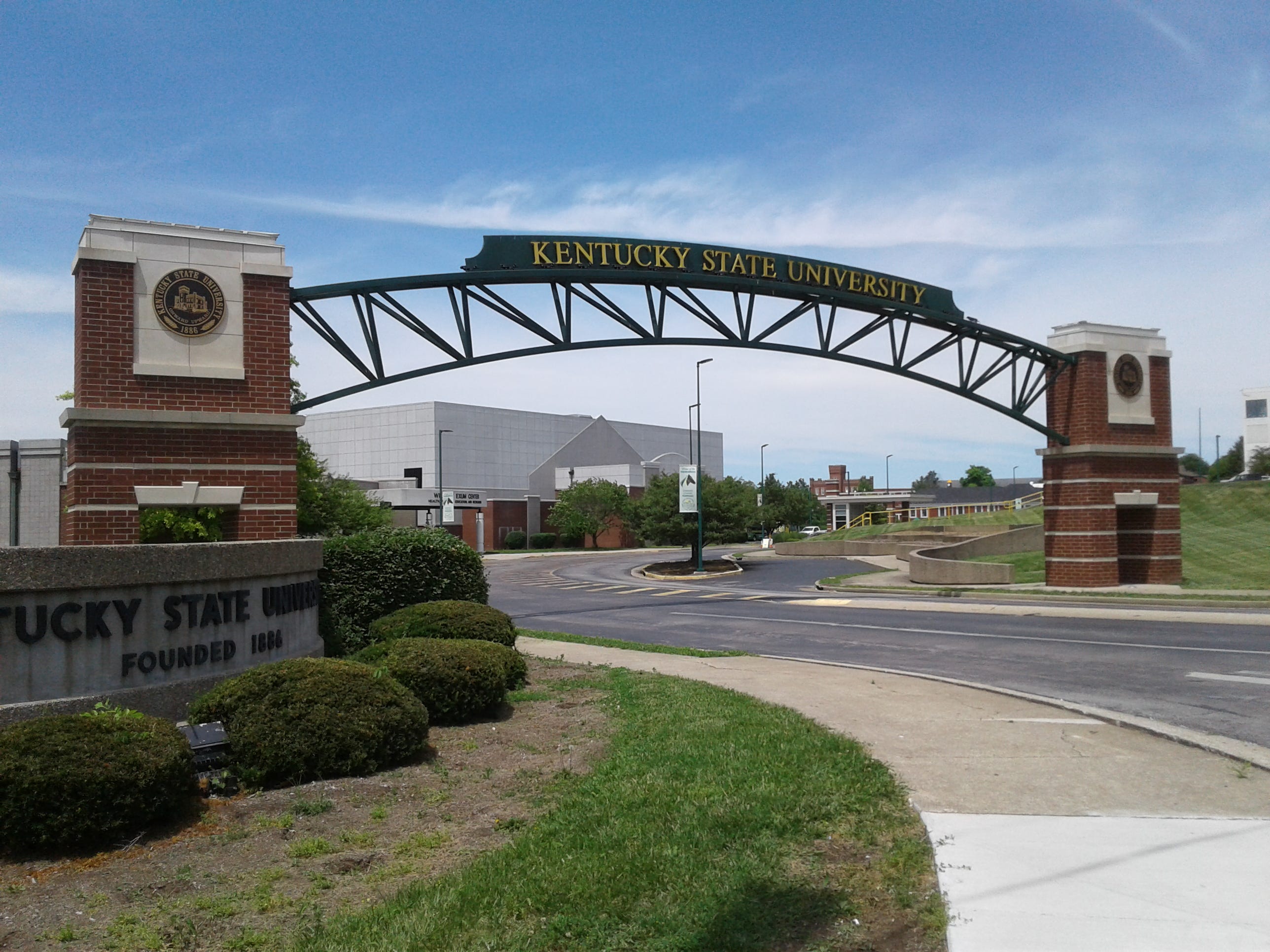
Kentucky State University sits in Frankfort, only a short distance from the Capitol, but the power struggle over its future did not begin on campus.
It began in the General Assembly, where lawmakers turned Senate Bill 185 from a bill dealing with branch budget recommendations into a restructuring law for Kentucky’s only public HBCU.
By the time it passed, SB 185 had become a sweeping intervention into Kentucky State University, an 1890 land-grant institution. The law declares a five-year financial exigency. It redefines KSU as a four-year residential polytechnic institution. It places the university under expanded oversight by the Council on Postsecondary Education. It requires academic program review, limits certain academic offerings, and gives the university president expanded authority during the exigency period.
The official bill record lists Sen. Chris McDaniel and Sen. Danny Carroll as sponsors. Gov. Andy Beshear signed the bill on April 13, 2026. The law gives the Council on Postsecondary Education new oversight authority, affects the Kentucky State University Board of Regents, and places pressure on KSU President Koffi Akakpo to implement. The new state-court challenge was filed by students represented by attorney James M. Morris.
Now, seven Kentucky State students have filed a lawsuit in the Franklin Circuit Court, arguing that the law was not enacted constitutionally. Their claim is procedural: that the bill’s original title and substance changed after required readings without following the proper constitutional process. They are asking the court to halt SB 185 while the case is considered.
That makes this more than a campus controversy.
It is a Kentucky state-power story.
The question is not only what Frankfort wants Kentucky State to become. But whether lawmakers followed the rules when they used state law to remake the operating terms of a public HBCU.
SB 185 moved power away from the campus and toward Frankfort
SB 185 does two things at once. It recognizes Kentucky State University as “Kentucky’s only public Historically Black College or University,” while also directing that KSU “shall be a four (4) year residential polytechnic institution.” That is the central tension in the law: it preserves KSU’s HBCU identity in statutory language while giving the state a much stronger hand in defining what the institution will become.
The law also gives the Council on Postsecondary Education practical power over KSU’s finances. The clearest example is the $20,000 threshold. KSU must receive prior CPE approval before entering obligations or making expenditures at or above that amount. That turns CPE from a statewide coordinating body into a direct gatekeeper over major KSU spending decisions.
But SB 185 changed the authority behind that work.
The law does not simply encourage reform. It places Kentucky State inside a state-designed restructuring framework. The clearest shift is financial control.
Control over spending is control over operations.
A university can still have a president, a board, faculty, staff, and students. But if another state body must approve major obligations and expenditures, the university’s daily decisions are no longer fully internal.
The law put KSU on a fast implementation clock
SB 185 also creates an unusually tight implementation schedule.
The law requires KSU’s Board of Regents, in consultation with CPE, to review academic programs and identify which programs should continue and which should be closed or substantively changed. Those recommendations are tied to a June 1, 2026, deadline.
Any required substantive-change request to the Southern Association of Colleges and Schools Commission on Colleges, known as SACSCOC, must be submitted by July 1, 2026.
KSU has tried to frame the transition as purposeful planning rather than only state intervention. In an April message, President Koffi Akakpo described the work as “defining a polytechnic-focused academic direction,” advancing academic program review, and forming an advisory committee to support the transition.
This is where the law becomes practical. It impacts program lists, board meetings, accreditation submissions, budget approvals, employee decisions, and student planning.
A student trying to decide whether to stay at KSU needs to know whether a program will remain. A faculty member needs to know whether financial exigency affects job security. A department needs to know whether its work fits the new state-defined direction. A board member needs to know whether the university is making its own decisions or carrying out a legislative mandate under court challenge.
The students are challenging how the law was made
The Franklin Circuit Court lawsuit matters because it focuses on how the General Assembly used its power.
Attorney James M. Morris, who represents the students in the Franklin Circuit Court case, described the process bluntly: “The Senate introduced and read a Trojan horse bill about budget recommendations, then replaced it with a KSU takeover bill.” The students argue that SB 185 was not constitutionally enacted because the bill’s original title and substance changed after required readings, without following the proper constitutional process.
Legislative procedure is one of the few guardrails the public has when lawmakers move quickly.
Readings, titles, committee substitutes, amendments, and votes are part of how the public, lawmakers, institutions, and affected communities can see what the government is doing before it becomes law.
SB 185’s official bill record shows that the original version addressed branch budget recommendations and supporting budget documents. Later, a Senate committee substitute deleted the original provisions and replaced them with restructuring language for Kentucky State University. The final bill became “An Act relating to Kentucky State University and declaring an emergency.”
That is the core procedural issue.
If a bill can begin as one thing and become another after key procedural steps, the public’s ability to track lawmaking becomes weaker.
The risk is larger when the final version does not merely adjust policy but restructures a public institution.
The Franklin Circuit Court case asks whether that process crossed a constitutional line.
The federal lawsuit raises a broader civil-rights challenge
The Franklin Circuit Court case is not the only legal challenge.
Earlier in May, a group of KSU students, alumni, and prospective students filed a federal lawsuit challenging SB 185. That case raises broader questions involving civil rights, equal protection, land-grant obligations, accreditation risk, and historic underfunding.
One of the most important pieces of context comes from the federal land-grant funding dispute. In 2023, federal officials called on states to correct funding disparities affecting land-grant HBCUs. Kentucky State was identified as having received roughly $172 million less than the University of Kentucky over multiple decades.
That history changes the frame.
If Kentucky State has struggled partly under the weight of long-term underfunding, then the state’s response deserves scrutiny.
The public should ask whether SB 185 repairs the damage, manages the institution through it, or uses the resulting financial weakness to justify a deeper state intervention.
Those are different choices.
This is how state power filters down locally
KSU is not just another state university. It is Kentucky’s only public HBCU. It was founded in 1886 and remains an 1890 land-grant institution. KSU’s own statement says SB 185 preserves that identity in state law, even as it establishes a new polytechnic direction.
Preserving a name is not the same as preserving institutional power.
The local consequences will be measured by academic programs, enrollment decisions, faculty and staff job security, board agendas, CPE approvals, accreditation submissions, debt-collection rules, spending limits, and student degree plans.
That is why this story requires more than a debate over branding, workforce needs, or campus management.
It requires attention to authority: who gets to define the mission, who controls the money, who decides which programs survive, who bears the consequences, and who can challenge the process.
What Kentuckians can do
Read the bill record. Look at how SB 185 changed from introduction to final passage. Pay attention to the original summary, committee substitute, title amendment, floor amendments, vote history, and emergency clause.
Follow the court cases. The state-court case focuses on legislative procedure. The federal case raises civil rights, equal protection, land-grant, and institutional-harm claims.
Watch KSU Board of Regents meetings. The board is where academic program review and implementation decisions may become visible. Look for agendas, packets, minutes, program lists, and any votes tied to closures or substantive changes.
Watch the Council on Postsecondary Education. CPE now has expanded oversight under SB 185. Its meetings, reports, and communications with KSU may show how state authority is being exercised in practice.
Ask specific questions:
Which KSU programs are being maintained, changed, or closed?
What criteria are being used?
Who makes the final decision: KSU, CPE, SACSCOC, or the legislature?
How will current students complete their degrees?
What protections exist for faculty, staff, and students?
What records will be public?
What will CPE approve or deny under the $20,000 spending threshold?
How will KSU’s historic underfunding be addressed?
Students, alumni, faculty, staff, and Kentucky residents can request records, attend meetings, follow court filings, and ask lawmakers and CPE members to explain how implementation will work.
Direct sources
Kentucky General Assembly: SB 185 bill record
Official legislative history, sponsors, amendments, votes, bill summary, and signing record.
https://apps.legislature.ky.gov/record/26rs/sb185.html
Kentucky General Assembly: SB 185 final bill text
Final statutory language on KSU’s mission, financial exigency, CPE oversight, program review, academic limits, spending approval, admissions, student balances, and emergency clause.
https://apps.legislature.ky.gov/recorddocuments/bill/26RS/sb185/bill.pdf
Kentucky State University: Onward and Upward SB 185 explanation
KSU’s official public explanation of what SB 185 does and how the university describes its continued HBCU and land-grant identity.
https://www.kysu.edu/president/onwardupward/index.php
Kentucky State University: Start, Stop, and Grow update
KSU’s explanation of its academic program review framework and early discussions with CPE.
https://www.kysu.edu/news/2026/4/sb-185-and-academic-program-review-update.php
Spectrum News 1: Franklin Circuit Court lawsuit
Coverage of the second lawsuit filed by seven KSU students challenging whether SB 185 was constitutionally enacted.
https://spectrumnews1.com/ky/louisville/news/2026/05/22/sb-185-lawsuit
WKYT: Federal lawsuit coverage
Coverage of the federal lawsuit challenging SB 185 and summarizing claims tied to civil rights, KSU’s HBCU status, and historic underfunding.
https://www.wkyt.com/2026/05/11/federal-lawsuit-filed-block-state-takeover-kentucky-state-university/
Higher Ed Dive: Federal lawsuit and underfunding context
Coverage of the federal lawsuit, including the plaintiffs’ argument that Kentucky imposed restrictions rather than remedying historic funding disparities.
https://www.highereddive.com/news/students-alumni-sue-to-block-kentucky-state-university-overhaul/820154/
KSU statement on May 21 court filing
KSU’s statement acknowledging the Franklin Circuit Court lawsuit and declining further comment because litigation is active.
https://www.kysu.edu/news/2026/5/kentucky-state-university-statement-on-may-21-court-filing-1.php