
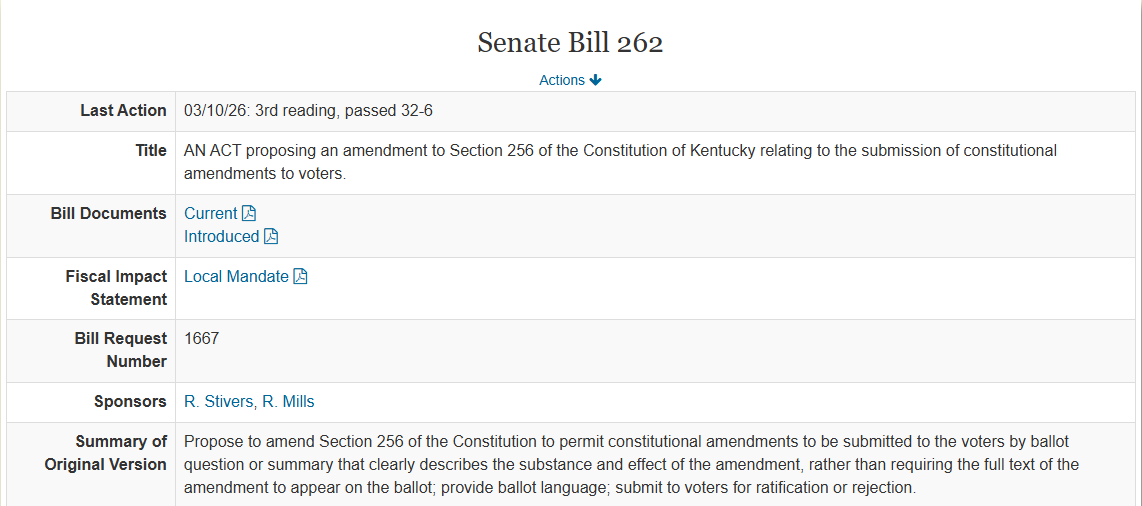
On March 10, the Kentucky Senate approved SB 262 by a vote of 32–6, advancing legislation that would change how constitutional amendments appear on Kentucky ballots. The bill proposes an amendment to the Kentucky Constitution that would allow amendments to appear on the ballot as a question or summary describing the substance and effect rather than printing the full constitutional text.
The measure now moves to the Kentucky House of Representatives for consideration. If the House passes the same language, the proposal would not become law immediately. Instead, it would place a constitutional amendment before voters in a future statewide election.
The vote marked the latest step in a legislative process that changes the procedures governing constitutional amendments themselves, rather than the subject matter of a specific amendment. The proposal addresses how information is presented to voters at the moment they decide whether to alter the state’s foundational governing document.
The operational question is simple. When Kentucky voters consider a constitutional amendment, what exactly should appear on the ballot?
For more than a century, Kentucky has required ballots to display the full text of proposed constitutional changes. SB 262 would allow that requirement to be replaced with a shorter description drafted by state officials.
How constitutional amendments currently reach Kentucky ballots
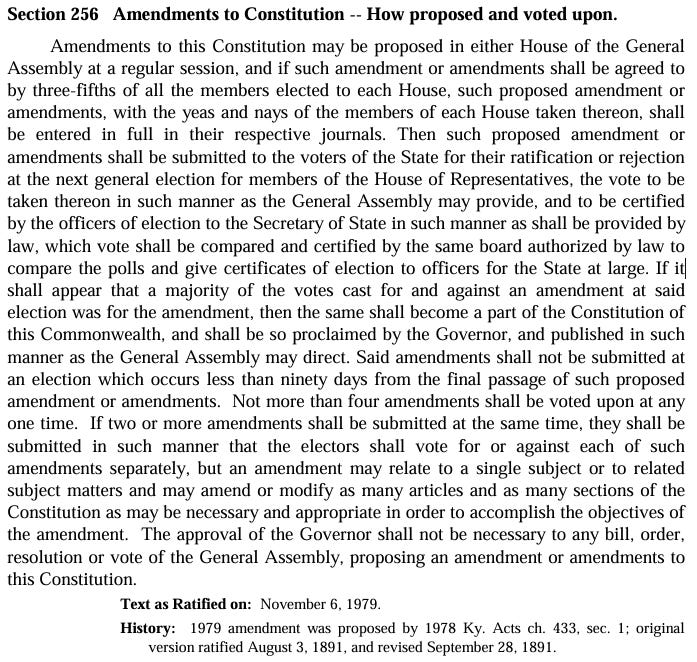
To understand the significance of SB 262, it helps to walk through the existing constitutional process step by step.
Under Section 256 of the Kentucky Constitution, the General Assembly may propose an amendment to the state constitution. The amendment must pass both chambers of the legislature by at least a three-fifths vote. After legislative approval, the proposal goes directly to the voters during a general election.
The ballot currently presents the full text of the amendment, allowing voters to see the exact language that would be inserted into the constitution.
The amendment becomes law only if a majority of voters approve it.
This system means the constitutional text appears in the same form at each stage of the process. Legislators debate the language. The Secretary of State places that language on the ballot. Voters read the exact text before deciding whether to adopt it.
SB 262 proposes to change this final step.
Instead of printing the full amendment text, the ballot could display a question or summary describing the substance and effect of the amendment. The full text would still exist in legislative documents and public notices, but it would not necessarily appear on the ballot itself.
The practical change occurs at the final moment of decision: the ballot box.
What SB 262 changes in the ballot process
The core mechanism of SB 262 is a constitutional revision that alters how amendment language is presented to voters.
If the proposal eventually takes effect, future ballots could contain:
a question describing the amendment
a summary explaining its effect
language approved through the legislative process
The ballot would no longer need to reproduce the entire amendment text.
Supporters describe the change as a readability improvement. Constitutional amendments often contain legal formatting, cross-references, and lengthy technical language that can fill a large portion of a ballot page. A summary format could make the ballot easier to navigate, particularly when multiple amendments appear during the same election.
The procedural shift, however, transfers greater importance to who writes the ballot description.
When a full constitutional amendment appears on the ballot, voters can read the language that would become binding law. When a summary appears instead, the wording of that summary becomes the primary information voters receive while casting a vote.
Ballot summaries are not unique to Kentucky. Many states already use them. However, the transition changes where interpretive power sits within the constitutional amendment process.
The legislature writes the amendment.
State officials prepare the ballot language.
Voters decide based on the wording presented at the ballot box.
SB 262 alters the balance between those steps by compressing the text voters see.
A procedural shift in Kentucky’s constitutional amendment process
Kentucky has seen several high-profile constitutional amendments in recent years, including proposals related to abortion policy, voting eligibility, and state authority over public education funding. In each of those cases, the ballot language became a central point of public discussion.
Ballot wording matters because constitutional amendments are typically decided by a simple majority vote statewide. Voters encounter the amendment only briefly when reading the ballot question during an election.
When the ballot contains the full amendment text, the wording reflects the exact language debated in the legislature. When the ballot contains a summary, the question becomes how effectively that summary captures the legal meaning of the proposal.
Across the United States, disputes over ballot summaries have appeared in several states where courts were asked to determine whether wording accurately described the underlying amendment.
These disputes illustrate a broader institutional dynamic. The structure of a ballot determines the information environment surrounding a vote. Adjustments to that structure can shape how voters interpret the proposal they are considering.
SB 262 fits within this category of procedural change.
The proposal does not directly alter policy in areas such as taxation, education, or criminal law. Instead, it modifies the mechanism through which voters approve constitutional changes.
Changes to procedural rules often receive less public attention than policy proposals. Yet procedural rules determine how democratic decisions are presented and interpreted.
How the proposal could affect Kentucky voters
The most immediate effect of SB 262 would appear during future elections that include constitutional amendments.
Ballots could display shorter questions or descriptions rather than full amendment text. This change would likely reduce the physical space used by amendment language on the ballot and could simplify ballot design when multiple amendments are presented simultaneously.
For voters, the practical difference lies in the level of detail available at the point of voting.
Under the current system, voters can read the exact amendment language before marking their choice. Under the proposed system, they would rely on a summary describing the amendment’s substance and effect.
That shift does not remove public access to the amendment text. Legislative documents, voter information materials, and news coverage would still contain the full language.
However, the ballot itself would function differently. It would serve as a summary instrument rather than a full legal document.
In practice, this means voters would encounter a shorter explanation during the final step of the constitutional process.
For Kentucky residents, the consequences will depend on how future ballot summaries are written and whether voters seek additional information before arriving at the polling place.
A pattern of procedural rule changes
SB 262 also reflects a broader category of governance decisions that adjust the rules governing elections and constitutional amendments.
Across many states, debates about election law have increasingly focused on the processes surrounding voting rather than the policies being decided. Legislatures have considered measures affecting ballot design, voter identification procedures, early voting rules, and election administration.
These measures often change how democratic decisions occur rather than the outcome of a specific policy question.
Kentucky has experienced similar procedural debates over the past decade. Legislative discussions have addressed election administration, voting eligibility provisions, and the structure of constitutional amendments.
SB 262 fits within this category because it alters the presentation of amendment language rather than the substance of an amendment itself.
Changes to procedural rules tend to shape long-term civic structures. Once adopted, they apply to future elections regardless of which political party holds power or which policy proposals appear on the ballot.
For that reason, procedural amendments often outlast the political debates that produced them.
What happens next procedurally
SB 262 must now move through the Kentucky House of Representatives. If the House approves the bill with the same language, the General Assembly will have completed the legislative portion of the constitutional amendment process.
At that point, the proposal would be scheduled for a statewide vote during a future general election. Kentucky voters would decide whether to amend the state constitution to allow ballot summaries instead of full amendment text.
If voters approve the amendment, the new rule would apply to constitutional amendments proposed after that election.
Election officials, including the Kentucky Secretary of State, would then implement the updated ballot format in accordance with state election law.
The next decision point therefore moves from the legislature to the voters themselves.
Suggested Actions for Readers
Review the full legislative text of SB 262 to understand the exact constitutional language being proposed.
Follow the bill’s progress through the Kentucky House of Representatives committee and floor process.
Monitor public statements from the Kentucky Secretary of State regarding ballot preparation and election administration.
Track whether the House introduces amendments that alter the ballot summary language provision.
Watch for the official ballot wording if the measure ultimately reaches a statewide vote.
Understanding procedural changes in election law helps voters evaluate how constitutional decisions are structured before they appear on the ballot.
Further Reading
• Kentucky General Assembly — SB 262 legislative page
https://apps.legislature.ky.gov/record/26rs/sb262.html
• LegiScan — SB 262 bill summary and legislative history
https://legiscan.com/KY/bill/SB262/2026
• National Conference of State Legislatures — State constitutional amendment procedures overview
https://www.ncsl.org/elections-and-campaigns/initiative-and-referendum-processes
• Kentucky General Assembly — Full constitution text and amendment history
https://apps.legislature.ky.gov/law/constitution
• Kentucky election law and ballot administration guidance
https://elect.ky.gov/Voters/Pages/default.aspx