

On a recorded floor vote in the Kentucky Senate this week, SB 154 passed and moved forward in the 2026 session. The bill amends Kentucky’s voter identification statute, KRS 117.227, by removing two documents from the list of acceptable secondary forms of ID at polling places: Social Security cards and public assistance cards, including EBT cards. Both are non-photo documents.
The change alters the set of documents that a voter without a qualifying photo ID may use to cast a ballot at a Kentucky polling location. The Senate acted under its legislative authority to amend election statutes. The bill now proceeds to the House of Representatives for consideration.
What changed is contained in the bill language itself. The list of acceptable secondary identification documents shrinks. Voters who previously could present a Social Security card or an EBT/public assistance card as part of the secondary ID process will no longer be able to use those documents if the bill becomes law.
The statutory amendment to KRS 117.227
Kentucky’s voter ID law is codified at KRS 117.227. The statute requires voters to present identification at the polls. It lists primary forms of photo identification and, in certain circumstances, permits the use of secondary identification when a voter does not have one of the qualifying photo IDs.
SB 154 amends that statute by deleting references to Social Security cards and public assistance cards from the secondary ID list. The operative change is textual. The bill strikes specific lines from the statute that currently recognize those documents as acceptable.
Under existing law, a voter who appears at a polling place without a qualifying photo ID may present certain other documents, and in some cases may complete a sworn statement. The statute provides the legal basis for what poll workers may accept and what they must reject. By narrowing the document list, SB 154 alters what county clerks and precinct officers are authorized to accept.
The Kentucky State Board of Elections administers statewide election procedures and provides guidance to county clerks. If SB 154 is enacted, the Board will need to update training materials, voter education guidance, and election manuals to reflect the revised list of secondary IDs.
The authority to change that list rests with the General Assembly. The Senate exercised that authority through passage of SB 154.
The Senate floor vote and debate record
SB 154 was debated on the Senate floor before passage. During debate, sponsors described the bill as part of ongoing efforts to maintain election integrity. Senators referenced fraud prevention as a legislative objective. The bill’s proponents framed the removal of non-photo documents as a tightening measure within the existing voter ID system.
Opponents raised questions during committee and floor proceedings about the scale of documented fraud involving Social Security cards or EBT cards at Kentucky polling locations. Reporting from the legislative session indicates that specific cases tied to those documents were not presented as part of the debate record.
The vote was recorded in the Senate Journal, which serves as the official legislative record. Passage in the Senate does not make the bill law. The Kentucky House of Representatives must take up the measure, and if both chambers pass identical language, the bill will go to the Governor for signature or veto under Section 88 of the Kentucky Constitution.
The procedural path is standard. First chamber passage. Second chamber consideration. Executive review. The change to the statute occurs only if the full legislative process concludes with enactment.
Polling place procedures under Kentucky law
At the county level, voter check-in and identification procedures are carried out by local election officials under the supervision of county clerks. Each of Kentucky’s 120 counties administers polling locations in accordance with state statute and guidance from the Kentucky State Board of Elections.
When a voter appears at a polling place, precinct officers verify identity as required by KRS 117.227. If the voter presents a qualifying photo ID, the process is straightforward. If the voter lacks a qualifying photo ID, the statute provides alternate procedures.
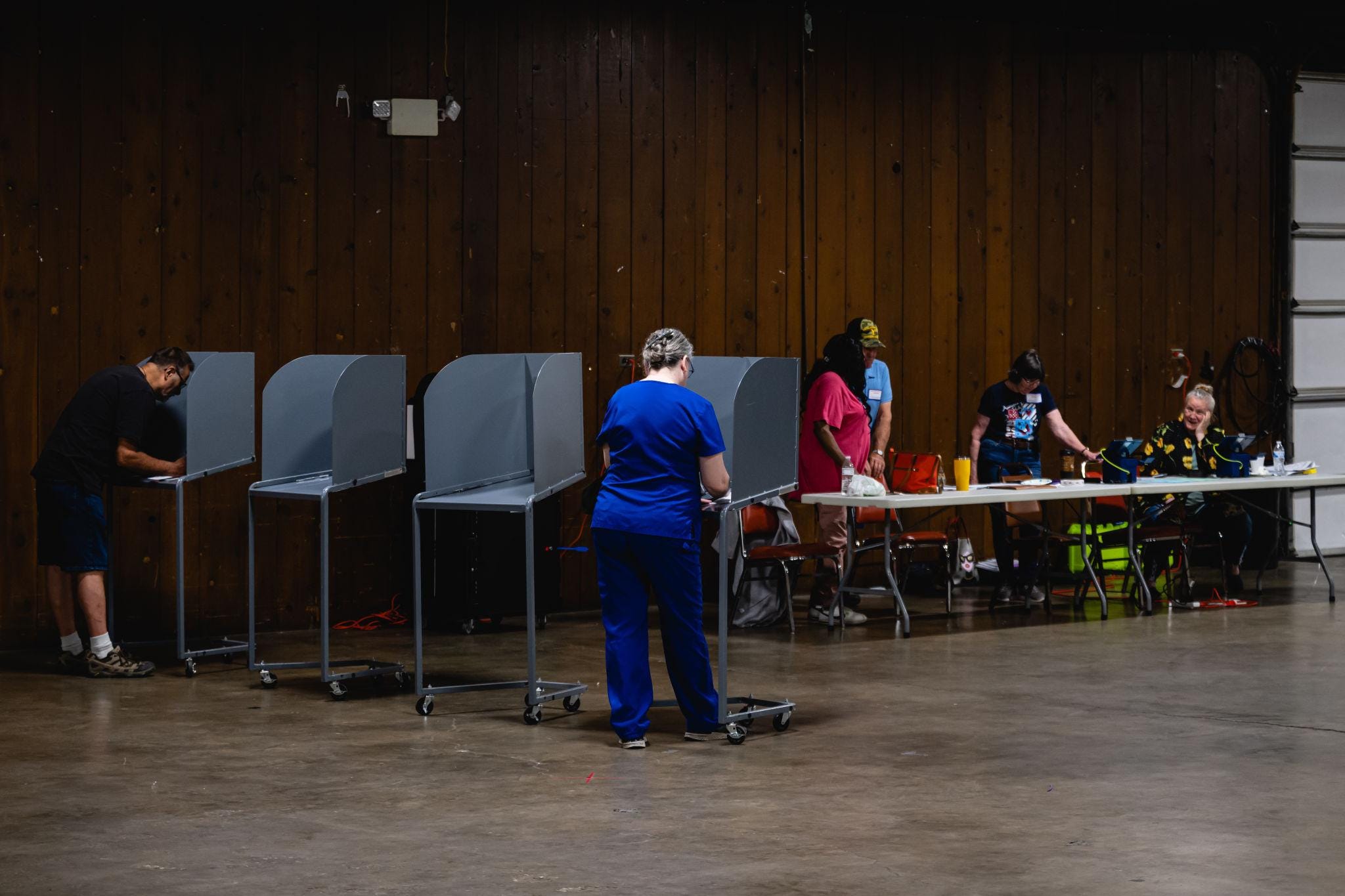
The removal of Social Security and EBT cards affects that alternate pathway. A voter who previously relied on one of those documents to satisfy identification requirements will need to rely on another qualifying document or follow the sworn statement process permitted under law.
In practical terms, this change shifts the set of documents that precinct officers may accept. Poll workers are trained to follow the statute precisely. They cannot accept documents outside the list authorized by law. A statutory deletion translates directly into a change at the check-in table.
County clerks will need to update their public guidance. Voter information posted on county websites, mailed in election materials, or distributed through outreach will need revision to reflect the new rules if the bill becomes law.
Documented examples of incremental ID changes
SB 154 is not the first statutory change to Kentucky’s voter ID law in recent years. In 2020, the General Assembly enacted Senate Bill 2, which established a stricter photo ID requirement framework. That legislation codified acceptable forms of photo identification and clarified procedures for voters lacking qualifying ID.
Subsequent legislative sessions have revisited election administration rules, including absentee ballot procedures and voter roll maintenance. For example, House Bill 574 in 2021 adjusted absentee voting rules and ballot handling procedures. House Bill 564 in 2022 addressed aspects of voter roll maintenance and election security measures.
Each of these bills amended specific statutory provisions. The changes were incremental and text-based. SB 154 fits within that pattern of targeted statutory revisions to election procedures.
In each instance, the General Assembly altered the list of permissible actions, documents, or timelines within the Kentucky Revised Statutes. The result is cumulative. The set of rules governing voter identification today differs in several respects from the pre-2020 framework.
Who is affected by the document removal
The documents removed by SB 154 share certain characteristics. They are non-photo documents and are associated with federal identification numbers or public assistance programs.
A Social Security card is issued by the Social Security Administration and contains a name and Social Security number but no photograph. An EBT card is typically issued to participants in the Supplemental Nutrition Assistance Program and contains account information used to access benefits.
Voters who relied on those documents as part of the secondary ID process may need to present alternative identification. The exact number of voters who used those documents in prior elections is not specified in the bill text. County-level data on which specific secondary IDs are presented at polling places is not routinely published in detailed public reports.
Households participating in public assistance programs are more likely to possess EBT cards than other forms of government-issued photo ID. The statutory change removes that document from the list poll workers may accept.
The practical effect depends on implementation. Some voters may already possess qualifying photo identification and will see no change. Others may need to obtain alternative documentation or rely on the sworn statement option if eligible.
Authority of the Kentucky State Board of Elections
The Kentucky State Board of Elections is charged with overseeing election administration and issuing guidance to county officials. Its authority derives from KRS Chapter 117. When statutory language changes, the Board updates its procedures, training materials, and public communications accordingly.
If SB 154 is enacted, the Board will likely revise its election manuals and publish updated guidance before the next statewide election. The Board may also conduct training sessions for county clerks and precinct officers to ensure consistent application of the revised ID requirements.
Election law changes typically require lead time. Training materials, ballot design, and voter outreach must align with the statute in force at the time of the election. The timing of enactment will determine how quickly counties must implement the revised document list.
The Secretary of State, as Kentucky’s chief election officer, also plays a role in communicating changes to voters. Public education efforts may include website updates, press releases, and informational campaigns.
What happens next in the legislative process
With Senate passage complete, SB 154 moves to the Kentucky House of Representatives. The House may assign the bill to a committee, amend it, pass it unchanged, or decline to advance it.
If the House amends the bill, the Senate must agree to those changes or a conference committee may be appointed to reconcile differences. Once both chambers pass identical language, the bill is enrolled and sent to the Governor.
The Governor may sign the bill into law, veto it, or allow it to become law without signature. A veto can be overridden by the General Assembly with the required majority.
If enacted, the effective date will be specified in the bill. Many election-related statutes include an effective date tied to the legislative calendar or a specific future date to allow for administrative preparation.
The next procedural decision point is House committee consideration. That stage will determine whether the bill advances to a full House vote.
Suggested Actions for Readers
Readers who want to track SB 154 can follow the bill’s status on the Kentucky Legislative Research Commission website and review committee agendas for upcoming hearings. Contact information for House members is available through the Kentucky General Assembly’s official directory. County clerks’ offices can provide current voter ID guidance for upcoming elections.
Further Reading
SB 154 bill text and status page (Kentucky General Assembly):
https://apps.legislature.ky.gov/record/26rs/sb154.html
Senate Bill 2 (2020 Regular Session) – Voter ID legislation:
https://apps.legislature.ky.gov/record/20rs/sb2.html
House Bill 574 (2021 Regular Session) – Election procedures:
https://apps.legislature.ky.gov/record/21rs/hb574.html
House Bill 564 (2022 Regular Session) – Election security and voter roll measures:
https://apps.legislature.ky.gov/record/22rs/hb564.html