
There is a moment in democratic decline when the words and terms used by institutions no longer reflect the lived experience of the citizens who must live with their actions.
Institutions continue to describe themselves using familiar terms. Civil enforcement. Law and order. Administrative authority. Meanwhile, the lived experience on the ground begins to feel different. Homes become sites of forced entry. Uniforms look heavier. Tactics escalate. Legal justifications narrow. Oversight thins.
What people are feeling is a shift in posture. Historically, these shifts are noticed by the public before they are formally acknowledged by institutions, and that early recognition has often been the first brake on further escalation.
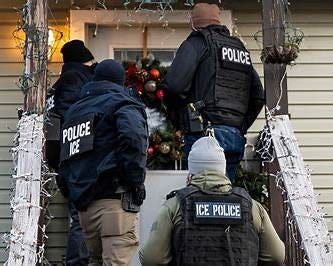
That tension is now visible in how immigration enforcement is being carried out in the United States, particularly in reporting on ICE’s reliance on administrative warrants to justify home entry, coercive arrest tactics and the murder of individuals protesting and protecting their neighbors. The agency remains, on paper, a civilian law enforcement body. Yet its operational logic is increasingly taking on paramilitary characteristics.
That distinction matters, because democracies do not usually collapse by announcing a new force. They erode by allowing existing ones to change character.
Paramilitary logic does not require a paramilitary name
In political science and security studies, a paramilitary force is not defined solely by statute. It is defined by behavior.
Paramilitary forces sit between police and military power, often in ways that weaken constitutional constraints. They adopt militarized equipment and tactics. They operate with wide discretion and limited judicial preauthorization. They frame enforcement targets as security threats rather than rights bearing civilians. They are designed to control populations, not adjudicate individual violations.
Historically, these systems remain most effective early, before their logic is widely understood and before civic resistance begins to organize around legitimacy rather than fear.
ICE, as an agency, remains legally a civil immigration enforcement body within DHS. It is not organized, trained, or authorized as a military unit. But it has, in certain contexts, moved closer to a paramilitary posture.
Consider what we have seen over time with militarized tactics: home-entry operations, use of battering rams, tactical vests, long guns, and coordinated raids mirror law-enforcement SWAT style operations rather than civil enforcement.
They are beginning to expand internal authority claims. ICE’s reliance on administrative warrants, combined with assertions that those warrants justify home entry, reflects a posture that treats civil process as sufficient for coercive force. That is a significant shift away from traditional Fourth Amendment norms.
Act first, deal with it later. Enforcement actions are often insulated from meaningful judicial pre-clearance, with after-the-fact litigation replacing prior authorization. This is a classic feature of paramilitary-style enforcement systems.
Their mission is expanding under political pressure. ICE has increasingly functioned as a symbolic and practical arm of national internal security policy, not merely an immigration compliance agency. That elevates threat framing and justifies heavier force.
What matters is not only what the law permits, but what kind of relationship between the state and the public is being constructed.
This pattern is not unique to the United States
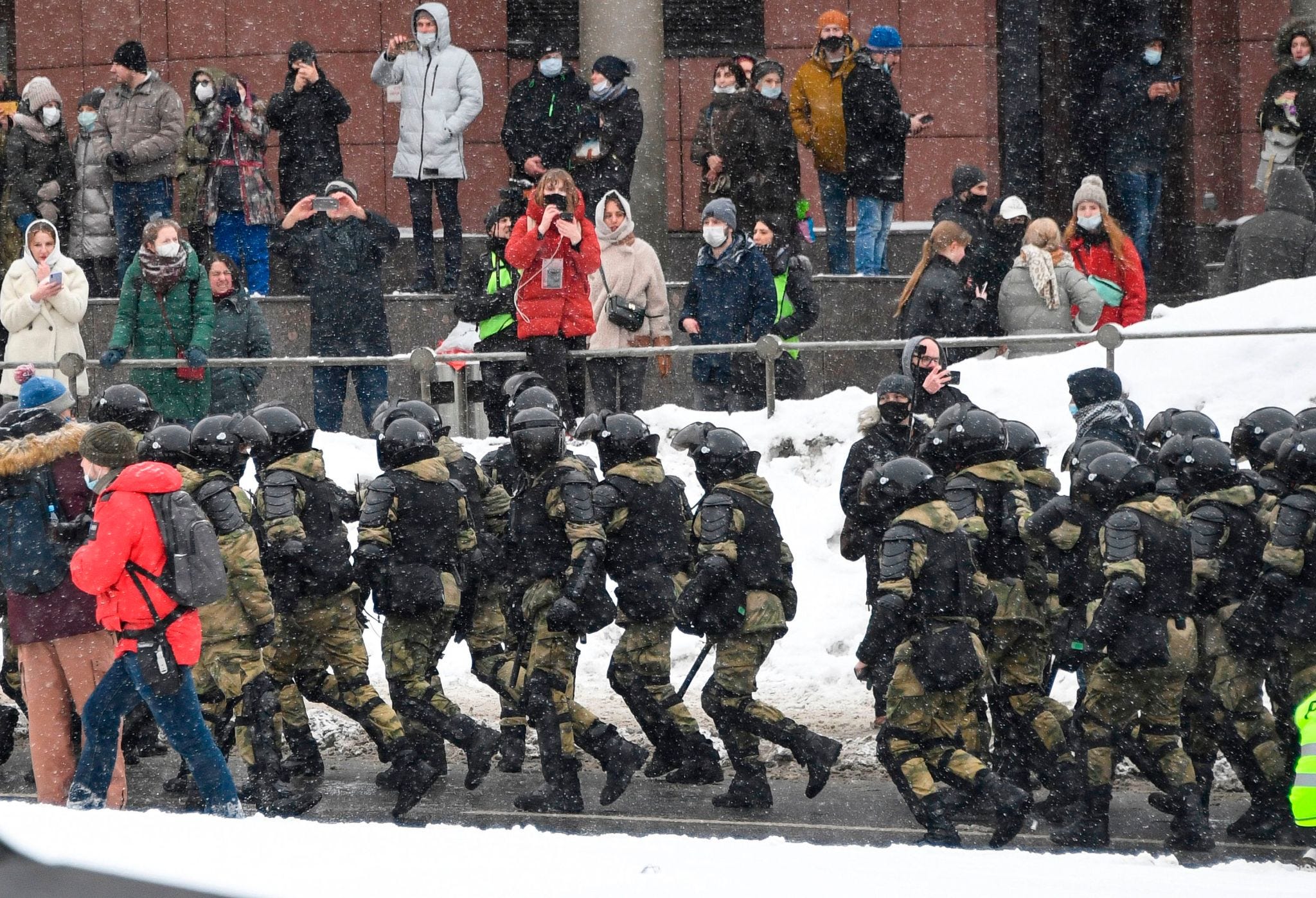
Other countries have traveled this path before.
In 2016 Russia created a national guard (Rosgvardiya) explicitly tasked with internal stability and protest suppression rather than crime prevention. This is one of the clearest modern examples of state-sanctioned paramilitary force against civilians.
Iran relies on parallel forces (Islamic Revolutionary Guard Corps and Basij) to enforce ideological compliance. They are regularly deployed against women, students, labor activists, and ethnic minorities.
Turkey expanded militarized internal security (Gendarmerie and special internal security units) after a failed coup. This reflects a transition from democratic policing toward internal security enforcement.
Mexico rebranded military policing (Guardia Nacional) as a civilian national guard. They are deployed against migrants, protesters, and civilians.
China institutionalized internal security (People’s Armed Police and internal security units) as a permanent governing function. China represents a fully normalized paramilitary internal security state.
In each case, governments argued necessity. Disorder. Threats. Exceptional circumstances.
In each case, paramilitary enforcement expanded before legal repression fully hardened. Courts lagged. Legislatures rationalized. The public adjusted. What began as targeted enforcement became routine presence.
The United States is not Russia or Iran. The analogy should not be abused. But neither should it be ignored. Democracies don’t wake up one morning with tanks in the streets. They arrive there through normalization.
People have defeated this before, but not the way movies suggest
History does offer counterexamples. And they are instructive precisely because they are unspectacular.
Poland’s Solidarity movement of the 1980s did not defeat the security state through violence. Solidarity built mass participation across workers, churches, and professionals. Resistance persisted through strikes, underground publishing, and parallel institutions. The state could repress protests, but not a society-wide refusal to comply. Paramilitary force proved unsustainable without consent.
East Germans did not storm the Stasi in 1989. Weekly mass demonstrations expanded despite repression threats. Crucially, security forces declined to fire on civilians. The moment enforcement refused orders, paramilitary power evaporated.
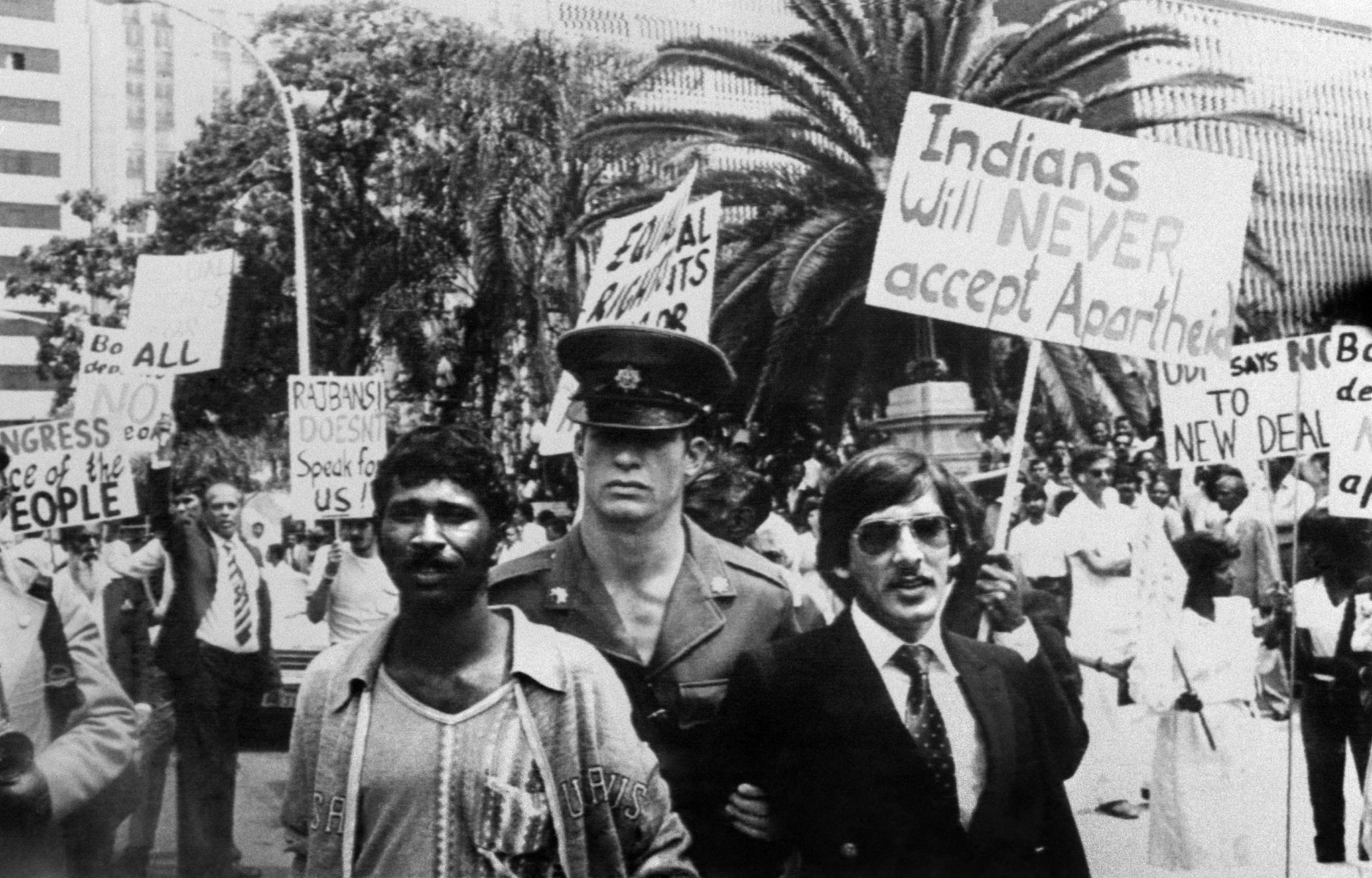
South Africans from the 1980s through 1994 did not overthrow apartheid by force. Mass protests, labor strikes, and international pressure intensified. Economic noncooperation weakened state capacity. Paramilitary repression failed when economic viability and international legitimacy collapsed simultaneously.
Serbians in 2000 did not outgun riot police. Their movement Otpor used mass nonviolent resistance, humor, and legitimacy attacks. Police units refused to suppress crowds. The regime’s enforcement arm could not justify violence against an overwhelming civic majority.
In all these cases they won by eroding legitimacy.
They organized across classes and institutions. They maintained nonviolent discipline. They built parallel civic life. They refused to disappear. Over time, enforcement arms lost moral cover. Orders went unfulfilled. The threat of repression stopped working.
Paramilitary power depends on compliance more than force. When enough people withdraw consent, enforcement becomes brittle.
The common thread is not bravery alone. It is scale, duration, and civic coherence.
Why this matters for Kentucky
It is tempting to see immigration enforcement as distant from daily life here in Kentucky. But enforcement posture doesn’t stay siloed.
When administrative authority is treated as sufficient for forced entry in one domain, it sets expectations in others. When judicial preclearance becomes optional, procedural norms weaken. When targeted populations are framed as inherent risks, that framing spreads.
Kentucky has already seen how enforcement discretion, ideological framing, and legal ambiguity intersect in other policy areas. Immigration enforcement does not exist in isolation. It exists within a broader ecosystem of power.
The question is not whether ICE is a paramilitary force today. The question is whether democratic guardrails are being maintained as enforcement practices escalate.
The danger
The danger is the slow acceptance of tactics once considered extraordinary. It is the narrowing of who is seen as deserving full constitutional protection. It is the replacement of judicial oversight with internal assurance.
By the time a society agrees on the label, the behavior is already entrenched.
Democratic resilience doesn’t require panic. It requires attention.
And attention begins by naming patterns while there is still time to interrupt them.
What we can still do, and why it matters
Let’s be honest about the moment we are in.
Many people are tired. Paying attention feels like work. Congress feels frozen because, on this issue, it largely is. It’s the predictable effect of sustained pressure combined with deliberate normalization.
The goal of that normalization is exhaustion.
That means endurance itself is already a form of resistance.
What we do now doesn’t need to be dramatic. It needs to be durable. History shows that democratic backsliding is interrupted not by a single act of courage, but by sustained refusal to accept that coercive force, once introduced, must simply be endured.
Refusal takes many lawful, visible forms.
We can refuse normalization by naming what is happening accurately, in public and in writing, without euphemism or minimization. Administrative warrants are not judicial warrants. Civil enforcement doesn’t justify forced home entry. Militarized tactics for civil violations are a policy choice. Saying this out loud, repeatedly, matters more than it feels like it should.
We can build durable public memory. Authoritarian drift relies on short attention spans. Democracies resist it by remembering. That means sharing primary reporting (not just commentary), keeping timelines and records, preserving firsthand accounts, and connecting new incidents to established patterns. Memory is infrastructure.
We can support litigation and watchdog institutions, even when they move slowly. Courts matter most when enforcement overreaches. Legal friction doesn’t always stop harm immediately, but it slows normalization. Slowing normalization buys time. Time is not nothing.
We can strengthen local resistance to federal overreach. ICE doesn’t operate alone. It relies on cooperation, access, and quiet acquiescence. Local institutions still have choices. Demanding warrants, limiting cooperation, and establishing clear boundaries don’t abolish an agency. They constrain it. Constraints matter.
We can withdraw consent in visible, lawful ways. History is clear on this point. Paramilitary-style enforcement depends on compliance, silence, and fear more than raw force. Disciplined, nonviolent refusal changes outcomes when it is collective, persistent, and broad based. This looks less like spectacle and more like presence: court watching, accompaniment, mutual aid, documentation, showing up and staying.
We can also speak honestly about abolition as a civic demand rather than a slogan. ICE is statutory, not constitutional. Abolition is a question of governance and redistribution of functions, not the absence of law. Pressing candidates to articulate clear positions shifts what is politically imaginable over time. That shift doesn’t happen all at once. It happens because people keep asking.
No one does all of this. No one is required to. Democratic resistance works because it is shared, uneven, and cumulative. Each act adds weight. Each refusal removes legitimacy.
The honest truth is this: democratic backsliding is rarely reversed in a single vote or a single moment of outrage. It is interrupted when enough people, over time, refuse to accept that coercive force is simply how things work now.
That work is slower than panic. It is quieter than force. It doesn’t always feel satisfying.
But it is how democracies have pulled back before.
And it is still available to us now.