
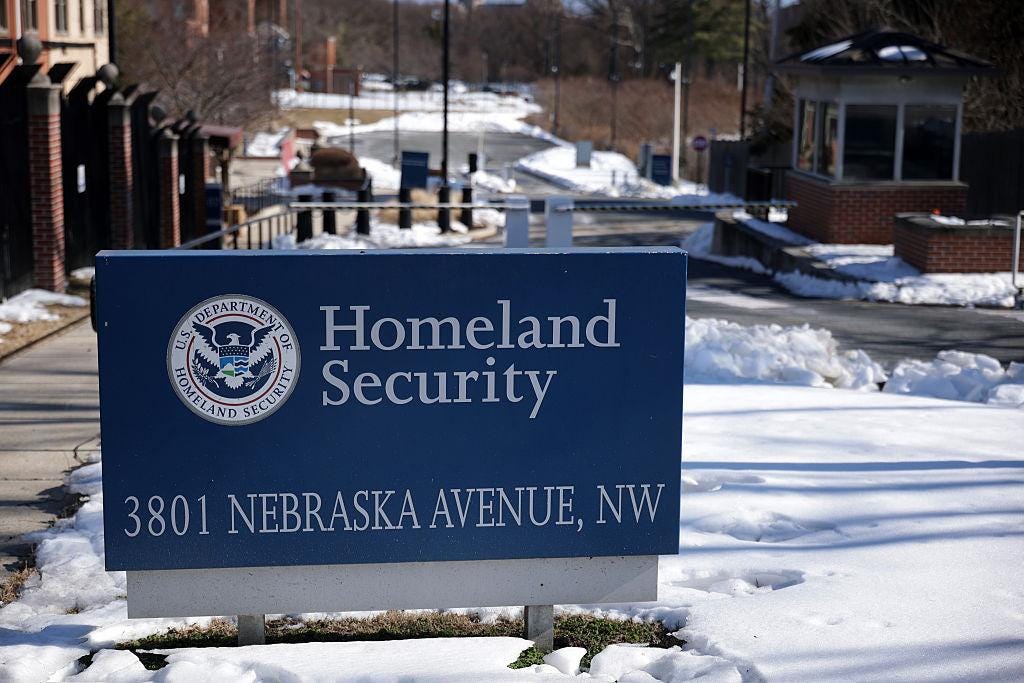
In mid-March 2026, the Associated Press reported that several of the federal government’s most commonly used immigration enforcement datasets have stopped updating regularly or now contain incomplete information. These are the statistics historically released by the U.S. Department of Homeland Security and its enforcement agencies, including U.S. Immigration and Customs Enforcement and U.S. Customs and Border Protection.
For years those datasets allowed the public to follow how immigration enforcement was unfolding across the country. Journalists, immigration attorneys, and policy researchers used them to track arrests, detention populations, removals, and demographic trends.
The new reporting described something different. Some federal dashboards have stopped updating for months. Certain tables that once included demographic details or location data now appear simplified or incomplete. In other cases, observers attempting to obtain updated numbers have been directed to submit formal public-records requests instead of relying on regularly updated public dashboards.
These changes arrive while the federal government is pursuing a larger deportation agenda. When enforcement expands while the data used to monitor it becomes less visible, an important accountability mechanism begins to weaken.
Understanding why requires looking at how immigration enforcement data normally works.
The Data Behind Immigration Enforcement
Every immigration enforcement action generates records inside federal systems. When federal officers make an arrest, place someone in detention, or carry out a removal, those actions are documented through internal databases maintained by the Department of Homeland Security.
That data must exist because agencies rely on it to run their own operations. Officers track detention capacity. Supervisors track enforcement activity. Courts track removal proceedings.
Public reporting does not create those records. It determines how much of that information becomes visible to the outside world.
For many years federal agencies published portions of this information through regularly updated statistical reports. ICE released detailed enforcement statistics through its Enforcement and Removal Operations division. CBP published monthly border encounter and enforcement data.
These releases created a shared factual reference point. Researchers could compare enforcement trends across different years. Journalists could test official statements against the numbers. Attorneys could identify patterns that affected their clients.
When those numbers stop updating regularly, the enforcement system itself does not stop. What changes is the ability of the public to see it clearly.
The Difference Between Public Dashboards and Records Requests
The Associated Press reporting described another shift alongside the stalled datasets. In some cases observers trying to obtain updated information were directed to use the federal Freedom of Information Act rather than relying on public dashboards.
That difference may sound procedural, but it changes how quickly the public can learn what is happening.
Public dashboards update automatically as agencies release new statistics. Researchers and reporters can review them immediately.
Freedom of Information Act requests operate on a very different timeline. Agencies often take months or years to respond, particularly when requests involve large datasets or enforcement records.
Moving information from public dashboards into records-request processes slows the flow of information dramatically. Patterns that once appeared quickly in public data may now take years to become visible.
During that time enforcement activity continues.
The Policy Direction Behind the Data Changes
The shift in data visibility comes as the federal government pursues a larger deportation agenda.
The Trump administration has directed federal immigration agencies to expand enforcement activity and increase deportations. Interior enforcement operations have become a central part of that strategy.
More enforcement actions mean more arrests, detention placements, and removal proceedings. Each of those actions generates new records inside federal systems.
At the same time, the public release of those records appears to be slowing or narrowing.
This combination creates a gap between enforcement activity and public understanding. The government continues collecting detailed internal data while the public tools used to monitor that activity grow less reliable.
In any administrative system, transparency determines how easily outside institutions can evaluate how authority is being exercised.
When transparency weakens while enforcement expands, oversight becomes more difficult.
What This Looks Like for Communities
The consequences of that change are not abstract.
Across the country, local institutions rely on federal immigration statistics to understand what enforcement is doing in their regions. Immigration attorneys track detention numbers and removal trends when advising clients. Nonprofit organizations monitor enforcement patterns when planning legal clinics or emergency response networks.
Local journalists often use federal statistics as a starting point for reporting. When numbers change sharply, reporters investigate why.
Schools, churches, and community groups also rely on those signals. A sudden increase in detention activity can affect classrooms, congregations, and workplaces long before it becomes a national news story.
Without updated data, those institutions lose one of the early indicators that something is changing.
Instead of seeing trends in national datasets, communities learn about enforcement through scattered individual incidents. A family detained. A workplace enforcement action. A removal that becomes known only after the fact.
The information arrives later and in fragments.
Why the Transparency Question Matters in Kentucky
Immigration enforcement is carried out by federal agencies, not by Kentucky state government. But the consequences of that enforcement appear in local communities across the state.
Schools see the impact when students disappear from classrooms after family members are detained. Churches and nonprofit organizations respond when families need legal help or emergency assistance. Employers confront sudden workforce disruptions when enforcement actions occur.
Local reporters depend on federal statistics to determine whether enforcement patterns are changing in Kentucky or across the broader region.
Without those numbers, it becomes harder to identify whether isolated incidents reflect a broader shift in policy.
For example, rising detention numbers in a regional facility may signal a new enforcement priority. A demographic change in removal statistics may reveal new targeting patterns.
These patterns often become visible first in federal datasets.
When those datasets stop updating regularly, communities receive less warning about changes that could affect them.
A Familiar Pattern in Administrative Power
The situation described in the Associated Press reporting reflects a pattern that sometimes appears when administrative authority expands.
Government agencies collect large amounts of operational data because they need it to perform their duties. That data allows them to manage programs, track performance, and coordinate across offices.
Public transparency determines whether those same records also serve an oversight function.
When agencies publish detailed statistics, journalists, researchers, and courts can examine how authority is being exercised. When public reporting narrows or slows, the ability to monitor those actions becomes more limited.
The enforcement authority itself has not changed. Federal immigration agencies still operate under statutes enacted by Congress and enforced through administrative processes and immigration courts.
What changes is the level of public visibility surrounding how that authority is used.
For communities trying to understand what is happening around them, visibility matters.
What Happens Next
Decisions about public immigration reporting are controlled by the Department of Homeland Security and its component agencies.
Congress has oversight authority over those agencies and can request updated reporting or hold hearings examining transparency practices. Members of Congress also have the ability to request internal data directly from federal agencies.
Journalists, researchers, and advocacy organizations will likely continue pursuing updated datasets through Freedom of Information Act requests and litigation when necessary.
Within the agencies themselves, reporting practices can also change as leadership priorities shift or oversight increases.
In the meantime, immigration enforcement activity continues through the operational authorities already in place.
The question facing communities is straightforward: how clearly can the public see what those enforcement systems are doing?
Suggested Actions for Readers
Monitor national reporting on immigration enforcement practices and federal data transparency.
Follow public statistical releases from the Department of Homeland Security, ICE, and CBP to see whether the stalled datasets begin updating again.
Support local journalism that tracks how federal enforcement policies affect Kentucky communities.
Encourage congressional oversight when federal agencies reduce public transparency around enforcement data.
Pay attention to Freedom of Information Act litigation and immigration court filings that may reveal additional information about enforcement activity.
Further Reading
U.S. Immigration and Customs Enforcement Enforcement and Removal Operations statistics
https://www.ice.gov/statistics
U.S. Customs and Border Protection enforcement statistics
https://www.cbp.gov/newsroom/stats
Immigration courts operated by the Executive Office for Immigration Review
https://www.justice.gov/eoir