
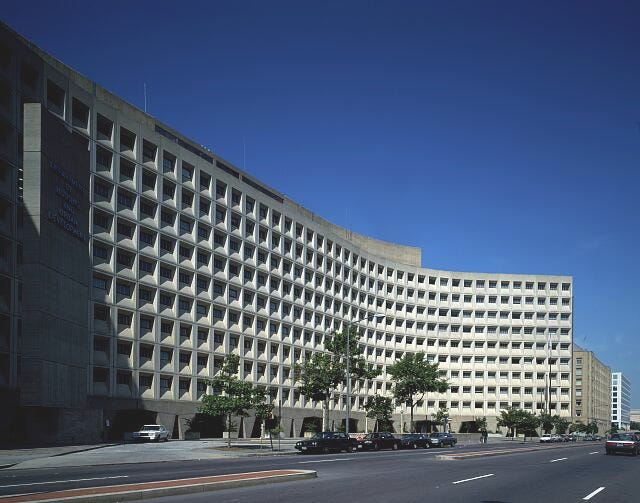
On April 28, 2026, the U.S. Department of Housing and Urban Development published a proposed rule called “Equal Access to Housing in HUD Programs Revisions.” The rule is listed as Docket No. FR-6518-P-01 and RIN 2501-AE12. Public comments are due June 29, 2026.
The rule is not final. Kentucky shelters, housing providers, local governments, and Continuums of Care are not yet implementing a final federal mandate from this proposal.
The immediate action is a federal rulemaking deadline, followed by HUD’s review of public comments and a future decision on whether to finalize, revise, or withdraw the rule.
The proposed change is still significant. HUD is proposing to remove references to “gender,” “gender identity,” and in several places “sexual orientation” from federal housing regulations and replace them with “sex.” HUD defines sex under President Donald Trump’s Executive Order 14168 as an immutable male-female biological classification.
That change would affect more than one shelter rule. HUD’s proposal lists changes across many parts of Title 24 of the Code of Federal Regulations, including Community Planning and Development programs, Continuum of Care programs, Emergency Solutions Grant-related programs, Housing Opportunities for Persons With AIDS, public housing, Section 8, supportive housing, and other HUD-connected housing programs.
For Kentucky, the issue is direct. HUD dollars fund local shelter, outreach, rapid rehousing, permanent supportive housing, public housing, vouchers, HIV/AIDS housing, and homeless services work. If HUD finalizes this rule, Kentucky agencies and providers that receive or administer those funds may have to decide how to handle intake, placement, privacy, nondiscrimination language, staff training, local policies, and grant compliance.
What happened
HUD Secretary Scott Turner signed the proposed rule. HUD’s Office of the Secretary published it in the Federal Register on April 28, 2026. The rule follows President Trump’s January 20, 2025, executive order titled “Defending Women from Gender Ideology Extremism and Restoring Biological Truth to the Federal Government.”
HUD says the proposal would align federal housing regulations with that executive order. The department’s summary says the rule would provide access to qualifying facilities according to a person’s sex rather than gender identity. It also says providers operating single-sex or sex-specific facilities could require “reasonable assurances and evidence” to confirm a person’s sex.
That language matters. Under the current 2016 Equal Access rule for Community Planning and Development programs, HUD-funded shelters and providers must serve people according to gender identity. The 2016 rule also says providers should not use intrusive questioning or require anatomical, medical, physical, or documentary evidence of a person’s gender identity.
The new proposal would reverse that standard for temporary emergency shelters and other facilities with shared sleeping quarters or shared bathing facilities. HUD proposes that placement and accommodation “shall be made in accordance with the individual’s sex.” HUD also proposes that a facility provider “may require reasonable assurances or evidence to establish a person’s sex.”
HUD is also proposing a funding enforcement provision. Proposed 24 CFR 5.106(e) says state or local entities that follow conflicting local laws or policies may be treated as violating federal requirements. HUD says enforcement could include withholding or revocation of Community Planning and Development funds.
The proposal would connect federal definitions of sex to local funding, shelter rules, intake decisions, and government policy choices.
How HUD funding impacts Kentucky providers
HUD funding reaches Kentucky through several channels. Some funding goes to state-level administrators. Some goes directly to local governments. Some go through Continuums of Care, which are local or regional planning bodies responsible for coordinating homelessness programs and competing for HUD funds.
Kentucky has three Continuums of Care. They are the Louisville-Jefferson County CoC, the Lexington-Fayette County CoC, and the Kentucky Balance of State CoC. The Balance of State CoC covers the 118 Kentucky counties outside Fayette and Jefferson.
Kentucky Housing Corporation serves as the lead planning entity and collaborative applicant for the Kentucky Balance of State CoC. KHC also administers Emergency Solutions Grant funds for the Commonwealth and subawards those funds to partner organizations across the 118-county Balance of State area.
Louisville and Lexington have their own CoC roles. The Coalition for the Homeless serves as the CoC lead in Louisville. Lexington’s Office of Homelessness Prevention and Intervention serves as the collaborative applicant for the Lexington-Fayette CoC and operates the local funding competition for HUD CoC funds.
Those offices and organizations do not decide whether HUD finalizes the rule. HUD does. But they would be among the Kentucky entities expected to understand, communicate, and respond to the final requirements if HUD adopts them.
The operational questions are specific.
A shelter may have to decide what its intake form asks.
A CoC board may have to review written standards. A city grant administrator may have to compare the local nondiscrimination policy with federal grant conditions. A nonprofit provider may have to decide how to train staff who make placement decisions at night, when a person needs shelter immediately.
The proposed rule would also affect public housing and voucher-related regulations. That does not mean every housing authority would face the same day-to-day decision as an emergency shelter. A Section 8 administrator handles different situations than those at a domestic-violence shelter or a youth shelter. But HUD’s proposal goes beyond a single narrow emergency shelter provision and edits language across many HUD programs.
Kentucky’s shelters would face the local decisions
Kentucky’s homelessness response depends on federal housing dollars, local providers, and nonprofit staff who handle urgent needs with limited beds. HUD’s proposed rule would add a new federal compliance question to those local decisions.
KHC’s K-Count page explains that HUD requires Kentucky’s point-in-time homelessness count as a funding condition for homeless service programs. The count is used to monitor trends and make resource-allocation decisions. That connects data, federal grants, local priorities, and shelter capacity.
Kentucky’s 2025 K-Count results include the Balance of State, Louisville, and Lexington. The Kentucky League of Cities reported that the most recent statewide K-Count identified 5,789 Kentuckians experiencing homelessness, including 1,998 unsheltered, 3,159 in emergency shelter, and 632 in transitional housing.
HUD’s 2024 Housing Inventory Count for Kentucky listed thousands of emergency, transitional, and permanent housing beds across the state. Those beds are the places people seek when they are fleeing domestic violence, sleeping outside, leaving an unsafe home, aging out of family support, recovering from a medical crisis, or trying to avoid another night in a car.
The people most directly affected by this proposed rule are transgender and gender-nonconforming people who need shelter or housing assistance. The Williams Institute has reported that transgender adults experience higher rates of homelessness and face denial or mistreatment when seeking shelter. For a person who already has few safe options, a rule allowing documentation or evidence demands can become a barrier at the door.
Domestic violence survivors are also part of this issue. HUD frames the proposal as a measure to protect women’s shelters and privacy in shared spaces. Providers that serve survivors will have to evaluate how any final rule interacts with trauma-informed care, survivor safety, federal grant conditions, and their own admission policies.
Faith-based providers are another part of the map. HUD’s public statement and proposed rule both identify religious liberty as part of the department’s rationale. Secretary Turner’s April statement used explicitly religious language, saying, “God created two sexes.” That matters for a public agency because HUD is using federal rulemaking authority to decide how publicly funded housing and shelter programs may classify people.
Local governments also need to watch the proposed funding language. HUD says state or local entities that follow conflicting local laws or policies may face enforcement actions, including the loss of federal funds. If a Kentucky city or provider has a nondiscrimination policy that protects gender identity, the final rule could create a conflict between local policy choices and federal grant compliance.
No final rule yet, but the enforcement posture has already shifted
The public comment window is the current change. HUD has not issued a final rule. There is no final implementation date for Kentucky providers from this proposal alone.
HUD has already taken one earlier enforcement step. In February 2025, Secretary Turner directed HUD staff to halt pending or future enforcement actions related to the 2016 gender-identity rule. That means federal enforcement posture shifted before the new rule was finalized.
The April 2026 proposal would take the next step by changing the regulatory text. A final rule would carry more force than a press statement or an enforcement pause because grantees, subrecipients, and local administrators would have new federal language to follow.
The proposal also creates a record for future litigation. If HUD finalizes the rule, courts may be asked to evaluate whether the agency followed federal rulemaking requirements, whether HUD has authority to make the change, how the Fair Housing Act applies, how the rule interacts with local laws, and whether the funding enforcement provision exceeds federal authority.
This proposal does not mean every Kentucky shelter changed its rules today.
It means HUD is trying to change the federal rules that many Kentucky providers rely on for funding, compliance, and operating guidance.
What you can do or watch next
If you read this before the June 29 deadline, submit a public comment through Regulations.gov under HUD-2026-0529. A useful comment can be short. It should explain how the proposal would affect shelter access, local service delivery, survivor safety, staff training, privacy, funding compliance, or Kentucky providers.
Ask Kentucky Housing Corporation whether it submitted a comment on the proposed rule. Also, ask whether KHC has identified which Balance of State providers could be affected by changes to intake, placement, privacy, nondiscrimination language, or documentation practices.
Track the Kentucky Balance of State CoC Advisory Board. KHC says board meetings are generally held virtually and are open to the public. Sign up for KHC homeless and support services eGrams to receive notices of future meetings and guidance.
In Louisville, ask the Coalition for the Homeless and the Louisville Metro whether they submitted comments, whether they are reviewing local written standards, and which HUD-funded projects could face policy revisions if the rule is finalized.
In Lexington, ask the Office of Homelessness Prevention and Intervention and the LFUCG Homelessness Prevention and Intervention Board whether they submitted comments, whether local grant agreements include gender-identity protections, and how the board would handle a conflict between local policy and federal funding conditions.
Ask your local shelter or housing provider whether its nondiscrimination policy protects against discrimination based on gender identity. Ask whether the provider receives HUD funds, ESG funds, CoC funds, HOPWA funds, public housing funds, Section 8 funds, or city/county pass-through funds. The funding source matters because the proposed rule changes different HUD regulations in different ways.
Watch for the final rule. The next major federal action would be HUD’s response to public comments and publication of a final rule. At that point, Kentucky providers, local governments, and CoC boards will need to compare the final text against current policies, contracts, grant agreements, and training materials.
Further reading and sources
Primary sources:
Federal Register, HUD proposed rule, “Equal Access to Housing in HUD Programs Revisions,” April 28, 2026
https://www.federalregister.gov/documents/2026/04/28/2026-08244/equal-access-to-housing-in-hud-programs-revisions
Regulations.gov docket, HUD-2026-0529
https://www.regulations.gov/docket/HUD-2026-0529
HUD press release, “Secretary Scott Turner Moves to Restore Biological Truth and Sanity to HUD’s Policies”
https://www.hud.gov/news/hud-no-26-027
HUD press release, “Secretary Scott Turner Halts Enforcement Actions of HUD’s Gender Identity Rule”
https://www.hud.gov/news/hud-no-25-026
Federal Register, 2016 Equal Access final rule
https://www.federalregister.gov/documents/2016/09/21/2016-22589/equal-access-in-accordance-with-an-individuals-gender-identity-in-community-planning-and-development
Federal Register, 2012 Equal Access final rule
https://www.federalregister.gov/documents/2012/02/03/2012-2343/equal-access-to-housing-in-hud-programs-regardless-of-sexual-orientation-or-gender-identity
White House, Executive Order 14168
https://www.whitehouse.gov/presidential-actions/2025/01/defending-women-from-gender-ideology-extremism-and-restoring-biological-truth-to-the-federal-government/
Kentucky and local sources:
Kentucky Housing Corporation, Continuum of Care
https://www.kyhousing.org/programs/continuum-care
Kentucky Housing Corporation, Emergency Solutions Grant
https://www.kyhousing.org/programs/emergency-solutions-grant
Kentucky Housing Corporation, K-Count Results
https://www.kyhousing.org/page/k-count-results
Coalition for the Homeless, Louisville CoC Awarded $23.3 Million
https://louhomeless.org/louisville-coc-funded-2025/
Lexington-Fayette Urban County Government, Office of Homelessness Prevention and Intervention
https://www.lexingtonky.gov/government/departments-programs/housing-advocacy-community-development/office-homelessness-prevention-intervention/whats-being-done
HUD Exchange, 2024 Kentucky Housing Inventory Count
https://files.hudexchange.info/reports/published/CoC_HIC_State_KY_2024.pdf
Additional context:
Williams Institute, Homeless Shelter Access Among Transgender Adults
https://williamsinstitute.law.ucla.edu/publications/trans-homeless-shelter-access/
National Low Income Housing Coalition, Equal Access rollback resource
https://nlihc.org/resource/new-resources-available-comment-huds-proposed-equal-access-rule-roll-back-take-action
National Alliance to End Homelessness, HUD’s Equal Access Rule
https://endhomelessness.org/resources/policy-information/huds-equal-access-rule/