
On October 7, federal judge Amir H. Ali stopped the Department of Homeland Security from enforcing a policy that prevented detained immigrants from completing a required step in their applications for legal immigration status.
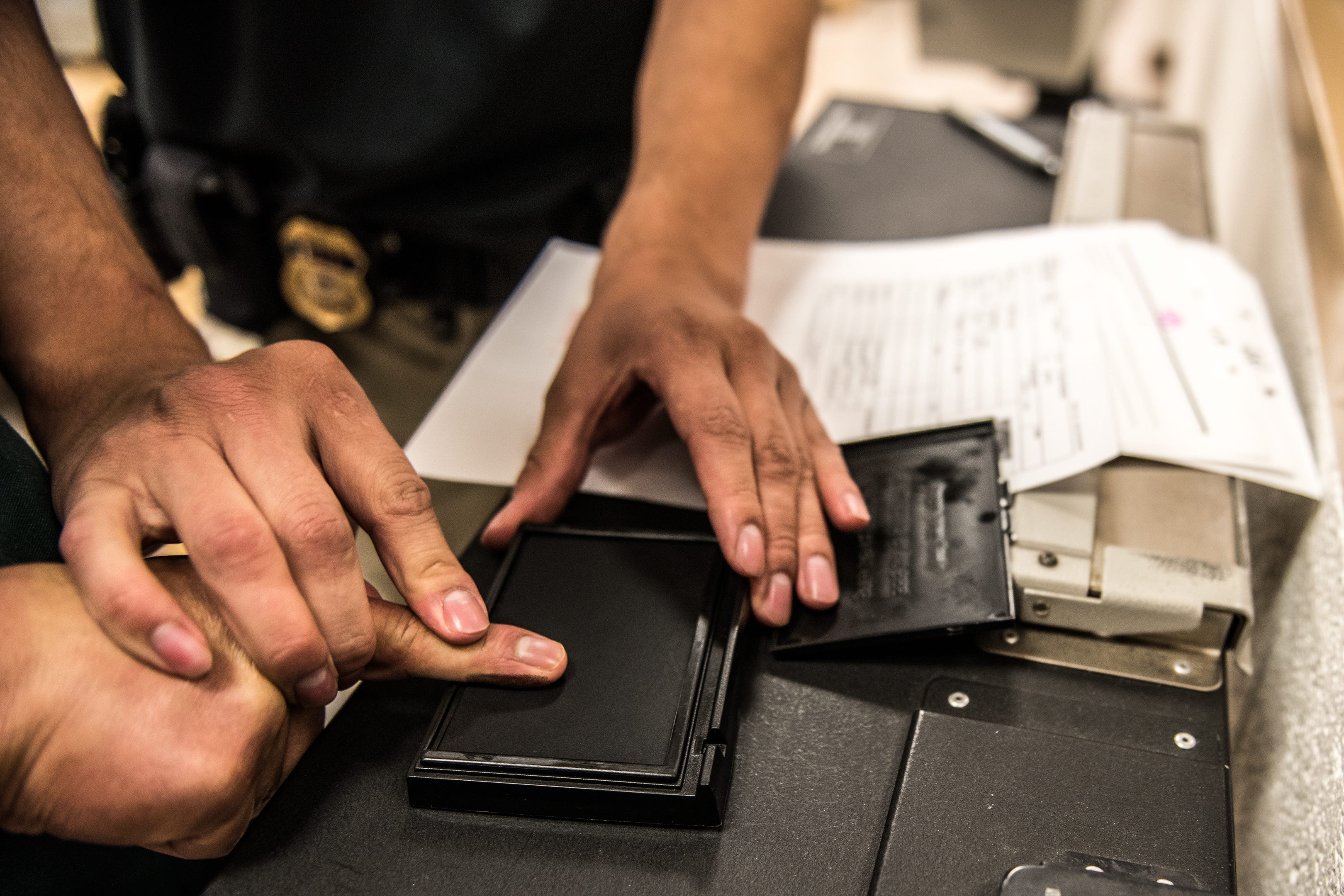
The problem was straightforward. The government required applicants to provide fingerprints and photographs before it could process their applications. But it had stopped providing a way for many people in immigration detention to submit them.
That meant someone could qualify for protection under federal immigration law and still have an application denied because the government wouldn’t allow them to complete the required paperwork.
The judge ordered DHS to restore its previous procedure while the lawsuit continues.
The government required an appointment people couldn’t attend
The dispute began with a policy change announced on December 5, 2025.
U.S. Citizenship and Immigration Services, or USCIS, processes applications for various forms of legal immigration status. Applicants may be required to provide fingerprints, photographs, and other identifying information, so the government can verify their identities and conduct background checks.
Normally, USCIS schedules an appointment to collect that information.
For people held in immigration detention, those appointments present an obvious problem. They can’t simply leave a detention facility and travel to a USCIS office.
Previously, Immigration and Customs Enforcement, or ICE, was responsible for helping detained applicants complete the process. That included transporting people to appointments or arranging biometric collection.
The December policy removed that responsibility from ICE. USCIS also prohibited its employees and contractors from traveling to detention facilities to collect the information.
But the requirement to submit biometrics remained. And USCIS policy said detention or incarceration was not an acceptable reason, by itself, to reschedule a biometric appointment.
Under federal regulations, applicants who miss required appointments can have their applications treated as abandoned and denied.
So a detained person could receive an appointment notice, be unable to attend because ICE wouldn’t transport them, and lose the opportunity to have an application considered.
The change did not apply to every immigration proceeding. DHS continued collecting biometrics for certain applications handled by immigration courts. The people challenging this policy had applications that USCIS itself was responsible for deciding.
Some applicants were seeking protection from serious harm
The people affected weren’t all applying for the same type of immigration status.
The lawsuit involved applications for permanent residency, protections available to certain abused or neglected children, visas for trafficking victims, and visas for victims of other serious crimes.
Congress established these forms of immigration relief and the requirements for obtaining them.
Whether someone qualifies should depend on the facts of their case. Applicants still have to establish their eligibility, undergo required checks, and receive a decision.
But the new policy could prevent the government from ever reaching that decision.
In the lawsuit, six detained immigrants challenged the policy. Their attorneys described people who couldn’t complete applications because ICE wouldn’t facilitate the required appointments.
The court found that the policy had prevented several plaintiffs from submitting required biometric information. That put them at risk of continued detention and deportation even though their applications might have entitled them to remain in the United States.
For some applicants, completing biometric checks could also affect whether removal proceedings were paused while the government considered their applications.
In other words, the delay wasn’t necessarily harmless. Someone could be deported before the government determined whether that person qualified for protection.
DHS said the change would discourage frivolous applications
The government had an explanation for its policy.
DHS said the change was intended to discourage frivolous immigration claims and improve consistency in its operations.
Those are legitimate administrative concerns. The government has authority to verify applicants’ identities, investigate possible fraud, and require people to satisfy lawful application procedures.
But Judge Ali identified a serious problem with DHS’s explanation.
The policy didn’t distinguish between frivolous applications and valid ones. It prevented people from completing the same biometric checks the government said were necessary to determine eligibility.
The judge also questioned how refusing to collect information needed for those checks would improve the process.
During a hearing, when the court asked how the policy would accomplish its stated goals, the government’s attorney acknowledged that he didn’t have an answer at that time.
DHS also argued that the policy didn’t actually prohibit detained people from attending their appointments or voluntarily asking ICE officers to collect their fingerprints.
The judge wasn’t persuaded. Detained people couldn’t simply leave custody to attend an appointment. And although ICE had collected fingerprints in some individual cases, the government couldn’t explain when officers would agree to do so.
Two plaintiffs eventually completed their biometrics and either obtained immigration status or were released from detention. Their claims were no longer before the court. But the government hadn’t established a reliable procedure for the others.
The law remained. The way to use it did not.
This is where the case illustrates a Pattern of Power: Weaken the rule of law while claiming to defend it.
The government didn’t repeal the immigration protections Congress had created. It didn’t have to.
Instead, DHS changed how its agencies handled a required administrative procedure.
USCIS continued demanding biometric information. ICE stopped collecting it. The people caught between those decisions could lose their applications without anyone determining whether they qualified for protection.
That is different from an administration deciding to enforce immigration law more strictly.
The government can investigate fraud, deny applications that don’t meet legal requirements, and deport people when the law permits it.
But it cannot assume that changing an administrative procedure is beyond legal review simply because the change is described as an improvement.
Here, the government’s own actions stood between applicants and a decision under existing law.
The court did not find that DHS officials deliberately intended to deny every affected application. It didn’t need to decide their motives; it examined what the policy actually did.
The important fact was that the government had removed a procedure people needed to exercise rights available under federal law, without adequately explaining or accounting for the consequences.
A judge made DHS restore the procedure
The affected immigrants went to federal court, represented by attorneys from Democracy Forward, the National Immigration Project, and the National Immigrant Justice Center.
They challenged the policy under the Administrative Procedure Act, a federal law that lets courts review many government agency decisions.
Judge Ali concluded that the plaintiffs were likely to succeed in showing DHS had acted arbitrarily and capriciously.
He found that the department had failed to adequately consider how its policy would prevent detained people from pursuing applications for legal immigration status. DHS also hadn’t provided a satisfactory explanation for treating people with pending USCIS applications differently from certain applicants whose cases were before immigration courts.
On October 7, the judge temporarily set aside the policy and its implementation. That restored the previous arrangement requiring DHS to collect biometrics for detained people with pending USCIS applications.
He did not issue the separate preliminary injunction the plaintiffs had requested, finding that temporarily suspending the policy was sufficient at this stage.
This wasn’t a final ruling on all the plaintiffs’ claims. The court didn’t decide whether the policy violated their constitutional rights, and it didn’t grant anyone immigration status.
But it did stop the government from continuing the challenged procedure while the case moves forward.
DHS must report to the court by October 21 on its compliance with the order.
That report will be important because restoring a procedure on paper isn’t the same as making it available to people in detention.
What can someone in Kentucky actually do?
For most Kentuckians, there is no direct way to make ICE collect someone’s fingerprints. The federal government makes that decision, subject to the court’s order.
But people can act in two specific ways.
First, someone who knows an immigrant detained in Kentucky who cannot complete a pending USCIS application can help that person’s family reach qualified legal counsel.
The Community Response Coalition of Kentucky provides immigration legal assistance, including help for people detained by ICE in Kentucky. Its telephone and text number is 800-674-9217.
An attorney can determine whether the October 7 ruling affects the person and what steps are available. Lawyers representing affected clients have also been asked to report continued failures to collect biometrics to the attorneys handling the federal case.
That information can help the plaintiffs’ lawyers determine whether DHS is complying with the court order.
Congress also has a specific avenue for oversight.
Kentucky Senator Rand Paul chairs the Senate Homeland Security and Governmental Affairs Committee. That committee oversees the Department of Homeland Security.
Kentuckians can ask Senator Paul whether his committee will examine DHS’s October 21 compliance report and, if detained applicants still cannot complete required biometric procedures, seek an explanation.
The committee can question agency officials and conduct oversight. It cannot substitute its judgment for the court’s, and a constituent’s request does not require the committee to act.
But the question is concrete: Has DHS restored the process the court ordered, and can detained people actually use it?
Watch what happens when an agency removes a required step
The warning sign in this case appeared months before the judge intervened.
On December 5, DHS announced that ICE would no longer be responsible for collecting biometric information from detained people with pending USCIS applications.
The question then should have been simple: If those people still have to provide biometrics, how are they supposed to do it?
The same question applies whenever a government agency changes the procedures people must follow to obtain a benefit, challenge a decision, or exercise a legal right.
A change may be perfectly lawful. But when officials remove the only practical way to meet a requirement while continuing to enforce it, the result deserves scrutiny.
The October 7 ruling stopped this particular policy for now. What happens next depends on whether DHS restores the required procedures in practice and whether the court enforces its order.
The larger lesson is that a legal protection can be weakened without changing the law that created it.
Sometimes the first sign is an agency announcement that it will no longer provide a service people still need to use.
The time to ask how those people are supposed to comply is when that announcement is made, not after their applications have been denied.
Sources
1. U.S. District Court for the District of Columbia, J.Z. v. Department of Homeland Security, Memorandum Opinion and Order, October 7, 2026. Primary source for the policy’s consequences, the government’s arguments, the judge’s findings, and the October 21 compliance deadline. https://www.govinfo.gov/app/details/USCOURTS-dcd-1_26-cv-01510/USCOURTS-dcd-1_26-cv-01510-1
2. USCIS, Policy Alert PA-2025-28, Biometrics Collection for Aliens in Custody, December 5, 2025. The original government policy document describing the change and its effective date. https://iptp-production.s3.amazonaws.com/media/documents/2025.12.05_USCIS_PA-2025-28_-_Biometrics_Collection_for_Aliens_in_Custody.pdf
3. Democracy Forward, Federal Court Blocks Trump-Vance Policy Denying Detained Immigrants Access to Legal Protections, October 8, 2026. Identifies the litigation team and describes the plaintiffs’ challenge. This is a statement from the plaintiffs’ representatives. https://democracyforward.org/news/press-releases/federal-court-blocks-trump-vance-policy-denying-detained-immigrants-access-to-legal-protections/
4. American Immigration Lawyers Association, District Court Stays DHS Policy Denying Biometric Collection for Detained Noncitizens, October 7, 2026. Confirms the ruling and provides instructions for attorneys reporting continued failures to collect biometrics. https://www.aila.org/library/district-court-stays-dhs-policy-denying-biometric-collection-for-detained-noncitizens
5. Community Response Coalition of Kentucky, Legal Program and Services. Confirms legal assistance for Kentucky residents and people in ICE detention, including contact information. https://www.crc4me.org/pro-se-program https://www.crc4me.org/services
6. U.S. Senate Committee on Homeland Security and Governmental Affairs, Committee Membership. Confirms Senator Rand Paul’s chairmanship and the committee’s responsibility for DHS oversight. https://www.hsgac.senate.gov/about/committee-members/
7. Senator Rand Paul, Contact and Constituent Services. Provides the official means for Kentucky constituents to communicate with his office. https://www.paul.senate.gov/connect/