
How Authoritarianism Works Now, Part 2
Institutional capture is one way the new authoritarianism changes public life without abolishing public offices.
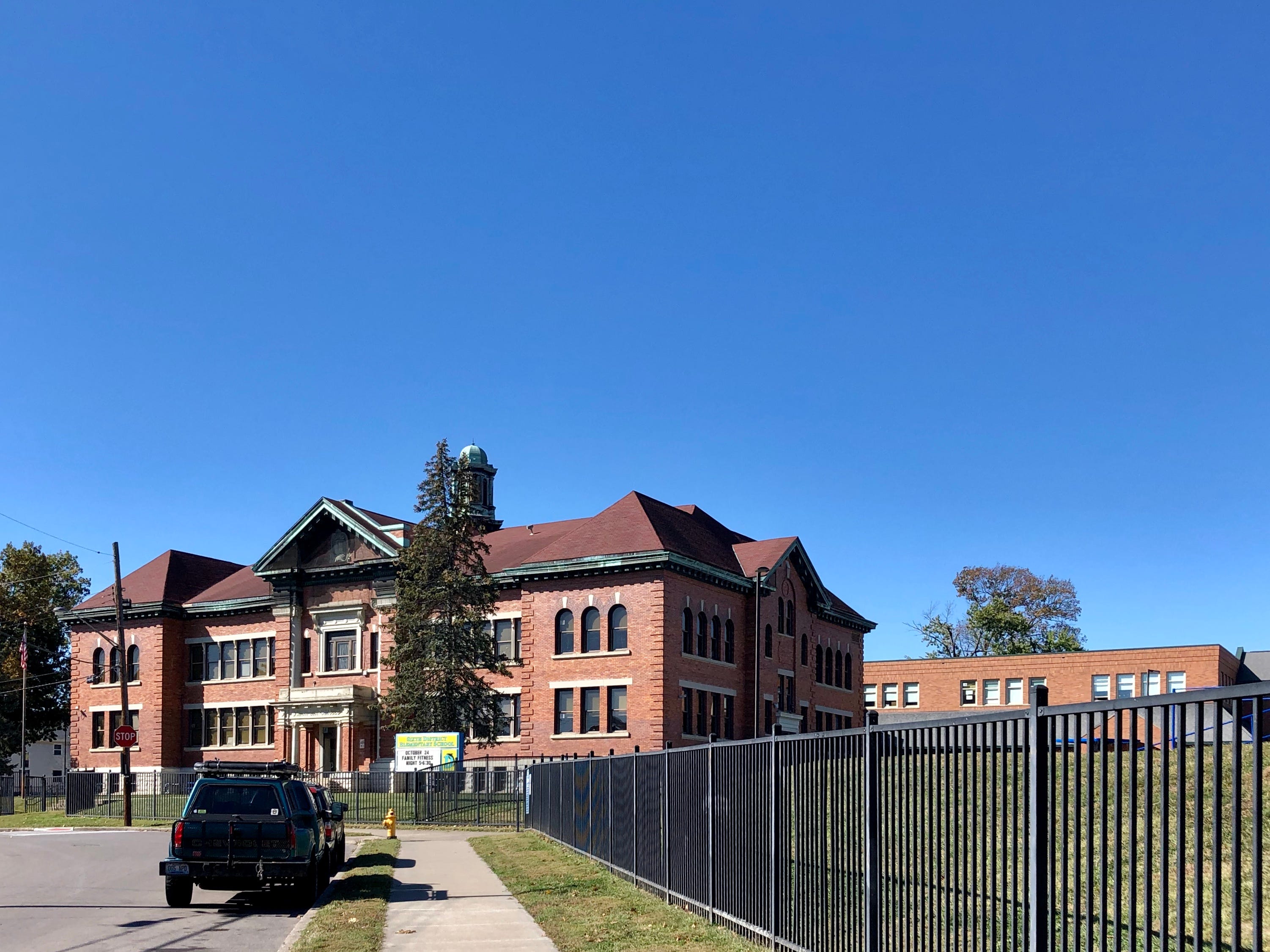
A captured institution may keep its name, staff, budget, meeting schedule, website, legal authority, and public mission statement. The bigger change appears in what the institution answers to. A school district created to serve all students and the public begins adjusting to a narrower political project, a louder faction, or a state mandate that limits its judgment.
That is why capture can be hard to recognize at first. The school board still meets. The superintendent still sends updates. Teachers still teach. Students still attend class. The institution remains visible, but its purpose begins to narrow.
In Kentucky, public education is the clearest place to see the pattern.
Schools combine state law, elected boards, local taxes, curriculum, libraries, student privacy, religion, race, gender, disability services, transportation, meals, discipline, and public employment. A political movement that wants to reshape civic life has many ways to enter a school district. It can change the rules for who governs, pressure education officials, challenge professional judgment, and make teachers or librarians cautious before any formal order arrives.
The result can look ordinary from the outside. A new statute is passed. A board policy is adopted. A complaint form is created. A university reviews language with legal counsel. None of those actions alone proves capture.
The warning sign appears when public education begins serving something smaller than its public purpose.
Public education is Kentucky’s clearest capture fight
Kentucky lawmakers have repeatedly acted on public education in recent sessions.
In 2023, the General Assembly passed Senate Bill 150. The law changed how schools handle student names and pronouns, parental notification, human sexuality instruction, and instruction or presentations involving gender identity, gender expression, or sexual orientation. The Kentucky General Assembly’s official bill records and chaptered law show the state placing new limits on what districts may do in these areas.
That same year, the General Assembly passed Senate Bill 5. The law created a complaint process for parents challenging materials, programs, or events they consider harmful to minors. Kentucky Department of Education guidance says SB 5 requires local boards of education to adopt complaint-resolution policies and requires schools to ensure that a student whose parent filed a complaint does not have access to the challenged material while the complaint is handled.
In 2025, lawmakers passed House Bill 4. The law directed Kentucky’s public postsecondary institutions to adopt policies complying with restrictions on diversity, equity, and inclusion programs and related spending. Kentucky Lantern reported that public universities were reviewing how to implement the law with legal counsel and the office of Attorney General Russell Coleman.
In 2026, lawmakers passed Senate Bill 4. The official bill record states that SB 4 changed school board eligibility, large-district board membership, and election divisions. Louisville Public Media reported that SB 4 reduces the Jefferson County Board of Education from seven members to five and creates new district maps. Spectrum News reported that Fayette County Board of Education Chair Tyler Murphy and the Kentucky Education Association sued over the law, arguing that it targets Murphy’s reelection bid and violates the Kentucky Constitution.
These laws do different things. SB 150 narrows what public schools may do around gender identity, sexual orientation, and related student policies. SB 4 changes who may govern large school districts and how representation is arranged. SB 5 changes how districts must respond to materials complaints. HB 4 changes the legal and financial environment for public universities.
Together, they show the same larger pattern. Public education is being changed through statutes, compliance duties, complaint procedures, eligibility rules, and political pressure. The fight is not only over a single book, candidate, course, or board seat. It concerns what public education is allowed to be in Kentucky.
Capture starts when schools narrow who they serve
A public school district exists to educate all students who enter its doors. That includes students with different family structures, religions, races, disabilities, immigration histories, political backgrounds, economic circumstances, sexual orientations, and gender identities.
That public purpose does not erase parental rights. Parents have a legitimate role in their own children’s education. School boards should answer questions, hear concerns, and provide review processes when families object to curriculum or materials.
Capture begins when one definition of which families count starts guiding the district’s duty to everyone else.
SB 150 is the clearest example in Kentucky. The law requires school districts to adopt policies regarding parental rights, student names and pronouns, instruction on human sexuality, and instruction or presentations that have the goal or purpose of helping students study or explore gender identity, gender expression, or sexual orientation. The chaptered law says students, regardless of grade level, may not receive instruction or presentations with that goal or purpose.
That is a direct change in what public schools may do.
A school district still has to educate LGBTQ students. It still has to employ LGBTQ staff. It still has to handle bullying, privacy, safety, discipline, counseling, classroom instruction, and family communication. But SB 150 tells districts that some topics and student circumstances must be handled within state-defined limits.
The capture risk appears when the school district’s public obligation narrows from serving all students to managing which students, families, and topics are politically safe to acknowledge.
That risk does not depend on every classroom becoming hostile. It begins when some students’ lives are treated as a legal hazard, some teachers’ judgment becomes risky, and some school policies are written less around student need than around state enforcement and public attack.
Rule control decides who governs
Capture often starts with rules that sound administrative.
Rules determine who may serve on a school board, where district lines are drawn, how many seats there are, when elections occur, and which local officials retain authority. Those details can determine whether local voters keep the same choices they had before the law changed.
SB 4 is Kentucky’s strongest example.
The Kentucky General Assembly passed SB 4 during the 2026 Regular Session. The official bill record says the law changes board of education eligibility, large-district board membership, election divisions, and related transition rules. The law also included an emergency clause, which meant the changes took effect immediately after enactment rather than waiting for the usual effective date.
In Fayette County, SB 4 created a direct fight over who may serve. Tyler Murphy, chair of the Fayette County Board of Education, is also a teacher in Boyle County. Spectrum News reported that Murphy and the Kentucky Education Association filed a lawsuit on June 3, 2026, arguing that SB 4 targets his reelection bid and is unconstitutional.
In Jefferson County, the rule change affects representation. Louisville Public Media reported on April 2, 2026, that SB 4 reduces the Jefferson County Board of Education from seven members to five and creates new district maps for the 2026 election. JCPS later described the law as requiring the Jefferson County Board of Education to restructure its seven-member board into five newly established district and at-large positions.
A state can set school-board qualifications. A conflict-of-interest rule can serve a legitimate public purpose. A board’s size can be debated.
The capture warning sign appears when rule changes affect who voters may choose, which neighborhoods are grouped together, which board members can continue, and how quickly residents must respond. A school board may continue to meet after those rules change, but the field of local democratic choice has been altered.
That is why rule control is such an effective capture tool. It can redirect authority without announcing that local control has been taken away.
Pressure teaches education officials what is dangerous to defend
Political pressure does not have to remove every official to change an institution.
It can make some judgments too costly to defend. It can teach superintendents, board members, principals, and state education officials which positions will bring attacks, hearings, confirmation fights, lawsuits, and career consequences.
Jason Glass is the clearest example from Kentucky.
Glass became Kentucky’s education commissioner in 2020. As commissioner, he led the Kentucky Department of Education and served as the state’s top K-12 education official. Louisville Public Media reported that he announced on July 31, 2023, that he would leave the position, with his last day set for September 29.
The pressure around Glass had been building. Louisville Public Media reported that Glass had been targeted by conservative politicians for his support of inclusive school policies. After he announced his resignation, LPM reported that Glass said he would rather leave his job than be charged with implementing SB 150’s restrictions on transgender students.
Glass’s departure did not close the Kentucky Department of Education. KDE continued operating. The Kentucky Board of Education continued. School districts continued opening their doors.
But the message to education leaders was plain. Defending inclusive policy, objecting to SB 150, or trying to preserve professional judgment around LGBTQ students could make the state’s top education job politically untenable.
That is how pressure captures institutions. It teaches the people inside them what they may lose if they speak plainly, defend a targeted group, or resist a law they believe harms students.
The pressure does not have to be constant after that. Future officials can read the lesson.
Professional judgment becomes politically suspect
Public education depends on professional judgment.
Teachers know classroom instruction. Librarians know collections, age-appropriate access, and review standards. Principals know building operations and student needs. District administrators are familiar with legal requirements, staffing, transportation, budgets, and special education duties.
Capture weakens a school district when that expertise is treated as political misconduct.
SB 5 gives Kentucky readers a direct example. The law created a complaint process for parents who believe materials, programs, or events are harmful to minors. KDE guidance says local boards of education must adopt complaint-resolution policies and that a school must ensure a student whose parent filed a complaint does not have access to the challenged material.
A complaint policy can be legitimate. Parents can object to material assigned to or accessed by their own children. Districts need a fair way to review those objections.
Distrust sets in when teachers and librarians are treated as suspects before their professional judgment is heard.
A librarian may have followed district policy in selecting a book. A teacher may have used material connected to state standards. A principal may have followed the board’s review policy. Under a charged complaint process, those professional decisions can be reframed as misconduct, ideology, or disregard for families.
That shift changes how the institution works. Educators may still have credentials, experience, and local knowledge. Their judgment carries less weight when every decision can be pulled into a political fight over what counts as harmful.
The school district keeps its review policy. The board keeps its authority. But the professionals hired to educate students may learn that expertise protects them less than caution does.
Pre-compliance changes schools before they are ordered
Pre-compliance happens when people adjust before a direct order arrives.
A teacher avoids a lesson because it could draw a complaint. A librarian skips a book order because the title could become a public fight. A principal edits a message because the original wording could attract attention. A university administrator removes language from a program description because the legal risk is unclear.
No board vote may be required to show the change. No court order may require it. No public memo may explain it. The public sees the safer version after the institution has already disciplined itself.
HB 4 gives Kentucky readers a strong example outside K-12.
The law applies to Kentucky public postsecondary institutions. The official bill record states that HB 4 creates new requirements for public universities regarding DEI, discriminatory concepts, public reporting, governing board compliance, civil actions, Attorney General enforcement, and annual certified reports. Kentucky Lantern reported in April 2025 that public universities were reviewing how to implement the anti-DEI law and that governing boards had to enact compliance policies by June 30.
Kentucky Lantern also reported that University of Louisville President Gerry Bradley told the Faculty Senate that UofL was reviewing the law with the general counsels of Kentucky public universities and the office of Attorney General Russell Coleman to determine the bill’s provisions, carve-outs, and legal lines.
That is the environment where pre-compliance grows.
A university may not wait for a lawsuit, Attorney General action, or formal funding threat. It may rename programs, change webpages, revise trainings, alter student-support offices, remove statements, change hiring materials, or shift budget lines to avoid risk. Some of those changes may be required by law. Others may go beyond what the law clearly requires because the institution wants to avoid danger.
Public institutions should follow the law. Legal review is part of responsible governance.
The warning sign appears when risk avoidance becomes the strongest force in educational decision-making. A public university created for learning and inquiry cannot fully serve students if every program, office, course description, or support service is filtered first through political compliance.
Pre-compliance changes institutions quietly because it often leaves few records. The change is visible later in the missing program, the renamed office, the altered webpage, the softened message, or the opportunity that no one proposes again.
The test is whether public education still serves the public
A school dispute is not automatically institutional capture.
Parents have rights. Boards should answer to the public. State lawmakers can write education law. School districts can make mistakes. Universities may need reform. Complaint processes can be useful. Eligibility rules can prevent real conflicts.
The evidence has to be examined.
For SB 150, the question is whether Kentucky schools can still serve LGBTQ students, families, and staff as part of the public they are responsible for, or whether state law has made their needs unusually dangerous for schools to address.
For SB 4, the question is whether the rule changes make Fayette and Jefferson school-board governance more accountable to local voters, or whether they reduce local choice, remove a disfavored official, or reshape representation with too little public justification.
For Jason Glass, the question is whether Kentucky education leadership can still exercise independent judgment, or whether the political cost of defending targeted students has become high enough to drive leaders out.
For SB 5, the question is whether complaint policies help districts review concerns fairly, or whether they make teachers and librarians answer to political suspicion before professional judgment is considered.
For HB 4, the question is whether public universities are protecting equal treatment and responsible use of public funds, or whether academic judgment is being replaced by fear of legal and political punishment.
The same civic test applies to each example.
Ask what the institution was created to do. Ask what the institution is being used to do now. Then compare the answer with the law, the policy, the board record, the lawsuit, the complaint file, the budget, and the people affected.
You can recognize capture by comparing what an institution was created to do with what it is used for now.
In Kentucky, that gap is most evident in public education right now. Schools and universities are being changed through laws, lawsuits, complaint rules, compliance duties, political attacks, and personnel consequences. The public buildings remain. The public language remains. The question is whether the public purpose remains strong enough to serve all students and the public.
What you can ask, watch, and do
Read the actual law before accepting a public summary. For SB 150, SB 4, SB 5, and HB 4, compare official Kentucky General Assembly records with school-board policies, university policies, and public statements.
Track SB 4 in Fayette and Jefferson counties. Follow the Franklin County Circuit Court case filed by Tyler Murphy and the Kentucky Education Association. Ask Fayette County election officials how eligibility questions may affect the ballot. Compare Jefferson County’s old and new school-board districts, and ask how representation changes for your neighborhood.
Ask your school district for its SB 5 complaint policy. Request the number of complaints filed, the materials or events challenged, the outcome of each complaint, and the role teachers, librarians, and administrators had in the review.
Attend school-board meetings when curriculum, library materials, student policies, board maps, superintendent authority, or complaint procedures are on the agenda. Read the packet before the meeting. Compare the public explanation with the document being voted on.
Ask Kentucky public universities how HB 4 changed programs, offices, budgets, trainings, student-support services, hiring materials, course descriptions, and annual reports. Look for changes that were required by law and changes made because the institution wanted to avoid risk.
Document pre-compliance when you can. If a lesson disappears, a display changes, a book order stops, an office is renamed, or a public statement is softened, ask what prompted the change and whether a written directive exists.
Share the public record, not only the argument. A statute, board policy, complaint file, court pleading, meeting agenda, or budget line gives readers something they can inspect for themselves.
Institutional capture is easier to resist before it becomes routine. The work starts with naming the institution, reading the document, identifying who acted, and asking whether the public purpose has narrowed.
Further reading and sources
Kentucky General Assembly, 2023 Regular Session, Senate Bill 150
https://apps.legislature.ky.gov/record/23rs/sb150.html
Kentucky General Assembly, Senate Bill 150 chaptered law
https://apps.legislature.ky.gov/law/acts/23RS/documents/0132.pdf
Louisville Public Media, “Ky. Education Commissioner Jason Glass is leaving his post”
https://www.lpm.org/news/2023-07-31/ky-education-commissioner-jason-glass-is-leaving-his-post
Louisville Public Media, “Kentucky’s top education official resigns over anti-LGBTQ+ law”
https://www.lpm.org/news/2023-08-01/kentuckys-top-education-official-resigns-over-anti-lgbtq-law
Kentucky General Assembly, 2026 Regular Session, Senate Bill 4
https://apps.legislature.ky.gov/record/26rs/sb4.html
Spectrum News 1, “Lawsuit challenges Kentucky law affecting Fayette school board race”
https://spectrumnews1.com/ky/louisville/news/2026/06/03/tyler-murphy-school-board
Louisville Public Media, “Kentucky legislature passes bill slimming JCPS board, calls for new election”
https://www.lpm.org/news/2026-04-02/kentucky-legislature-passes-bill-slimming-jcps-board-calls-for-new-election
Jefferson County Public Schools, Board of Education
https://www.jefferson.kyschools.us/page/board-of-education
Kentucky General Assembly, 2023 Regular Session, Senate Bill 5
https://apps.legislature.ky.gov/record/23rs/sb5.html
Kentucky Department of Education, “Senate Bill 5 (2023) Supplemental Guidance”
https://www.education.ky.gov/districts/LegislativeGuidance/Documents/SB%205%20Supplemental%20Guidance.pdf
Kentucky General Assembly, 2025 Regular Session, House Bill 4
https://apps.legislature.ky.gov/record/25rs/hb4.html
Kentucky Lantern, “Kentucky public universities are reviewing how to implement anti-DEI law”
https://kentuckylantern.com/2025/04/15/kentucky-public-universities-are-reviewing-how-to-implement-anti-dei-law/
University of Louisville, Office of the President, Legislative Updates
https://louisville.edu/president/focus-areas/legislative-updates