
In Wayland, Kentucky, five properties repeatedly flooded are now slated for acquisition and demolition with federal disaster-mitigation funds.
FEMA announced the award in April: $416,200 for Kentucky, part of a larger $19.9 million flood-mitigation package across five southeastern states. The money will go toward buying and tearing down five National Flood Insurance Program Severe Repetitive Loss properties in Floyd County, a practical step that can prevent those same homes from flooding again and again.
That kind of project is exactly what hazard mitigation is supposed to do. It does not wait until the next flood. It reduces the damage before the next flood arrives.
But the size of Kentucky’s recent award is hard to ignore. The Washington Post reported Friday that FEMA has sharply slowed hazard-mitigation grant distribution since last summer, with Kentucky receiving less than $500,000 since July 2025. Nationally, the Post reported that FEMA’s mitigation grant distribution dropped from roughly $91 million per month in early 2025 to about $3 million per month afterward. FEMA attributed some delays to a 76-day budget lapse and new review requirements.
For Kentucky, this is not a theoretical funding dispute. It is a question of whether counties get the money to buy flood-prone properties, install warning systems, protect public buildings, improve stormwater systems, and reduce the damage before the next round of water, wind, or mud arrives.
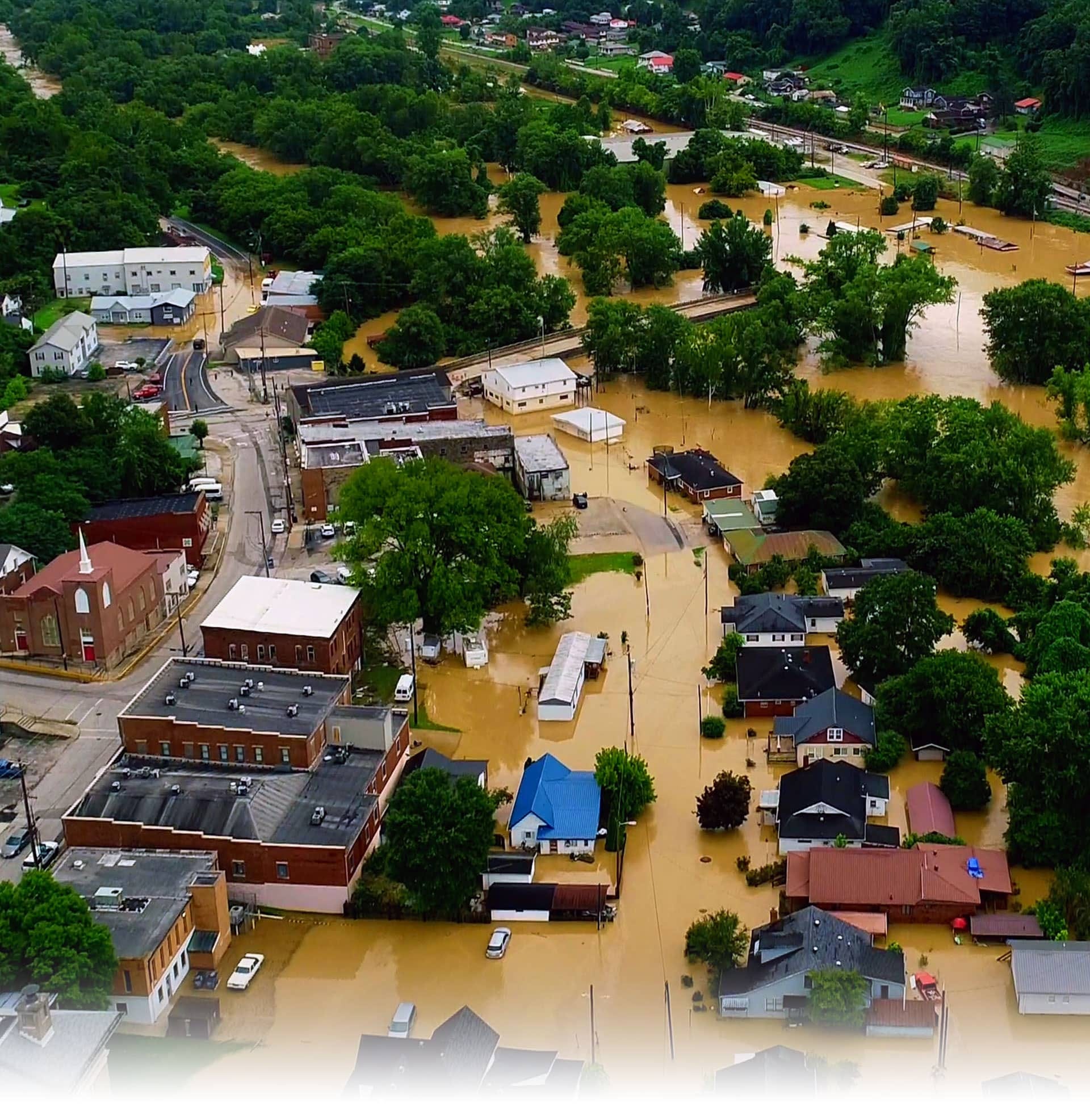
Kentucky’s Storm Risk Is No Longer Occasional
Kentucky does not need a lesson in severe weather.
NOAA’s billion-dollar disaster data shows Kentucky was affected by 92 billion-dollar weather and climate disaster events from 1980 through 2024. Those included severe storms, flooding, winter storms, droughts, tropical cyclones, and freezes. The pace has accelerated. Kentucky averaged 2.0 billion-dollar events per year over the full 1980 to 2024 period, but 5.4 events per year from 2020 through 2024.
That is the backdrop for the Floyd County award.
Five properties in Wayland matter to the families and local officials directly involved. They also show the scale of the gap. Kentucky has communities that need flood control, warning sirens, generators, safe rooms, drainage projects, buyouts, and long-term relocation options.
A single small award cannot carry that load.
Kentucky has already seen how quickly mitigation money can become uncertain. Last July, Gov. Andy Beshear’s office said FEMA denied requests for Hazard Mitigation Assistance connected to April flooding and May tornadoes. Local news outlets reported that the denial also affected counties seeking individual or public assistance after severe storms.
The pattern is no longer limited to one denial or one county. Kentucky has a documented history of storm damage, a recent record of FEMA denials, and now a national slowdown in the flow of disaster-prevention money.
Mitigation Money Pays for Prevention, Not Cleanup
Disaster coverage often focuses on what happens after a storm: damaged homes, closed roads, emergency shelters, debris removal, and federal disaster declarations.
Mitigation sits earlier in the timeline.
It pays for work that can keep a disaster from becoming worse next time. FEMA’s mitigation programs can support property buyouts, elevations, flood-control projects, storm shelters, generators, and other infrastructure meant to reduce future loss. Kentucky Emergency Management describes mitigation work in Kentucky as commonly focused on flooding and tornadoes, including elevating flood-prone buildings, tornado safe rooms, community shelters, localized flood-control projects, and floodplain management.
That is why delays have consequences even when there is no dramatic scene on television.
A delayed buyout can leave a family in a home that floods again.
A delayed generator can leave a public facility vulnerable during an outage. A delayed warning system can leave a community with less time to respond. A delayed flood-control project can leave local officials preparing for the next storm with the same weak points they had during the last one.
The point of mitigation is to make the decision before the next disaster, so fewer people and buildings are exposed when it comes.
Kentucky Already Had $21 Million Caught in the BRIC Fight
The current slowdown is part of a larger dispute over FEMA’s mitigation work.
In April 2025, FEMA ended the Building Resilient Infrastructure and Communities (BRIC) program. The program was designed to fund pre-disaster mitigation projects. The Kentucky League of Cities reported at the time that BRIC had awarded $30.8 million for selected Kentucky projects, with $2.4 million obligated.
By December, Kentucky was part of a multistate legal fight over the withheld money. Gov. Beshear’s office said a federal judge ruled in favor of Kentucky, 21 other states, and the District of Columbia, barring the Trump administration from unlawfully withholding FEMA disaster-prevention funds. Kentucky said more than $21 million for Kentucky projects had been withheld, including 13 unfunded projects and nearly $3 million in management costs.
Spectrum News 1 reported that the affected Kentucky projects included flood control, generators, warning sirens, and other Eastern Kentucky protections.
That detail is central to the Kentucky story. These were not abstract planning documents sitting on a shelf. They were projects tied to public safety in communities that already live with repeated disaster risk.
FEMA later reopened BRIC applications after a court order, making $1 billion available for the program. The Associated Press reported that the restored program came with new rules, including an end to funding for hazard mitigation planning and non-financial technical assistance. That change could hurt smaller communities with fewer staff and less grant-writing capacity.
For rural Kentucky counties, that is not a minor administrative change. Smaller counties often need technical help to compete for federal money. Cutting that help can favor places that already have more staff, more consultants, and more capacity.
The Delay Is Happening Inside the Funding System
The Washington Post reported that FEMA’s slowdown followed new review requirements and a budget lapse. The Post also reported that a policy requiring high-level approval for grants over $100,000 contributed to backlogs.
That is an institutional story, not a weather story.
A county can identify the flood risk. A state agency can help prepare the application. FEMA can approve the project. But if the money does not move, the project does not happen.
At the state level, Kentucky Emergency Management helps communities develop hazard mitigation plans, apply for and manage grant funding, and carry out mitigation work. At the local level, county judge-executives, fiscal courts, emergency management directors, floodplain managers, and area development districts help decide which projects move forward.
But the federal government controls the funding stream.
That makes accountability difficult. Local residents may know the road that floods, the siren that is needed, the shelter that does not exist, or the home that should be bought out. Local officials may know the project. State officials may know the application. But the final answer may sit inside FEMA, DHS, or a federal review process that the public cannot easily see.
A FEMA Overhaul Could Push More Responsibility Onto States
This is happening as FEMA itself faces proposed restructuring.
A Trump-appointed FEMA Review Council released a final report this week recommending major changes to how the agency operates. The Associated Press reported that the council proposed shifting more disaster-management responsibility to state governments and changing FEMA’s role in response and recovery.
The Washington Post reported that the council’s recommendations included moving more responsibility to states, downsizing or streamlining parts of FEMA’s operation, and changing how environmental reviews and other functions are handled.
There may be fair debates over FEMA bureaucracy. Anyone who has dealt with federal grant systems knows they can be slow, technical, and frustrating.
But shifting responsibility to states and local governments without reliable federal funding creates a different problem. Kentucky counties may be asked to carry more responsibility while still waiting for the money, staff support, and technical assistance that make mitigation possible.
That is especially important in small and rural counties. A large metro government may have grant writers, engineers, consultants, and legal staff. A small county may have one emergency manager, limited administrative capacity, and a long list of urgent needs.
A system that favors communities with more staff, consultants, and technical support can leave higher-risk places behind.
Kentucky Needs a Project-by-Project Accounting
Which mitigation projects have been submitted since July 2025? Which have been approved? Which have been obligated? Which are still waiting? Which were denied? Which were affected by BRIC cancellation, litigation, or new review requirements?
That list should not be hard to explain in plain language.
For each project, Kentuckians should be able to see the county, the hazard, the requested amount, the approved amount, the current status, and what happens if the project does not move forward before the next severe-weather season.
Without that information, the public cannot tell whether the problem is FEMA delay, state capacity, local paperwork, changed grant rules, lack of matching funds, or a political decision about where disaster-prevention money goes.
Kentucky has already paid the price of learning about flood risk after the water rises. It should not have to wait until the next disaster to learn which prevention projects were stalled.
Actions readers can take
Ask Kentucky Emergency Management for a public mitigation dashboard.
The dashboard should list FEMA mitigation projects by county, project type, amount, and status, including pending, approved, denied, and obligated projects.Contact your county judge-executive or fiscal court.
Ask whether your county has submitted any FEMA mitigation applications since July 2025, and whether any are delayed, denied, or waiting for obligation.Ask Kentucky’s congressional delegation to request answers from FEMA and DHS.
The request should seek a project-by-project list of Kentucky mitigation awards, pending applications, denials, and delayed obligations since July 1, 2025.Watch local fiscal court agendas.
Mitigation projects often appear as grant applications, match-funding approvals, property acquisitions, emergency-management updates, or engineering contracts.If you live in a flood-prone area, document repeated damage.
Photos, dates, insurance claims, road closures, and local reports can help communities make the case for buyouts, drainage work, warning systems, or other mitigation needs.
Sources
FEMA: April 23, 2026, flood-mitigation announcement
FEMA announced $19.9 million in flood-mitigation support across five southeastern states, including $416,200 for Kentucky to acquire and demolish five National Flood Insurance Program Severe Repetitive Loss properties in Wayland.
https://www.fema.gov/press-release/20260423/fema-approves-199-million-support-flood-mitigation-alabama-florida-kentucky
WYMT/WKYT: Kentucky FEMA flood-mitigation coverage
Local coverage confirmed Kentucky’s $416,200 award for five repeatedly flooded properties in Wayland, Floyd County.
https://www.wymt.com/2026/04/23/fema-announces-flood-mitigation-projects/
Washington Post: FEMA hazard-mitigation slowdown
The Post reported that FEMA sharply slowed hazard-mitigation grant distribution, falling from about $91 million per month in early 2025 to about $3 million per month afterward. It also reported that Kentucky received less than $500,000 since July 2025.
https://www.washingtonpost.com/weather/2026/05/08/wildfire-fema-grants-delay/
Governor Andy Beshear’s Office: BRIC funding lawsuit
The Governor’s Office said Kentucky had more than $21 million in FEMA BRIC disaster-prevention funds withheld, including 13 unfunded projects and nearly $3 million in management costs.
https://kentucky.gov/Pages/Activity-stream.aspx?m=45&n=GovernorBeshear&prId=2658
Spectrum News 1 Kentucky: Kentucky BRIC projects
Spectrum reported that the affected Kentucky projects included flood control, generators, warning sirens, and other protective measures in Eastern Kentucky.
https://spectrumnews1.com/ky/louisville/news/2025/12/11/fema-funding-lawsuit
Kentucky League of Cities: FEMA ends BRIC program
KLC reported that BRIC had awarded $30.8 million for selected Kentucky projects, with $2.4 million obligated, before FEMA ended the program.
https://www.klc.org/CityNews/news/fema-ends-bric-program
Associated Press: FEMA reopens BRIC after court order
AP reported that FEMA reopened BRIC applications after a court order and made $1 billion available, while new rules ended funding for hazard mitigation planning and non-financial technical assistance.
https://apnews.com/article/bric-fema-grant-disasters-resilience-mullin-ff0df0da60e3001e19f97bcb7778f41c
NOAA/NCEI: Kentucky billion-dollar disaster data
NOAA’s state summary shows Kentucky was affected by 92 billion-dollar weather and climate disaster events from 1980 through 2024, with the annual average rising from 2.0 events over the full period to 5.4 events from 2020 through 2024.
https://www.ncei.noaa.gov/access/billions/state-summary/KY
Washington Post: FEMA Review Council overhaul report
The Post reported that the FEMA Review Council recommended major changes to FEMA, including shifting more responsibility to states.
https://www.washingtonpost.com/climate-environment/2026/05/07/fema-review-council-final-report/