
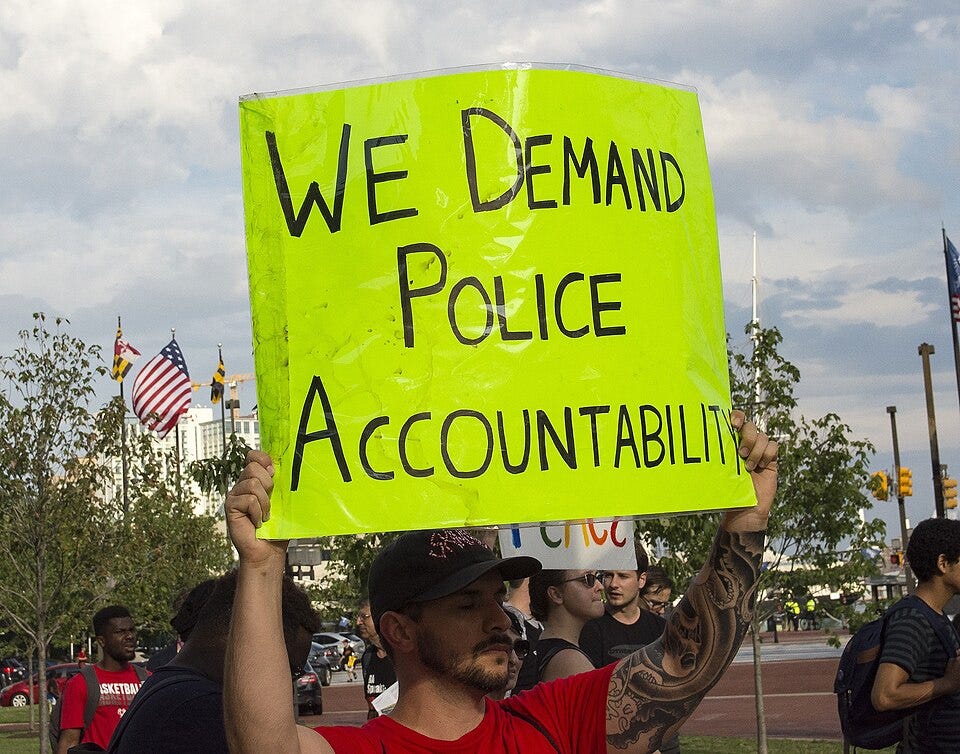
A Kentucky resident does not need to lead a protest to become part of an immigration-enforcement story.
They might see federal agents outside a courthouse. They might hear that ICE is near a workplace. They might learn that someone was transferred from a county jail into immigration custody. They might pull out a phone, call a neighbor, alert a family member, or ask a local official what role a jail, sheriff, police department, or fiscal court played.
That kind of observation is civic behavior.
It is how communities keep track of government power when federal agents operate in neighborhoods, workplaces, courts, and local jails.
That is why a set of federal raids in California deserves attention in Kentucky.
On May 13, federal agents executed search warrants at homes and a business connected to members and volunteers of VC Defensa, a Ventura County immigrant-rights group that runs ICE-watch patrols, operates a rapid-response hotline, and supports immigrant families. The Guardian reported that Homeland Security Investigations agents carried out the raids, seized electronics and other items, and made no arrests during the searches. VC Defensa and its attorneys describe the raids as an intimidation campaign aimed at suppressing lawful organizing. Federal officials have described the searches as part of an ongoing investigation connected to prior conduct involving federal officers.
The raids happened in California, but the signal reaches farther than California.
The question is whether people and organizations can observe immigration enforcement, document public actions, warn their neighbors, and support affected families without being treated as threats.
Kentucky should pay attention because this state already has ICE infrastructure. ICE lists a Louisville Enforcement and Removal Operations office with coverage including all of Kentucky, and recent reporting has identified multiple Kentucky jails holding people for ICE. Local cooperation with ICE is no longer hypothetical here.
Federal Agents Used Search Warrants, Not Warnings
This story begins with a concrete use of federal power.
Federal agents searched homes connected to three current or former VC Defensa volunteers, along with a business connected to one of the group’s members. Reporting from The Guardian, CBS Los Angeles, the Los Angeles Times, L.A. TACO, and the Santa Barbara Independent all describe a federal operation targeting people tied to an immigrant-rights organization that monitors ICE activity and supports immigrant families.
The government has not publicly laid out its full evidence in the reporting reviewed here. CBS Los Angeles reported that DHS said several members of the organization had previously been arrested for alleged conduct involving federal law enforcement, and that the investigation remains ongoing.
But the public facts still matter.
Search warrants were used. Homes were entered. Property was seized.
No arrests were made during the searches, according to The Guardian’s reporting. The group says the purpose and effect are intimidation.
That is enough to raise a civic question: when federal agents use raid tactics against people tied to ICE-watch work, what happens to everyone else who might have documented, reported, or questioned an immigration operation?
Watching Government Power Is Civic Work
ICE-watch work can take several forms. Some groups monitor courthouse activity. Some operate hotlines. Some alert families when enforcement activity is reported. Some document arrests or raids. Some help people understand their rights and connect with legal support.
That kind of work is not the same thing as interfering with officers. It is also not the same thing as doxing, threats, or violence. Those distinctions need to stay clear.
The National Lawyers Guild describes legal observers as trained volunteers who document protests, police activity, and law-enforcement conduct for legal teams, defense cases, and public statements. ICE-watch networks and legal observers are not identical. Still, both rely on a basic democratic premise: people can observe government activity, record what happens, and help the public understand how power is being used.
That premise becomes more important when enforcement expands. If people are afraid to film, call a hotline, take notes, or stand nearby as witnesses, the public record narrows. Families lose information. Journalists lose leads. Attorneys lose evidence. Local officials face less pressure to explain their role.
The point is not that every tactic used by every activist group is beyond criticism.
The point is that government power should not become shielded from public observation because the subject is immigration enforcement.
The Chill Can Start Before Charges Are Filed
A raid can change behavior even if no one is arrested.
People do not wait for a court ruling before deciding whether it is safe to volunteer. They ask whether their phone could be seized. They ask whether their family could be watched. They ask whether recording enforcement activity could bring agents to their door at dawn.
That is where policy and enforcement can do damage. The public record may never show the people who stopped showing up, stopped filming, stopped answering hotline calls, or stopped accompanying families because the risk suddenly felt too high.
L.A. TACO reported that attorneys affiliated with VC Defensa were preparing legal action in response to the group’s federal targeting. The outlet also reported claims from attorneys and organizers that multiple members, volunteers, and activists had experienced searches, seizures, surveillance, or other tactics. Attorneys and organizers say the raids fit a broader pattern of federal pressure on the group.
In a democracy, a chilling effect does not require a formal ban. It can happen through fear, uncertainty, and selective enforcement.
Kentucky Already Has ICE Infrastructure
Kentucky does not need a local version of VC Defensa for this story to matter here.
ICE lists a Louisville field office with coverage across Kentucky, and recent reporting has identified multiple Kentucky jails holding people for ICE. Oldham County is one example. Louisville Public Media reported in April 2025 that the Oldham County Detention Center secured two 287(g) contracts with ICE, while WDRB reported that residents questioned the jail’s expanded role in holding people for federal immigration authorities.
That infrastructure creates local oversight questions. Who decides when Kentucky jails cooperate with ICE? What agreements are in place? What information is shared? How are families notified when someone is transferred? What role do sheriffs, jailers, fiscal courts, and police departments play?
Those questions do not answer themselves. They depend on residents, journalists, attorneys, advocates, and community groups being able to observe, document, request records, attend meetings, and press for public answers.
Community Groups May See the Harm First
If ICE-watch and immigrant-support work are chilled, the first signs may not appear in a public report.
The first signs may be small. A hotline gets fewer volunteers. A family hesitates before calling a legal clinic. Fewer people attend public meetings, participate in film enforcement activities, or ask questions after a jail transfer. Local immigrant-serving organizations begin hearing that people are afraid their names, phones, documents, or family members could be exposed.
Kentucky has organizations positioned to hear those concerns. The ACLU of Kentucky works on immigrants’ rights and civil liberties. The Louisville Coalition for Immigrant Support brings together the community to support immigrant neighbors. Kentucky Refugee Ministries provides immigration and citizenship services. The Community Response Coalition of Kentucky provides support for immigrants moving through legal and social-service systems.
Those organizations are not responsible for proving every federal claim or every activist claim. But they can help answer the Kentucky question: are people becoming afraid to observe, document, or seek help?
That question matters because fear can undermine accountability before any formal policy says it has.
Criminal Allegations Should Not Blur Protected Observation
The government is entitled to investigate crimes. Assaulting officers, destroying property, threatening people, and obstructing lawful operations are serious allegations.
But those claims should not become a shortcut that places broad categories of civic activity under suspicion.
Recording law enforcement is not the same as assault.
Warning neighbors is not the same as obstruction.
Running a hotline is not the same as destroying property. Accompanying families is not the same as a conspiracy. A democracy depends on those distinctions because the government has every incentive to treat scrutiny as interference.
That is why the missing details matter. If search-warrant affidavits, charges, or court filings become public, they should be read carefully. If the government has evidence of criminal conduct, it should present that evidence through the legal process. If the raids were overbroad or retaliatory, that should be challenged just as directly.
The public should not be asked to choose between two false options: ignore violence or accept raids on community defense work. The real question is whether enforcement can be investigated without turning lawful observation into a target.
Kentucky Should Set the Standard Before a Crisis
Kentucky’s immediate task is not to pretend California’s facts are already Kentucky’s facts.
The task is to decide what standards should apply here before a crisis arrives.
Can a resident record immigration enforcement from a lawful distance? Can a volunteer alert neighbors when ICE is reported nearby? Can a nonprofit run Know Your Rights sessions without being framed as a threat? Can a person ask a fiscal court why a jail is holding people for ICE without becoming a suspect? Can a journalist, legal observer, or community member document enforcement activity without losing their phone to a search?
Those questions should be answered publicly, not after a raid.
If local officials believe public observation is protected, they should say so. If local agencies assist federal immigration operations, they should explain the limits of that assistance. If jails participate in ICE programs, fiscal courts should require public reporting. If federal agents operate in Kentucky communities, local leaders should not hide behind the phrase “federal matter” when residents ask what role local institutions played.
Kentucky does not have to wait for a local version of the VC Defensa raids to ask whether watching government power is still protected.
What Kentuckians Can Do Now
Ask local officials what cooperation with ICE looks like.
Residents can ask county jailers, sheriffs, police chiefs, fiscal courts, city councils, and county judge/executives whether local agencies share information with ICE, hold people for ICE, participate in 287(g), or assist during federal operations.
Ask for written policies.
Verbal assurances are not enough. Ask whether local agencies have written policies on filming law enforcement, responding to federal immigration operations, protecting bystanders, and handling public-records requests tied to ICE cooperation.
Support immigrant-serving organizations.
Groups that provide legal support, language access, rapid response, and family assistance are more important when federal enforcement pressure increases. Support can include donations, volunteering, interpretation help, transportation, meeting space, or sharing accurate resources.
Document, but do not interfere.
People who observe enforcement activity should stay at a lawful distance, avoid physical obstruction, record facts, preserve dates and locations, and seek legal guidance before posting identifying information that could create safety risks.
Push for public reporting on local ICE relationships.
Fiscal courts and city councils can require regular public reporting on ICE agreements, jail revenue, detainee counts, transfers, complaints, and use of local resources. Public oversight should not depend on rumors or after-the-fact discoveries.
Ask Kentucky’s congressional delegation for oversight.
Members of Congress can ask DHS, ICE, HSI, FBI, and DOJ whether search warrants are being used against immigrant-rights volunteers, legal observers, hotline operators, or community defense networks because of protected activity.
Direct Sources
The Guardian: “Immigration activists whose homes were raided accuse federal agents of intimidation campaign”
https://www.theguardian.com/us-news/2026/may/20/ice-watch-group-vc-defensa-raids
Los Angeles Times: “Federal agents raid homes of Ventura County immigration activists”
https://www.latimes.com/california/story/2026-05-18/federal-agents-raid-homes-of-ventura-county-immigration-activists
CBS Los Angeles: “Federal agents search homes tied to immigration rights group in Ventura County”
https://www.cbsnews.com/losangeles/news/ice-vc-defensa-search-warrants-immigration-rights-group/
L.A. TACO: “Legal Coalition Prepares Restraining Orders Against Feds Who Targeted VC Defensa”
https://lataco.com/vc-defensa-legal-coalition-restraining-order
Santa Barbara Independent: “Central Coast Immigrant Rights Orgs Respond to Federal Raids”
https://www.independent.com/2026/05/19/central-coast-immigrant-rights-orgs-respond-to-federal-raids/
National Lawyers Guild: Legal Observer Program
https://www.nlg.org/massdefenseprogram/los/
ICE Louisville, Kentucky Field Office
https://www.ice.gov/node/62127
ICE Oldham County Detention Center page
https://www.ice.gov/detain/detention-facilities/oldham-county-detention-center
Kentucky Center for Economic Policy: “ICE Arrests Are Surging in Kentucky as Local Law Enforcement Agreements and Jail Contracts Assist Mass Deportation”
https://kypolicy.org/ice-arrests-in-kentucky/
LPM: “Oldham Countians wrestle with ICE partnership”
https://www.lpm.org/investigate/2025-04-11/oldham-countians-wrestle-with-ice-partnership
WDRB: “Oldham County residents question jail’s new policy to indefinitely hold illegal immigrants”
https://www.wdrb.com/news/oldham-county-residents-question-jails-new-policy-to-indefinitely-hold-illegal-immigrants/article_7ff5b586-6714-4327-b34d-248b207b3070.html
ACLU of Kentucky: Immigrants’ Rights
https://www.aclu-ky.org/issues/immigrants-rights/
Louisville Coalition for Immigrant Support
https://www.aclu-ky.org/campaigns-initiatives/lcis/
Kentucky Refugee Ministries: Immigration & Citizenship
https://kyrm.org/services/immigration-citizenship/
Vera Institute: Kentucky Immigrant Population Profile
https://vera-institute.files.svdcdn.com/production/downloads/publications/KT_Immigrant_Population_Profile.pdf