
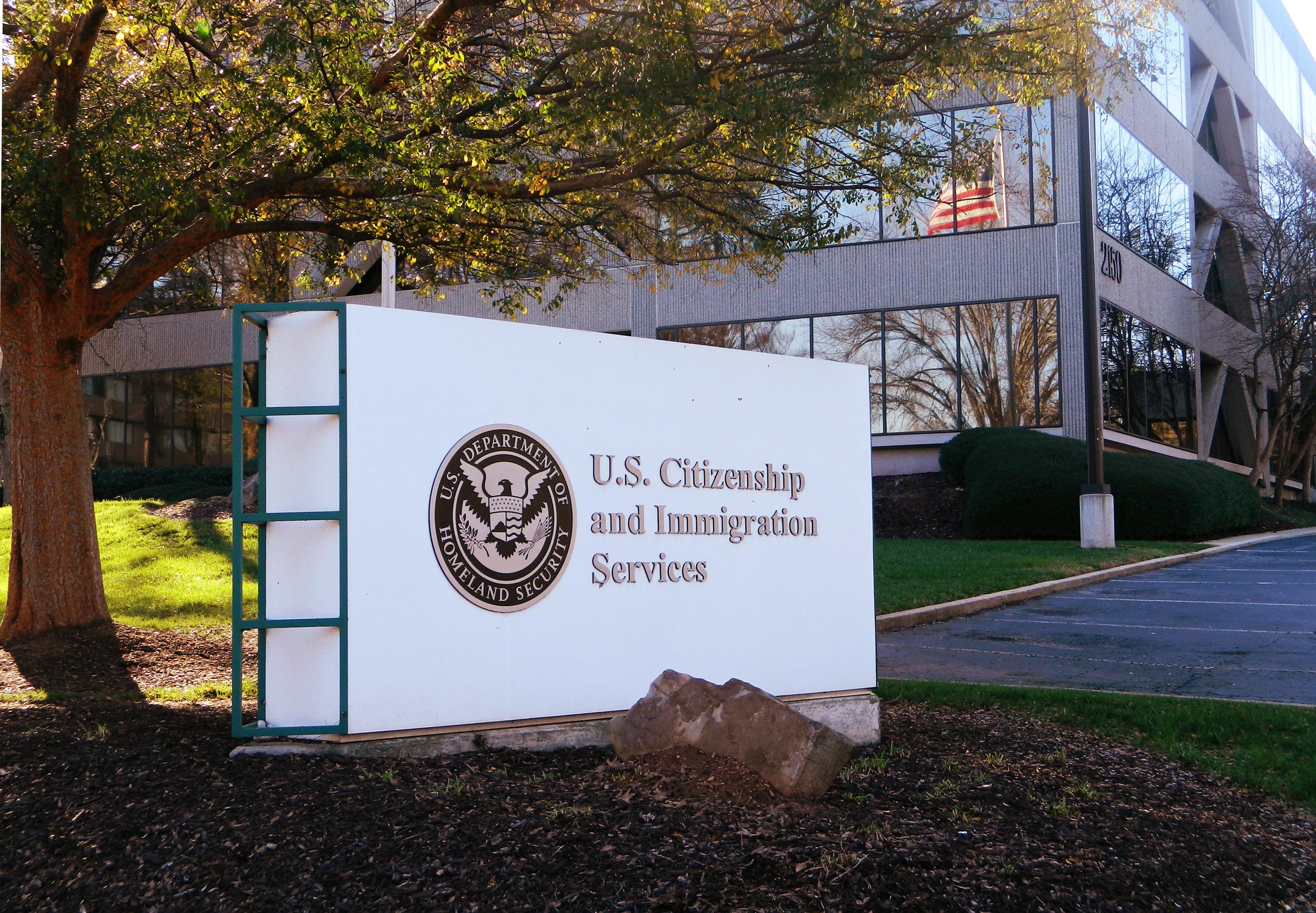
A person in Kentucky can be doing everything the government says to do.
They can file the form. Pay the fee. Show up for fingerprints. Wait for the interview. Wait for the work permit. Wait for the green card. Wait for the citizenship decision. Wait because the system tells them waiting is part of the process.
Then the federal government can decide that where they were born counts against them.
That is the heart of the immigration ruling issued this week by U.S. District Judge Julia Kobick in Boston. The case did not begin in Kentucky, but the way it works impacts Kentucky. It impacts families waiting on immigration paperwork, workers waiting on employment authorization, students and graduates trying to regularize their status, refugees and asylees rebuilding their lives, and legal-service providers trying to move people through a system already marked by long delays.
On April 30, Judge Kobick blocked Trump administration policies that halted or burdened immigration applications from people tied to countries named in the administration’s travel-ban framework. Reuters reported that the policies affected applications for asylum, green cards, work authorization, and naturalization. The lawsuit involved around 200 people from 20 countries, including Iran, Syria, Haiti, and Venezuela. For now, the order protects 22 plaintiffs who showed they were harmed. The judge also asked both sides to explain whether the order should protect the larger group of roughly 200 plaintiffs.
That may sound like a narrow immigration case. It is more than that.
This case shows how executive power works.
Stop the application, and you stop someone from working, staying with family, seeking protection, or becoming a citizen.
For Kentucky, the question is not only who is allowed to enter the country.
The question is what happens to people already here when the federal government turns nationality into a reason to delay the legal process.
A travel ban became an application freeze
The policies at issue grew out of the Trump administration’s travel-ban system.
In June 2025, the White House issued Proclamation 10949, restricting entry for nationals of certain countries. The administration framed the order as a national-security and public-safety measure tied to screening, vetting, terrorism risk, and information-sharing concerns.
In December 2025, the White House issued another proclamation expanding the travel-ban framework. The State Department later summarized the December proclamation as suspending or limiting entry and visa issuance for nationals of 39 countries, along with certain people using travel documents issued or endorsed by the Palestinian Authority.
But the ruling this week focused on something beyond entry into the United States.
USCIS used the travel-ban country list inside the immigration-benefits process. USCIS policy memoranda placed asylum applications and other benefit requests from “high-risk countries” on hold and review. The December 2025 memo applied to countries named in the June proclamation. The January 2026 memo expanded the policy after the December proclamation.
A travel ban controls who may enter the country. USCIS benefit processing controls what happens to people who are already in the legal immigration system.
That can include people already living in Kentucky and waiting for work authorization, asylum decisions, permanent residency, family reunification, or citizenship.
Reuters reported that the challenged policies treated nationality from the affected countries as a “significant negative factor” in immigration-benefit decisions. Judge Kobick found the plaintiffs were likely to succeed in showing that this kind of nationality-based discrimination violates the Immigration and Nationality Act. She also found that the broader halt on processing applications defied congressional mandates and existing regulations.
Plainly put: the administration tried to make country of origin a reason to slow or block immigration benefits, and the court said Congress likely did not give the executive branch that power.
State power can hide in a stalled case file
Immigration stories are often told through border images, detention centers, raids, and deportation flights.
Those are visible uses of state power.
This case shows another form.
USCIS decisions can shape whether someone is allowed to work, settle permanently, reunite with family, become a citizen, travel safely, or receive protection after fleeing danger. When those decisions are delayed or frozen, the consequences are real. They impact income, housing, safety, family stability, and civic life.
When USCIS freezes or slows those decisions, it changes lives without a dramatic public scene.
USCIS has also been moving in a broader direction of expanded screening and vetting. In March 2026, USCIS said its memoranda placed asylum applications and benefit requests from high-risk countries on hold. Reuters also reported that USCIS began using expanded FBI criminal-history information for fingerprint-based background checks effective April 27, 2026.
Security checks are not new. Immigration applications have long involved vetting.
The problem begins when vetting becomes an indefinite barrier, or when a person’s nationality becomes a stand-in for individualized review. A legal process depends on rules, evidence, deadlines, and reviewable decisions. Once the government can hold a case because of a country list, the process becomes less like law and more like administrative limbo.
Kentucky families are part of this system
Kentucky is connected to this story through the people, families, employers, schools, and service providers who depend on USCIS decisions.
USAFacts reports that Kentucky had 238,000 foreign-born residents in 2024, or 5.2 percent of the state population. The U.S. Census Bureau’s QuickFacts lists Kentucky’s foreign-born share at 4.7 percent for the 2020–2024 period. The numbers differ because they are based on different measurement windows, but both point to the same reality: immigrant communities are part of Kentucky.
These numbers represent people living in communities across the state. Some are citizens. Some are lawful permanent residents. Some have temporary status. Some are seeking asylum. Some are waiting for USCIS to decide what comes next.
Louisville has a particularly clear connection. Louisville Metro’s immigrant-affairs resources direct residents to immigrant and refugee services, including Kentucky Refugee Ministries. Kentucky Refugee Ministries says its immigration services are family-based and humanitarian, including refugees and asylees, and are open to community members of all immigration statuses living in Kentucky.
Kentucky Refugee Ministries also describes its broader mission as resettling refugees and welcoming immigrants, with services that include English classes, citizenship preparation, career development, and family support.
That is where a national policy becomes local.
A USCIS hold affects real decisions in Kentucky. It can delay work authorization, extend family separation, and keep someone waiting for the protection or permanent status they need to build a stable life.
For Kentucky institutions, the practical question is: are local applicants seeing delays, holds, denials, canceled interviews, repeated security checks, or unexplained pauses tied to country of origin?
Delay can do real damage
A stalled immigration case can cost someone a job, a paycheck, a home, a family reunion, or a path to citizenship.
A denial gives someone an answer they can challenge. A delay can leave them stuck with no clear decision, no timeline, and no way to move forward.
A person may not receive a clear answer. A legal-service provider may see cases stall. A family may wait months without knowing whether the delay is ordinary backlog, expanded vetting, or nationality-based review. An employer may lose a worker whose employment authorization does not arrive on time. A student may graduate into uncertainty. A family member abroad may remain separated.
A delay can cost someone income, stability, safety, and time with family, even without a formal denial.
Work authorization is a good example. When a work permit stalls, the impact is immediate. Rent still comes due. Groceries still have to be bought. Children still need care. A person trying to follow the rules can be pushed into crisis by a delay they cannot control.
Naturalization delays matter, too. A person eligible for citizenship has often lived in the country for years, passed through prior screening, and built a life here. If nationality can be used to stall naturalization, then full civic membership can be delayed without a new law or a public vote.
That is why this case is a test of whether the executive branch can take a country list built for travel restrictions and use it to burden people already moving through legal immigration channels.
What Kentuckians can ask now
Ask Kentucky’s congressional offices whether they have requested data from DHS or USCIS on delayed immigration-benefit applications from people living in Kentucky, especially asylum, work authorization, green card, and naturalization cases tied to travel-ban countries.
Ask local service providers what they are seeing. Groups such as Kentucky Refugee Ministries and Community Response Coalition of Kentucky may know whether clients are experiencing new or unusual delays. Do not ask for private client information. Ask whether providers are seeing patterns.
Ask universities and employers whether international students, workers, or sponsored employees are affected. Public universities, hospitals, research programs, and employers that rely on immigration filings should be asked whether USCIS holds or expanded vetting are delaying work authorization, status changes, or permanent residency cases.
Ask local officials to treat immigration processing delays as a community stability issue. When people cannot work, renew documents, or complete legal status applications, the effect reaches housing, schools, jobs, health care, and local economies.
People directly affected should work with qualified immigration counsel or accredited legal-service providers. They should keep notices, filing dates, receipt numbers, interview dates, cancellation notices, and any communication from USCIS.
The question for Kentucky
This ruling does not end the immigration fight. It does not erase the travel-ban framework. It does not guarantee that every delayed application will move quickly.
But it does draw a line.
The federal government cannot simply take a country list and use it as a hidden barrier inside the legal immigration process without running into the law Congress wrote.
That line matters in Kentucky because USCIS delays can reach people who are already living, working, studying, worshiping, and raising families here. A stalled case can disrupt a job, a household, a classroom, a workplace, or a family’s future.
The question now is whether that line is holding for people in Kentucky who are still waiting on a decision.