
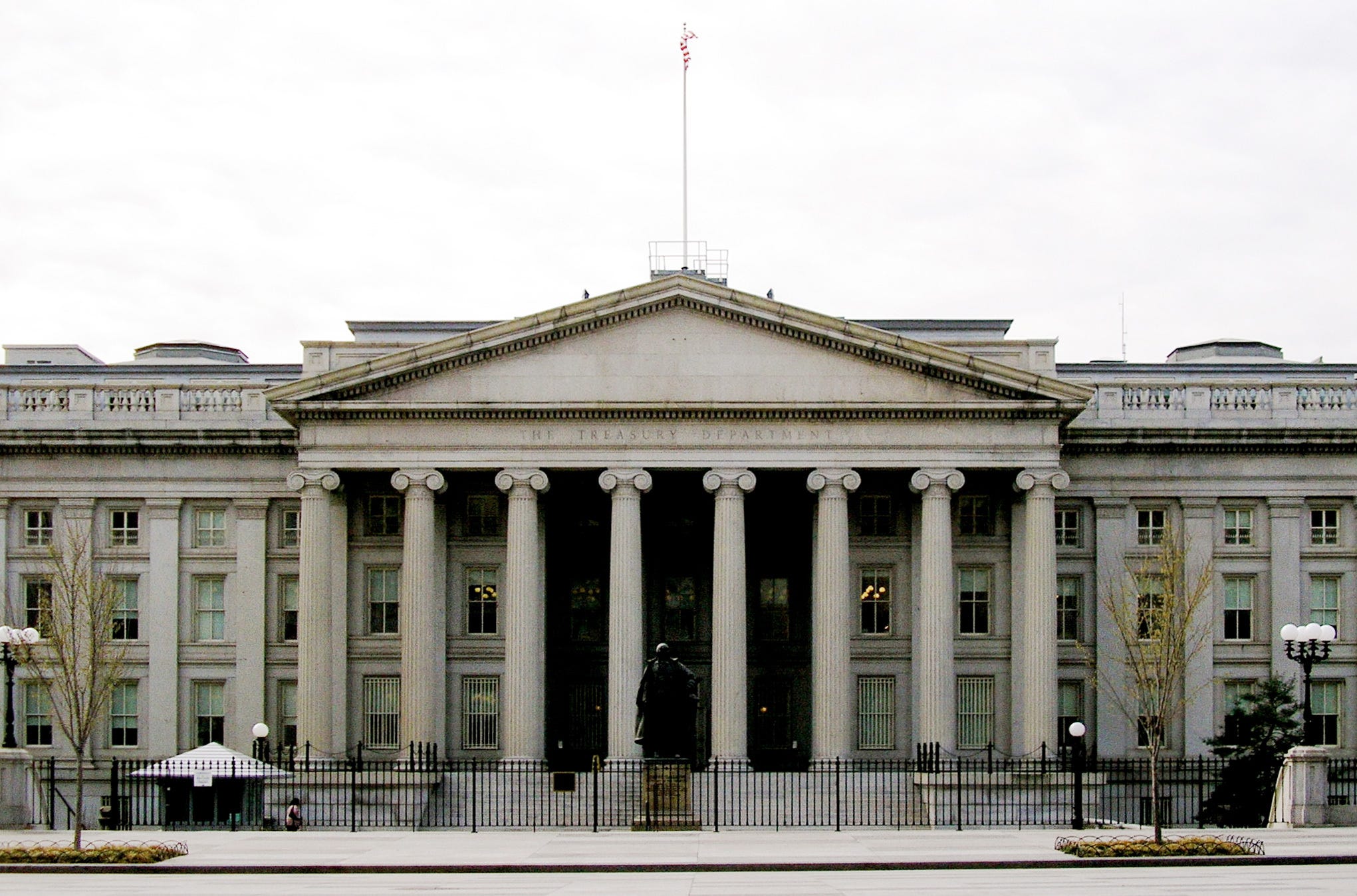
On June 5, 2026, the U.S. Treasury Department announced that FinCEN, the Financial Crimes Enforcement Network, had issued a joint advisory to financial institutions on “non-work authorized populations” and their employers.
The advisory was issued with the Federal Deposit Insurance Corporation, the Office of the Comptroller of the Currency, the National Credit Union Administration, and in coordination with the Internal Revenue Service. It followed President Donald Trump’s May 19 executive order titled “Restoring Integrity to America’s Financial System.”
The development warrants close attention because it links federal immigration enforcement to everyday financial services. The advisory does not create a new law requiring banks to report every immigrant customer. It does not make the use of an ITIN illegal. It does not tell banks to close accounts held by immigrants.
Its effect is more indirect, and that is why it is important to understand. Treasury and FinCEN are telling banks, credit unions, money transmitters, check cashers, mortgage lenders, and other financial institutions to treat certain immigration-linked activity as a possible financial crime risk. Once a federal advisory is incorporated into a bank’s compliance program, it can affect account opening, customer monitoring, loan review, suspicious activity reporting, and information sharing with other financial institutions.
What happened
President Trump signed Executive Order 14406 on May 19, 2026. The order directed the Treasury secretary to issue a formal advisory within 60 days on financial activity tied to people the administration describes as “non-work authorized” and to employers that hire them.
The order also directed Treasury and federal financial regulators to consider changes to Bank Secrecy Act rules, customer due diligence requirements, customer identification rules, and credit-risk guidance. It singled out immigration status, employment authorization, ITIN use, foreign identity documents, consular identification cards, payroll tax evasion, labor brokers, shell companies, and off-the-books wage payments.
FinCEN issued the advisory on June 5. It tells financial institutions to look for red flags tied to alleged unlawful employment, payroll fraud, identity theft, cash-heavy payroll patterns, remittances, peer-to-peer payments, money services businesses, and certain industries.
The advisory names agriculture, construction, domestic service, hospitality, and staffing. Those industries include farms, hotels, restaurants, home-cleaning work, construction sites, landscaping, staffing agencies, and subcontracted labor arrangements across Kentucky.
FinCEN also asks financial institutions to include the key term “FINANCIALINTEGRITY-2026-A002” in suspicious activity reports related to the advisory. In addition to filing a suspicious activity report, FinCEN encourages financial institutions and the public to report tips about employers who knowingly employ or exploit unauthorized workers to Immigration and Customs Enforcement.
FinCEN’s referral language creates a direct path from bank compliance reviews to Immigration and Customs Enforcement.
How banking guidance becomes immigration enforcement
FinCEN does not arrest people. It is a bureau of the U.S. Treasury Department that administers and enforces parts of the Bank Secrecy Act. The Bank Secrecy Act requires financial institutions to maintain anti-money-laundering programs, monitor certain activity, keep records, and file suspicious activity reports when transactions may involve specified unlawful activity.
A suspicious activity report, or SAR, is not a criminal charge. It is a confidential report filed by a financial institution with FinCEN. Banks and credit unions use SARs when they believe activity may involve money laundering, fraud, terrorist financing, tax evasion, or other specified illegal conduct.
The June 5 advisory tells financial institutions what Treasury and federal regulators now want them to watch. That can change behavior even without a new statute. Bank compliance departments read FinCEN advisories because regulators may later ask whether the institution had policies and monitoring procedures that reflected known risks.
The advisory’s treatment of ITINs is one of the most important pieces. An Individual Taxpayer Identification Number is issued by the IRS to people who need a taxpayer identification number but are not eligible for a Social Security number. ITINs are used for federal tax purposes. They do not prove lawful immigration status, nor do they authorize a person to work.
FinCEN’s advisory says use of an ITIN instead of a Social Security number or a valid employment authorization document may be treated as a risk factor requiring enhanced due diligence. It also encourages banks to assess whether to use an ITIN when a person applies for credit products or opens a deposit account.
The advisory includes limiting language that should not be ignored. FinCEN says no single red flag proves illicit or suspicious activity. It tells financial institutions to consider surrounding facts and circumstances, including the customer’s financial history and whether transactions match normal business practices. It also says the red flags do not alter independent regulatory obligations or supervisory expectations.
That limiting language gives Kentucky banks and credit unions room to apply the advisory cautiously.
A lawful ITIN user should not be treated as suspicious solely because they use the tax identification number the IRS issued to them.
The concern is whether banks, worried about Bank Secrecy Act risk, will overcorrect.
FinCEN added a second layer on June 12 by updating its Section 314(b) fact sheet. Section 314(b) provides a legal safe harbor for financial institutions to share information with one another when identifying and reporting activity that may involve money laundering or terrorist activity.
The updated fact sheet states that financial institutions may share personally identifiable information when such sharing is consistent with Section 314(b). It lists examples including transaction information, video surveillance footage, IP addresses, geolocation data, device identification numbers, account creation decisions, account maintenance or closure decisions, transaction-monitoring alerts, and suspicious indicators.
That means a concern raised at one financial institution can become part of a broader information-sharing trail. FinCEN says SARs themselves cannot be shared, and institutions must protect shared information. Even with those limits, the June 12 fact sheet provides banks with greater clarity on how much customer-related information may be exchanged under the safe harbor.
The result is a set of internal banking decisions that customers may never see: extra documentation requests, delayed account openings, increased transaction monitoring, suspicious activity reports, account closures, or information-sharing with other financial institutions.
Why Kentucky banks, workers, and families are implicated
Kentucky has its own financial regulator, the Kentucky Department of Financial Institutions. The department regulates state-chartered banks, state-chartered credit unions, money transmitters, check cashers, mortgage lenders, other consumer lenders, and securities-related entities. It also accepts consumer complaints involving entities it regulates.
National banks and federal credit unions in Kentucky are primarily supervised by federal regulators, including the OCC, FDIC, NCUA, Federal Reserve, CFPB, and FinCEN, depending on the institution and issue. Kentucky DFI does not control federal Bank Secrecy Act guidance, but state-regulated institutions still operate within that federal compliance environment.
The Kentucky impact also comes through the workforce. USAFacts reports that immigrants made up 6.7% of employed workers in Kentucky in 2024, or about 1 in 15. The Kentucky Center for Economic Policy reported in April 2026 that more than 230,000 people in Kentucky are immigrants and that immigrant workers are present in restaurants, construction, farming, domestic work, landscaping, laundry, dry cleaning, child care, and other jobs.
Several of the industries FinCEN named overlap with Kentucky’s immigrant workforce. KyPolicy reported that Kentucky has about 12,000 immigrant construction workers, accounting for 8% of the industry’s workforce. It also reported that immigrants make up 20% of maids and housekeepers, 10% of landscaping workers, 11% of laundry and dry-cleaning workers, and 61% of nail technicians in Kentucky.
Agriculture is another obvious Kentucky connection. The advisory names agriculture, and KyPolicy reported that Kentucky has more than 69,000 farms and that 6,400 H-2A visas were awarded in agricultural businesses in 2025. H-2A workers are lawfully authorized agricultural workers, which underscores why banks need to avoid crude assumptions. Immigration category, work authorization, tax identification, and industry are not interchangeable.
The advisory could affect people who never appear in an immigration court. A mixed-status family may use an ITIN to file taxes. A lawful noncitizen may lack a Social Security number. A small-business owner may receive recurring payments from a contractor. A hotel housekeeper may send remittances to relatives abroad. A farmworker may use a bank account, check casher, or money transmitter because that is how wages and family support are handled.
The risk is not only enforcement.
The risks include delayed account opening, additional documentation requirements, account closures, loan denials, increased monitoring, and fear of using standard financial services.
Who could face extra scrutiny
The people most likely to feel the advisory first are immigrants who use ITINs, non-U.S. passports, consular identification cards, remittances, money transmitters, check cashers, or cash-heavy financial services. That includes undocumented workers, lawfully present noncitizens, mixed-status families, and people whose immigration status does not fit cleanly into a bank’s account-opening checklist.
Employers in agriculture, construction, domestic service, hospitality, and staffing may also face additional scrutiny. Some of that scrutiny may uncover real payroll fraud, identity theft, labor trafficking, or wage exploitation. Employers who use shell companies, labor brokers, off-the-books payments, or fraudulent identification documents should be investigated under labor, tax, and criminal laws.
A fair enforcement approach would aim at exploitation and fraud without treating entire industries or immigrant customers as suspects.
The advisory’s own language requires financial institutions to consider surrounding facts before deciding whether the activity is suspicious.
Kentucky workers can be harmed if banks respond with broad denial rather than careful review. Account access affects wages, rent, utilities, transportation, school expenses, child care, remittances, small-business operations, and the ability to build credit. When people are pushed away from mainstream banking, they often rely more heavily on check cashers, money transmitters, prepaid cards, and informal arrangements, which are more expensive and offer fewer protections.
Kentucky banks and credit unions also face a difficult compliance task. They must comply with federal anti-money-laundering requirements without engaging in discriminatory customer practices. They must identify fraud without treating lawful tax compliance as evidence of wrongdoing. They must document risk without turning branch employees into immigration screeners.
That is where public accountability belongs. The question for Kentucky institutions is not whether they should ignore fraud. The question is whether they will apply the advisory narrowly, document their safeguards, train staff carefully, and protect lawful customers from blanket suspicion.
What you can do and watch next
Ask your bank or credit union whether it has changed account-opening, lending, or customer due diligence procedures in response to the June 5 FinCEN advisory. Ask specifically whether ITIN use alone will trigger enhanced due diligence, account denial, account closure, or additional monitoring.
Request written policies if you are part of a community organization, legal aid group, church, labor group, or local advocacy group working with immigrant families. Banks may not disclose internal fraud controls, but they can explain customer-facing documentation requirements, complaint procedures, nondiscrimination policies, and account-access safeguards.
Track the Kentucky Department of Financial Institutions for any statement, guidance, consumer alert, or complaint data related to ITIN users, immigrant customers, money transmitters, check cashers, mortgage lenders, or account closures. DFI is the state office with the clearest role for Kentucky-regulated financial entities.
Contact Kentucky’s members of Congress and ask whether they will request answers from Treasury and FinCEN. Useful questions include: How many SARs are filed using the new advisory key term? How will FinCEN monitor for over-reporting? What safeguards protect lawful ITIN users? How will regulators prevent national-origin discrimination? Will customers have any meaningful way to challenge account closures tied to this guidance?
Local reporters and advocates can also ask Kentucky banks and credit unions whether their boards have reviewed the advisory. Board minutes may not be public for private financial institutions, but public-facing statements, compliance notices, and changes to customer documentation can still be tracked.
Watch for the next federal steps. Executive Order 14406 directs the Treasury and federal regulators to consider or propose changes to the Bank Secrecy Act customer due diligence rules, customer identification rules, and credit risk guidance. Those later actions could have stronger legal force than the current advisory.
Further reading and sources
White House, Executive Order 14406, “Restoring Integrity to America’s Financial System”
https://www.whitehouse.gov/presidential-actions/2026/05/restoring-integrity-to-americas-financial-system/
Federal Register, Executive Order 14406
https://www.federalregister.gov/documents/2026/05/22/2026-10400/restoring-integrity-to-americas-financial-system
U.S. Treasury Department press release on FinCEN advisory
https://home.treasury.gov/news/press-releases/sb0523
FinCEN, “Joint Advisory on Non-Work Authorized Populations and Their Employers and Risks to the Integrity of the U.S. Financial System”
https://www.fincen.gov/system/files/2026-06/FinCEN-Advisory-Non-Work-Authorized-Populations.pdf
FinCEN Section 314(b) information-sharing page
https://www.fincen.gov/resources/section-314b
FinCEN Section 314(b) Fact Sheet, updated June 12, 2026
https://www.fincen.gov/sites/default/files/shared/314bfactsheet.pdf
Kentucky Department of Financial Institutions, complaint and regulatory information
https://kfi.ky.gov/newstatic_Info.aspx?static_ID=347
USAFacts, immigrant share of Kentucky workforce
https://usafacts.org/answers/what-percent-of-the-workforce-in-the-us-are-immigrants/state/kentucky/
Kentucky Center for Economic Policy, “The Economic and Fiscal Impacts of Mass Deportation: What’s at Risk in Kentucky”
https://kypolicy.org/the-economic-impact-of-mass-deportation-in-kentucky/