
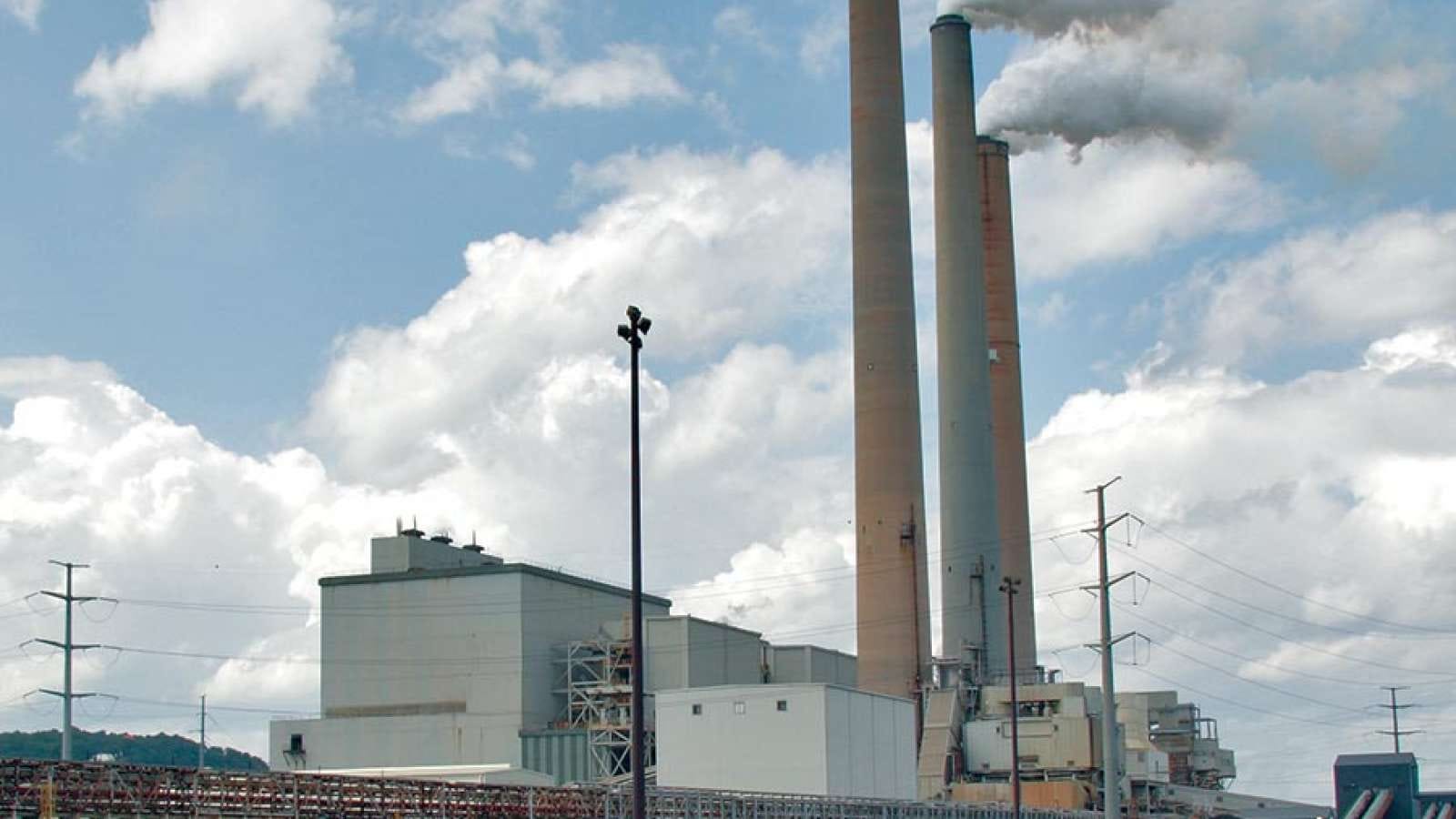
On Friday, the U.S. Environmental Protection Agency announced in Louisville that it is weakening federal limits on mercury and other toxic air pollutants from coal-fired power plants. The announcement took place at the Mill Creek Generating Station, a large coal plant operated by Louisville Gas and Electric.
The agency said it will revert to the emissions standard first established in 2012 under the federal Mercury and Air Toxics Standards program, commonly known as MATS. That move rescinds tighter limits adopted in a later update of the rule.
The announcement was not made through a campaign event or political rally. It was delivered as a federal regulatory decision tied to the agency’s authority under the Clean Air Act. That statute directs the EPA to regulate hazardous air pollutants from major industrial sources when emissions pose risks to public health.
Mercury, arsenic, acid gases, and particulate metals from coal plants fall into that category. The MATS rule was originally created to address those pollutants after decades of scientific findings showing that they accumulate in waterways, food chains, and human tissue.
The EPA’s decision returns the regulatory baseline to the earlier standard adopted in 2012.
Because coal plants operate continuously and release emissions that travel across state lines, the consequences of this type of rule change extend well beyond the facility where the announcement was made.
The regulatory framework governing toxic emissions
The Mercury and Air Toxics Standards program was created under Section 112 of the Clean Air Act, which governs hazardous air pollutants. Unlike broader air quality rules that regulate pollutants such as ozone or particulate matter, Section 112 focuses on substances that can cause severe health effects even at relatively low exposure levels.
Under that statute, the EPA must determine whether regulating emissions from a specific industrial sector is “appropriate and necessary.” Once that determination is made, the agency sets technology-based emission limits for the largest sources of those pollutants.
Coal-fired power plants became subject to these standards after years of study documenting that they were among the largest industrial sources of mercury emissions in the United States.
Mercury released into the air eventually settles into rivers and lakes. Once there, it can be converted into methylmercury, a compound that accumulates in fish and enters the human food chain.
Public health research has repeatedly connected methylmercury exposure to neurological harm, particularly in developing fetuses and young children.
Under the MATS rule, power plants were required to install pollution-control technology capable of capturing mercury and other toxic emissions before they enter the atmosphere.
These systems include activated carbon injection units, fabric filters, and scrubbers that remove heavy metals and acid gases from exhaust streams.
Utilities across the country installed those systems during the first half of the 2010s as the rule took effect.
The EPA’s new decision does not eliminate the MATS rule entirely. Instead, it withdraws the more stringent limits adopted in a later update and returns the regulatory baseline to the earlier 2012 standard.
In practical terms, that means coal plants will face less restrictive emission limits than those required under the more recent rule revision.
Why Louisville’s Mill Creek plant became the announcement site
The location of the announcement is significant.
Mill Creek Generating Station is one of Kentucky’s largest coal-fired power plants. Located along the Ohio River southwest of downtown Louisville, the facility consists of four generating units with a combined capacity of roughly 1,700 megawatts.
Plants of this scale operate as major baseload power sources within regional electricity grids. They burn large quantities of coal each day and release exhaust through tall stacks designed to disperse emissions over wide geographic areas.
Choosing Mill Creek as the site for announcing the regulatory change places the decision directly within the physical landscape of coal-based electricity generation.
Kentucky has historically relied heavily on coal for electric power. While the share of coal generation has declined over the past decade due to natural gas and renewable energy growth, coal plants still supply a substantial portion of the state’s electricity.
Facilities like Mill Creek therefore occupy a central position in both the state’s energy system and its environmental regulatory framework.
Communities living near coal plants experience the most direct exposure to emissions from these facilities. At the same time, atmospheric pollutants released from power plants travel long distances and affect downwind populations.
Mercury deposition, in particular, occurs across regional watersheds rather than remaining confined to the immediate area surrounding a plant.
That means the regulatory standards governing coal-plant emissions shape environmental conditions across multiple states.
Documented health risks tied to mercury pollution
The public-health dimension of mercury regulation has been extensively documented by federal agencies and scientific researchers.
Mercury is classified as a neurotoxin. Exposure during pregnancy can interfere with fetal brain development, leading to cognitive and developmental impairments.
The Centers for Disease Control and Prevention and other public health agencies have long advised pregnant women to limit consumption of fish species known to accumulate high levels of mercury.
Adults exposed to elevated mercury levels may face cardiovascular effects, including increased risk of heart disease.
The MATS rule was designed in part to reduce these risks by lowering the amount of mercury released into the environment by coal plants.
According to EPA analyses conducted during the original rulemaking process, coal-fired power plants were responsible for a substantial share of human-generated mercury emissions in the United States.
The regulatory strategy therefore focused on reducing emissions at the source rather than relying on downstream interventions.
When power plants install mercury-capture technology, the pollutant is removed from exhaust gases before it enters the atmosphere. That prevents it from circulating through ecosystems where it can accumulate in water bodies and fish populations.
Weakening emission limits alters that regulatory balance.
The health consequences of such changes rarely appear immediately. Mercury exposure occurs gradually through environmental accumulation.
Because of that time lag, regulatory decisions about toxic emissions often shape public health conditions years or decades after the rulemaking process occurs.
A broader pattern of federal environmental deregulation
The decision to revert to the earlier MATS standard fits within a broader trajectory of federal regulatory changes affecting environmental protections tied to fossil-fuel industries.
Over the past several years, multiple federal agencies have revisited rules governing emissions, energy production, and environmental oversight.
These changes have frequently taken the form of revising or rescinding regulatory updates adopted in previous rulemaking cycles.
Under the Clean Air Act, agencies possess authority to revisit rules when they determine that earlier decisions should be reconsidered. Such changes typically proceed through the federal rulemaking process, which includes proposed rules, public comment periods, and final regulatory actions published in the Federal Register.
The EPA’s mercury announcement reflects that administrative authority.
At the same time, environmental rules often function as interconnected safeguards. When one regulatory layer is weakened, the responsibility for addressing resulting risks can shift toward state governments or local institutions.
States retain the ability to adopt their own environmental protections in some areas. However, federal standards historically establish the baseline level of protection applied nationwide.
Changes to those standards therefore reshape the regulatory environment within which states operate.
For Kentucky, where coal generation remains part of the electricity mix, federal air-quality rules directly influence how power plants operate and how environmental oversight is structured.
How the decision could affect Kentucky communities
The regulatory change announced in Louisville does not immediately alter electricity service or energy prices.
Coal plants already operating pollution-control equipment will continue to run those systems as part of normal operations.
The effect of the policy shift lies instead in the regulatory limits governing emissions.
By reverting to the earlier standard, the EPA reduces the level of control technology plants must meet under federal law.
For Kentucky communities, the implications arise through environmental exposure pathways rather than direct service disruptions.
Residents living near coal-fired power plants may experience changes in the amount of mercury and other hazardous pollutants released into the air over time.
Downwind populations could also be affected through atmospheric transport of emissions.
Mercury deposition into rivers and lakes can influence fish contamination levels, which in turn affects public-health advisories about fish consumption.
These pathways illustrate how environmental regulatory decisions move through institutional systems and eventually intersect with daily life.
A rule issued by a federal agency in Washington becomes operational through power-plant permits, emission-control systems, environmental monitoring programs, and public-health guidance.
Kentucky’s reliance on coal-based generation means those federal rules interact directly with the state’s energy infrastructure.
The procedural path forward
The EPA’s announcement signals a regulatory shift, but the process surrounding environmental rule changes typically continues beyond the initial decision.
Under federal administrative law, regulatory revisions must be documented through formal rulemaking procedures. Proposed rules are published in the Federal Register, followed by public comment periods during which stakeholders may submit technical analyses, legal arguments, and policy recommendations.
After reviewing those comments, the agency issues a final rule that includes responses to major issues raised during the comment process.
Once finalized, environmental regulations can also become the subject of litigation. States, environmental organizations, and industry groups frequently challenge federal rule changes in the U.S. Court of Appeals for the District of Columbia Circuit or other federal courts.
That judicial review process can determine whether the agency’s decision complies with statutory requirements under the Clean Air Act and the Administrative Procedure Act.
For Kentucky residents, the next stages of this process will unfold largely through federal administrative and judicial institutions rather than state government action.
However, the outcomes will shape environmental conditions and regulatory oversight affecting power plants operating within the state.
Suggested Actions for Readers
Follow updates from the U.S. Environmental Protection Agency regarding the Mercury and Air Toxics Standards program. Federal rulemaking notices provide the official documentation of regulatory changes.
Review Federal Register notices related to the MATS rule to understand how emission standards are defined and modified.
Monitor Kentucky Energy and Environment Cabinet communications regarding air-quality monitoring and environmental permitting.
Track any federal court filings that challenge the regulatory change, which can influence whether the rule ultimately remains in place.
Pay attention to local public-health advisories related to mercury contamination in fish and waterways, which reflect environmental exposure patterns over time.
Further Reading
U.S. Environmental Protection Agency – Mercury and Air Toxics Standards (MATS) overview
https://www.epa.gov/matsClean Air Act Section 112 – Hazardous Air Pollutants regulation framework
https://www.epa.gov/clean-air-act-overview/clean-air-act-text