
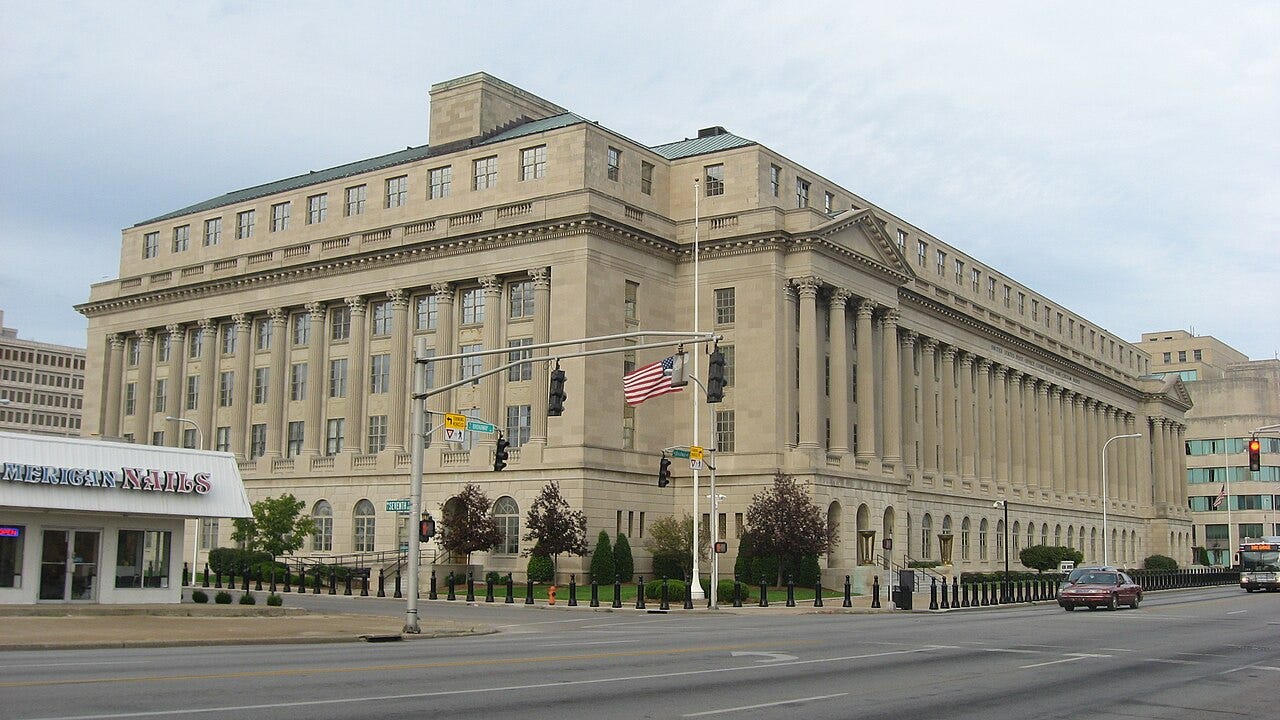
A civil complaint filed in the U.S. District Court for the Eastern District of Kentucky names the Kentucky Secretary of State and the Kentucky State Board of Elections as defendants. The filing, brought by the U.S. Department of Justice, seeks access to voter-registration records the federal government says it is entitled to inspect under the National Voter Registration Act of 1993.
The complaint cites 52 U.S.C. § 20507(i), a provision of the NVRA that requires states to “make available for public inspection” records concerning the implementation of programs and activities conducted for the purpose of ensuring the accuracy and currency of official lists of eligible voters. DOJ attorneys assert that Kentucky declined to provide certain requested data fields, including information that would allow federal review of list-maintenance practices.
The case is styled against the Secretary of State in his official capacity and the State Board of Elections as the agency responsible for maintaining Kentucky’s centralized voter registration system. The suit asks the court to declare that the Commonwealth must provide the requested records and to issue an order compelling production.
The Eastern District of Kentucky has jurisdiction because the defendants reside in Kentucky and the alleged violation concerns actions taken within the Commonwealth. The case has been assigned to a federal district judge in the Lexington division.
NVRA Inspection Clause at 52 U.S.C. § 20507(i)
The statutory authority at issue is narrow and specific. Section 8 of the NVRA governs voter list maintenance. Subsection (i) requires that states “maintain for at least 2 years and shall make available for public inspection” all records concerning the implementation of programs and activities conducted to ensure the accuracy and currency of official lists of eligible voters.
DOJ’s complaint quotes this language directly and argues that the statute grants federal authorities the same inspection rights as members of the public. The federal filing states that Kentucky’s refusal to provide certain data fields obstructs the enforcement authority granted to the Attorney General under 52 U.S.C. § 20510(b), which authorizes civil action to enforce compliance with the NVRA.
Kentucky officials, in public statements, have referenced provisions of state law that restrict disclosure of personal identifiers such as Social Security numbers, driver’s license numbers, and portions of birth dates. Kentucky’s voter registration statutes, including KRS 116.095 and KRS 116.035, identify which fields are confidential and which are public record. The State Board of Elections has previously provided public voter data sets that exclude sensitive fields.
The dispute centers on whether federal inspection authority extends to fields that state law shields from general public disclosure and whether a court order is required before those fields can be released.
Two documented examples frame the legal context. In 2020, federal courts in other jurisdictions addressed NVRA inspection disputes involving list-maintenance records. In 2023, DOJ brought an NVRA enforcement action in a different state seeking access to list maintenance documentation. Those cases did not arise in Kentucky, but they establish that the Department has used litigation to enforce the inspection clause when negotiations stalled.
Kentucky State Board of Elections Data Fields and Confidentiality Provisions
The Kentucky State Board of Elections maintains the statewide voter registration database under KRS Chapter 116. County clerks in Jefferson, Fayette, Oldham, Shelby, and other counties input and update voter data through that centralized system. The Secretary of State serves as chair of the Board and chief election official for the Commonwealth.
Kentucky law distinguishes between public voter information and confidential information. Publicly available data typically includes name, address, party affiliation, voting history, and precinct assignment. Confidential data includes full Social Security numbers, driver’s license numbers, and in many cases complete birth dates. Certain voters, such as victims of domestic violence participating in address confidentiality programs, may have additional protections.
In press statements responding to the lawsuit, state officials have argued that releasing full data extracts containing confidential identifiers would violate Kentucky statutes absent a court order. The Secretary of State’s office has indicated that it has provided DOJ with list-maintenance documentation and non-confidential data but has declined to release protected fields.
The complaint alleges that DOJ requested records necessary to evaluate Kentucky’s compliance with federal list-maintenance requirements, including information concerning removals for felony convictions, deaths, change-of-address confirmations, and interstate cross-checks. The federal filing asserts that the absence of certain fields prevents effective review.
Kentucky’s election administration is decentralized at the county level but governed by state rules. County clerks rely on the centralized database and follow procedures outlined in KRS 116.112 and related regulations. Any court-ordered production of additional data would require coordination between the State Board of Elections and all 120 county clerks who maintain underlying records.
Federal Enforcement Authority Under 52 U.S.C. § 20510(b)
The Attorney General’s enforcement authority under the NVRA is explicit. Section 20510(b) authorizes the Attorney General to bring civil actions for declaratory and injunctive relief when a state fails to comply with the Act. DOJ’s complaint invokes this authority directly.
The filing states that DOJ provided written notice to Kentucky and sought voluntary compliance before initiating suit, as required under the statute. After negotiations failed to resolve the dispute, the Department filed the complaint seeking judicial intervention.
If the court grants declaratory relief, Kentucky would be required to produce the requested records. If the court issues an injunction, it could specify deadlines and the scope of production. Failure to comply with a federal court order would expose the Commonwealth to potential contempt proceedings.
The procedural path is structured. Kentucky must file an answer or motion to dismiss under the Federal Rules of Civil Procedure, likely within 21 days of service. The parties may engage in briefing on statutory interpretation. If the case proceeds beyond initial motions, the court could order discovery, though the core issue appears to be legal interpretation of the NVRA’s inspection clause.
Any ruling from the Eastern District of Kentucky could be appealed to the United States Court of Appeals for the Sixth Circuit, which has jurisdiction over Kentucky, Tennessee, Ohio, and Michigan. A Sixth Circuit decision would establish binding precedent within those states.
Cross-Agency Data Use and Federal “Roll Integrity” Initiatives
The DOJ filing references its role in enforcing federal election law. Reporting on the case connects the lawsuit to a broader federal posture emphasizing voter list accuracy and interstate data comparisons.
Federal agencies have, in recent years, expanded data-sharing agreements for immigration verification, Social Security death records, and felony conviction data. While the NVRA addresses voter list maintenance specifically, the availability of detailed voter data can facilitate cross-agency checks where authorized by law.
Two documented examples illustrate the broader context. First, federal litigation in other states has sought access to voter roll maintenance records to evaluate compliance with removal procedures. Second, the U.S. Election Assistance Commission maintains the National Voter Registration Act data collection program, which gathers aggregate state-level statistics concerning registration and removals.
The Kentucky lawsuit does not allege misconduct by county clerks or identify specific inaccuracies in voter rolls. Instead, it asserts a right to inspect records and evaluate compliance.
For Kentucky counties, including Jefferson County Clerk’s Office, Fayette County Clerk’s Office, Oldham County Clerk’s Office, and Shelby County Clerk’s Office, the immediate effect is administrative. If the court orders broader disclosure, the State Board of Elections will need to generate data extracts that include fields currently treated as confidential under state law.
What Changes if the Court Compels Production
If the Eastern District grants DOJ’s request, Kentucky would be required to provide the specified data fields under federal authority. State statutes that conflict with the NVRA’s inspection clause would be preempted to the extent of the conflict under the Supremacy Clause of the U.S. Constitution.
The court could issue a narrow order limited to DOJ inspection or a broader declaration clarifying the scope of public inspection rights under 52 U.S.C. § 20507(i). A narrow order would require production to DOJ alone. A broader ruling might clarify whether other requesters have similar rights.
If the court denies DOJ’s request, Kentucky’s current disclosure practices would remain in place unless altered by legislative action. The General Assembly could amend KRS Chapter 116 to clarify the scope of disclosure to federal authorities, though any amendment would need to align with federal law.
The litigation also sets a procedural timetable. Initial motions will define the statutory interpretation question. If the court sets a hearing date, that hearing will determine whether an injunction issues. Appeals could extend the timeline.
Suggested Actions for Readers
Review the complaint filed in the Eastern District of Kentucky once it is available on PACER or through court reporting.
Examine 52 U.S.C. § 20507(i) and KRS Chapter 116 to compare federal inspection language with Kentucky confidentiality provisions.
Monitor statements from the Kentucky Secretary of State and the Kentucky State Board of Elections regarding compliance plans.
Follow the docket for scheduling orders, motion deadlines, and any preliminary injunction hearing.
Contact local county clerks to understand how voter registration data is stored and transmitted to the state system.
Further Reading
Kentucky Revised Statutes Chapter 116 (Elections and Registration): https://apps.legislature.ky.gov/law/statutes/chapter.aspx?id=39278
Kentucky State Board of Elections voter data policies:
U.S. District Court for the Eastern District of Kentucky docket access:
United States Court of Appeals for the Sixth Circuit: