
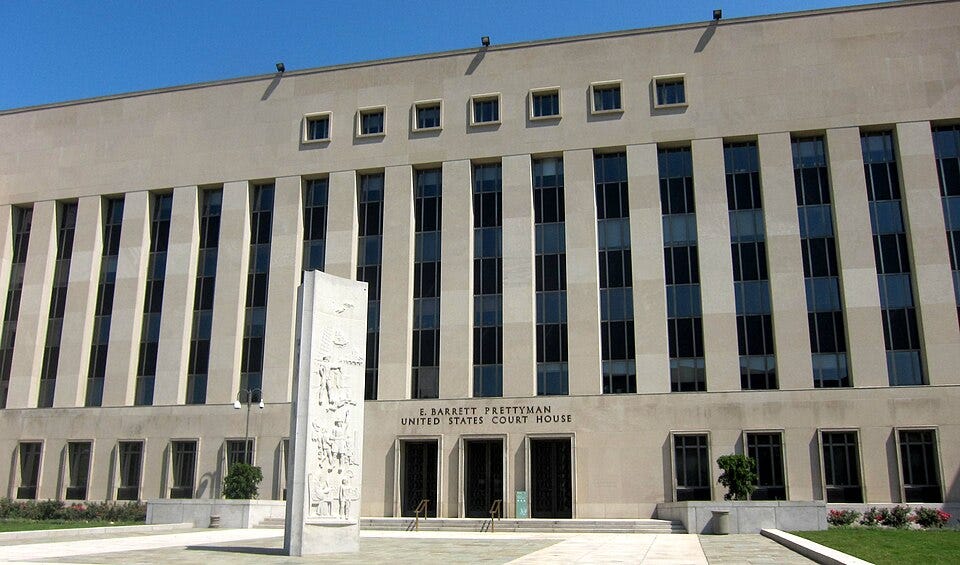
On Friday, a federal judge ordered the Trump administration to turn over a list of more than 20,000 people it suspected were noncitizens registered to vote in California.
Lawyers challenging the administration’s use of that list examined the data and told the court they found serious problems.
By Sunday, the Justice Department was asking the same judge to consider sanctions against the lawyers, including a possible referral for a criminal contempt investigation.
The dispute raises an important question. When someone challenges the accuracy of government evidence, how far can the government go in seeking punishment for the way that evidence was examined?
What the lawyers found
The Coalition for Humane Immigrant Rights, known as CHIRLA, and California voter Pedro Trujillo have sued federal officials over efforts to identify alleged noncitizens on voter rolls and pressure election officials to act on that information.
The administration says its list was developed by comparing state voter registration information with federal citizenship records. It argues that identifying ineligible voters is necessary to protect election integrity.
CHIRLA’s lawyers wanted to examine the evidence behind those claims.
On October 30, Chief U.S. District Judge James Boasberg ordered the government to provide the list, so the plaintiffs could determine whether people associated with their lawsuit appeared on it.
The analysis produced troubling findings.
Two experts working with the UCLA Voting Rights Project reported that 8,880 of the 20,930 names on the government list, approximately 42 percent, could not be matched to California’s current voter file.
They also reported identifying at least 22 CHIRLA members who were naturalized American citizens and whose information appeared to match entries on the federal list.
The court has not independently established those findings. A missing match in a voter file does not establish citizenship, and a government allegation does not establish illegal voting.
The experts also reported that the spreadsheet they received lacked California voter identification numbers that would have allowed more precise comparisons. They questioned whether the government had provided the same version of the list previously sent to California election officials.
No court has determined that the Justice Department failed to comply with the disclosure order.
But the analysis put specific, testable questions about the government’s data before the judge.
Then the Justice Department asked for sanctions
Boasberg’s October 30 order placed limits on how the plaintiffs could use the list.
They could share it only within their legal team, could not disclose the names of listed individuals, and could use the information to argue their legal standing to bring the lawsuit.
Legal standing matters because the plaintiffs must demonstrate that the government’s actions affect them in a way that allows a federal court to hear their claims.
The Justice Department argues that the lawyers went beyond those limits.
In a November 1 filing, government attorneys described the broader analysis of California voter records as “political grandstanding.” They argued that examining the list’s overall accuracy bore no relation to whether the plaintiffs had standing.
The department asked Boasberg to strike portions of the plaintiffs’ filing and consider civil sanctions, including dismissal of the lawsuit. It also suggested referring the plaintiffs and their attorneys to the Justice Department to investigate possible criminal contempt.
A spokesperson for the UCLA Voting Rights Project disputed the accusation, saying the lawyers and their experts complied with the judge’s orders.
A legitimate legal dispute exists here.
Federal judges have the authority to enforce orders that protect sensitive information and control how evidence is used. Lawyers cannot disregard those restrictions simply because they believe their findings serve the public interest.
The plaintiffs, however, sought to show that the government’s list included people whose voting rights might be threatened. Identifying citizens on that list could support their claim that members of the organization face a real injury.
The judge must determine whether the analysis crossed the limits he established.
The Justice Department has requested penalties. The judge has not found a violation.
That distinction matters because a request for criminal contempt carries consequences far beyond an ordinary disagreement about evidence.
The possibility of a criminal investigation can place considerable pressure on attorneys challenging the federal government. If the threat is unjustified, it may discourage lawyers and organizations from pursuing similar challenges.
If the court’s restrictions were violated, the judge has legitimate reasons to address that conduct.
The question is what the evidence supports.
What has the court accomplished?
CHIRLA and Trujillo have done more than criticize the administration’s voter investigations. They filed a lawsuit, requested emergency relief, obtained access to disputed government data, and submitted an expert analysis challenging its reliability.
The court’s order requiring disclosure was a meaningful intervention.
The government provided a spreadsheet, and the plaintiffs examined it. That gave the court evidence it previously lacked about the people targeted by the government’s voter-list investigation.
So far, the result is limited but real: the government produced data, and outside experts challenged its reliability.
The court has not determined whether the list is accurate, whether the plaintiffs are entitled to their requested injunction, or whether the lawyers violated the restrictions on using the data.
The public docket records the plaintiffs’ response to the sanctions motion on November 2. No verified ruling granting the requested sanctions or finding criminal contempt had been identified as of the morning of November 2.
Why Kentucky should pay attention
Kentucky also has a dispute with the Justice Department over voter registration information.
In February, the department sued Secretary of State Michael Adams and Kentucky election officials after they refused to provide the state’s complete, unredacted voter registration database, including sensitive identifying information.
The Kentucky State Board of Elections and Adams challenged the demand.
On July 23, U.S. District Judge Claria Horn Boom dismissed the federal lawsuit and denied the government’s motion to compel production of the records.
The Justice Department appealed the next day. The district court’s decision therefore represents an actual intervention, with the appellate dispute unresolved.
Kentucky’s election officials have already shown that federal demands for voter information can be challenged in court.
The California case involves a different list, different plaintiffs, and a separate legal question. Boasberg’s decision on sanctions will not directly resolve Kentucky’s appeal.
It does, however, test whether plaintiffs examining federal election evidence can pursue their challenges without facing unjustified legal penalties.
That question matters wherever state officials, independent organizations, or individual voters are contesting the government’s election-related claims.
The next decision
For ordinary citizens, no public-comment process or direct request can determine whether Boasberg grants the Justice Department’s motion.
Readers who want to support the legal challenge can contribute to CHIRLA, the organization pursuing the case. Its official donation program supports legal services and advocacy, although contributions are not specifically designated for this lawsuit. Supporting the organization cannot influence the judge’s ruling.
The more immediate development to watch is what Boasberg does with the government’s November 1 request.
He can determine whether the plaintiffs exceeded his order, whether any part of their analysis should be excluded, and whether sanctions or further proceedings are warranted.
The court has already required the government to disclose evidence that its opponents wanted to examine. Now the judge must decide whether those opponents violated the rules governing that examination.
The next ruling will determine whether the lawyers face penalties for using the data and how much of their analysis remains before the court.
That decision will tell us much more about whether the court’s safeguards protect both the integrity of its proceedings and the ability to challenge government evidence.