
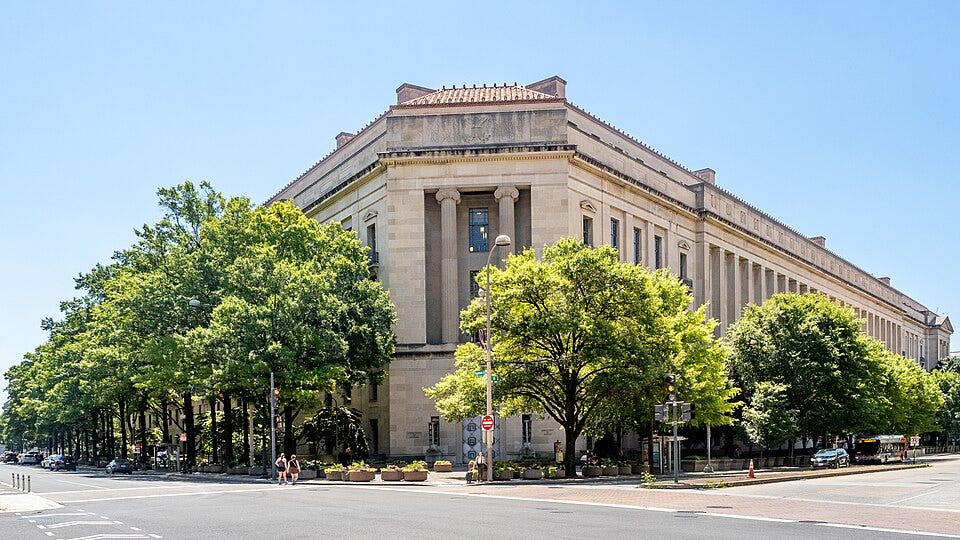
Senior Justice Department officials reportedly told California’s four U.S. attorneys to issue election-related grand jury subpoenas or risk losing their jobs.
CBS News reported the alleged threat Wednesday, November 4, citing two sources briefed on the matter.
The subpoenas are real. Federal prosecutors have issued them to election offices across California, seeking information about suspected noncitizen voting and how counties responded to federal demands.
What is new is the reported pressure on the prosecutors themselves.
Until now, the dispute has largely concerned threats directed at state and local election officials who refused to change how they process ballots. The latest allegation suggests Justice Department leaders were also using the possibility of dismissal to secure cooperation inside their own department.
That raises a question separate from whether California properly handled its voter rolls: Were federal prosecutors being allowed to exercise their professional judgment, or were they being told to use their investigative authority or lose their jobs?
The subpoenas followed a dispute over voter eligibility
The Justice Department says federal investigators identified approximately 20,000 people on California’s voter rolls who may not be American citizens.
Federal officials demanded that California set aside ballots associated with those individuals until their eligibility could be verified.
California Secretary of State Shirley Weber and Los Angeles County Registrar-Recorder Dean Logan refused. They questioned the accuracy of the federal list and maintained that the state must follow its established election procedures.
The disagreement went to federal court.
On October 28, U.S. District Judge David Carter rejected the administration’s request to force California to segregate the ballots. A federal appeals court denied emergency relief on October 30, and the Supreme Court rejected another emergency request on November 2.
Those decisions prevented the federal government from compelling California to change its ballot procedures through the requested emergency orders. They did not settle every issue in the underlying lawsuit.
Meanwhile, the Justice Department continued pursuing criminal investigations.
Grand jury subpoenas went to Los Angeles County election employees in October. Additional subpoenas reached Santa Clara and Sonoma counties shortly before the November 3 election.
According to CBS, the newer subpoenas sought information about possible noncitizen voting and records of how counties responded to federal demands that certain ballots be segregated.
County attorneys have continued evaluating those demands.
Receiving a subpoena does not establish that an election official committed a crime. It does, however, require a response and can place significant demands on the offices responsible for administering elections.
The reported threat came from inside the Justice Department
On October 29, Bloomberg Law reported that Justice Department leadership had directed federal prosecutors in California to pursue criminal subpoenas against state and local election officials.
The November 4 CBS report added that California’s four U.S. attorneys were allegedly warned they could be terminated if they did not issue the subpoenas.
That allegation has not been independently established through a publicly released directive or an official finding. CBS attributed it to two sources briefed on the matter. Its November 4 report did not include a Justice Department response to the alleged firing threat.
Federal prosecutors work within the executive branch. Their supervisors can establish enforcement priorities, direct investigations, and require compliance with lawful departmental policies.
U.S. attorneys also serve in positions from which the president has statutory authority to remove them.
An order to investigate possible illegal voting is not, by itself, improper. A threat of dismissal to compel a particular investigative step raises a different question.
Prosecutors are supposed to evaluate evidence, determine whether lawful grounds exist for investigative action, and exercise the judgment their responsibilities require.
If their continued employment depends on carrying out a particular directive regardless of those considerations, that pressure can compromise the independence of the process.
The reported threat is an example of how fear can be used to create compliance within government institutions.
But there are important limits to what is known.
The subpoenas do not, by themselves, prove that prosecutors believed they lacked a legal basis for issuing them. No public evidence identified in this reporting establishes that a prosecutor refused an order, was disciplined, or issued a subpoena solely because of the alleged threat.
Those distinctions are essential to understanding what the November 4 disclosure does and does not establish.
The courts have imposed limits, but not on everything
California officials have done more than criticize the Justice Department.
They refused to segregate ballots based on the disputed federal list and defended that decision in court. Their position has been sustained against the federal government’s requests for emergency orders requiring ballot segregation.
A separate lawsuit brought by labor unions and civil-rights organizations challenged federal letters warning state and local election officials about possible prosecution.
On October 30, a federal judge temporarily barred the government from making further ballot-segregation demands and threats of criminal prosecution against election officials.
But on November 2, a divided panel of the Ninth Circuit stayed that order. The full appeals court reinstated the panel’s stay on November 3.
The appeals court distinguished between forcing California to change its election procedures and the federal government’s authority to request action or warn officials about possible criminal violations.
The result is a narrower safeguard than the initial district court order provided.
The emergency orders have not required California to segregate the disputed ballots. But the separate criminal investigations and subpoenas remain active.
The Justice Department also has a legitimate responsibility to investigate credible allegations of illegal voting. Federal law prohibits noncitizens from voting in federal elections, and prosecutors have brought cases involving alleged unlawful voting in prior elections.
The issue is whether particular investigations and demands are supported by evidence and exercised within legal boundaries.
Neither the California court rulings nor the criminal investigations resolve the newly reported allegation of pressure on federal prosecutors.
What Kentucky can do about it
No evidence in the November 4 reporting establishes that Kentucky prosecutors received similar instructions or that Kentucky election offices were targeted by these particular subpoenas.
The Kentucky connection is congressional oversight.
Representative Thomas Massie, who represents Kentucky’s Fourth Congressional District, serves on the House Judiciary Committee and its Subcommittee on the Constitution and Limited Government. The subcommittee oversees voting rights and constitutional protections.
Congress can examine how the Justice Department exercises federal power, including through committee oversight.
Kentucky residents represented by Massie can ask him to seek the directives behind the California subpoenas and determine whether federal prosecutors were threatened with dismissal.
One specific question would be:
Will you ask the House Judiciary Committee to obtain the Justice Department’s instructions to California U.S. attorneys and determine whether prosecutors were threatened with dismissal for refusing to issue election-related subpoenas?
Massie’s official constituent contact form is linked in the sources below.
A constituent request does not compel an investigation, and no verified indication shows that Massie has agreed to pursue this allegation. But the request is directed to a lawmaker who serves on a committee with relevant oversight responsibilities.
What remains unanswered
The Justice Department’s dispute with California is not finished.
Further court proceedings are scheduled, and some Northern California counties face November 17 deadlines to respond to grand jury subpoenas.
The new reporting leaves several important questions unresolved.
Who authorized the alleged dismissal threat? Was it communicated in writing? Did any prosecutor question the directive? Did the threat influence decisions about which subpoenas were issued?
The courts have examined the federal government’s attempts to change California’s election procedures. They have not established what happened inside the Justice Department when prosecutors received their instructions.
For now, county officials are responding to subpoenas, related litigation continues, and the alleged pressure on federal prosecutors has not been documented publicly.
The unanswered question is whether prosecutors were free to decide what the evidence warranted, or whether their jobs depended on following orders.
Sources and further reading
CBS News, November 4, 2026: Northern California counties hit with subpoenas over alleged noncitizen voting — Primary reporting on the alleged dismissal threat and additional county subpoenas.
Bloomberg Law, October 29, 2026: DOJ Orders Criminal Probes of California Officials on Voting — Earlier reporting on directives from DOJ leadership.
Bloomberg Law, November 4, 2026 UTC: DOJ Subpoenas New California Election Leaders During Court Fight — New subpoenas and response deadlines.
U.S. Court of Appeals for the Ninth Circuit, October 30, 2026: United States v. California — Emergency relief denied in the ballot-segregation case.
U.S. Court of Appeals for the Ninth Circuit, November 3, 2026: SEIU v. Department of Justice — Reinstatement of the stay concerning threats and ballot-segregation requests.
28 U.S.C. § 541: United States Attorneys — Federal law governing appointment and removal.
U.S. House Judiciary Committee: Subcommittee on the Constitution and Limited Government
Representative Thomas Massie: Official Constituent Contact Form