
The federal government can keep more than 600 boxes of 2020 election records seized from Fulton County, Georgia.
That is the immediate news. A federal judge ruled Wednesday that the Justice Department does not have to return the records the FBI took in January from a Fulton County election warehouse. Fulton County had argued the seizure was unconstitutional and sought the return of the ballots and related electronic copies. The judge denied that request.
Kentucky should note that the Justice Department’s pursuit of Fulton County records parallels its active lawsuit for access to Kentucky voter data, signaling broader federal scrutiny.
Kentucky is already fighting a related federal demand: the Justice Department has sued Kentucky for access to its full voter registration list, including sensitive voter information. Jefferson County Clerk David Yates has moved to intervene in that case, arguing that turning over the data would expose voters to privacy risks and erode confidence in election administration.
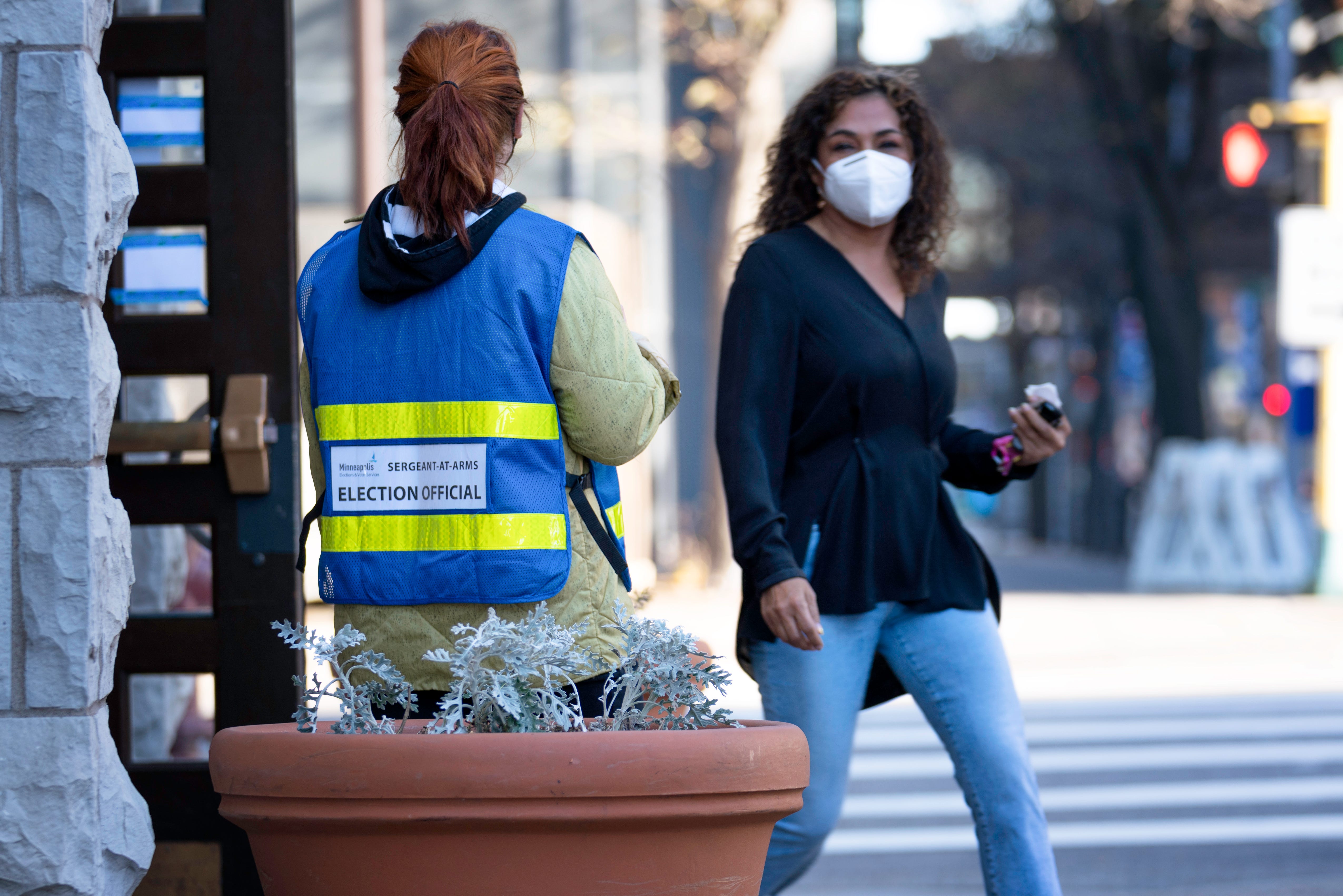
This Georgia ruling is a warning for Kentucky: federal enforcement can override local election control and reshape established norms.
The judge let DOJ keep the records, but not without warning signs
The Fulton County case began after the FBI seized election materials from the county’s election warehouse on January 28, 2026. The records came from the 2020 election, the same election Donald Trump and his allies have repeatedly challenged despite recounts, audits, lawsuits, and certification procedures that confirmed the result in Georgia.
U.S. District Judge J.P. Boulee allowed the Justice Department to keep the materials. He found that Fulton County had not met the legal standard required to force the government to return them. According to Reuters, the judge acknowledged errors in the FBI affidavit used to authorize the search but concluded that the threshold for returning the ballots had not been met.
That distinction is important.
The ruling does not mean the seizure was clean, ordinary, or free from concern.
It means the county did not clear the specific legal bar needed to get the records back at this stage.
The Washington Post reported that the judge described the raid as “unprecedented” and said it was based on debunked conspiracy theories, while still ruling that Fulton County had not met the standard to reclaim the ballots.
That leaves the Justice Department in possession of local election records from a presidential election held more than five years ago.
The next target may be the people who ran the election
The Fulton County dispute is not limited to ballots and boxes.
The Justice Department has also sought names and personal contact information for people involved in the 2020 election in Fulton County. According to the Associated Press, the subpoena sought information on thousands of workers and volunteers, including full-time county employees, temporary poll workers, volunteers, and even bus drivers involved in a mobile voting operation. Fulton County moved to quash the subpoena, calling it overly broad and warning that it could intimidate or harass people who helped run the election.
That part of the story deserves attention because election work is already under strain.
Local election workers are not public celebrities. They are clerks, staff members, volunteers, poll workers, ballot processors, and temporary workers who make elections function. Some are retirees. Some are county employees assigned to designated tasks. Some show up because their community needs people willing to do slow, precise, thankless work under pressure.
When federal prosecutors seek their names, home addresses, phone numbers, and email addresses years after an election, the request comes after years of threats and harassment against election workers.
The Brennan Center’s 2026 survey of local election officials found continuing concerns with safety, threats, intimidation, and the difficulty of recruiting and retaining election workers. That context changes how a subpoena like this is felt on the ground.
To those named in a subpoena, a federal demand for personal information can feel like vulnerability—and for some, exposure can lead to intimidation or lasting harm.
Kentucky is already in court over voter data
In February, the Justice Department sued Kentucky and several other states over access to voter rolls. In Kentucky, the lawsuit seeks full voter registration data. Local reporting has described the requested information as including sensitive data such as Social Security numbers and driver’s license numbers.
Kentucky officials have pushed back. Spectrum News reported that Jefferson County Clerk David Yates filed to dismiss the DOJ lawsuit seeking unredacted Kentucky voter registration lists. Yates and Secretary of State Michael Adams argued that turning over the data would violate state law and the U.S. Constitution.
Kentucky is already facing direct federal legal action to obtain election-related records, making the issue immediate and local.
The Brennan Center has been tracking Justice Department requests for voter information nationwide. Its tracker says DOJ has demanded election-related records and data from nearly every state and Washington, D.C., including full statewide voter registration lists, ballots from previous elections, and access to voting equipment. It also reports that the federal government has sued 30 states and Washington, D.C. for noncompliance, with six lawsuits dismissed.
The Georgia case represents a larger federal push for election materials, voter data, and state-controlled election infrastructure.
Kentucky’s involvement in the DOJ’s pursuit of voter data illustrates its role in the national dispute.
Federal demands put county election offices on the front line
Elections are national in their stakes but local in their administration.
In Kentucky, county clerks and county boards of elections carry much of the operational responsibility. County boards include the county clerk as chair, the county sheriff, and two members appointed by the State Board of Elections. That local structure means federal demands for election records become local decisions, handled by state officials, county clerks, election boards, and staff who must determine what the law permits and what voter privacy requires.
Kentucky faces a pressing question: how do state and local officials respond when federal enforcement opposes state election law and record custody?
Do not wait for a subpoena to figure out a response. Improvised answers only invite mistakes and jeopardize protections.
Kentucky needs clear lines around who can access voter data, what information must remain protected, how federal requests are reviewed, what county clerks are required to do, and how voters are notified when sensitive information is at issue.
This is not a call to hide election records. Public assurance depends on lawful transparency, accurate records, and secure procedures. But transparency does not require handing over every sensitive detail in a voter file. Oversight does not require exposing election workers to unnecessary risk.
Federal enforcement may challenge, but cannot erase state responsibility—or the obligation to defend voters from new threats.
The real question is who controls election records
The Fulton County ruling confronts a fundamental issue for Kentucky: who controls election records when federal authorities demand them?
If the answer becomes “the federal government, whenever it asks,” Kentucky risks losing real authority. Election workers may be exposed, voters may suspect misuse, and old conspiracies might fuel new federal probes.
Kentucky does not need to wait for a ballot seizure to ask those questions.
The state already has a live test case in the DOJ voter-data lawsuit. The officials with power are identifiable: the Justice Department, the Secretary of State, Michael Adams, the Kentucky State Board of Elections, Jefferson County Clerk David Yates, county clerks across the state, county boards of elections, and the federal court handling the case.
The public can now ask for clear answers.
Actions readers can take
Ask the Kentucky Secretary of State’s Office:
What is Kentucky’s position on DOJ access to full voter registration data, including sensitive information such as Social Security numbers, driver’s license numbers, dates of birth, and home addresses?
Ask your county clerk:
What protocol does your office follow if the federal government requests voter data, ballots, election equipment records, or election-worker information?
Ask your county board of elections:
Are county election workers and poll workers told how their personal information is stored, protected, and disclosed?
Ask state legislators:
Does Kentucky law clearly guard sensitive voter information from unnecessary disclosure, and does it set a clear process for responding to federal demands?
Support election workers:
Sign up to serve as a poll worker, thank the people who do this work, and push back against efforts to treat election administration as a partisan weapon.
Track the Kentucky lawsuit:
The case over Kentucky voter data should not be left to lawyers alone. Voters have a direct stake in whether their personal information is protected.
Direct sources
Primary development
Associated Press: “Justice Department can keep 2020 election ballots seized from Georgia’s Fulton County, judge rules”
Use for the basic factual spine: judge’s ruling, DOJ retention of seized ballots, Fulton County’s challenge, and Georgia 2020 context.
Direct link: https://apnews.com/article/1c425a1d1d04bf4ea2178c2a5443f2e9
Reuters: “Trump administration can keep 2020 election ballots seized from Georgia, judge rules”
Use for the number of boxes, the judge’s finding, the FBI affidavit concerns, and the political context around Trump’s 2020 claims.
Direct link: https://www.reuters.com/world/trump-administration-can-keep-2020-election-ballots-seized-georgia-election-2026-05-06/
Washington Post: “Judge denies request to return 2020 ballots seized from Fulton County, Georgia”
Use for deeper framing, including the judge’s acknowledgment that the raid was unprecedented and connected to debunked conspiracy theories.
Direct link: https://www.washingtonpost.com/national-security/2026/05/06/fulton-ballots-investigation-trump/
Election-worker subpoena
Associated Press: “Justice Department seeks the names of 2020 election workers in Georgia’s Fulton County”
Use for DOJ’s subpoena seeking names and personal contact information for election workers, volunteers, and other people involved in the 2020 election.
Direct link: https://apnews.com/article/2c4bc764855341a0c9eedb135d25591e
Kentucky connection
Spectrum News 1 Kentucky: “Jefferson County clerk moves to dismiss DOJ voter data suit”
Use for Kentucky’s voter-data lawsuit, David Yates’ motion, and the privacy concerns involving Social Security and driver’s license numbers.
Direct link: https://spectrumnews1.com/ky/louisville/news/2026/03/31/jefferson-county-clerk-motion-to-dismiss
Kentucky Lantern: “Louisville officials seek to block transfer of Kentuckians’ sensitive voter data to feds”
Use for the Kentucky-specific voter-data fight and Jefferson County Clerk David Yates’ effort to intervene.
Direct link: https://kentuckylantern.com/2026/03/17/louisville-officials-seek-to-block-transfer-of-kentuckians-sensitive-voter-data-to-feds/
Broader pattern and data
Brennan Center for Justice: “Tracker of Justice Department Requests for Voter Information”
Use for the broader national pattern of DOJ demands for voter registration lists, ballots, election records, and access to voting equipment.
Direct link: https://www.brennancenter.org/our-work/research-reports/tracker-justice-department-requests-voter-information
Brennan Center for Justice: “Resistance to Trump Administration’s Demands for State Voter Files Is Bipartisan and Widespread”
Use for context that pushback against DOJ voter-data demands is not limited to one party or one state.
Direct link: https://www.brennancenter.org/our-work/analysis-opinion/resistance-trump-administrations-demands-state-voter-files-bipartisan-and
Court and case tracking
Democracy Docket: “Georgia Fulton County 2020 Election Records Seizure Challenge”
Use for case tracking and court filings.
Direct link: https://www.democracydocket.com/cases/georgia-fulton-county-2020-election-records-seizure-challenge/
Democracy Docket: “Judge lets DOJ keep Fulton County ballots despite ‘misleading’ FBI affidavit claims”
Use for legal framing and the affidavit concerns.
Direct link: https://www.democracydocket.com/news-alerts/judge-lets-doj-keep-fulton-county-ballots-despite-misleading-fbi-affidavit-claims/