
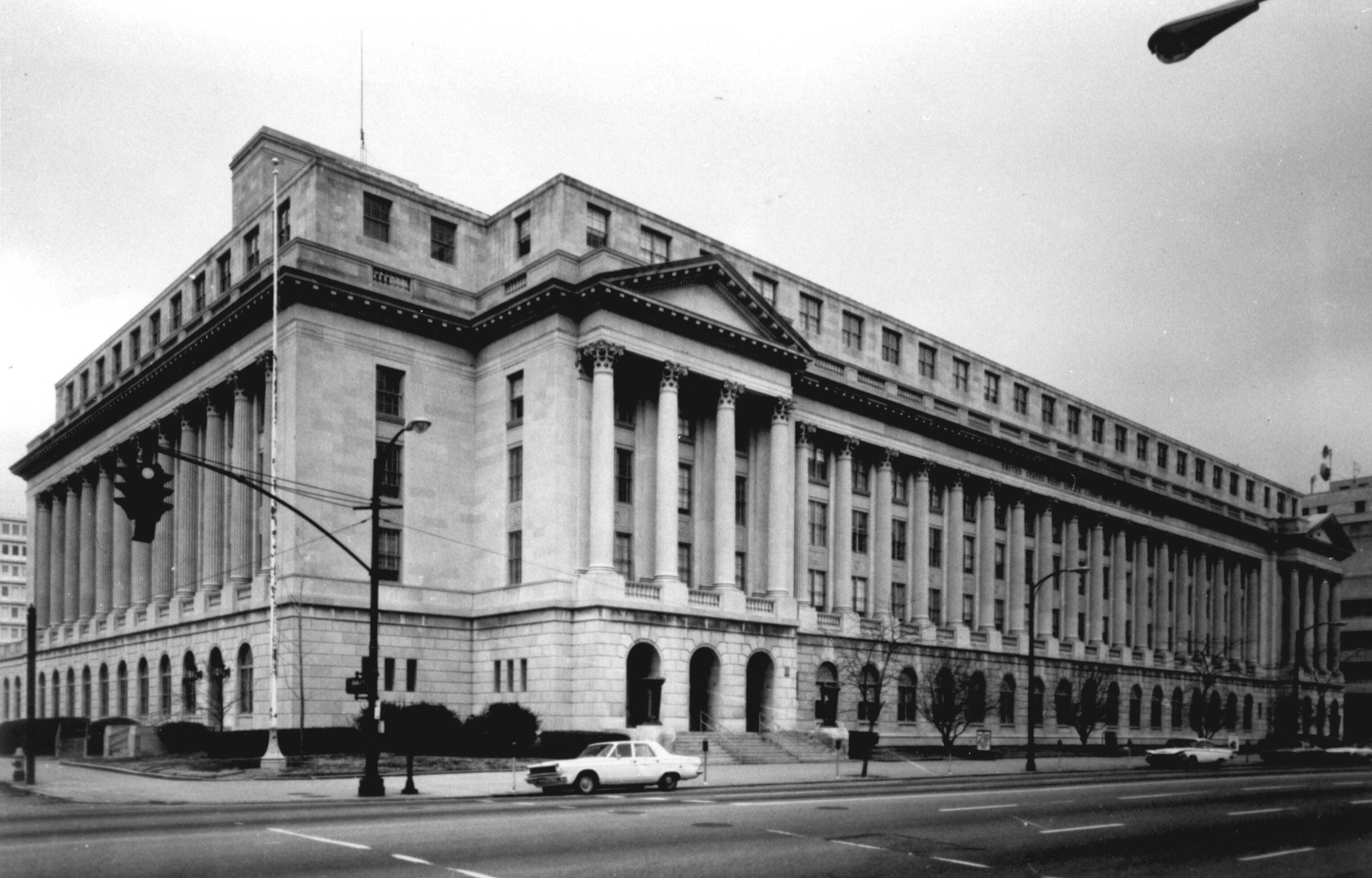
In Louisville, immigration court filings no longer go to a standalone Louisville Immigration Court. They go to the EOIR Louisville Hearing Location, which operates under the administrative control of the Memphis Immigration Court. EOIR closed the Louisville Immigration Court as a separate court in 2021 and made Louisville a hearing location instead.
The immigration court already operates out of public view. A person in Kentucky can be arrested, held in a county jail, transferred into federal immigration custody, and placed into proceedings controlled by a federal court structure most Kentuckians never see.
Now the Justice Department is adding more judges to that system.
On May 21, 2026, the Executive Office for Immigration Review announced that it had sworn in 77 immigration judges and 5 temporary immigration judges, calling it the largest class of new adjudicators in EOIR history. DOJ says the new class brings the immigration judge corps to nearly 700 and that EOIR has hired 153 permanent immigration judges during fiscal year 2026.
The administration describes this as a backlog story. The backlog is real. TRAC, the immigration data project at Syracuse University, reported that at the end of March 2026, more than 3.28 million active cases were pending before immigration courts, including more than 2.31 million people awaiting asylum hearings or decisions.
This is not some neutral staffing announcement. Immigration courts are not independent federal courts. They are part of the Justice Department. The judges work inside the executive branch, under the same federal administration that is expanding immigration arrests, detention, local enforcement partnerships, and deportation capacity.
That changes the question.
The question is not simply whether immigration courts need more judges. The question is what kind of system those judges are being added to, and whether Kentucky’s local institutions are helping move people into it.
Faster Immigration Courts Do Not Automatically Mean Fairer Hearings
DOJ says the new class is part of an effort to reduce the immigration court backlog. That is the public-facing explanation, and the backlog gives the administration a powerful argument. Millions of cases are pending, hearings can take years, and delay creates real harm for people trying to resolve their legal status.
But speed and fairness are different things.
Reuters reported that the new class follows the firing of more than 100 immigration judges since Trump returned to office in January 2025. Reuters also reported that many of the new judges have backgrounds in criminal prosecution or immigration enforcement.
That context changes the meaning of the hiring announcement. If experienced judges are removed and new judges are added while the administration is pushing faster deportation processing, the public should ask whether the court system is being strengthened or reshaped.
Immigration judges make decisions that can determine whether a person remains with family, receives asylum, is detained longer, or is removed from the country. Those decisions require time, evidence, interpretation, legal representation, and the ability to challenge government claims. A court can move faster while becoming less fair, especially when people do not have lawyers.
That is the danger hidden inside the word “efficiency.”
Efficiency sounds harmless until it means less time to find counsel, less time to gather documents, less time to understand a hearing notice, or less time to appeal.
Kentucky’s Role Begins Before Anyone Reaches Immigration Court
Kentucky does not control EOIR. Kentucky does not decide how many immigration judges the DOJ hires. Kentucky does not assign judges to Memphis, Louisville, or detained dockets.
But Kentucky can help fill the federal immigration system.
ICE says the 287(g) program allows state and local law enforcement agencies to perform certain immigration enforcement functions through agreements with ICE. As of May 21, 2026, ICE listed 1,864 memorandums of agreement for 287(g) programs across 39 states and two U.S. territories.
Kentucky is part of that expansion. The Kentucky Center for Economic Policy reported in February 2026 that 24 local law enforcement groups in Kentucky had signed 287(g) agreements, and 11 county jails were contracting with ICE to hold detainees.
That is the Kentucky side of the story.
Federal immigration court capacity does not operate in isolation. It depends on people being identified, arrested, detained, transferred, and placed into proceedings.
County jails, sheriffs, and local officials can become part of that chain.
Kentucky Lantern reported in March 2026 that more than 1,000 people were being held by ICE in Kentucky jails, based on an analysis by the League of Women Voters of Kentucky. PBS Kentucky reported in February 2026 that Kentucky county jails were housing 900 more immigration inmates than a year earlier, with ICE jail beds bringing millions in federal dollars into local facilities.
Those numbers should change the public conversation.
When federal officials announce more immigration judges, Kentuckians should ask what happens before someone reaches that judge. Who was arrested? Who identified them for ICE? Were they held in a local jail? Was the county paid? Did the fiscal court receive regular reports? Did the person have access to a lawyer? Did anyone in Kentucky track what happened next?
Louisville’s Immigration Docket Is Already Controlled From Memphis
Kentucky’s immigration court geography matters.
EOIR lists the Louisville Hearing Location as 601 W. Broadway, but filings in the Louisville docket are tied to the Memphis Immigration Court. EOIR’s administrative control list indicates that Louisville became a hearing location under Memphis’s administrative control effective July 30, 2021.
That means Kentucky immigration cases are already connected to a regional federal structure. People may live in Kentucky, be detained in Kentucky, have family in Kentucky, and rely on Kentucky legal service organizations. Yet, the court administration does not sit squarely within Kentucky’s public line of sight.
TRAC’s hearing-location data includes Kentucky-related immigration hearing locations, including Louisville, Hopkins County Jail, Kenton County Detention Center, and Oldham County Detention Center.
That should raise a simple question: if Kentucky detention locations are part of the immigration court map, who in Kentucky is tracking what happens to the people held there?
The answer is not obvious.
That lack of visibility is itself part of the problem.
Local officials may sign agreements, accept federal money, or house detainees, while the later stages of the process disappear into federal court and detention systems that are hard for the public to follow.
Oldham County Shows How Federal Immigration Enforcement Becomes Local Government Business
Oldham County has already shown what this looks like up close.
Local reporting has documented public concern about Oldham County’s ICE partnership and participation in 287(g). Louisville Public Media reported on residents questioning the county’s ICE partnership. WDRB reported that the Oldham County Detention Center shifted from a shorter ICE hold arrangement to full-time holding, and that Jailer Jeff Tindall said he had signed a memorandum of agreement.
That is where the national story becomes a county story.
The Justice Department can hire judges in Washington’s federal system. ICE can expand enforcement agreements across the country. But a county jailer signs a local agreement. A fiscal court approves or reviews a budget. A jail accepts detainees. Residents ask questions in public meetings. Local legal organizations try to help families understand what is happening.
If the federal government builds more capacity to process immigration cases, counties that cooperate with ICE should face more scrutiny, not less.
The public deserves to know whether local jails are simply holding people temporarily, actively participating in immigration enforcement, receiving federal detention revenue, or helping move people into removal proceedings. Those are different levels of involvement, and each one deserves public explanation.
A Faster System Puts More Pressure on Lawyers, Families, and Detainees
Kentucky has organizations working with immigrants and refugees, but legal help is limited.
Kentucky Refugee Ministries provides immigration legal services for Kentucky residents, including family-based and humanitarian immigration services. The National Immigration Legal Services Directory lists Kentucky organizations that provide immigration legal help, including some that offer representation before immigration court.
The Louisville Coalition for Immigrant Support was created to help immigrant neighbors in Jefferson County and Metro Louisville by sharing information, resources, and support. The Community Response Coalition of Kentucky says it provides wraparound care to immigrants in Kentucky as they move through the immigration system.
Those organizations are part of the real-world infrastructure that federal announcements omit.
When court capacity expands, people may receive hearing notices sooner. Families may need documents faster. Lawyers may have less time to prepare. People without counsel may have to navigate a federal court system alone, often in a language they do not speak fluently and under the pressure of detention.
A faster system may reduce a backlog on paper while increasing the burden on people with the least power inside it.
That is why Kentucky should treat the DOJ announcement as a warning sign. The state’s role does not begin in the courtroom. It begins with the arrest, the jail bed, the detainer, the transfer, the contract, the fiscal court budget line, and the local decision to cooperate.
Backlog Reduction Should Not Become a Shortcut Around Due Process
There is no serious argument that a backlog of more than 3 million immigration court cases is healthy. Delay can hurt people who have valid claims, families waiting for stability, and communities trying to understand what happens next.
But backlog reduction can be done in different ways.
It can mean more judges with independence, adequate training, legal representation, access to translation, and meaningful appeal rights. It can also mean pressure to process cases faster, remove experienced judges, add temporary adjudicators, narrow review, and turn courtrooms into another part of an enforcement campaign.
The public should not accept “backlog reduction” as the end of the explanation.
Reuters placed the record judge class in the context of more than 100 immigration judge firings since January 2025. DOJ placed the same announcement in the context of faster case completion and a reduced pending caseload. TRAC shows the backlog remains enormous. Kentucky data shows local jails and law enforcement agencies are already participating in the immigration enforcement system.
Kentucky should not wait until more people disappear into the federal system before asking what local institutions are doing.
Counties that cooperate with ICE should be able to explain how many people they hold, how much money they receive, how long people remain in custody, whether detainees have access to lawyers, and whether local officials track what happens after transfer.
The federal government is adding court capacity.
Kentucky should ask whether its own institutions are helping supply the cases.
What Kentuckians Can Ask Now
Ask county officials direct questions.
If your county jail houses ICE detainees or participates in 287(g), ask the jailer, sheriff, and fiscal court how many people are held for ICE each month, how much revenue the county receives, and whether those numbers are reported publicly.
Request the records.
Ask for ICE agreements, 287(g) memorandums, detention contracts, monthly ICE population reports, ICE revenue reports, jail policies, and any communications with ICE or DHS about immigration holds, transfers, or detainee access to counsel.
Watch fiscal court agendas.
ICE cooperation often appears as jail funding, detention revenue, contracts, staffing, population reports, or policy updates. Those discussions may not be labeled as immigration policy.
Support immigrant legal services and community response groups.
Organizations such as Kentucky Refugee Ministries, legal aid providers, and immigrant-support coalitions are part of the due process infrastructure. A faster court system increases the need for legal help and practical support.
Contact members of Congress.
Ask Kentucky’s congressional delegation whether the DOJ will release assignment data for the new immigration judges, how many will hear detained dockets, and whether any will handle Memphis or Louisville docket cases.
Ask state lawmakers to require transparency.
Kentucky can require clearer public reporting when local jails contract with ICE or participate in federal immigration enforcement. At a minimum, counties should have to report population numbers, revenue, agreements, and basic custody outcomes.
Direct Sources
U.S. Department of Justice / Executive Office for Immigration Review
DOJ announced that EOIR swore in 77 immigration judges and 5 temporary immigration judges, calling it the largest adjudicator class in EOIR history. DOJ also said EOIR has hired 153 permanent immigration judges in fiscal year 2026 and now has nearly 700 immigration judges.
https://www.justice.gov/opa/pr/eoir-announces-77-immigration-judges-and-5-temporary-immigration-judges
Reuters
Reuters reported that the record hiring class follows the firing of more than 100 immigration judges since Trump returned to office in January 2025. Reuters also reported that many of the new judges have backgrounds in criminal prosecution or immigration enforcement.
https://www.reuters.com/legal/government/trump-administration-brings-record-new-class-immigration-judges-2026-05-21/
TRAC Immigration
TRAC reported that immigration courts had more than 3.28 million active cases at the end of March 2026, including more than 2.31 million people awaiting asylum hearings or decisions.
https://tracreports.org/immigration/quickfacts/eoir.html
EOIR Memphis Immigration Court
EOIR lists Louisville as a hearing location under the Memphis Immigration Court, with Louisville docket filings directed to the Louisville Hearing Location at 601 W. Broadway.
https://www.justice.gov/eoir/memphis-immigration-court
EOIR Immigration Court Administrative Control List
EOIR’s administrative control list states that the Louisville Immigration Court was closed as a separate court and became a hearing location under Memphis’s administrative control, effective July 30, 2021.
https://www.justice.gov/eoir/immigration-court-administrative-control-list
TRAC Hearing Location Data
TRAC lists Kentucky-related immigration hearing locations, including Louisville, the Hopkins County Jail, the Kenton County Detention Center, and the Oldham County Detention Center.
https://tracreports.org/immigration/help/hearingloccode.html
ICE 287(g) Program
ICE says 287(g) agreements allow state and local law enforcement agencies to perform certain immigration enforcement functions.
https://www.ice.gov/identify-and-arrest/287g
Kentucky Center for Economic Policy
KyPolicy reported that 24 local Kentucky law enforcement groups had signed 287(g) agreements, and 11 county jails were contracting with ICE to hold detainees.
https://kypolicy.org/ice-enforcement-in-kentucky/
Kentucky Lantern
Kentucky Lantern reported that more than 1,000 people were being held by ICE in Kentucky jails, based on an analysis by the League of Women Voters of Kentucky.
https://kentuckylantern.com/2026/03/16/more-than-1000-people-being-held-by-ice-in-kentucky-jails-analysis-finds/
PBS Kentucky Edition
PBS Kentucky reported that county jails in Kentucky were housing 900 more immigration inmates than a year earlier and that ICE jail beds were bringing millions in federal dollars into local facilities.
https://www.pbs.org/video/some-kentucky-jails-getting-millions-renting-beds-to-ice-fajb3u/
Kentucky Refugee Ministries
KRM provides immigration legal services for Kentucky residents, including family-based and humanitarian immigration services.
https://kyrm.org/services/immigration-citizenship/