
On February 18, 2026, the Department of Homeland Security issued internal travel guidance during the ongoing partial shutdown that placed new limits on FEMA travel and disaster surge deployments. The directive, transmitted through DHS management channels and reflected in FEMA operational guidance that day, restricted new deployments and constrained nonessential travel while the funding lapse continued.
The instruction did not close FEMA. It narrowed how quickly FEMA could move people and resources. Under shutdown rules, only personnel classified as “excepted” may continue working. Travel, hiring, and new deployment actions are subject to review and limitation. FEMA surge assignments, which normally rely on rapid travel authorizations and interregional staff movement, now require additional clearance and may be delayed or paused depending on funding status and mission designation.
Kentucky’s emergency management officials operate within this federal system. When FEMA surge resources slow, state and county recovery timelines can shift.
DHS Shutdown Guidance Under the Antideficiency Act
The legal authority governing shutdown conduct is the federal Antideficiency Act, 31 U.S.C. § 1341, which bars agencies from incurring obligations or expenditures in excess of available appropriations. During a lapse in funding, agencies must halt nonexcepted functions and limit activity to those tied to the safety of human life or the protection of property.
DHS maintains a publicly posted shutdown contingency plan describing which components continue operations and which are limited. FEMA is generally categorized as essential for disaster response, but the scope of permitted activity narrows. New travel, new contracts, and certain deployment actions can require higher-level approval or be paused depending on funding conditions.
On February 18, DHS reportedly imposed restrictions affecting FEMA travel and surge staffing. Surge capacity typically draws personnel from other FEMA regions or headquarters components. That mobility depends on available funds and authorized travel. When travel is limited, FEMA’s ability to reposition staff quickly diminishes.
The difference is operational. Surge teams include incident management personnel, logistics specialists, public assistance coordinators, and housing experts. Their movement requires plane tickets, lodging contracts, rental vehicles, and per diem expenditures. All of those involve obligations under federal law. Without appropriated funds, DHS must carefully limit new obligations.
FEMA Surge Assignments Under Stafford Act Authorities
FEMA’s disaster authority arises under the Robert T. Stafford Disaster Relief and Emergency Assistance Act, 42 U.S.C. § 5121 et seq. When a governor requests a disaster declaration, and the President approves it, FEMA activates federal support under that statute.
Kentucky has relied on Stafford Act declarations repeatedly. Severe storms, flooding, tornadoes, and ice events have triggered federal assistance in counties such as Breathitt, Letcher, Perry, Graves, and Warren in recent years. Under those declarations, FEMA surge staff deploy to conduct damage assessments, establish disaster recovery centers, coordinate logistics, and process individual and public assistance claims.
Surge capacity operates on timing. Damage assessments occur early. Housing inspections follow. Public assistance coordination for counties and cities begins soon after. If staff movement slows, the sequence stretches.
The Kentucky Division of Emergency Management, housed within the Kentucky Justice and Public Safety Cabinet, coordinates with FEMA Region IV. Region IV covers Kentucky along with seven other states. Surge staff often travel across state lines. Travel restrictions during a shutdown can affect that regional staffing pool.
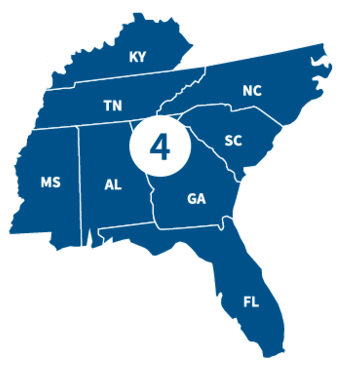
When FEMA’s ability to move personnel narrows, Kentucky’s Division of Emergency Management must rely more heavily on in-state staff or await clearance for federal reinforcement.
Kentucky’s Severe Weather Record and FEMA Reliance
Kentucky’s recent disaster history underscores the practical effect of surge timing. The December 2021 tornado outbreak led to a major disaster declaration covering multiple western Kentucky counties. FEMA personnel established disaster recovery centers, coordinated temporary housing assistance, and processed individual assistance applications for thousands of residents.
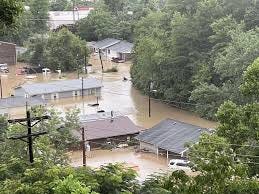
In July 2022, catastrophic flooding in eastern Kentucky prompted another major disaster declaration. FEMA surge teams deployed for damage assessment, debris management support, and public assistance coordination. Counties including Knott, Breathitt, and Letcher relied on federal personnel working alongside state and local officials.
Those deployments required rapid staff movement. FEMA incident management teams mobilized within days. Housing inspectors traveled to remote areas. Logistics specialists coordinated commodity distribution. Each of those steps depended on travel authorizations and available funding.
If a severe weather event were to occur during a period of constrained FEMA travel, the initial response might still proceed, particularly if tied directly to life safety. However, reinforcement and recovery personnel could face delays if additional travel requires shutdown-specific approval.
Kentucky’s spring storm season approaches annually with little predictability. The National Weather Service offices serving Louisville, Paducah, and Jackson routinely issue severe weather outlooks during late winter and early spring. FEMA surge flexibility intersects with that seasonal reality.
DHS Funding Lapse and Enforcement Priorities
During shutdowns, DHS components operate under separate funding authorities and contingency plans. Certain enforcement functions, including immigration enforcement and border operations, often continue as excepted activities tied to safety or statutory mandates.
Public reporting during prior shutdowns has documented that Immigration and Customs Enforcement operations proceeded while other DHS administrative functions slowed. That pattern is rooted in how agencies classify excepted functions under contingency plans.
FEMA’s core life-saving operations remain active, yet travel restrictions can affect surge assignments beyond immediate life safety response. The distinction lies in classification under shutdown guidance.
Kentucky’s interaction with federal enforcement priorities has already been visible in other contexts. For example, ICE operations within the state fall under DHS authority and continue under shutdown conditions. FEMA surge support, by contrast, may be subject to funding controls that hinge on travel and new obligations.
The result is a differential pace across DHS components during a funding lapse. Operational tempo in one area can remain steady while another component adjusts deployment speed.
FEMA Travel Controls and Deployment Mechanics
FEMA surge deployment typically follows a structured process. Regional offices identify staffing gaps. Headquarters or interregional personnel receive activation orders. Travel authorizations are processed through federal travel systems. Lodging and transport arrangements follow.
Each step requires available funds and authorization. During a shutdown, FEMA must ensure compliance with the Antideficiency Act before incurring obligations.
Travel restrictions effective February 18 reportedly limited new deployments and required heightened review. The effect is cumulative. Even a short delay in travel authorization can extend damage assessment timelines by days. In a large-scale disaster, days matter for housing inspections and debris coordination.
Kentucky counties seeking reimbursement under the Public Assistance program rely on timely FEMA coordination. Delays in staff arrival can push back project worksheets and reimbursement approvals. Local governments often carry upfront costs while awaiting federal reimbursement.
The Kentucky Office of Homeland Security and the Division of Emergency Management serve as conduits for these interactions. Their coordination role becomes more complex when federal staffing flexibility narrows.
Procedural Path Forward in Congress
Congress remains in recess until February 23. Appropriations negotiations continue around DHS funding levels and oversight conditions. Until a continuing resolution or full appropriations bill passes both chambers and is signed by the President, shutdown restrictions remain in place.
If Congress restores funding, FEMA travel and surge operations would return to standard authorization levels. If negotiations extend, DHS components must continue operating under shutdown contingency plans.
Kentucky officials monitor these developments through intergovernmental channels. The Governor’s office, the Kentucky Justice and Public Safety Cabinet, and the Division of Emergency Management receive federal briefings as conditions evolve.
The next procedural decision point occurs when Congress reconvenes. Appropriations action determines whether FEMA surge restrictions persist or lift.
Suggested Actions for Readers
Readers who follow emergency preparedness issues can review Kentucky’s current emergency management plans and county-level hazard mitigation documents. County fiscal courts and city councils often post meeting agendas that include emergency management briefings.
Residents may also contact their U.S. Senators and Representatives to ask about the status of DHS appropriations and FEMA operational capacity. Public questions during town halls or written inquiries can focus on how surge deployment limitations are being addressed during the funding lapse.
County officials and nonprofit partners engaged in disaster response can review reimbursement timelines under active disaster declarations and assess whether federal staffing levels have shifted.
Monitoring updates from the Kentucky Division of Emergency Management and FEMA Region IV provides direct information on deployment status.
Further Reading
Antideficiency Act, 31 U.S.C. § 1341
https://uscode.house.gov/view.xhtml?req=granuleid:USC-prelim-title31-section1341&num=0&edition=prelimRobert T. Stafford Disaster Relief and Emergency Assistance Act, 42 U.S.C. § 5121
https://uscode.house.gov/view.xhtml?req=granuleid:USC-prelim-title42-section5121&num=0&edition=prelimKentucky Division of Emergency Management
https://kyem.ky.govFEMA Region IV Overview
https://www.fema.gov/about/organization/region-ivMajor Disaster Declaration for Kentucky Severe Storms (2022 Flooding)
https://www.fema.gov/disaster/4663Major Disaster Declaration for Kentucky Tornadoes (December 2021)
https://www.fema.gov/disaster/4630
As Congress reconvenes, appropriations negotiations will determine whether FEMA’s deployment flexibility returns to standard levels or remains subject to shutdown controls. Kentucky’s emergency management agencies continue planning under current federal guidance while monitoring legislative action.
Kentucky and all of the south need to pay mind to this. We are who this harms the most. The very folks who voted Donald in are the people he is dealing the most damage to