
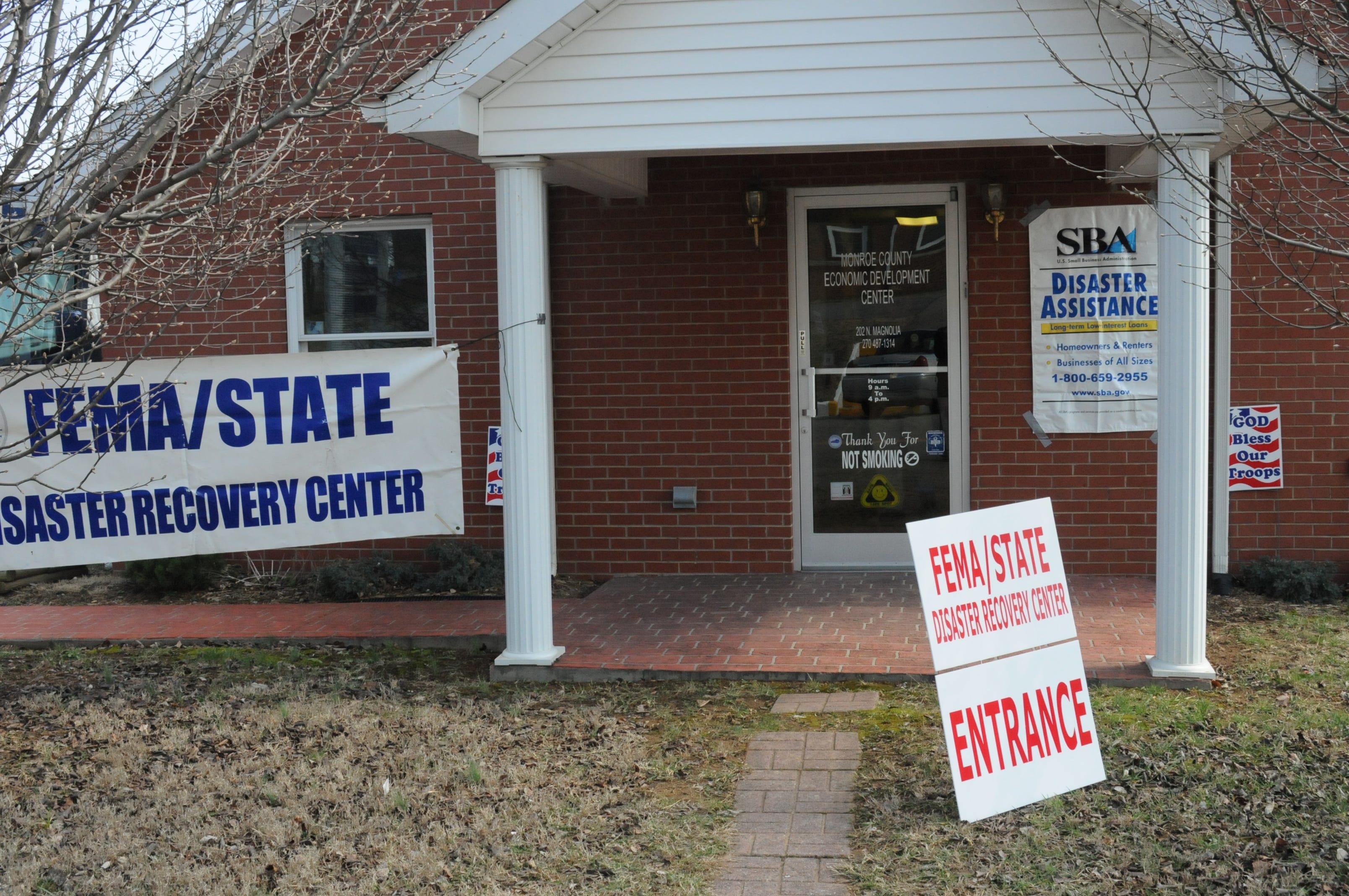
On June 22, 2026, the Department of Homeland Security published a final rule changing civil-rights regulations for programs that receive DHS and FEMA financial assistance.
The rule was issued by the DHS Office of the Secretary and the Federal Emergency Management Agency. It amends DHS Title VI regulations at 6 CFR Part 21 and FEMA regulations at 44 CFR Part 7. The rule took effect the same day it was published.
DHS and FEMA removed language that allowed the agencies to treat some facially neutral policies as civil rights violations when those policies had unequal effects based on race, color, or national origin. DHS says its Title VI regulations will now focus on intentional discrimination rather than unintentional disparate impact.
For Kentucky, the rule connects to disaster recovery, emergency management, homeland security grants, cybersecurity grants, nonprofit security grants, local public safety equipment, and grant compliance. Kentucky Emergency Management manages FEMA Public Assistance in the state. The Kentucky Office of Homeland Security administers several DHS/FEMA-backed reimbursement grants for local governments, utilities, schools, law enforcement, emergency management offices, public-safety answering points, and nonprofits.
The rule does not repeal all civil rights requirements in disaster assistance.
The Stafford Act still requires equitable and impartial relief operations in major disasters and emergencies. But DHS has narrowed the use of one federal enforcement tool that communities could use when a policy appears neutral on paper but produces unequal results in federally funded programs.
What happened
The Federal Register notice is titled “Rescinding Portions of DHS Title VI Regulations To Conform More Closely With the Statutory Text and To Implement Executive Order 14281.” It was published on June 22, 2026, under DHS docket number DHS-2025-1009.
DHS says the rule follows a December 2025 Department of Justice rule that removed disparate-impact liability from DOJ Title VI regulations. DHS also cites Executive Order 14281, “Restoring Equality of Opportunity and Meritocracy,” signed in April 2025. That order directed federal officials to reduce the use of disparate-impact liability across federal civil-rights enforcement.
Title VI of the Civil Rights Act of 1964 prohibits discrimination based on race, color, or national origin in programs or activities receiving federal financial assistance. For decades, federal agencies have used Title VI regulations to address both intentional discrimination and some policies that produced discriminatory effects. The June 22 DHS/FEMA rule pulls DHS and FEMA away from that second category.
DHS amended several regulatory provisions. It removed and reserved 6 CFR 21.5(b)(2), deleted “or effect” language from 6 CFR 21.5(b)(3), removed 6 CFR 21.5(b)(6), and revised employment-practices language. FEMA’s separate civil-rights regulation at 44 CFR 7.5(b) was also removed and reserved.
DHS states that the rule reduces compliance costs, legal uncertainty, and potential liability for recipients of DHS funding. That means the direct institutional beneficiaries are federal funding recipients: state agencies, local governments, public safety agencies, private nonprofits, utilities, and other entities that receive DHS or FEMA funding.
What changed in the federal rule
The strongest sentence in the federal rule is the one explaining the practical effect. DHS says it will not pursue Title VI disparate-impact liability against DHS funding recipients.
That means a community may still document unequal effects, such as a disaster-recovery practice that burdens one racial, ethnic, or language group more heavily than another. Under the new DHS/FEMA rule, the agency is saying Title VI enforcement must be tied to intentional discrimination. Statistical disparities may still be evidence of intent, but unequal effects alone carry less federal enforcement force under these DHS and FEMA regulations.
The rule’s limited nature should be stated clearly. FEMA did not gain permission to distribute disaster aid in a discriminatory way. The Stafford Act still requires that disaster assistance be handled equitably and impartially, without discrimination based on race, color, religion, nationality, sex, age, disability, English proficiency, or economic status.
The change is still important because intent can be difficult to prove. Many public decisions are written in neutral terms: application deadlines, documentation rules, notice methods, reimbursement criteria, eligibility steps, damage-assessment procedures, procurement choices, staffing plans, and site-location decisions. Those decisions may produce unequal outcomes even when no official writes a discriminatory sentence in a memo.
When federal enforcement focuses only on intent, affected people often carry a heavier burden.
They may have to prove not only that an outcome was unequal, but also that a decision-maker intended the unequal result.
How FEMA funding reaches Kentucky counties and cities
DHS and FEMA do not only operate at the federal level. They send money to state and local agencies through grants, reimbursements, disaster declarations, preparedness programs, mitigation programs, cybersecurity grants, and security grants.
In Kentucky, FEMA Public Assistance is administered by FEMA and managed by Kentucky Emergency Management. KYEM says the program provides federal funding to help communities recover from major disasters. It can pay for repair, replacement, or restoration of public infrastructure, emergency response costs, and debris removal.
Eligible applicants include state government, local government, and certain private nonprofits. That means a county fiscal court, city government, public utility, school district, or nonprofit may become part of a FEMA-funded recovery project after a federally declared disaster.
KYEM also describes itself as a pass-through entity for FEMA federal grant funding. That role gives KYEM responsibility for monitoring subrecipients at every stage of the award. KYEM says its monitoring includes site visits, documentation review, project-location visits, meetings with local representatives, and annual risk assessments.
The Kentucky Office of Homeland Security administers other DHS/FEMA-backed grants. Its grants page lists the State and Local Cybersecurity Grant Program, the State Homeland Security Grant Program, and the Nonprofit Security Grant Program. Those grants can support local governments, utilities, K-12 schools, law enforcement, emergency management offices, public-safety answering points, and nonprofits.
That means the rule affects more than one state office. It reaches Kentucky through disaster recovery, local preparedness, cybersecurity, public safety, school security, nonprofit security, communications equipment, generators, cameras, emergency operations, and reimbursement paperwork.
Why unequal outcomes may be harder to challenge
Kentucky repeatedly depends on FEMA and DHS funding after floods, tornadoes, storms, mudslides, landslides, and other emergencies. In April 2025, Gov. Andy Beshear requested Public Assistance for 64 Kentucky counties after flooding. In July 2025, the Governor announced that FEMA had denied Individual Assistance for two counties and Public Assistance for one county after severe storms and tornadoes, and that Kentucky planned to appeal.
Those events show why federal disaster rules have local meaning here. FEMA decisions can affect whether a county gets public infrastructure reimbursement, whether families can apply for assistance, whether local governments can repair roads and public buildings, and whether long-term mitigation work gets funded.
Civil-rights enforcement in disaster recovery often depends on ordinary administrative choices. Which neighborhoods receive information first? Are notices available in languages people can understand? Are recovery centers reachable without a car? Do renters receive the same practical access to help as homeowners? Are people with disabilities able to apply, appeal, and receive services? Are rural counties given enough support to document damage and meet federal deadlines?
Kentucky has language-access stakes even though most residents speak English at home. Census QuickFacts reports that 6.8% of Kentuckians age 5 and older spoke a language other than English at home in 2020 to 2024. In a disaster, warnings, applications, appeal instructions, shelter information, debris-removal notices, and recovery-center hours have to be understandable to the people who need them.
Kentuckians with disabilities also have a direct stake in emergency communication and disaster access. The Stafford Act expressly includes disability and English proficiency in its nondiscrimination provision. FEMA and Kentucky agencies still have to account for those obligations even after DHS narrows Title VI disparate-impact enforcement.
The Kentucky institutions most likely to experience this change are not abstract. They include KYEM, the Kentucky Office of Homeland Security, county fiscal courts, city governments, local emergency management offices, public utilities, public schools, law enforcement agencies, nonprofit grant recipients, and contractors working on federally funded emergency or security projects.
The procedure deserves scrutiny
DHS did not issue this rule through a proposed rule followed by a public comment period. It published a final rule and made it effective immediately.
DHS relied on an exception under the Administrative Procedure Act for rules involving agency management, public property, loans, grants, benefits, or contracts. DHS also said the same exception allowed the agency to avoid the usual delay in the effective date.
That procedural choice matters for Kentucky because the rule governs federal grant recipients. Counties, cities, schools, utilities, nonprofits, emergency managers, and disaster survivors did not receive a standard comment window before the change took effect.
The rule also uses executive-branch sequencing. Executive Order 14281 set the policy direction in April 2025. DOJ changed its Title VI regulations in December 2025. DHS then conformed its own regulations in June 2026. The result is a federal civil-rights shift carried out through executive order, DOJ coordination, and agency rulemaking.
The money involved
DHS says it issued about 274,000 awards totaling roughly $140 billion from fiscal years 2022 through 2024. In fiscal year 2024 alone, DHS reported about 35,000 awards totaling $43.4 billion.
FEMA accounts for nearly all of the grant dollars described in the DHS rule. FEMA’s fiscal year 2024 grant total listed in the rule was about $43.143 billion. Disaster Assistance Grants accounted for about $35.892 billion.
Those numbers explain why a civil-rights rule tied to DHS and FEMA grants has a broad reach. The money pays for disaster recovery, emergency response, fire safety, hazard mitigation, preparedness, cybersecurity, nonprofit security, equipment, infrastructure, and local reimbursement claims.
The incentive shift is straightforward. DHS is reducing civil-rights compliance risk for recipients of DHS/FEMA funding when unequal effects occur without proof of intent. For recipients, that may lower liability concerns. For affected residents, it may reduce one federal avenue for challenging practices that produce unequal outcomes.
My Kentucky readers should follow the grant documents, not only the speeches.
Grant assurances, monitoring checklists, application instructions, site-visit forms, appeal letters, procurement files, and local reimbursement requests will show how the change is being carried out here.
What you can do
Check fiscal court and city council agendas.
Look for FEMA Public Assistance projects, debris-removal contracts, emergency repairs, generator purchases, cybersecurity grants, nonprofit security grants, emergency communication systems, and public-safety equipment.
Request the grant documents.
Ask KYEM, KOHS, your county fiscal court, or your city for the civil-rights assurances, grant award letters, subrecipient agreements, monitoring checklists, and reimbursement records associated with DHS- or FEMA-funded work.
Compare public notices with local needs.
Look at whether disaster notices, recovery-center information, FEMA application instructions, appeal instructions, and public meetings are accessible to people with disabilities, people without reliable internet, renters, rural residents, and people who need language assistance.
Watch appeal and denial letters.
If FEMA, KYEM, a city, or a county denies assistance, reimbursement, or access to a program, the written explanation matters. Save the letter, deadline, appeal instructions, and any forms used to make the decision.
Document unequal access early.
Keep screenshots, flyers, emails, meeting agendas, application instructions, and dates. If one neighborhood, language group, disability group, or rural area receives less usable information or less access to recovery help, the record needs to be built while the decision is still fresh.
The first signs will likely appear in grant files, local agendas, disaster notices, monitoring forms, and appeal letters. Those are the records you can request, compare, and save.
Why the distinction matters
A federal agency can narrow one enforcement tool without erasing every civil-rights duty. That is what happened here.
DHS/FEMA has narrowed Title VI disparate-impact enforcement for DHS funding recipients. The Stafford Act still requires nondiscriminatory disaster assistance. Other federal civil rights laws, disability laws, language access duties, and state or local requirements may still apply, depending on the program.
The warning sign is the shift in burden. If federal enforcement gives less weight to unequal outcomes, people affected by disasters and security funding may have a harder time getting agencies to address patterns that no one admits were intentional.
Kentucky has enough experience with disasters to know that access is often decided by details. A form, a deadline, a recovery-center location, a reimbursement rule, a translation choice, a damage-assessment method, or an appeal instruction can change who receives help and who gets left to navigate the aftermath alone.
The rule took effect in Washington, but Kentucky will feel it in Frankfort, county courthouses, city halls, emergency operations centers, school districts, utility offices, nonprofit offices, and disaster recovery sites.
Readers can track the change by looking at the documents attached to FEMA and DHS-funded work in Kentucky: grant assurances, subrecipient monitoring forms, fiscal court agenda packets, city council reimbursement votes, disaster-recovery notices, appeal letters, procurement files, and public-facing instructions for applying for help. Those records will show whether Kentucky agencies and local governments maintain strong civil-rights practices even after DHS and FEMA narrow a federal enforcement tool.
Further reading and sources
Department of Homeland Security and FEMA final rule, June 22, 2026:
https://www.federalregister.gov/documents/2026/06/22/2026-12399/rescinding-portions-of-dhs-title-vi-regulations-to-conform-more-closely-with-the-statutory-text-and
Department of Justice Title VI final rule, Dec. 10, 2025:
https://www.federalregister.gov/documents/2025/12/10/2025-22448/rescinding-portions-of-department-of-justice-title-vi-regulations-to-conform-more-closely-with-the
Executive Order 14281, “Restoring Equality of Opportunity and Meritocracy”:
https://www.federalregister.gov/documents/2025/04/28/2025-07378/restoring-equality-of-opportunity-and-meritocracy
DOJ Title VI overview:
https://www.justice.gov/crt/fcs/TitleVI
Stafford Act nondiscrimination provision, 42 U.S.C. § 5151:
https://uscode.house.gov/view.xhtml?edition=prelim&num=0&req=granuleid%3AUSC-prelim-title42-section5151
Kentucky Emergency Management Public Assistance Program:
https://www.kyem.ky.gov/recover-and-mitigate/public-assistance
Kentucky Emergency Management Subrecipient Monitoring:
https://www.kyem.ky.gov/inside-kyem/subrecipient-monitoring
Kentucky Emergency Management Directory:
https://www.kyem.ky.gov/inside-kyem/kyem-directory
Kentucky Office of Homeland Security Grants:
https://homelandsecurity.ky.gov/Pages/Grants.aspx
Governor Beshear, April 2025 Public Assistance request:
https://www.kentucky.gov/Pages/Activity-stream.aspx?n=GovernorBeshear&prId=2474
Governor Beshear, July 2025 FEMA denial and appeal announcement:
https://www.kentucky.gov/Pages/Activity-stream.aspx?n=GovernorBeshear&prId=2546
U.S. Census Bureau QuickFacts, Kentucky:
https://www.census.gov/quickfacts/fact/table/KY/HCN010222