
On February 18, 2026, the U.S. Department of Homeland Security circulated a memorandum to senior immigration officials authorizing U.S. Immigration and Customs Enforcement to arrest and detain certain legally admitted refugees for “rescreening.” The memo, first reported by national outlets including The New York Times and Politico, directs ICE field offices to treat refugee status as subject to renewed eligibility review, including physical detention during that review for refugees who have not yet adjusted to lawful permanent resident status.
The document reverses prior internal guidance that treated refugee admission as presumptively stable absent individualized evidence of fraud or disqualifying conduct. It also interacts with ongoing federal litigation over refugee processing and humanitarian parole. The change does not require new legislation. It operates under executive authority delegated through the Immigration and Nationality Act and existing detention statutes.
For Kentucky, where several counties host long-standing refugee communities, the memo changes risk calculations even before any publicized enforcement action in the state.
The DHS Memorandum and the Authority It Invokes
The memorandum relies on the Secretary of Homeland Security’s authority under 8 U.S.C. § 1226 to arrest and detain noncitizens pending a decision on removal. Refugees are admitted under 8 U.S.C. § 1157 after overseas vetting by the State Department and DHS. Once admitted, refugees are authorized to work immediately and are required to apply for lawful permanent residence after one year under 8 U.S.C. § 1159.
The new directive instructs ICE to treat the period before adjustment to permanent residence as a window during which “rescreening” may occur. The memo characterizes this as a review of eligibility grounds, including potential inadmissibility or security-related concerns. Field offices are told that detention may be used while that review proceeds.
Previously, ICE guidance emphasized case-by-case enforcement priorities and limited detention absent individualized triggers. The memo replaces that language with broader discretionary authority. It does not amend the statute. It alters internal enforcement posture.
This shift is procedural rather than legislative. Congress has not amended refugee law. The executive branch has adjusted how it applies detention authority during the period between refugee admission and green card adjustment.
Litigation over refugee admissions is ongoing in several federal courts, including cases challenging caps and processing delays. The memo acknowledges that certain aspects may be affected by court orders but directs implementation where not expressly prohibited.
ICE Field Office Implementation and Detention Facilities
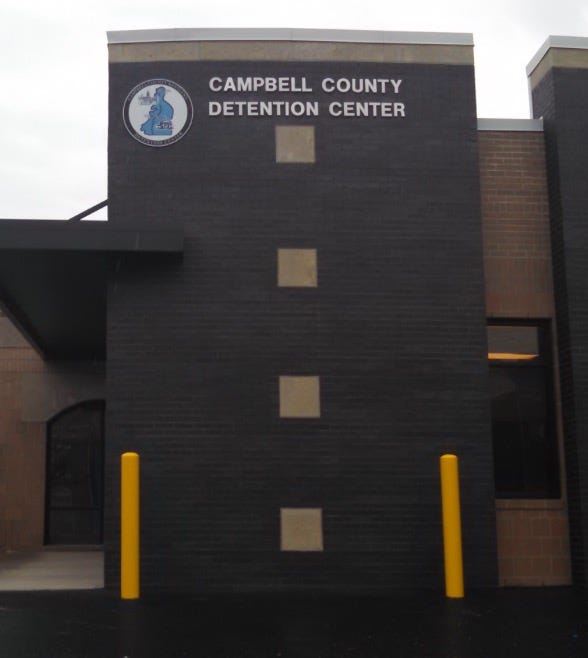
ICE operates through field offices, including the Chicago Field Office, which has jurisdiction over Kentucky. Detention in Kentucky typically occurs through intergovernmental service agreements with county jails. The Boone County Jail in Burlington and the Campbell County Detention Center in Newport have historically housed ICE detainees under federal contracts. Jefferson County has also interacted with federal detention requests in prior years.
If ICE were to detain refugees for rescreening in Kentucky, those detentions would likely occur through existing jail contracts. Those contracts allow ICE to reimburse counties per detainee per day. The authority derives from 8 U.S.C. § 1103 and implementing agreements between ICE and local governments.
No Kentucky-specific enforcement action tied to this memo has been publicly reported as of this writing. The operational pathway, however, already exists. ICE does not need to construct new facilities or obtain new local legislation to use detention space.
The Kentucky Office for Refugees, administered through Catholic Charities of Louisville under contract with the state Cabinet for Health and Family Services, coordinates refugee resettlement services statewide. That office does not control federal detention decisions. It administers federal and state funds for employment services, language training, and integration support.
If ICE detains refugees for rescreening, local resettlement agencies would face immediate disruptions in service delivery. Employment placements, housing arrangements, and benefit enrollments depend on physical presence and documentation. Detention interrupts each of those processes.
Kentucky Counties with Established Refugee Populations
Jefferson County, Fayette County, Warren County, and Kenton County host significant refugee communities. Louisville has resettled refugees from countries including Somalia, Bhutan, the Democratic Republic of Congo, Syria, and Afghanistan over the past two decades. Lexington and Bowling Green have similar histories.
Refugee admission involves coordination between federal agencies and local affiliates of national resettlement organizations such as Catholic Charities, Kentucky Refugee Ministries, and the International Rescue Committee. Once admitted, refugees receive short-term federal assistance for housing and employment.
The DHS memo does not distinguish among counties. It applies nationwide. In counties with concentrated refugee populations, word of potential detention for rescreening can alter behavior quickly. Refugees may delay applying for benefits, avoid public offices, or postpone green card filings out of uncertainty. Legal aid providers may experience increased inquiries.
Kentucky’s legal service providers, including the Legal Aid Society in Louisville and Kentucky Equal Justice Center, already manage high caseloads in housing, employment, and benefits matters. Additional immigration-related representation demands would require new funding or reallocation.
Local public school districts could also feel effects. Jefferson County Public Schools and Fayette County Public Schools enroll students from refugee families. Attendance stability depends on housing continuity and parental employment. Detention of a parent during rescreening would affect enrollment and support services.
Ongoing Federal Litigation and Interaction with Court Orders
Several federal cases challenge recent changes to refugee admissions and humanitarian protections. Courts have issued injunctions in some matters related to asylum processing and parole. The DHS memo states that its implementation must comply with existing court orders but otherwise proceeds.
If a refugee detained for rescreening challenges detention, that case would likely proceed through the immigration court system and potentially federal district court. Kentucky falls under the jurisdiction of the U.S. District Courts for the Eastern and Western Districts of Kentucky, with appeals to the Sixth Circuit.
Detention decisions under § 1226 are generally discretionary, though bond hearings may be available. The memo’s effect is to increase the number of cases in which detention is considered appropriate pending review.
This procedural change does not require congressional approval. It may, however, generate new litigation testing whether rescreening grounds are consistent with statutory protections afforded to admitted refugees.
Rhetoric, Enforcement Posture, and Documented Examples
Over the past year, federal immigration enforcement has expanded in several ways. The termination of certain parole programs, increased worksite enforcement actions, and expanded expedited removal authority have each proceeded through executive action rather than new statutes. Each change altered how existing laws were applied.
The refugee rescreening memo fits within that pattern. It relies on preexisting detention authority. It broadens its use.
In 2017, litigation over the travel ban and refugee admissions demonstrated how quickly executive directives could affect refugee processing nationwide. More recently, changes to Temporary Protected Status designations have similarly altered the status of lawful residents through administrative action.
The current memo follows that model. A document circulated within DHS modifies enforcement posture without altering the underlying refugee statute.
Kentucky Institutional Response and Monitoring
As of publication, Kentucky’s Governor’s Office has not issued a public statement regarding the memo. The Kentucky Attorney General has not announced litigation. County jailers have not reported new ICE detainee categories tied to refugee rescreening.
The Kentucky Cabinet for Health and Family Services oversees contracts related to refugee assistance but does not have authority over federal detention. Communication between federal ICE field offices and county detention centers occurs through contractual channels rather than state executive approval.
Monitoring will likely occur through several sources: ICE detention statistics, county jail population reports, and filings in immigration court. Advocates may submit open records requests to county facilities for updated intergovernmental service agreements or detainee counts.
Local school districts and social service agencies may track attendance disruptions or service interruptions, though those effects often surface informally before appearing in public data.
What Changes Procedurally
Under prior guidance, refugee admission signaled a pathway toward permanent residence absent specific individualized triggers. The new memo introduces an additional review step subject to detention before adjustment to permanent resident status.
The statutory requirement that refugees apply for green cards after one year remains in place. The memo affects the period before that application is adjudicated.
Detention authority during rescreening increases ICE’s leverage during review. It also increases legal costs for affected families. Bond hearings and immigration court proceedings require representation, which is not government-funded in civil immigration matters.
Counties with ICE contracts may see detainee counts fluctuate. Service providers may reallocate staff time toward legal coordination rather than employment placement.
Suggested Actions for Readers
Readers who want to follow this issue can begin by reviewing the full text of the DHS memorandum once publicly available and comparing it to prior ICE guidance on detention priorities. Monitoring ICE detention statistics for the Chicago Field Office, which covers Kentucky, will provide early indicators of implementation.
Local residents can attend county fiscal court meetings in Boone, Campbell, and other counties with ICE contracts to ask whether detainee categories have changed under existing agreements. Agendas and minutes are publicly posted.
Legal professionals may track filings in the Eastern and Western Districts of Kentucky and the Sixth Circuit for any habeas petitions or injunction requests related to refugee detention.
School board members and social service administrators can review contingency plans for family disruptions tied to detention. Public meetings provide a forum for those discussions.
What Happens Next
Implementation will proceed through ICE field offices unless halted by a federal court. Individual detention cases will likely generate early legal challenges. If courts issue temporary restraining orders or injunctions, DHS may revise guidance again.
Congress could intervene legislatively, though no bill has been introduced addressing refugee rescreening detention specifically. State officials could file amicus briefs if litigation reaches appellate stages.
In Kentucky, the first signal will likely appear in detention data or local reporting rather than a statewide announcement. The procedural next step is case-by-case enforcement. Whether courts uphold or limit that authority will determine the memo’s durability.
Further Reading
ICE Detention Standards and Field Office Structure:
https://www.ice.gov/detain
U.S. District Court for the Eastern District of Kentucky:
https://www.kyed.uscourts.gov
U.S. District Court for the Western District of Kentucky:
https://www.kywd.uscourts.gov
Recent reporting on DHS refugee rescreening memo (The Guardian):
https://www.theguardian.com/us-news/2026/feb/19/trump-administration-memo-ice-dhs-refugees-screening