
On Tuesday, the Department of Homeland Security confirmed that it is closing the Office of the Immigration Detention Ombudsman, the federal office created to review complaints from people held in immigration detention.
That may sound like a Washington staffing decision. In Kentucky, it is more than that.
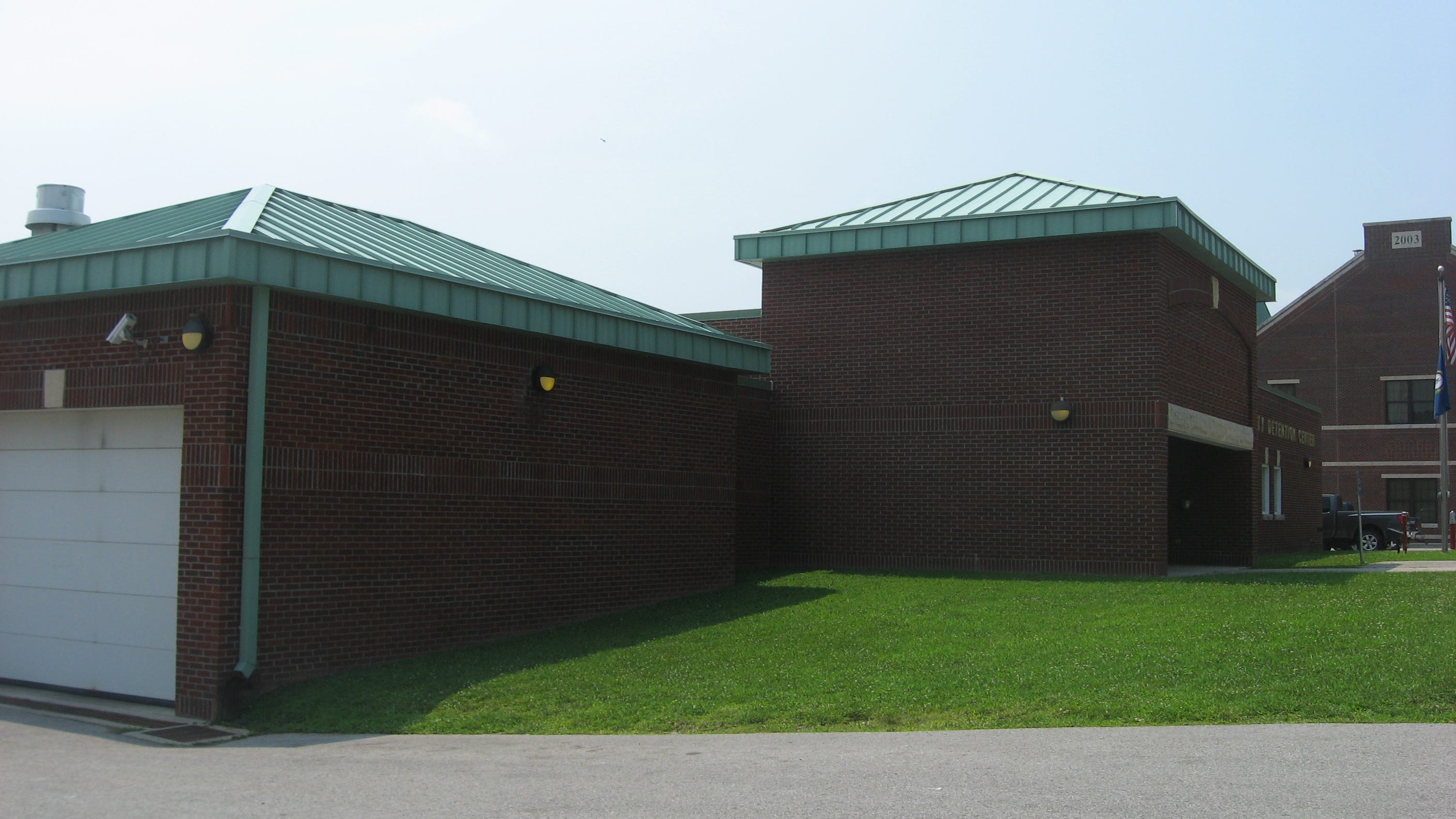
Kentucky county jails are part of the federal immigration detention system. Earlier this year, more than 1,000 people were being held for ICE in Kentucky county facilities, according to reporting based on analysis by the League of Women Voters of Kentucky. That reporting identified several county jails holding ICE detainees, including Oldham County Detention Center.
So when DHS closes an office that handled immigration detention complaints, the accountability question does not stay in Washington. It comes to the counties where people are actually held.
In Kentucky, the question is direct: if someone held for ICE in a county jail is mistreated, denied care, subjected to excessive force, or unable to get help, who outside the jail can review what happened?
The office DHS closed handled complaints from inside detention
The office being closed is the Office of the Immigration Detention Ombudsman, often called OIDO.
OIDO was not a court. It did not decide whether someone could remain in the United States. It did not replace an immigration lawyer. Its job was narrower, but important: it provided a formal complaint and review process for problems inside immigration detention.
DHS’s own case-intake instructions said OIDO could review complaints from people who had problems while in immigration detention. The office described itself as independent from ICE and Customs and Border Protection. It allowed complaints to be submitted by detained people or on their behalf.
That function matters because immigration detention is difficult for the public to see. People may be held in federal facilities, private detention centers, county jails, or local facilities operating under federal agreements. Families may not know where to call. Lawyers may have trouble getting information. Local officials may describe ICE custody as a federal responsibility even when the person is physically held in a county jail.
OIDO was one formal place where complaints could go.
DHS has now closed that door.
DHS says Congress caused the closure. Reporting shows a more complicated record.
Reuters reported that DHS confirmed the closure and blamed Congress, saying Congress caused OIDO to shut down through the DHS appropriations bill. Reuters also reported that the bill ending the DHS shutdown did not mandate OIDO’s closure.
NOTUS reported the same conflict. DHS blamed Congress, but the funding bill did not mention OIDO or require the office to close. NOTUS also reported that the office’s website had been archived and that internal communications obtained by HuffPost said the office was removing public signage and ending inspections.
That distinction affects accountability. If Congress explicitly abolished an office, responsibility would sit with Congress. If DHS chose to close a congressionally created oversight office while pointing to Congress as the reason, responsibility sits with DHS and with lawmakers who can question the decision.
For Kentucky, the immediate concern is practical: what replaces the complaint and inspection functions OIDO provided?
Kentucky jails are already part of the ICE detention system
Kentucky is not outside this story.
The League of Women Voters of Kentucky reported that more than 1,000 people were being held for ICE in Kentucky county jails. The League also reported that ICE detainees are not included in some jails’ public inmate lists and that some are held in severely overcrowded jails.
Kentucky Lantern and WKMS reported that county jails shown to have ICE detainees held a cumulative total of 1,041 detainees as of February 5, 2026. Their reporting listed multiple Kentucky county facilities, including Boone County, Campbell County, Grayson County, Henderson County, McCracken County, Oldham County, and others.
That is the Kentucky connection.
If a federal oversight office closes while Kentucky jails are holding people for ICE, county officials cannot simply treat immigration detention as someone else’s responsibility.
The detention may be federal in purpose, but the place is local.
The beds are local. The jail staff are local. The budget may run through county government. The contract or agreement may be approved, defended, or questioned by local officials.
And the public can ask what complaint process remains.
The closure comes as ICE detention faces scrutiny
The timing raises the stakes.
Reuters reported that at least 18 deaths had been reported in ICE custody during the first four months of 2026, following 31 deaths in 2025, which Reuters described as a two-decade high.
The Washington Post recently reported on internal ICE records showing widespread use of force in detention centers, including pepper spray, takedowns, and restraints. The Post reported that ICE records documented at least 1,460 use-of-force incidents from January 2024 to February 2026.
Those national findings do not prove the same conditions exist in every Kentucky jail holding ICE detainees. They do show why oversight cannot be treated as paperwork.
When deaths, overcrowding, medical neglect, force, and complaint access are all part of the national detention record, closing a formal complaint office is not a minor administrative change. It removes one route for documentation and review.
For people inside detention, fewer complaint pathways can mean fewer chances to be heard.
For families, it can mean fewer places to call.
For local communities, it can mean less information about what happens in facilities operating in their name.
Local officials still have responsibilities
Federal agencies set immigration-enforcement priorities. ICE enters agreements and contracts. County jails provide beds. Jailers manage facilities. Fiscal courts approve budgets. Sheriffs and local law-enforcement agencies may participate in 287(g) agreements. State lawmakers can encourage, restrict, or require forms of cooperation.
That chain matters because it shows where accountability can still be applied.
If OIDO is gone, Kentucky communities can still ask county-level questions.
Who receives complaints from people held for ICE?
Are complaints tracked separately?
Are medical grievances reviewed by anyone outside the jail?
Are use-of-force incidents involving ICE detainees reported to fiscal court?
Are ICE detainees included in public jail population numbers?
Has ICE inspected the facility?
Has DHS or ICE reported deficiencies?
Has the county been paid for holding ICE detainees, and how much?
Those are oversight questions. They belong in fiscal court meetings, jail budget hearings, open records requests, and congressional offices.
Who holds power in Kentucky
The federal government closed the office, but Kentucky officials still hold practical power over what happens next.
County jailers operate the jails and manage detention conditions.
Fiscal courts, county judge-executives, and magistrates oversee county budgets, jail funding, and public accountability.
Sheriffs and local law-enforcement agencies may participate in immigration-enforcement partnerships, including 287(g) agreements.
The Kentucky General Assembly can decide whether to expand, restrict, regulate, or require local cooperation with ICE.
The Kentucky Attorney General affects access to public records and can influence how transparency disputes are resolved.
Kentucky’s congressional delegation can question DHS, demand records, and ask whether the closure was legally authorized or politically chosen.
The office may have been federal. The accountability gap is local, state, and federal at the same time.
What to watch now
The first thing to watch is whether DHS explains what replaces OIDO.
A closed office is one development. A missing replacement process is another.
Kentuckians should also watch whether county jails holding ICE detainees update their complaint procedures, inspection policies, public reporting, or fiscal court presentations. If a jail continues to hold people for ICE, residents can ask what changed after the federal complaint office closed.
The third thing to watch is whether Congress responds. If OIDO was created by Congress and DHS closed it without a direct statutory mandate, lawmakers can request documents, legal justification, and operational plans.
The fourth thing to watch is whether local governments try to treat this as someone else’s problem.
That answer should not be accepted without scrutiny.
A county jail holding someone for ICE is still a county jail.
Local officials still have responsibilities. Local residents still have the right to ask what is being done with local facilities, local budgets, local staff, and local authority.
Actions readers can take
Ask your county officials whether your jail holds people for ICE.
Start with the jailer, county judge-executive, magistrates, and fiscal court.
Ask what complaint process exists now.
The direct question is: “If someone held for ICE in this jail reports abuse, medical neglect, excessive force, or unsafe conditions, who outside the jail reviews that complaint?”
Ask whether ICE detainees appear in public jail population reports.
If they do not, ask why.
Ask fiscal court to request a public report from the jailer.
That report should include the number of ICE detainees, revenue received from ICE, complaints filed, use-of-force incidents, medical grievances, inspections, and deaths or serious injuries.
Ask Kentucky’s congressional delegation whether they support the closure of OIDO.
They should also be asked whether they will request DHS records explaining who made the decision, what legal authority DHS relied on, and what complaint pathway remains.
File open records requests.
Useful records include ICE contracts, 287(g) agreements, inspection reports, detainee grievance logs, use-of-force reports, medical grievance summaries, invoices to ICE, and communications with DHS or ICE about detention standards.
Share local information with organizations tracking this issue.
The League of Women Voters of Kentucky, Kentucky Center for Economic Policy, ACLU of Kentucky, Kentucky Refugee Ministries, Maxwell Street Legal Clinic, Community Response Coalition of Kentucky, Detention Watch Network, and national immigration-detention watchdog groups may all have reason to track what happens next.
The question Kentucky should not let go
The closure of OIDO removes one formal route for complaints from people in immigration detention.
That does not end the public’s ability to demand answers. It makes those demands more necessary.
For Kentucky, the question now belongs in county fiscal courts, jail budget hearings, legislative offices, congressional inboxes, and public records requests.
If Kentucky county jails hold people for ICE, Kentucky officials should be able to answer one basic question:
Who is watching what happens inside?
Direct sources
Reuters: “US to close watchdog office for federal immigration detention abuses”
Used for confirmation of the closure, DHS’s explanation, the funding-bill dispute, and ICE death-in-custody context.
https://www.reuters.com/legal/government/us-close-watchdog-office-federal-immigration-detention-abuses-2026-05-05/
NOTUS: “DHS Shuts Down Its Immigration Detention Watchdog”
Used for additional reporting on DHS blaming Congress, the archived website, and reported ending of inspections and signage.
https://www.notus.org/immigration/dhs-shuts-down-office-immigration-detention-watchdog-ombudsman
DHS / myOIDO: DHS Form 405 Case Intake Form instructions
Used for OIDO’s stated complaint function and its description as independent from ICE and CBP.
https://myoido.dhs.gov/pt-BR/instructions/
League of Women Voters of Kentucky: Immigration research page
Used for Kentucky-specific detention data, including more than 1,000 people held for ICE in Kentucky county jails and transparency concerns.
https://www.lwvky.org/immigration
Kentucky Lantern: “More than 1,000 people being held by ICE in Kentucky jails, analysis finds”
Used for Kentucky county jail detainee counts and county-specific reporting.
https://kentuckylantern.com/2026/03/16/more-than-1000-people-being-held-by-ice-in-kentucky-jails-analysis-finds/
WKMS: “More than 1,000 people being held by ICE in Kentucky jails, analysis finds”
Used as a republication/source for the Kentucky Lantern reporting.
https://www.wkms.org/government-politics/2026-03-16/more-than-1-000-people-being-held-by-ice-in-kentucky-jails-analysis-finds
Washington Post: “Internal ICE records reveal widespread use of force in detention centers”
Used for national context on use-of-force incidents in ICE detention.
https://www.washingtonpost.com/business/2026/05/04/ice-detention-centers-force/
Prison Policy Initiative: “How is your local government collaborating with ICE?”
Used for local accountability framing around 287(g), detention contracts, and informal cooperation.
https://www.prisonpolicy.org/blog/2026/02/23/ice_county_collaboration/
Detention Watch Network: “DHS decision to shut down watchdog office proves once again that no one is safe in ICE custody”
Useful for advocacy response and community-based framing.
https://www.detentionwatchnetwork.org/pressroom/releases/2026/dhs-decision-shut-down-watchdog-office-proves-once-again-no-one-safe-ice