
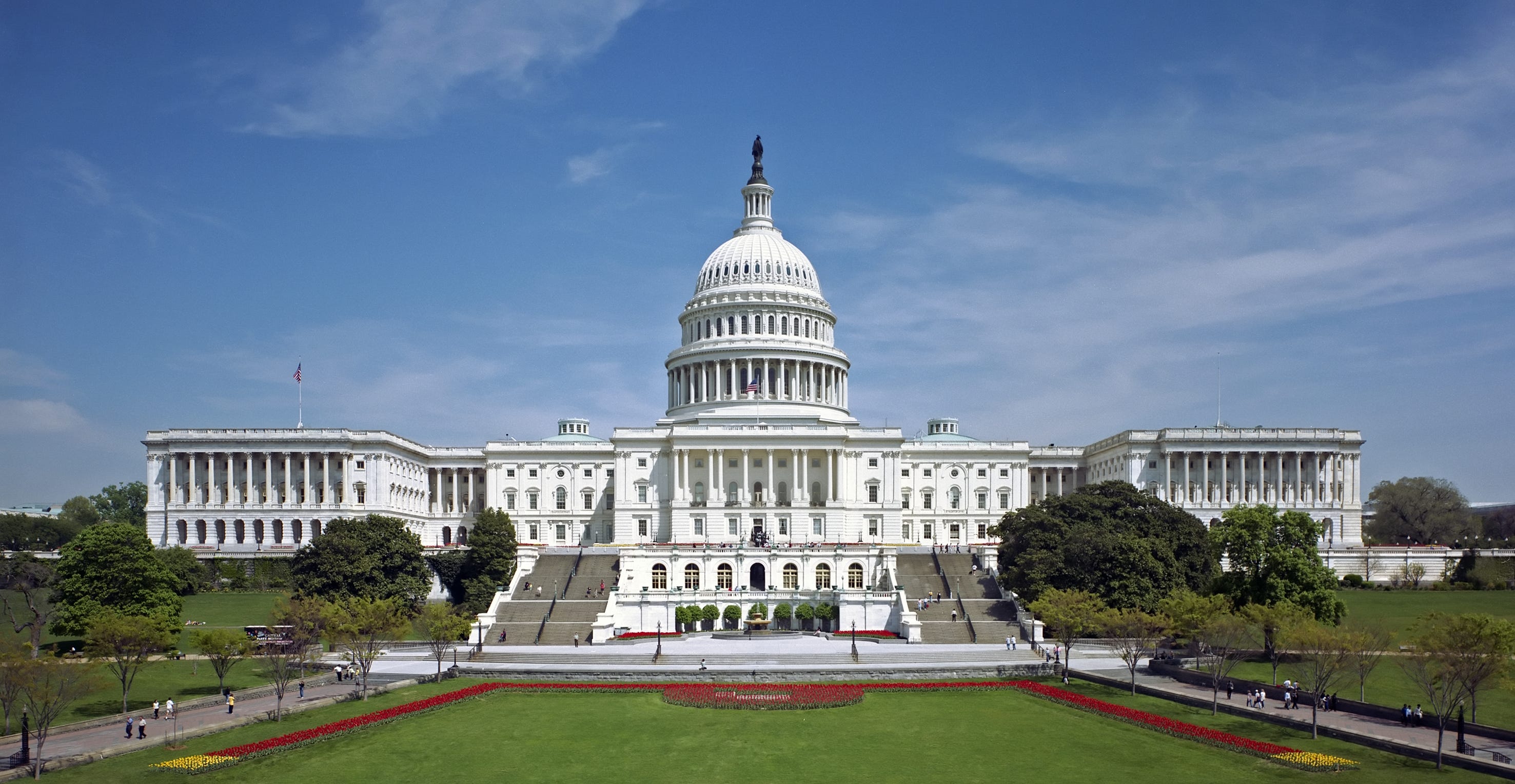
On June 3, 2026, the U.S. Senate voted 53-46 to begin debate on a roughly $70 billion immigration-enforcement funding bill for agencies including Immigration and Customs Enforcement and Customs and Border Protection. The vote came after controversial funding for a Trump-backed settlement fund and White House security proposal was dropped or challenged, but the central enforcement funding remained intact.
For Kentucky, the issue is both local and federal: multiple county jails already hold ICE detainees, and some Kentucky law enforcement agencies have signed 287(g) agreements that link local personnel to federal immigration enforcement.
That makes the federal funding debate a local-government story.
More money for ICE and CBP can mean more personnel, more detention capacity, more transportation, more surveillance technology, more local agreements, and more pressure on county jails that already see federal detention as a revenue source.
The Senate vote put ICE funding back on the floor
The Senate voted on June 3 and did not enact the bill. It allowed debate to begin on a package moving through the budget reconciliation process. The bill still faces amendments, final Senate action, and House action before it can become law.
The most important change is the scale of the proposed investment. The Congressional Budget Office estimated that the Senate Homeland Security and Governmental Affairs Committee title would directly appropriate $32.5 billion for the Department of Homeland Security in 2026. CBO also estimated that the Senate Judiciary title would increase direct spending by $39.2 billion, producing a combined enforcement package of roughly $71.7 billion over the 2026-2035 period.
Sen. Rand Paul of Kentucky, chair of the Senate Homeland Security and Governmental Affairs Committee, led committee Republicans in advancing the DHS portion of the reconciliation bill on May 19. The committee approved it by an 8-5 vote. Paul framed the bill as a response to Democratic opposition to regular appropriations for ICE and CBP.
The Senate text released by Paul’s committee included billions for CBP personnel, ICE Homeland Security Investigations personnel and operations, border-security technology, screening, artificial intelligence, machine learning, biometric entry-exit systems, inspection equipment, air and marine platforms, and other DHS purposes.
The Senate Judiciary title adds another layer. Its text includes funding for ICE immigration enforcement operations, CBP enforcement activities, DHS, DOJ, and federal, state, and local participation in DOJ-related missions. The exact final language still needs review after Senate amendments, but the committee texts show the basic direction: larger enforcement capacity across immigration agencies and related law-enforcement partners.
Reconciliation changes the path to passage
The bill is being advanced through budget reconciliation, a fast-track congressional procedure for spending, revenue, and debt-limit legislation. Reconciliation can allow a Senate majority to pass budget-related legislation without reaching the usual 60-vote threshold required to overcome a filibuster.
That procedural choice affects public power. A major enforcement buildout can advance as budget legislation, even when the policy consequences extend far beyond an annual spending adjustment. The Senate parliamentarian has already forced changes to parts of the package, including controversial provisions outside the core ICE and CBP funding.
The June 3 vote also followed weeks of Republican negotiations over side provisions, including a proposed $1.776 billion settlement fund tied to claims of government “weaponization” and a $1 billion White House security proposal that included funding connected to Trump’s new ballroom. AP reported that the immigration-enforcement funding moved forward after those controversies were removed or challenged.
I encourage my Kentucky readers to separate the procedural drama from the central proposal. The settlement fund and ballroom security language drew attention. The more durable issue is the proposed multi-year expansion of ICE, CBP, DHS, DOJ, and detention operations, as well as federal-local enforcement capacity.
How ICE funding reaches county jails
Federal immigration enforcement depends on federal agencies, but it often works through local institutions. ICE does not need to build every detention bed itself if county jails agree to house detainees. ICE does not need to perform every local enforcement task itself if sheriffs and jail staff participate under federal agreements.
One key pathway is 287(g), a program named for Section 287(g) of the Immigration and Nationality Act. ICE describes the program as a way for state and local law enforcement agencies to partner with ICE under formal agreements. Those agreements can allow local personnel to carry out certain immigration-enforcement functions after training and under federal supervision.
In Kentucky, this pathway is already active. Kentucky Center for Economic Policy reported in October 2025 that ICE arrests in Kentucky had increased sharply after January 20, 2025, and that local law-enforcement partnerships were part of the expansion of enforcement.
Oldham County is one documented example, but it is not the whole story in Kentucky. Kentucky Center for Economic Policy reported in February 2026 that 24 local law enforcement groups in Kentucky had signed 287(g) agreements, and 11 county jails were contracting with ICE to hold detainees. That means a federal increase in immigration-enforcement funding could affect several counties, not only one detention center.
The scale has grown quickly. The Kentucky Lantern reported in March 2026 that more than 1,000 people were being held for ICE in Kentucky jails, with large detainee counts reported at Hopkins County Jail and Kenton County Detention Center. WDRB reported that ICE detainers in Kentucky had more than doubled in five months, contributing to jail overcrowding concerns.
Oldham County still deserves mention because it offers a clear example of local accountability. Residents there have already publicly questioned the jail’s role with ICE, and the Oldham County Detention Center appears in ICE’s public facility records. But the Kentucky question is broader: which county jails are accepting ICE detainees, how much money they receive, what contracts they signed, and whether fiscal courts are tracking the costs and risks.
The Kentucky link is the county jail
The federal bill does not need to mention Kentucky county names to affect Kentucky residents.
The connection comes through federal contracts, local jail budgets, 287(g) agreements, county fiscal courts, jail operations, and local law enforcement decisions.
If Congress appropriates billions more for ICE and CBP, agencies can hire more personnel, fund more operations, pay for more transportation, expand technology, and support more detention activity. County jails that already house ICE detainees may see stronger financial incentives to maintain or expand those arrangements.
That creates practical questions for Kentucky counties. How many beds are being used for ICE detainees? What per diem rate is the county receiving? How much of the jail budget depends on federal detention revenue? What happens if ICE asks for more capacity? What medical-care obligations does the county assume? What liability does the county carry when people are detained under federal authority inside a local jail?
County residents should ask these questions during budget reviews, fiscal court meetings, jail reports, public records requests, and local news coverage.
For Oldham County, the record already includes public concern. WDRB reported that residents questioned the jail’s new ICE policy at an Oldham County Fiscal Court meeting in April 2025. Louisville Public Media also reported that Oldham Countians held a local town hall in La Grange to discuss the county’s ICE partnership.
When Congress debates billions more for immigration enforcement, county residents have a direct reason to ask how federal money could affect the jail, the county budget, detainee conditions, public records, and Fiscal Court oversight.
Who is affected
Immigrants and mixed-status families face the most immediate risk from expanded enforcement funding. More ICE capacity can mean more arrests, more detention, more transfers, and more family separation through detention and deportation.
County taxpayers are also affected. When a county jail builds revenue expectations around federal detention payments, residents deserve to know whether the county is becoming financially dependent on ICE detainee beds. They also deserve to know whether the arrangement affects staffing, medical care, insurance, transportation costs, litigation exposure, and public-record access.
Jail staff are affected because federal detainee housing can change workload, training requirements, security protocols, medical responsibilities, and pressure inside the facility. Local attorneys and immigration advocates are affected because detention location, transfer practices, and access to clients can change quickly when enforcement operations expand.
County governments are affected because detention contracts can bring money into a jail’s budget while reducing public visibility into who is detained, why they are detained, how long they remain there, and which government is responsible when something goes wrong.
Questions you can ask now
First, track the final Senate language. Amendment votes may change the bill. You should compare the final Senate text with the committee texts and the CBO estimate.
Second, watch how Kentucky’s congressional delegation votes. Rand Paul’s committee role warrants particular attention because it advanced the DHS portion of the package. You can ask Paul, Mitch McConnell, and House members how much of the bill funds detention capacity, 287(g) support, surveillance technology, state and local reimbursement, and ICE transportation.
Third, watch county budgets. In counties with ICE detention relationships, you can compare jail revenue lines, federal prisoner revenue, ICE payments, per diem assumptions, staffing costs, medical expenses, insurance costs, and legal expenses year over year.
Fourth, ask for the documents. You can request ICE detention contracts, 287(g) memoranda of agreement, jail revenue reports, detainee bed counts, inspection reports, medical-care policies, grievance policies, and any county communications with ICE or DHS.
Fifth, attend the local meetings where jail money is approved.
Fiscal courts may not control federal immigration law, but they do control county budgets, local appropriations, public questioning, and the political cost of weak reporting.
For readers in counties with ICE detention or 287(g) agreements, ask the jailer and the fiscal court how federal immigration-enforcement funding could affect detainee numbers, jail revenue, staffing, medical care, overcrowding, public-records access, and liability.
You can also ask whether ICE detainees appear on the jail’s public inmate list. WDRB reported that some Kentucky jails do not list ICE detainees publicly, which can make it harder for families and attorneys to locate people.
Further reading/sources
Primary sources
Congressional Budget Office, “Reconciliation Legislation of the Senate Committee on Homeland Security and Governmental Affairs and the Senate Committee on the Judiciary”
https://www.cbo.gov/publication/62413
Senate Homeland Security and Governmental Affairs Committee, “Chairman Paul Leads HSGAC Republicans in Advancing DHS Reconciliation Bill to Fund ICE and Border Patrol”
https://www.hsgac.senate.gov/media/reps/chairman-paul-leads-hsgac-republicans-in-advancing-dhs-reconciliation-bill-to-fund-ice-and-border-patrol/
Senate Homeland Security and Governmental Affairs Committee, “Chairman Paul Releases HSGAC Portion of Reconciliation Text”
https://www.hsgac.senate.gov/media/reps/chairman-paul-releases-hsgac-portion-of-reconciliation-text/
ICE, “Delegation of Immigration Authority Section 287(g) Immigration and Nationality Act”
https://www.ice.gov/identify-and-arrest/287g
ICE, “Oldham County Detention Center”
https://www.ice.gov/detain/detention-facilities/oldham-county-detention-center
Reporting and analysis
Associated Press, “Senate begins voting on funding immigration enforcement after Trump’s settlement fund is dropped”
https://apnews.com/article/f616e78c67a60619393d77ecf6e16f1b
WDRB, “Oldham County residents question jail’s new policy to indefinitely hold illegal immigrants”
https://www.wdrb.com/news/oldham-county-residents-question-jails-new-policy-to-indefinitely-hold-illegal-immigrants/article_7ff5b586-6714-4327-b34d-248b207b3070.html
Louisville Public Media, “Oldham Countians wrestle with ICE partnership”
https://www.lpm.org/investigate/2025-04-11/oldham-countians-wrestle-with-ice-partnership
Kentucky Center for Economic Policy, “ICE Arrests Are Surging in Kentucky as Local Law Enforcement Agencies Enter Agreements to Assist”
https://kypolicy.org/ice-arrests-in-kentucky/