
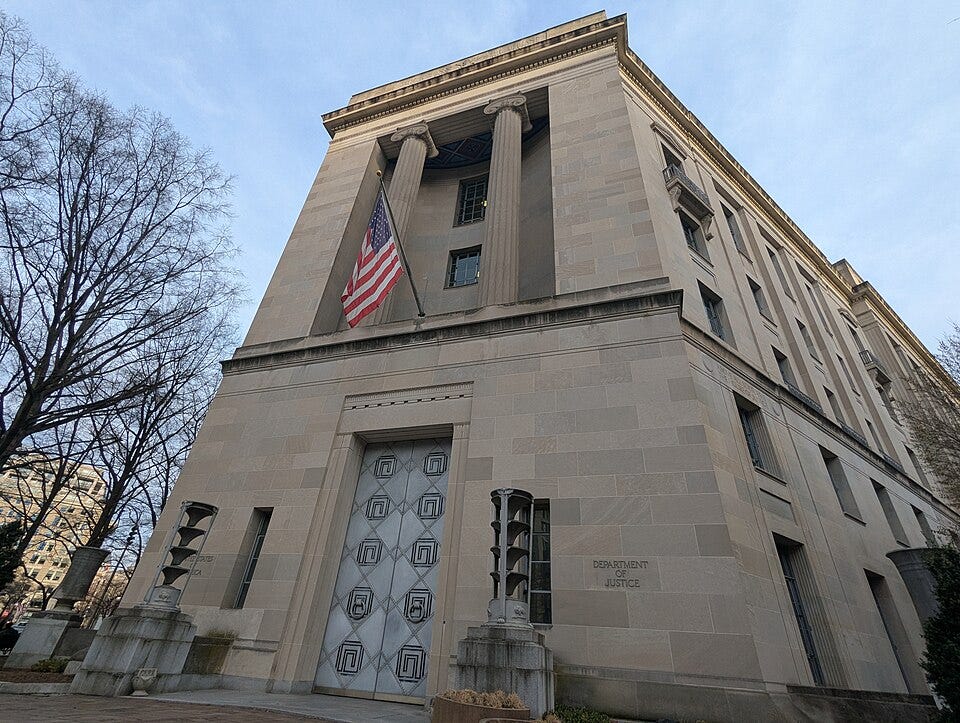
On Friday, October 16, the Justice Department warned California election officials that they could face criminal prosecution if they knowingly count ballots cast by people the federal government identifies as noncitizens.
The warning came one day after the department sued California to prevent election officials from counting ballots associated with more than 20,000 people it believes may not be American citizens.
California officials have refused to act on the federal list without adequate evidence identifying those people and showing whether they are actually ineligible to vote.
Now, less than three weeks before the November 3 election, the dispute has moved beyond a disagreement over voter records. Federal officials are threatening criminal consequences for election administrators who do not comply with their demands.
The list at the center of the dispute
The Justice Department says it worked with the Department of Homeland Security to identify more than 20,000 people registered to vote in California who are likely noncitizens.
On October 13, federal officials gave California election administrators 48 hours to investigate the names and take action. Federal officials delivered a password-protected thumb drive containing the list to Los Angeles County.
California Secretary of State Shirley Weber said her office had not received the list directly. She also questioned the administration’s refusal to explain its methodology and provide supporting evidence.
The Justice Department maintains that federal investigators compared voter registration information with immigration records and conducted additional checks. It argues that California must ensure it does not count ballots from ineligible voters.
That is a legitimate concern. Federal law generally prohibits noncitizens from voting in federal elections, and election officials must enforce eligibility requirements.
But there is an important distinction between identifying someone as a possible noncitizen and proving that person is not eligible to vote.
Federal citizenship databases have previously misidentified naturalized American citizens. In July, federal officials identified approximately 1,500 supposedly ineligible voters in Nevada, but the state found none were registered noncitizens.
That history makes verification particularly important.
A person who has become an American citizen has the same right to vote as someone born here.
If government records incorrectly identify that person as a noncitizen, the error cannot determine whether their ballot counts.
The threat of prosecution
On October 15, the Justice Department filed a lawsuit asking a federal judge to require California to set aside ballots from people on the disputed list until their citizenship could be verified.
That placed the disagreement before a court, where the government would have to defend its position.
But the following day, Acting Deputy Attorney General Trent McCotter sent another letter, this time warning Los Angeles County officials about possible criminal liability.
McCotter argued that election workers who knowingly count votes cast by noncitizens could be considered participants in a federal crime.
President Donald Trump amplified the warning on social media, threatening lengthy prison sentences for the officials involved.
The lawsuit asks a judge to decide whether California must set aside certain ballots. The criminal warning places additional pressure directly on the people responsible for administering the election.
The federal government is effectively telling election officials that following their existing procedures could expose them to prosecution, even as the accuracy of the government’s allegations remains disputed.
That is how fear can create compliance.
A government does not have to arrest anyone to influence behavior through the threat of prosecution. Election administrators facing potential criminal investigations may feel pressure to act before a court determines whether the government’s evidence is sufficient.
At the same time, the Justice Department’s warning concerns allegedly knowing participation in illegal voting. It is not an announcement that every official who processes a disputed ballot will be prosecuted. No court has established that California election officials committed a crime.
California has not backed down
Los Angeles County Registrar-Recorder Dean Logan has declined to act on the allegations without adequate verification. After receiving the latest warning, he said the dispute should be resolved in court.
Weber has also rejected the federal demands as presented, maintaining that California already has procedures intended to prevent ineligible people from registering and voting.
Their refusal is a meaningful institutional response. They are not simply criticizing the administration. They have declined to carry out the requested action while insisting that the federal government substantiate its claims.
But their position has not yet been vindicated by a court.
Three Democratic senators, Alex Padilla of California, Dick Durbin of Illinois, and Sheldon Whitehouse of Rhode Island, also intervened on October 16. They asked Attorney General Todd Blanche to commit the Justice Department to not seizing ballots, voting machines, or other election materials before the midterm elections are certified.
Their letter creates a formal request for accountability, but it is not a court order. It does not establish that the Justice Department has agreed to their demands.
For now, California election officials are resisting the federal pressure, the Justice Department is pursuing its lawsuit, and the underlying questions about voter eligibility remain unsettled.
Why Kentucky should pay attention
California is not Kentucky, and no evidence suggests Kentucky election officials have received the same criminal warning.
But a separate dispute involving federal voter information is already underway here.
On October 16, Kentucky Public Radio reported that voting rights and privacy organizations had sued the Department of Homeland Security over allegations that it collected and processed voter information from Kentucky and other states.
Kentucky Secretary of State Michael Adams previously resisted federal demands for confidential voter records. Courts dismissed Justice Department efforts to obtain such information from Kentucky and several other states.
The new lawsuit cites federal records suggesting that DHS processed information associated with Kentucky despite the state’s refusal to provide the requested confidential records.
Adams’ office says Kentucky’s voter rolls have not been improperly accessed or altered. It does not know whether federal officials created their own voter file.
The Kentucky allegations are separate from the California dispute. There is no established evidence that information associated with Kentucky was used to compile California’s disputed list.
Nevertheless, both cases raise an important question: What evidence must federal officials produce before their conclusions about voter eligibility can influence how states administer elections?
One question Kentuckians can ask
Kentucky Senator Rand Paul chairs the Senate Homeland Security and Governmental Affairs Committee, which oversees the Department of Homeland Security.
That gives him a direct institutional means of examining the federal agency involved in identifying the disputed California voters.
Kentuckians can use Senator Paul’s official constituent contact form to ask one specific question:
Will you use your committee’s oversight authority to obtain and examine the evidence DHS used to identify California voters as likely noncitizens, including the safeguards against incorrectly identifying naturalized American citizens?
A constituent request does not compel a Senate investigation. But it puts a specific question before an official with oversight responsibility for the agency that conducted the analysis.
The committee could seek explanations and records to help determine whether the federal government’s claims are reliable.
What happens next
The federal court considering the Justice Department’s lawsuit makes the immediate decision.
A judge must determine whether the government has demonstrated a sufficient legal and factual basis to require California to set aside ballots while the citizenship status of the affected voters is checked.
A separate question is whether federal officials will pursue their threats against election administrators who continue to insist on verification.
California’s election officials have not accepted the federal allegations as sufficient grounds to change how they handle ballots. But the administration has not withdrawn its demands, and no ruling has resolved the dispute.
The next test is whether the federal government can establish the facts behind its accusations before election officials are pressured to act on them.
Sources
U.S. Department of Justice, October 15, 2026: Justice Department sues California over voter list
California Secretary of State, October 14, 2026: Response to DOJ letter
California Secretary of State, October 15, 2026: Response to DOJ demands
Kentucky Public Radio, October 16, 2026: Lawsuit alleges federal collection of Kentucky voter data