
On February 15, 2026, the Kentucky Personnel Cabinet sent a letter to state employees outlining the projected impact of House Bill 500 on the Kentucky Employees’ Health Plan. The letter describes a proposed statutory change that would limit annual growth in the employer contribution for health insurance premiums to 5 percent. It attaches projections prepared by the Cabinet’s actuaries showing that, under that cap, the Kentucky Employees’ Health Plan would face estimated shortfalls of $77 million in Fiscal Year 2027 and $202 million in Fiscal Year 2028.

The warning is direct. If the cap becomes law in its current form, the Cabinet explains that the remaining costs would have to be absorbed either through higher employee premiums, increased deductibles and cost sharing, reductions in covered benefits, or some combination of those measures. The letter does not frame this as a distant concern. It presents the numbers as a foreseeable result of the statutory language in HB 500.
HB 500 is the biennial budget bill moving through the Kentucky General Assembly for Fiscal Years 2026 and 2027. The employer contribution cap is embedded within the appropriations and policy language governing state employee benefits. The Personnel Cabinet’s letter links directly to the bill text and to its internal projections so employees can review the numbers themselves.
What follows is a closer look at the statutory clause, the actuarial projections, and the workforce consequences identified in the Cabinet’s own documents.
The 5 Percent Employer Contribution Cap in HB 500
HB 500 proposes to limit annual growth in the state’s share of health insurance premiums for employees and retirees to 5 percent. The cap applies to the employer contribution, not to total premium growth. If total plan costs increase at a rate above 5 percent in a given year, the difference would not be covered by additional state funds unless lawmakers amend the bill.
The Kentucky Employees’ Health Plan, commonly referred to as KEHP, covers state employees, many school district employees, and certain quasi-public agencies. The plan is administered by the Personnel Cabinet under authority granted in Kentucky Revised Statutes Chapter 18A. Premium rates and benefit structures are set annually based on projected claims, negotiated provider contracts, and administrative costs.
Health plan costs are driven by medical claims trends, pharmaceutical pricing, utilization rates, and demographic factors. In recent years, national health cost growth has frequently exceeded 5 percent annually. The Cabinet’s letter references actuarial projections assuming cost growth above that threshold.
Under the proposed cap, the state would appropriate funds sufficient to increase its contribution by up to 5 percent per year. If actuarial projections show a required increase of 8 percent, for example, the remaining 3 percent would have to be absorbed elsewhere within the plan. The statute does not identify an automatic backfill mechanism.
The bill text does not direct the Cabinet to draw from a reserve account to cover the difference, nor does it authorize deficit financing within KEHP. Instead, it leaves plan administrators with limited tools: adjust premiums, adjust benefits, or adjust cost sharing.
The Personnel Cabinet letter frames the cap as a structural constraint on the funding formula that currently allows employer contributions to rise in line with actuarial projections approved during the budget process. If enacted, the cap would become a binding rule for the duration of the biennium unless later amended by the General Assembly.
The Personnel Cabinet’s Actuarial Projections for FY27 and FY28
The Cabinet’s projections, cited in the employee letter, estimate a $77 million shortfall in Fiscal Year 2027 and a $202 million shortfall in Fiscal Year 2028 if the 5 percent cap is applied and health care cost growth continues at projected rates.
These figures are not generalized estimates. They are tied to KEHP’s enrollment levels, benefit design, and projected claims experience. The Cabinet’s actuarial models incorporate current participation numbers across state agencies, public school districts, and other covered entities.
The growth from $77 million to $202 million reflects compounding effects. If a shortfall is not fully offset in one fiscal year, the base for the following year shifts. The letter indicates that without corrective action, the cumulative impact would increase plan pressure in successive years.
The Cabinet does not describe the shortfalls as hypothetical. It uses language indicating that, under current projections, the gap would occur if the cap is enacted without additional appropriations. The letter also notes that federal law, including requirements under the Affordable Care Act, constrains certain benefit reductions. That narrows the set of feasible adjustments.
KEHP’s annual open enrollment process typically occurs in the fall, with benefit and premium decisions finalized in advance of the January coverage year. The Cabinet’s planning cycle requires several months of lead time. As a result, even pending legislation can affect actuarial assumptions and preliminary rate modeling.
The letter informs employees that planning for FY27 rates is already underway. That timing matters. Budget language enacted in the spring legislative session would directly inform the fall premium-setting process.
KEHP Coverage Across State Agencies and School Districts
KEHP covers employees across executive branch agencies, including the Kentucky Department of Education, the Kentucky Department of Corrections, the Kentucky State Police, and numerous smaller boards and commissions. Many public school districts participate in KEHP for their certified and classified staff.
For school districts, health insurance costs are a major component of compensation. Local boards of education adopt annual budgets based on state SEEK funding, local tax revenues, and projected benefit costs. If employee premiums increase significantly due to a KEHP shortfall, districts may face secondary effects. Employees may seek higher salaries to offset increased health costs, or districts may experience increased turnover.
The Cabinet’s letter does not quantify district-level impacts by county, but it notes that KEHP participation includes thousands of public employees outside Frankfort. The projected shortfalls are system-wide figures.
Public school staffing in Kentucky has already been under pressure from retirements, certification shortages, and regional competition. Health benefits are part of total compensation. A shift in cost burden from the employer to the employee changes that calculation.
State agencies face similar considerations. Recruitment and retention in corrections, child protective services, and public health rely on compensation packages that include health insurance contributions. The Cabinet’s projections indicate that the proposed cap would constrain one of those components.
The Budget Process in the Kentucky General Assembly
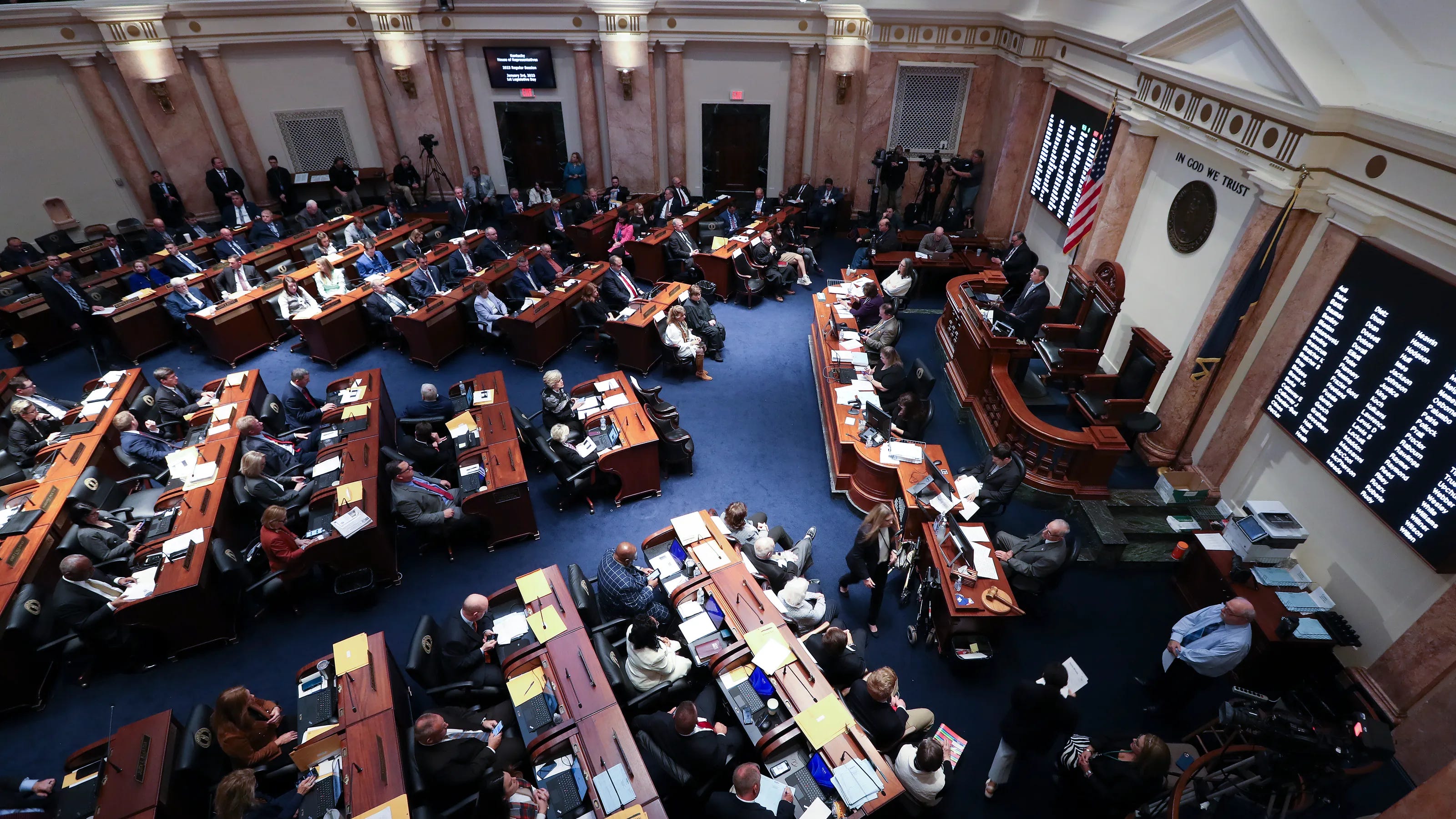
HB 500 is currently under consideration in the House and Senate budget committees of the Kentucky General Assembly. The biennial budget must pass both chambers and be signed by the Governor before the start of the new fiscal year on July 1.
The employer contribution cap is part of the bill as introduced. Amendments may be offered during committee markup or on the floor. Conference committee negotiations could also alter the language if the House and Senate pass different versions.
The Personnel Cabinet’s letter functions as an internal advisory to employees, but it also serves as a data point within the legislative process. Lawmakers have access to the same projections. Budget staff within the Legislative Research Commission typically review agency fiscal notes and actuarial analyses as part of committee deliberations.
If the cap remains in the final enacted budget, the Personnel Cabinet would implement it as written. If lawmakers modify or remove the cap, the Cabinet’s projections would change accordingly.
The next procedural step is committee action on HB 500. Public testimony, written comments, and fiscal analyses are typically entered into the legislative record during this phase. The timing of those actions will determine whether any revisions occur before final passage.
Suggested Actions for Readers
Readers who are covered by KEHP or who employ KEHP participants may wish to review the full text of HB 500 and the Personnel Cabinet’s employee letter. Understanding the specific statutory language is essential to evaluating how the 5 percent cap operates.
Contacting individual members of the House and Senate budget committees is one avenue for input. Legislators can clarify whether amendments are under consideration and how they are weighing actuarial projections in their decisions.
School board members and local superintendents may also be monitoring the issue. Asking how potential premium increases would affect district budgets can provide county-level context.
Finally, state employees and retirees may wish to monitor KEHP communications during the upcoming rate-setting cycle. Open enrollment materials will reflect any enacted changes.
What Happens Next in the Budget Timeline
The biennial budget must be enacted before July 1. Committee hearings and floor votes in the coming weeks will determine whether the employer contribution cap remains in the final bill. If the cap is enacted, the Personnel Cabinet will incorporate it into its actuarial models for the FY27 rate-setting process.
Open enrollment planning for KEHP typically begins months before the January coverage year. Decisions made during the current legislative session will inform premium notices issued later in the year. If amendments are adopted, updated projections would be prepared before that stage.
The decision point now sits with lawmakers considering HB 500. The statutory language they adopt will determine whether the 5 percent cap governs employer contributions for the next two fiscal years or whether a different funding formula applies.
Further Reading
HB 500 (2026 Regular Session), full text as introduced:
https://apps.legislature.ky.gov/record/26rs/hb500.htmlKentucky Personnel Cabinet employee letter on KEHP projections (Feb. 15, 2026):
https://personnel.ky.gov/kehp/hb500-letter-feb15-2026.pdfKentucky Employees’ Health Plan overview and plan documents:
https://personnel.ky.gov/Pages/KEHP.aspxKentucky Revised Statutes Chapter 18A (State Personnel Administration):
https://apps.legislature.ky.gov/law/statutes/chapter.aspx?id=37285Legislative Research Commission budget process overview:
https://legislature.ky.gov/Public%20Services/Pages/Budget-Process.aspxKentucky Department of Education district funding resources (SEEK):
https://education.ky.gov/districts/FinRept/Pages/SEEK.aspxKentucky General Assembly committee schedules and agendas:
https://legislature.ky.gov/Committees/Pages/default.aspxKEHP Open Enrollment information and rate-setting calendar:
https://personnel.ky.gov/kehp/open-enrollment
These documents provide the statutory language, actuarial context, and administrative authority relevant to the proposed employer contribution cap and its projected effect on the Kentucky Employees’ Health Plan.